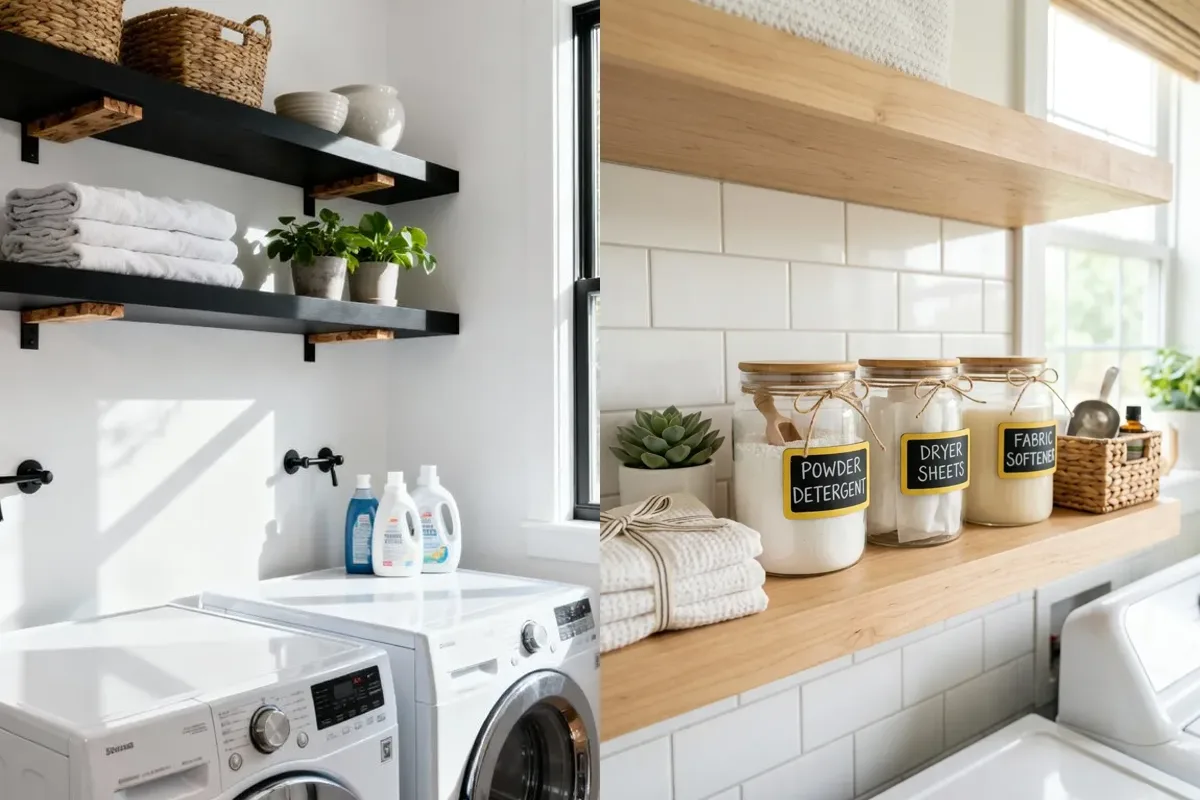
Small Laundry Room Storage Without Cabinets Made Easy
A laundry room with no cupboards at all can still hold every bottle, towel and stray sock your home produces. The secret behind good small laundry room storage without cabinets is surprisingly simple: walls, doors, corners and the tops of your machines are all storage space waiting to be used. Nothing here needs a built in unit, a big budget or permission from a landlord. Most of these ideas go up with a few screws, hooks or no tools at all, and renters can take most of them along when they move. Start with two or three ideas that fit your room today, then add more as you see what your wash day routine really needs.
Floating Wall Shelves
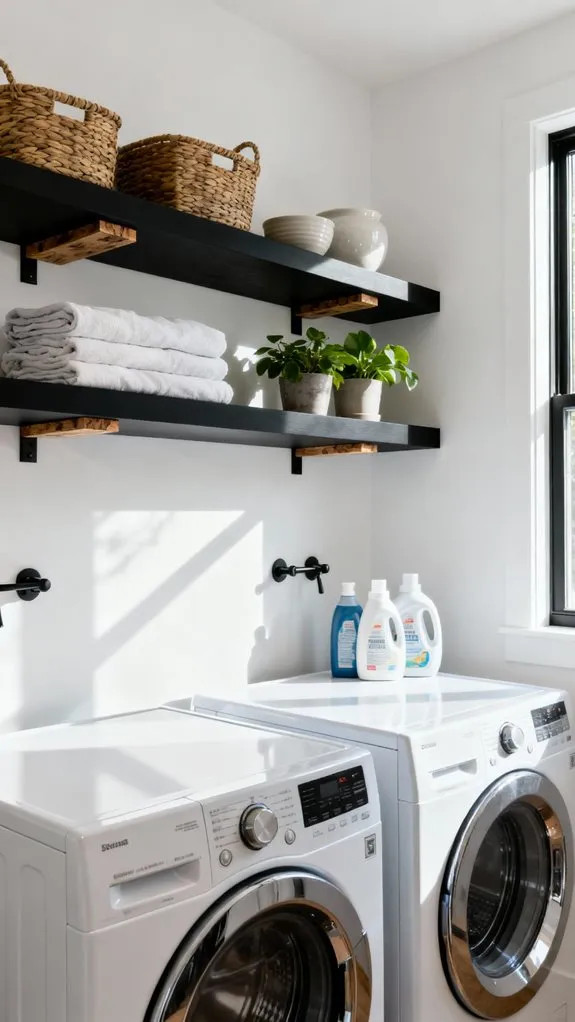
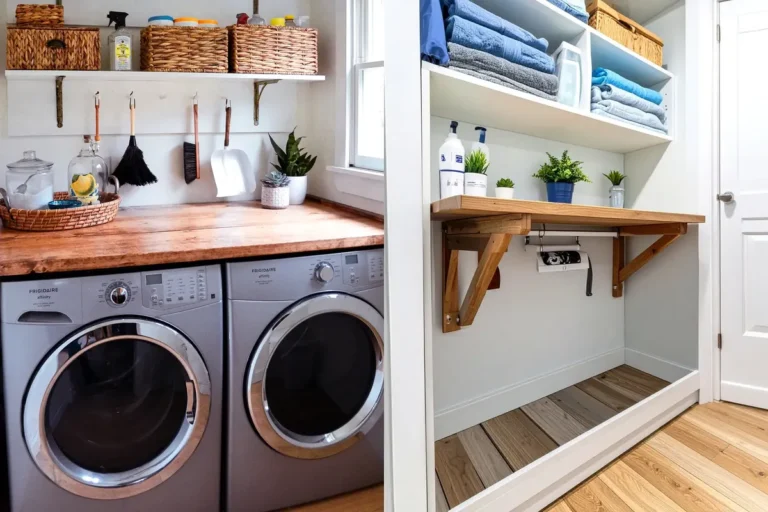
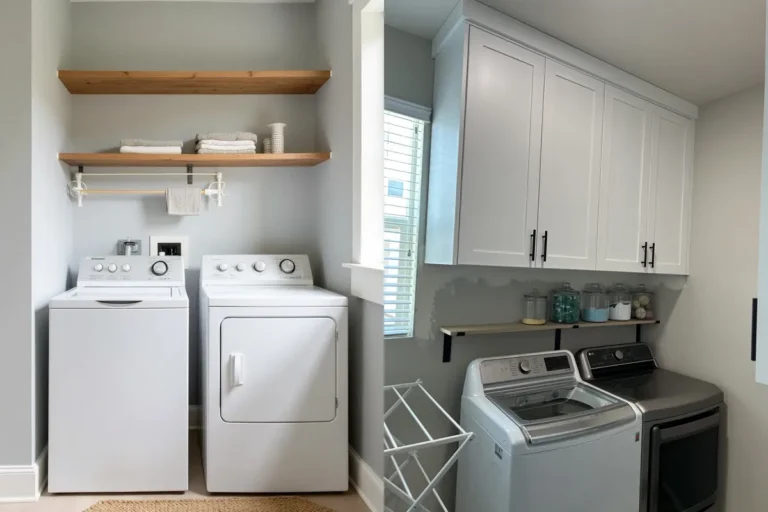
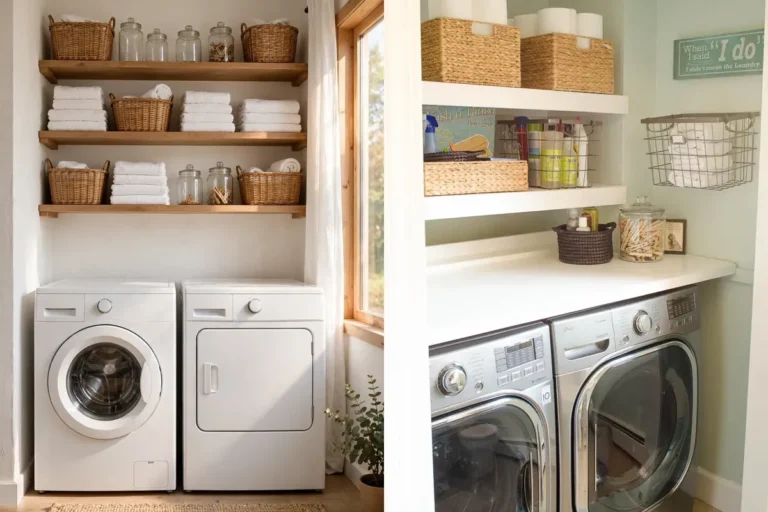
Blank wall above the washer is the most valuable storage spot in a cabinet free room. Two or three floating shelves there hold detergent, stain remover and folded towels right where your hands already reach during a wash. Because the shelves are open, every item stays visible, so nothing gets forgotten at the back and restocking takes seconds.
Keep the lowest shelf about 40 centimetres above the machines so bottles slide in and out easily. Group products by job, washing on one shelf and cleaning on the next, and add one small basket for loose items like pegs and lint rollers. A row of matching jars or baskets stops open shelves looking messy.
Over Door Storage Rack
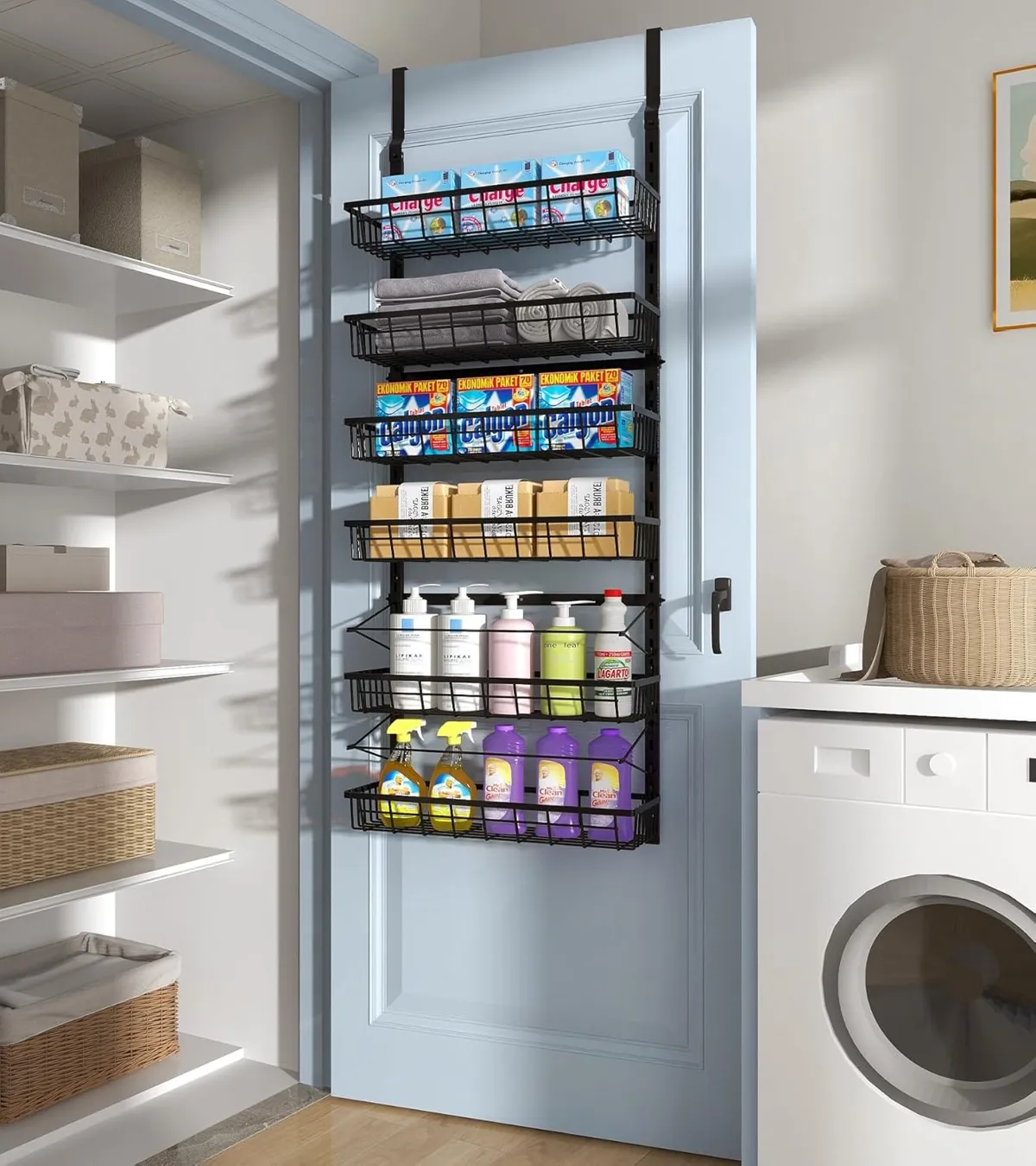
The back of the laundry door is storage space most people walk past every single day.
- Steel racks hook over the door top in seconds, with no drilling and no marks left behind.
- Wide shelves suit detergent bottles, spray cleaners and spare rolls of paper towel.
- Slim lower shelves hold dryer sheets, pegs and small cloths that usually scatter across the machine tops.
- Renters love this option because the whole rack lifts off cleanly on moving day.
- Check the door still closes fully before loading the top shelf with heavy bottles.
In my experience this one rack can free an entire shelf elsewhere in the room. Put daily products at eye level, refills up high, and the door stops being dead space within one afternoon.
Rolling Three Tier Cart
Quick Tip:
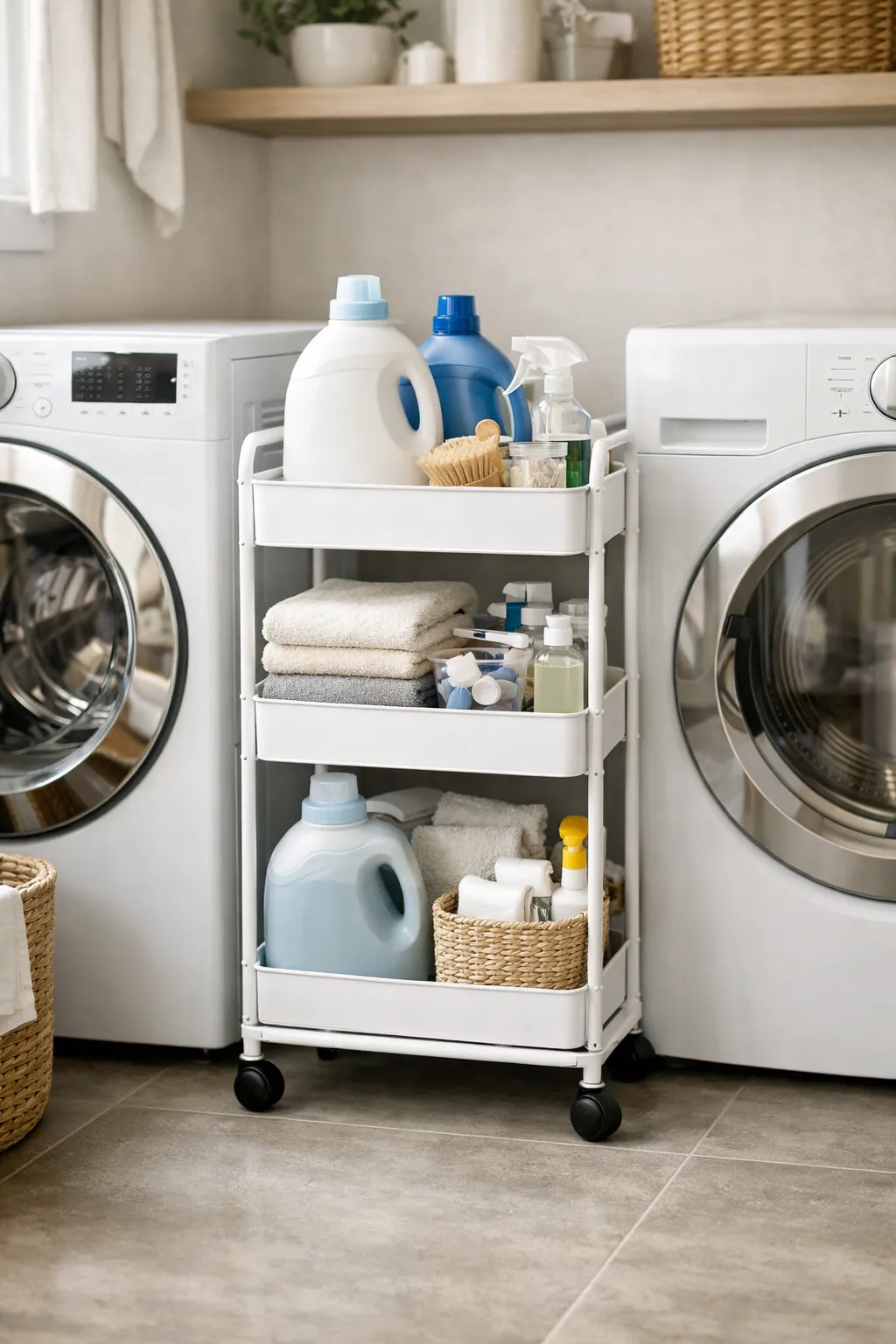
A slim rolling cart turns the awkward gap beside the washer into a pull out pantry for laundry supplies. Choose one with three tiers, sort by task from top to bottom, and roll it out only when you need something, then push it back so the room stays clear.
Metal carts handle heavy detergent bottles best, while lighter plastic ones suit towels and cloths. Measure the gap before ordering, because carts come in widths from about 12 centimetres upward. A cart that fits snugly looks built in, costs very little, and keeps the floor easy to mop since nothing sits in piles around the machines.
Woven Baskets On Floor
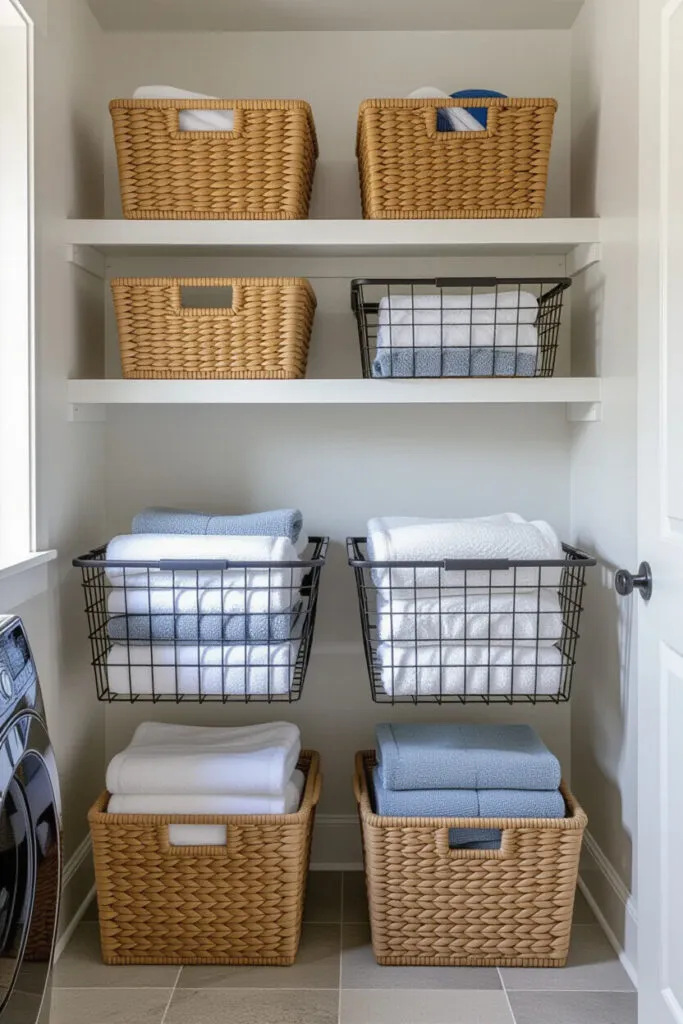
BEFORE: Dirty laundry, clean towels and cleaning cloths shared one growing pile in the corner, and sorting meant digging through everything on wash day morning.
AFTER: Three woven baskets sit in a neat row, one for whites, one for colours and one for towels. Each load goes straight into its own basket, and the natural texture makes the corner look styled rather than stored.
Floor baskets need no fixing, no tools and no landlord approval, which makes them the fastest starting point on this whole list. Choose lined baskets for delicates, keep one empty spare for bedding days, and shake them out weekly so dust never settles into the weave.
Wall Mounted Hooks Row
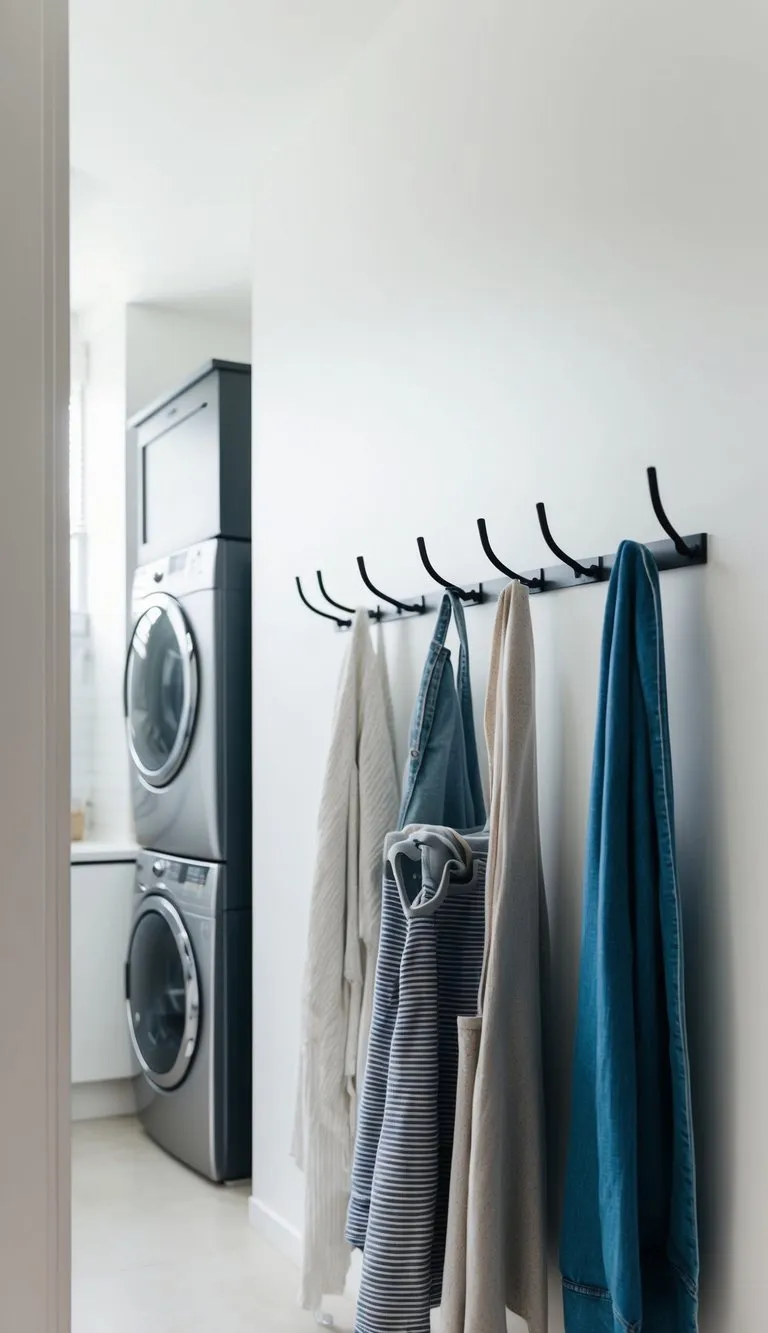
- Choose a wall strip near the door or beside the sink, at a height everyone can reach.
- Fix a row of four to six sturdy hooks into studs or solid plugs, spaced a hand width apart.
- Hang the ironing board, mop, dustpan and a mesh bag for delicates on separate hooks.
- Add one hook just for hangers, so shirts can drip dry without crowding the room.
- Label each hook with a small tag if family members keep swapping spots.
Long items stored flat against the wall stop leaning, falling and tangling in corners. A hooks row costs very little, takes under an hour to fit, and keeps daily tools visible enough that putting them back becomes automatic.
More Info : Smart Laundry Room Organization Tips for Small Spaces
Tension Rod Supply Holder
DO:
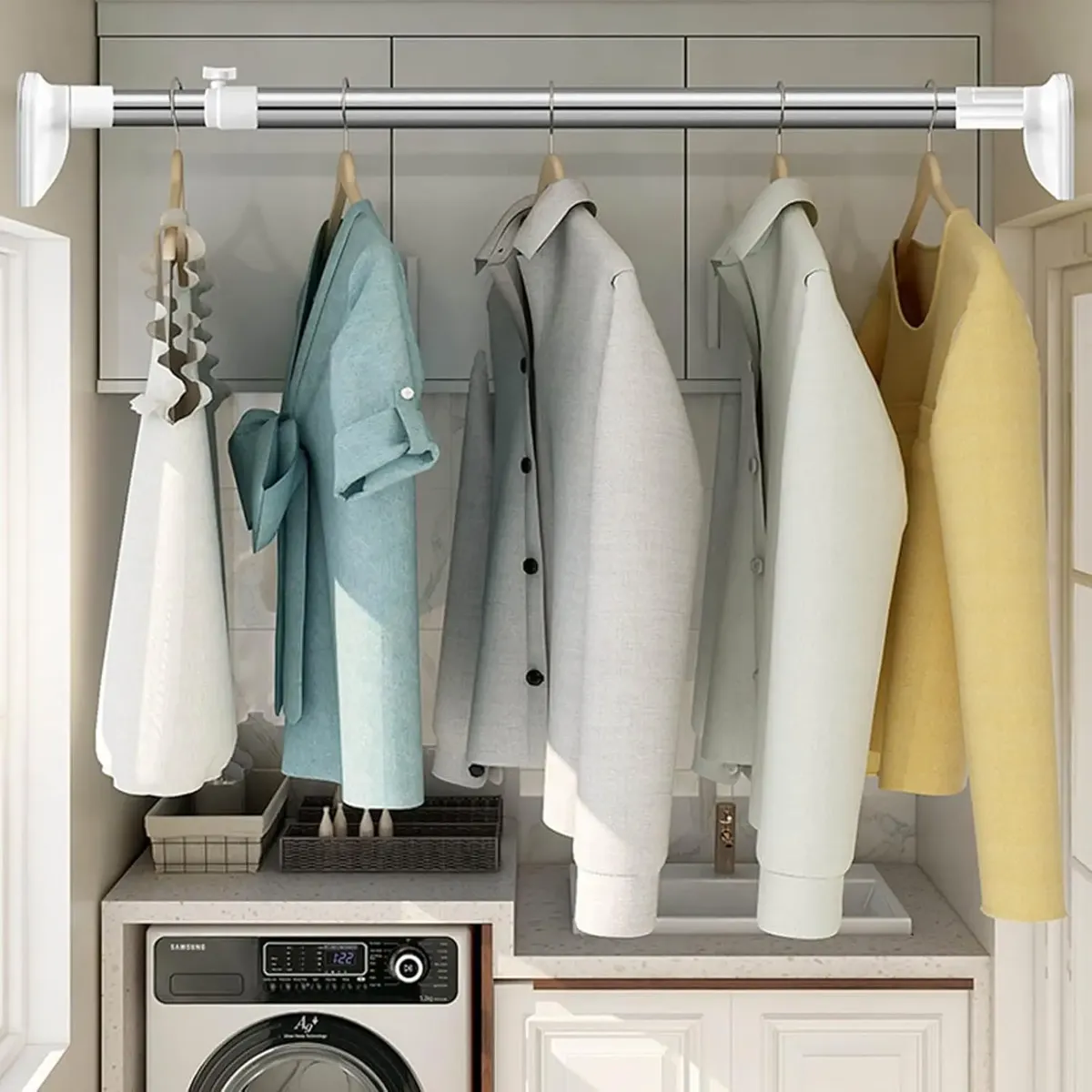
- Wedge a tension rod between two walls or inside a window recess above the sink.
- Hang spray bottles by their triggers along the rod, labels facing forward.
- Slide a few S hooks on for cloths, brushes and a small hanging basket.
- Twist the rod firmly and test it with one bottle before loading it fully.
DON’T:
- Hang glass jars or very heavy bottles that could slip and smash.
- Place the rod where wet hands knock bottles down during every wash.
- Forget to wipe the rod monthly, since laundry rooms gather fine dust.
Few storage tricks feel as clever as bottles hanging in mid air, using space that was doing nothing at all. It suits renters perfectly because the rod leaves no holes, and it comes down in seconds.
Pegboard Tool Wall
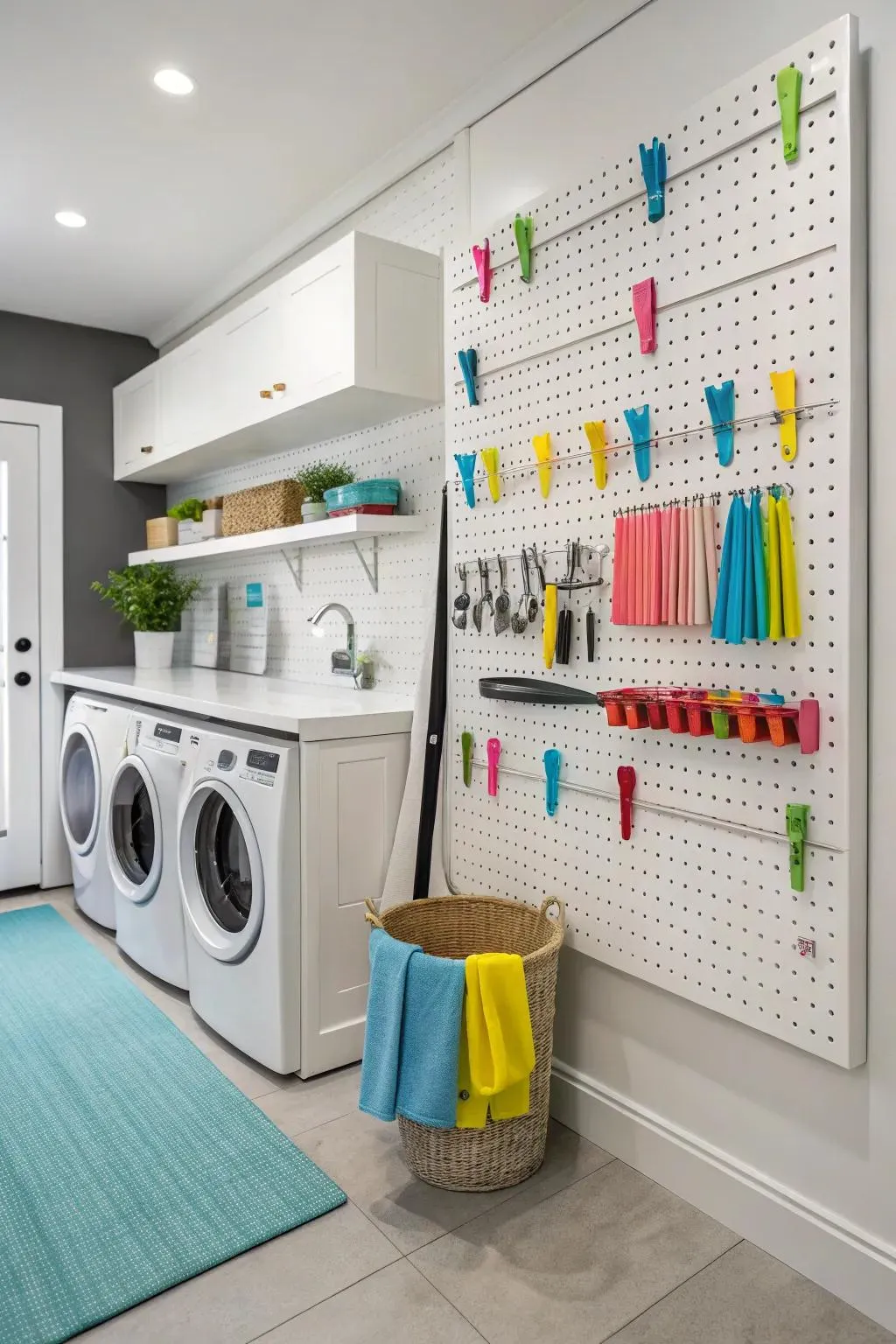
Cost: Low, one board plus a starter pack of hooks
Time: About one hour to hang and arrange
Skill Level: Beginner, basic drill work only
Best For: Brushes, scissors, lint rollers and small tools
A pegboard turns one flat wall into a flexible grid where every small tool gets its own hook. Move the hooks whenever your routine changes, add a small wire basket for pegs, and outline each item with a marker line if you like the shadow board look. Small tools stop vanishing into drawers that a cabinet free room does not have anyway.
Blanket Ladder Shelf
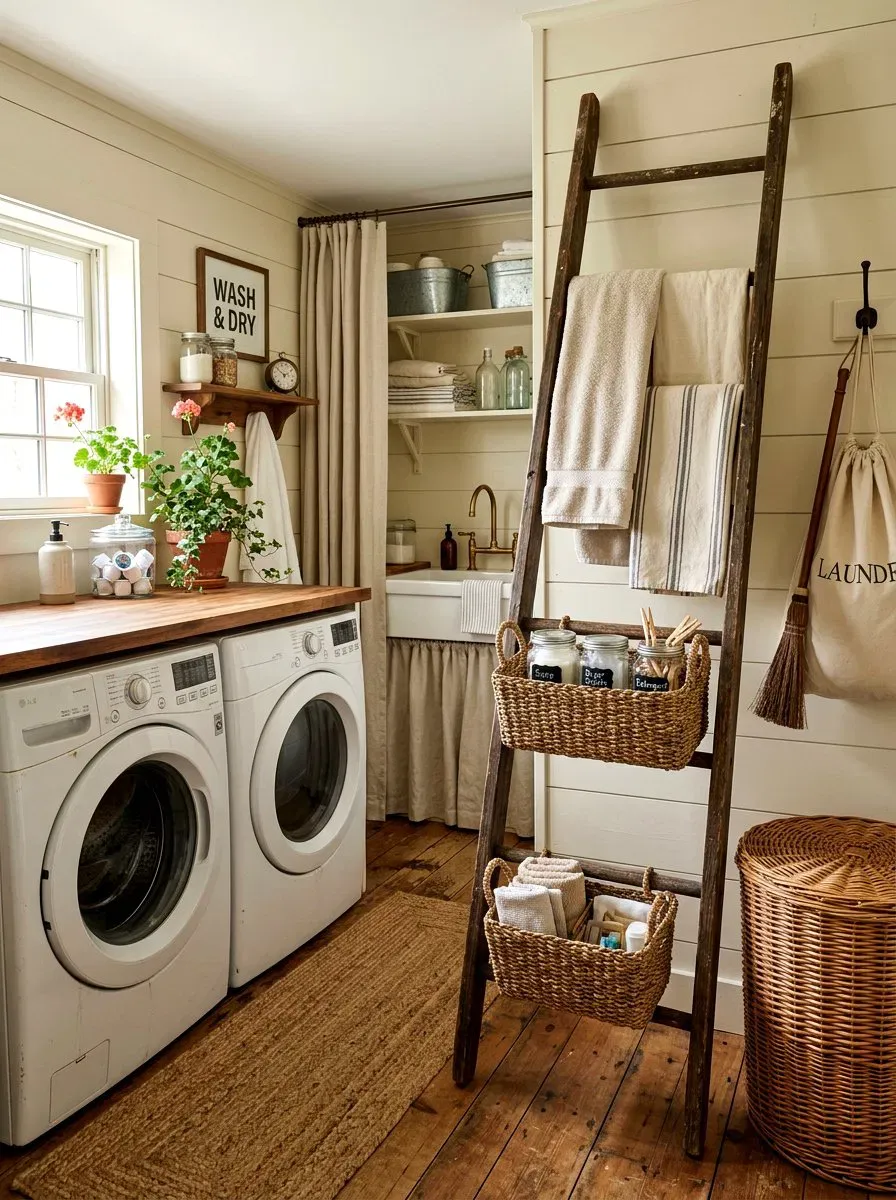
Leaning a wooden ladder against the wall gives a small laundry room storage that also looks like decor. Draped towels dry faster over the rungs than in a heap, spare blankets fold neatly over the top bars, and a hanging basket on one rung keeps pegs or cloths within reach. The footprint is tiny because the ladder hugs the wall.
Paint an old ladder in a colour that matches your walls, or leave natural wood for warmth against white tiles. Stand it beside the dryer, away from the main walkway, and use the lowest rung for the laundry basket handle so the whole setup stays in one tidy zone.
Stackable Wooden Crates
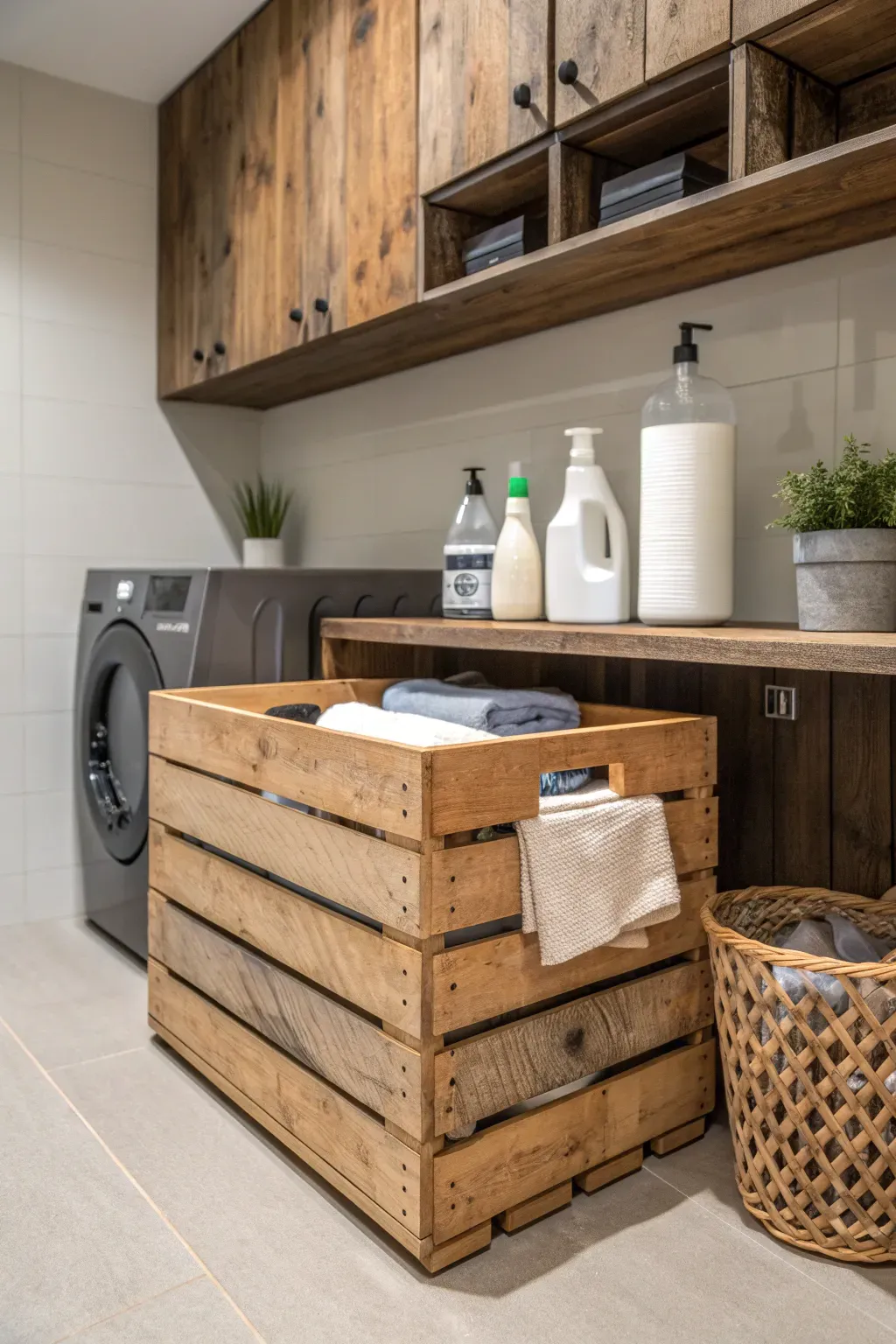
Old fruit crates and simple wooden boxes stack into storage that grows one box at a time.
- Stand two crates side by side for towels, then stack a third on top for cleaning refills.
- Turn one crate on its side to make an open shelf for folded bedding.
- Sand rough edges and add small felt pads so crates never scratch the floor or machines.
- Handles cut into the sides make each crate easy to lift down when it is full.
- A coat of white or pastel paint ties odd crates together into one calm set.
Crates suit slow, budget friendly building: buy one this month, another next month, and rearrange the stack whenever the room changes. I’ve noticed crate stacks also work brilliantly as a low bench for sitting while you sort socks.
Freestanding Shelf Tower
Quick Tip:
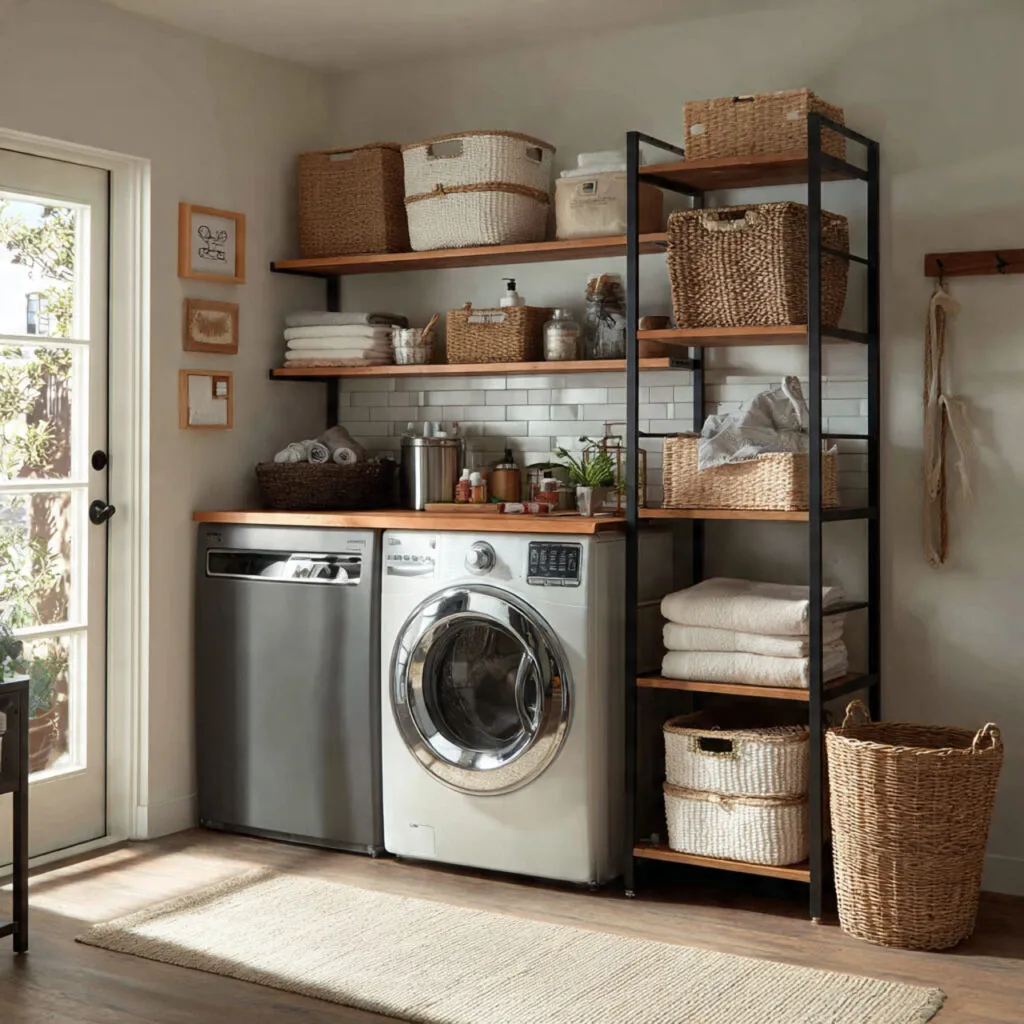
A tall, narrow shelf tower borrows only a square of floor about the size of a dinner tray, yet gives you four or five open levels. Put heavy bottles on the bottom shelf for balance, towels in the middle, and light baskets up top.
Choose a tower with raised edges or add small rails so bottles cannot vibrate off during spin cycles. Towers with adjustable shelves flex as your supplies change, and because nothing fixes to the wall, the whole unit moves rooms in minutes. It is the closest thing to a cupboard on this list, with none of the cost or commitment.
Hanging Rail With Hooks
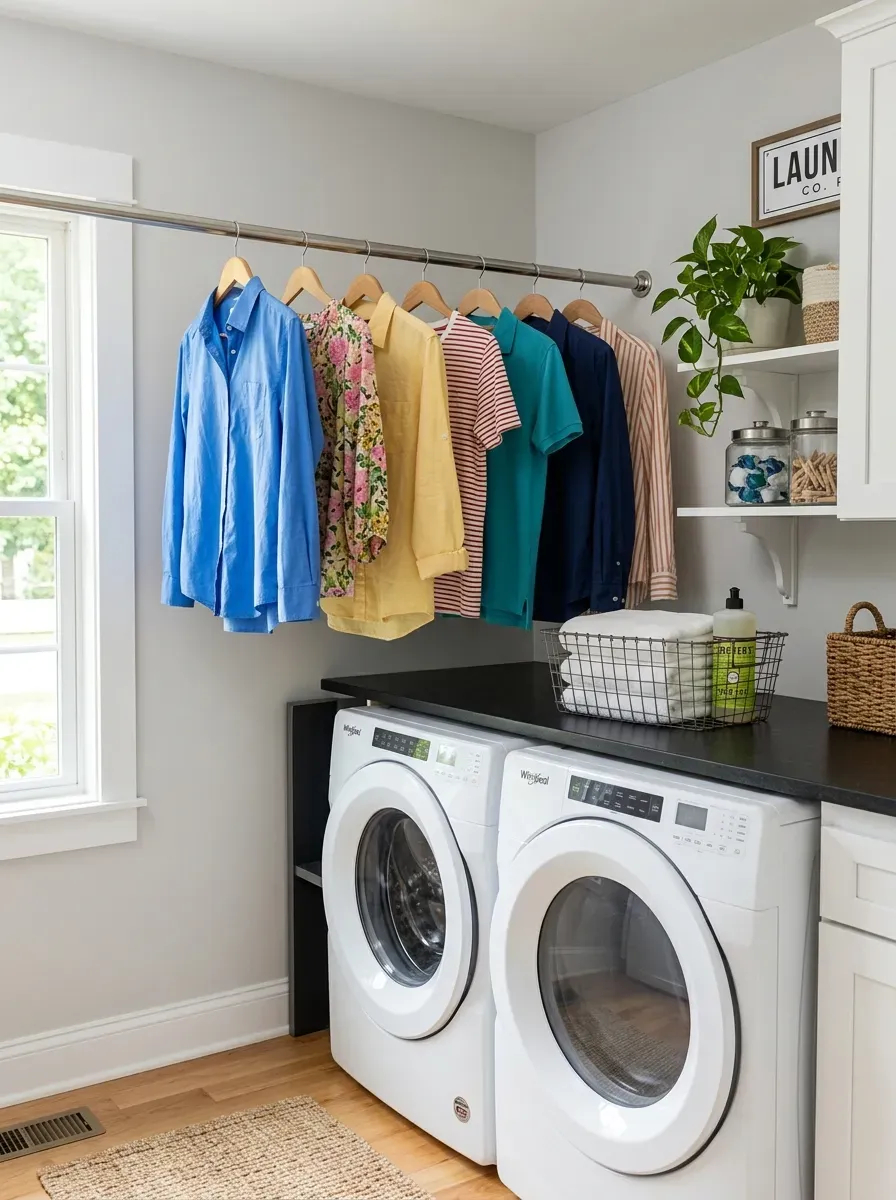
BEFORE: Freshly washed shirts draped over door handles and chair backs, creasing as they dried and making the small room feel crowded all day.
AFTER: A simple wall rail with S hooks runs above the machines, holding hangers in one neat line. Shirts dry straight, the floor stays clear, and ironing time drops because nothing dries in a crumpled heap.
Kitchen style rails work just as well here as fancy laundry fittings, and cost far less. Hang the rail high enough that long dresses clear the machine tops, keep spare hooks in a jar nearby, and the rail doubles as storage for the iron and steamer between washes.
Clear Jars On Shelves
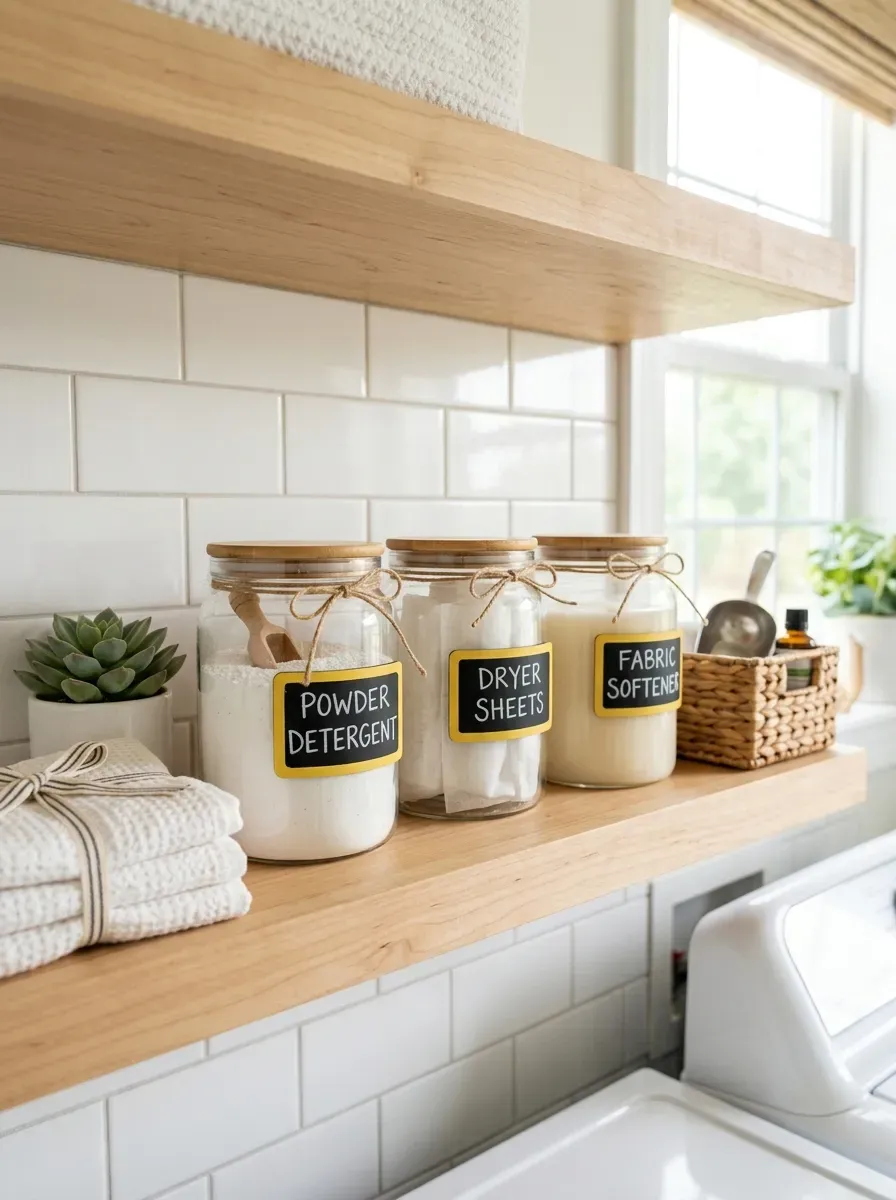
- Pour powder detergent, soda crystals and scent boosters out of bulky branded boxes into clear glass or plastic jars.
- Add a simple label with the product name and any dosing notes your family needs.
- Line the jars along one open shelf in size order, tallest at the back.
- Keep one small scoop in each jar so measuring never means hunting through drawers.
- Refill from bulk bags stored elsewhere, so the shelf only ever holds what looks tidy.
Seeing exactly how much product is left ends the surprise empty box on wash day. Jars also pour more cleanly than floppy bags, and a matching set turns everyday supplies into part of the room’s style.
More Content : Clever Laundry Room Storage Ideas for Small Spaces
Slim Gap Rolling Trolley
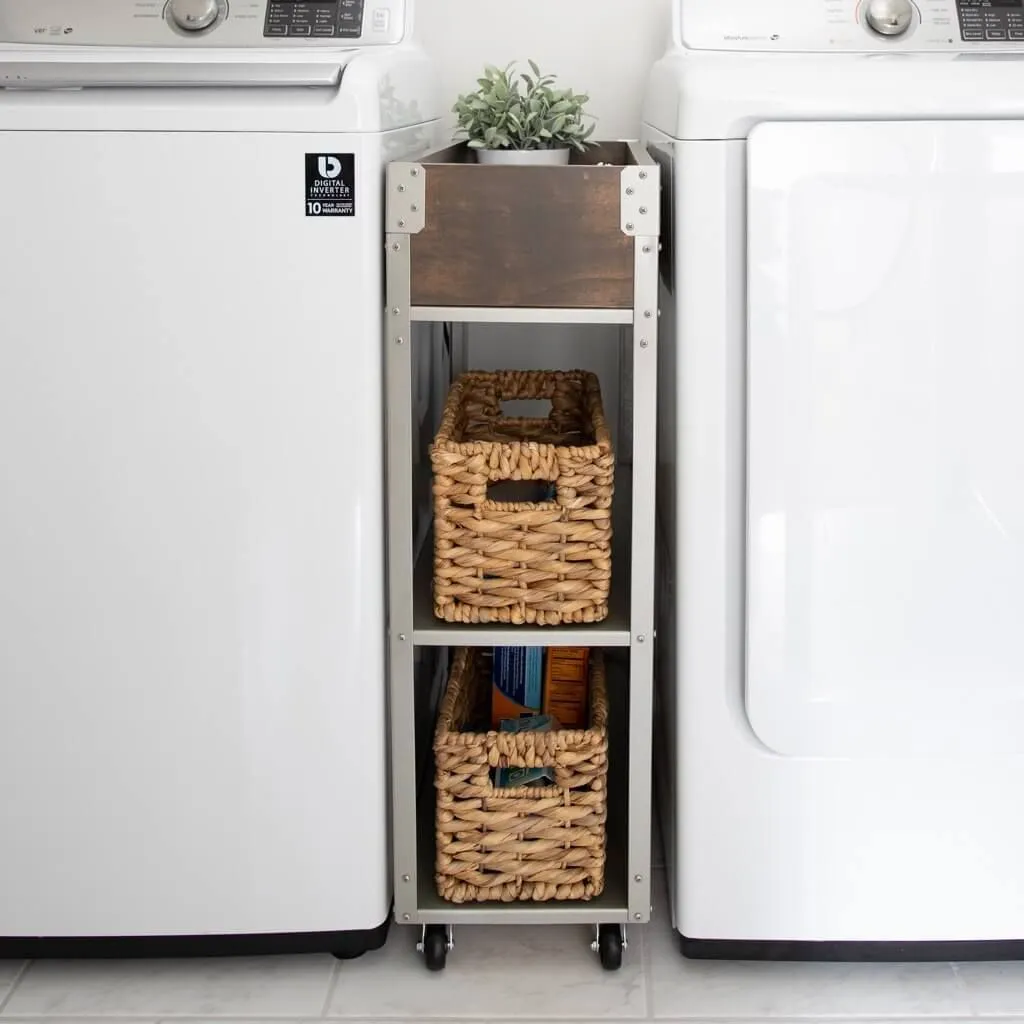
DO:
- Measure the gap between washer and wall or between the two machines before buying anything.
- Pick a trolley with at least three slim shelves and smooth, quiet wheels.
- Store tall thin items there: stain sprays, fabric softener, spare peg bags.
DON’T:
- Force a trolley into a gap so tight that the sides scrape on every pull.
- Store bleach where children can reach it at the trolley front.
- Overload the top shelf, which makes narrow trolleys tippy.
That forgotten slot of dead space often measures barely 15 centimetres, yet a trolley turns it into one of the hardest working spots in the room. In my experience, guests always ask about this one.
Magnetic Strip For Small Tools
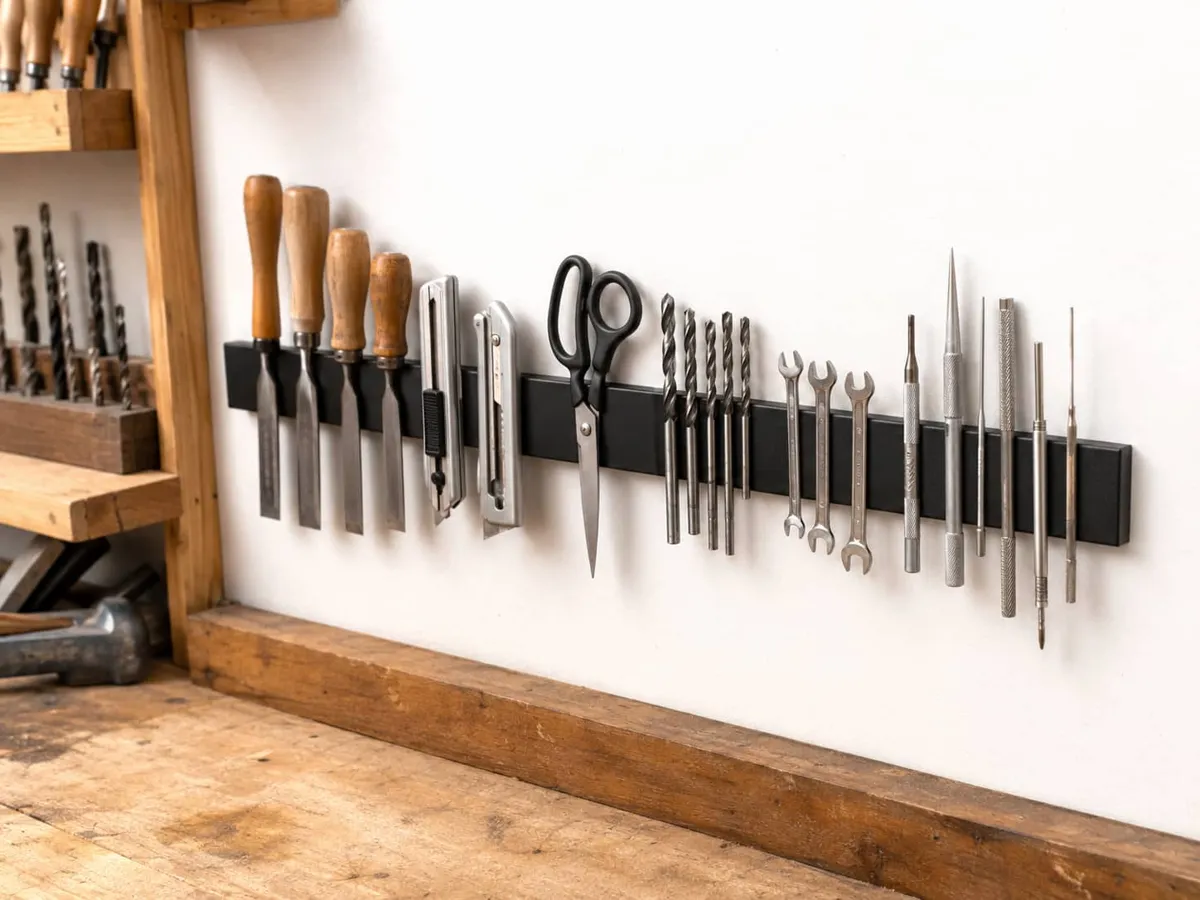
Cost: Very low, one strip plus screws or strong adhesive pads
Time: Fifteen minutes to fit
Works In: Any room with a free strip of wall near the door
Best For: Scissors, tweezers, safety pins and metal clips
Loose metal bits are the first things to vanish in a busy laundry room, usually into the drum or the floor drain. A magnetic strip on the wall gives scissors, clips and the safety pins from new clothes a visible home they snap back onto. Fit it at adult eye level, away from small hands, and enjoy never fishing for a lost pin again.
Under Shelf Hanging Baskets
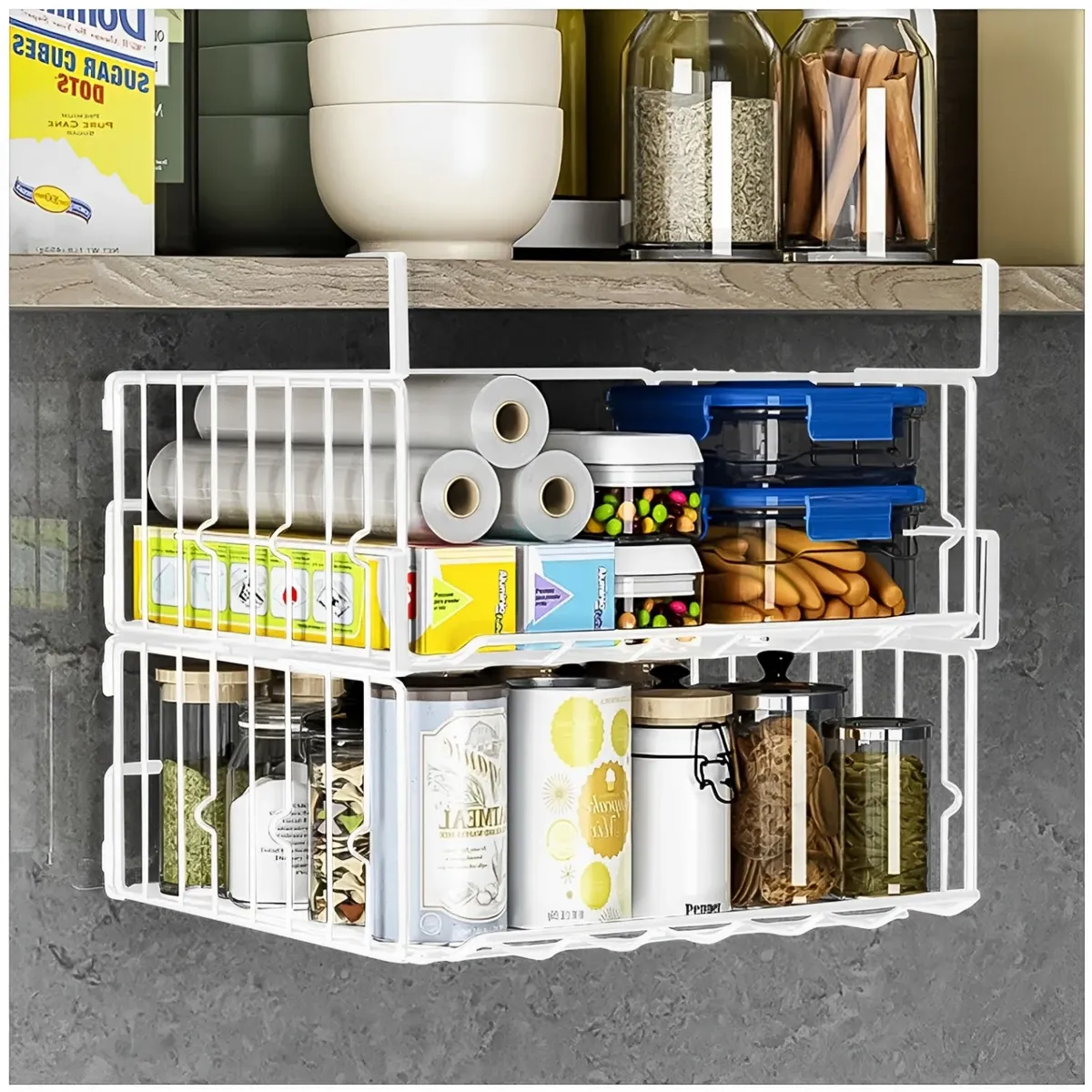
Wire baskets that hook under an existing shelf double that shelf without a single new fixing. The top surface keeps its bottles and jars, while the basket below cradles dryer sheets, cloths and peg bags that used to drift around the room. It is storage built out of thin air, in the gap most rooms waste completely.
Slide the basket hooks fully onto the shelf edge so nothing swings when the machines vibrate. Reserve the under shelf spot for light, flat items rather than bottles, and group one job per basket: laundry extras under one shelf, cleaning cloths under another, so your hands learn exactly where to reach.
Fold Down Wall Table
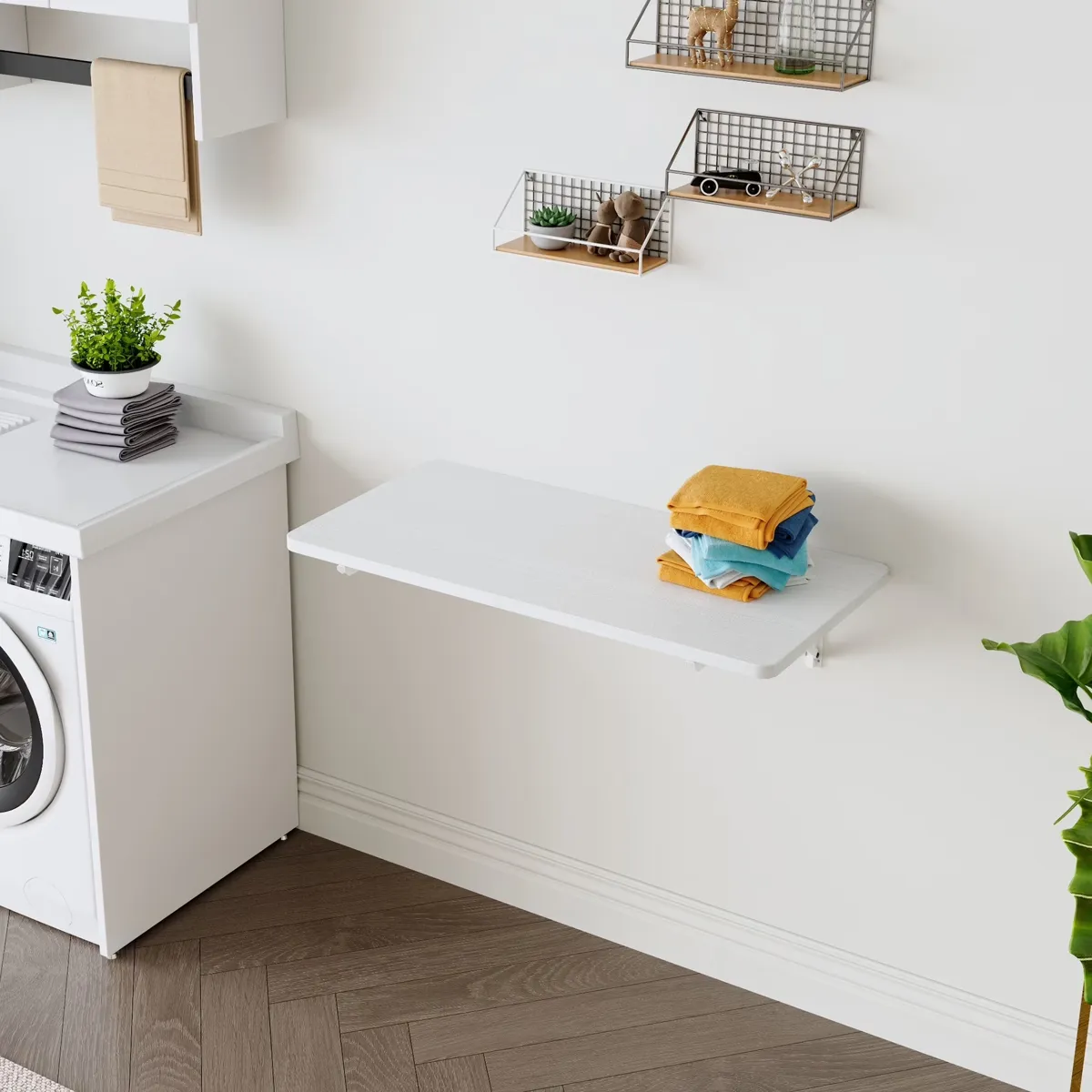
Folding laundry is where small rooms hurt most, and a wall mounted table that drops down solves it without eating floor space.
- The tabletop hinges flat against the wall, then folds down only for the ten minutes you actually fold.
- Mount it at standing elbow height so folding never means bending over a low basket.
- A small shelf or basket under the tabletop holds hangers and the lint roller.
- Painted or wooden tops double as a styling surface for a plant between washes.
- Strong brackets matter: choose a set rated well above a full load of wet towels.
Renters should check with the landlord first, since brackets need solid screws. Everyone else gains a folding station that vanishes after use, which is exactly what a tiny room needs from its furniture.
Corner Pole Shelves
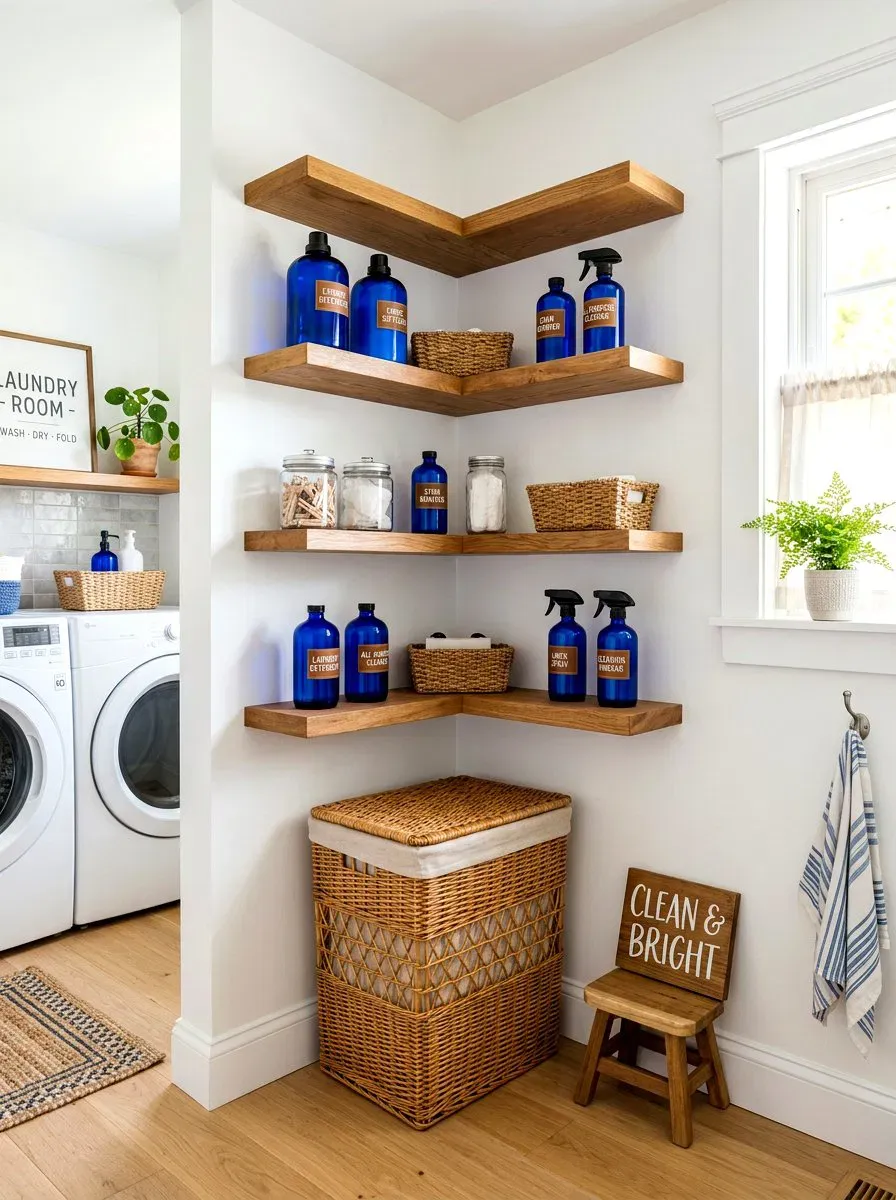
Quick Tip:
A tension pole with small corner shelves twists tight between floor and ceiling and needs no screws at all. Fit it into the dead corner beside the dryer, stack spare towels and refill bottles on its trays, and the corner finally earns its keep.
Pole shelves suit renters who cannot drill, and the trays rotate on many models so nothing hides at the back. Keep heavier bottles on the lowest tray for balance, and leave the top tray for light rolls of bin bags or dusters. Measure your ceiling height first, since poles come in fixed ranges.
Clear Pocket Door Organizer
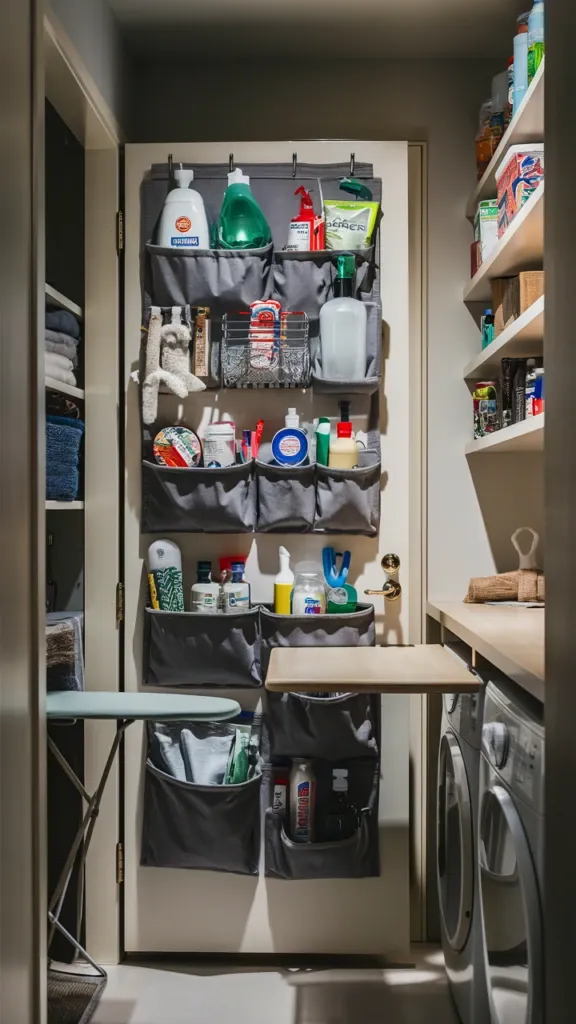
BEFORE: Small supplies lived in a jumble: shoe polish beside stain remover, spare buttons in a mug, and a sewing kit nobody could find when a shirt lost a button.
AFTER: A clear pocket organizer hangs on the door, each see through pocket holding one small job. Everything shows at a glance, so grabbing the right item takes two seconds, and nothing small gets buried again.
Originally sold for shoes, these organizers are perfect for the little things laundry rooms collect. Hang one inside a utility door if the laundry door faces the room, keep heavy bottles out of the bottom pockets, and give children their own low pockets for pegs so helping stays fun.
Triple Sorter Hamper Stand

- Set up the folding frame in the spot where clothes usually land, often beside the washer door.
- Hang the three bags and label them clearly: whites, colours and delicates.
- Sort each item at the moment it comes off, not on wash day morning.
- Lift out one full bag at a time and carry it straight to the machine.
- Wash the bags monthly with a towel load so the sorter itself stays fresh.
Sorting at the source removes the worst ten minutes of laundry day entirely. A stand with removable bags also travels well, so students and renters keep the same calm system in every home they live in.
Washer Top Storage Tray
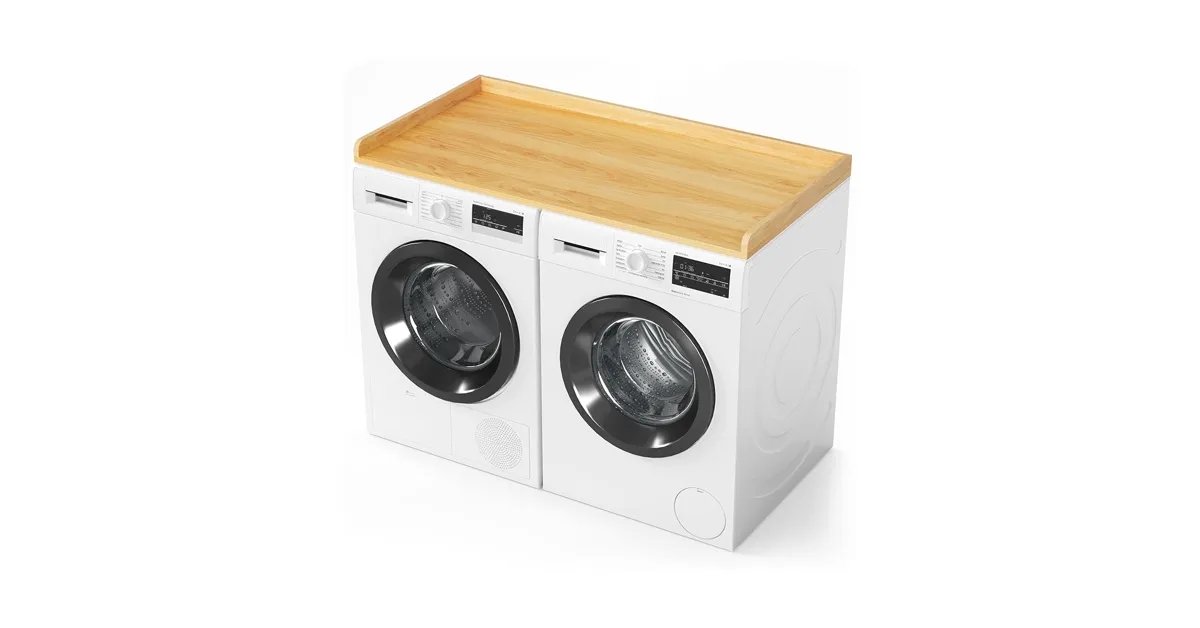
DO:
- Lay a wooden or bamboo tray across the top of the washer to corral daily bottles.
- Choose a tray with a raised lip so nothing slides off during the spin cycle.
- Keep only the current detergent, softener and stain spray on it, nothing more.
- Wipe the tray weekly, because drips collect fast near open bottles.
DON’T:
- Cover the machine controls or the detergent drawer with the tray edge.
- Balance tall glass bottles where vibration can walk them to the edge.
- Let the tray become a dumping ground for keys, coins and pocket clutter.
Flat machine tops invite mess, and a simple tray gives that mess a border. I’ve noticed the room looks calmer within minutes, because the eye reads one neat tray instead of six scattered bottles.
Retractable Wall Clothesline
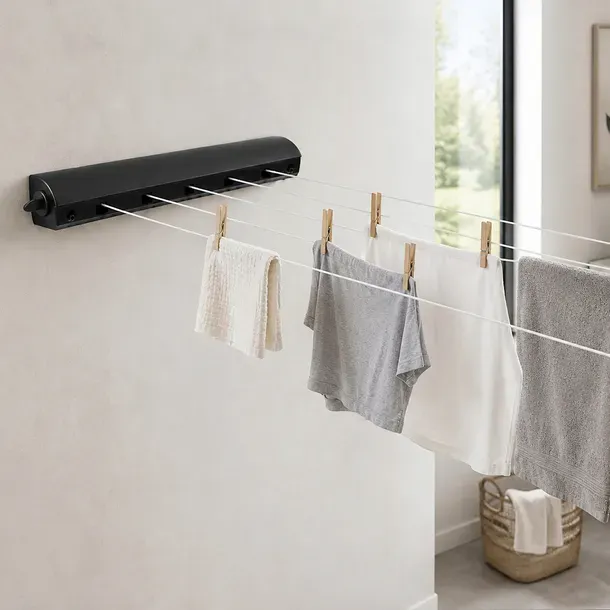
Cost: Low, a single unit with lines included
Time: Twenty minutes to mount both ends
Result: Metres of drying line that vanish when not in use
Best For: Small items, delicates and rainy day overflow
Indoor drying space is storage in disguise, and a retractable line gives you several metres of it only when needed. Pull the lines across the room for socks and delicates, unclip them afterwards, and the walls look bare again. Mount the unit where air moves, near a window or fan, so washing dries fresh instead of musty.
Ceiling Pulley Drying Rack
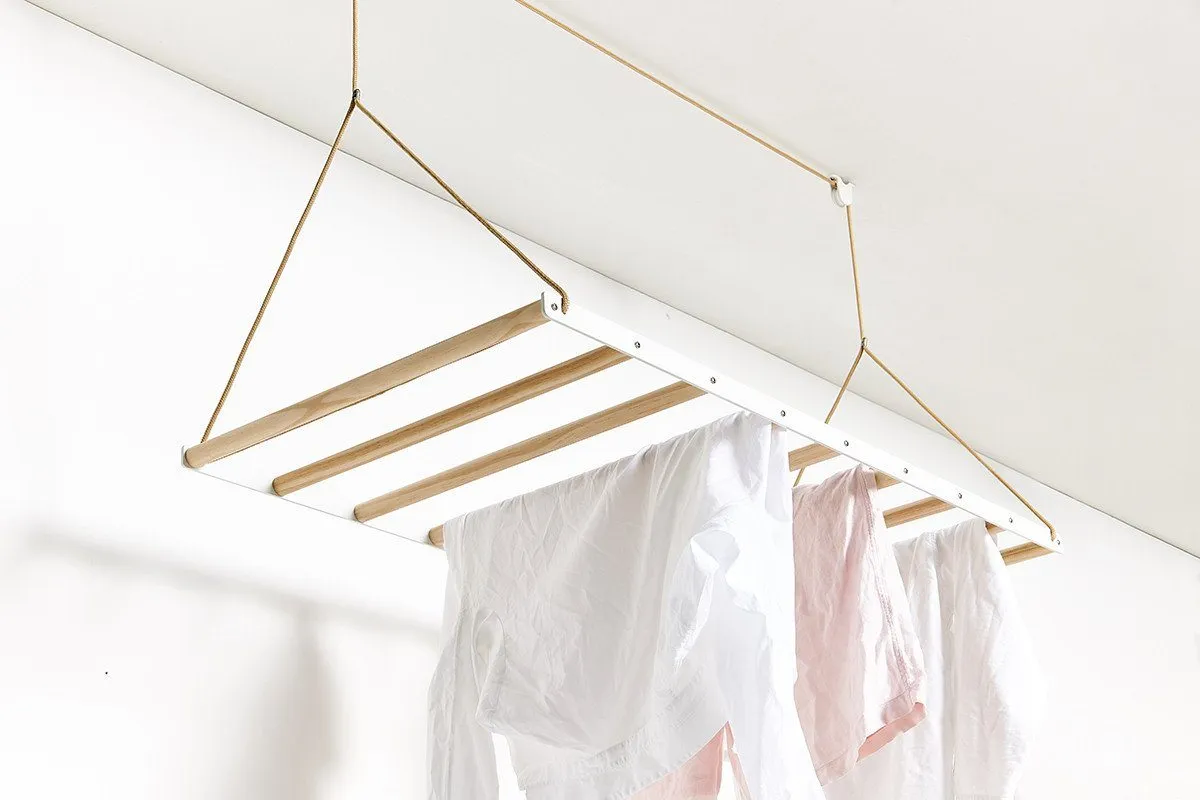
Warm air rises, which makes the ceiling the fastest drying zone in the whole house, and a pulley rack puts it to work. Wooden or metal slats hang from cords, loading at waist height, then hoist up out of the way with a gentle pull. Sheets, shirts and towels dry overhead while the floor and walls stay completely free for storage and movement.
Older homes used these racks for generations, and modern versions suit small rooms beautifully. Fix the pulleys into ceiling joists so the rack carries a full wet load safely, and route the cord to a wall cleat at a height children cannot reach. It is the hardest working idea here for rooms with tall ceilings.
Freestanding Garment Rack
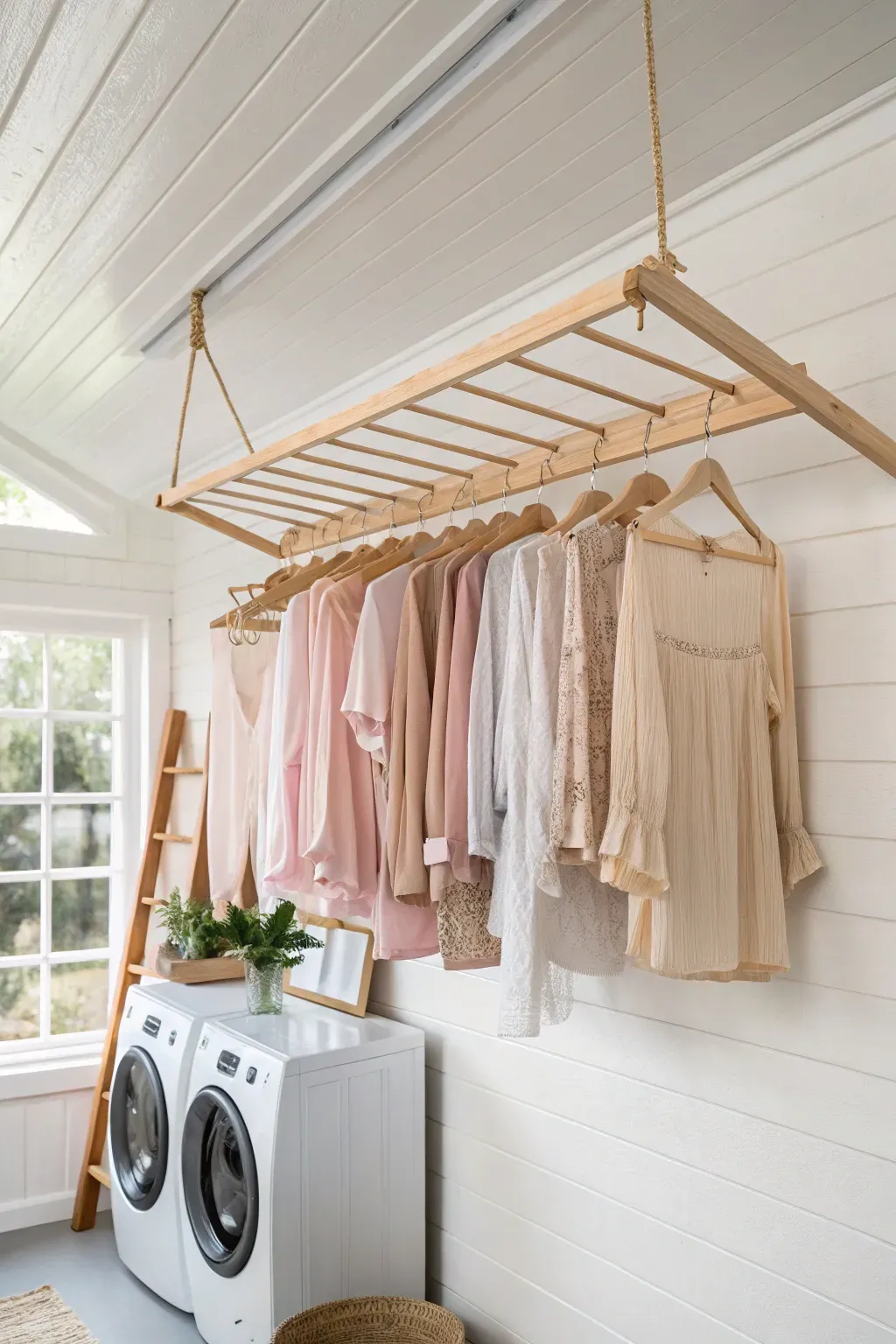
A slim garment rack on wheels stands in for the hanging space a cabinet free room never had.
- Roll it beside the dryer on wash day, then park it against the wall when guests come.
- Hang shirts straight from the drum so creases fall out while they dry.
- The lower bar or shelf holds a basket of pegs, hangers and the steamer.
- Simple metal frames cost little and assemble with no tools in most cases.
- A wooden top rail version doubles as an attractive spot for tomorrow’s outfit.
Families who iron in batches gain the most, since a full load can hang in one place awaiting the board. Choose locking wheels if your floor slopes, so the rack stays exactly where you park it.
Stackable Open Front Bins
Quick Tip:
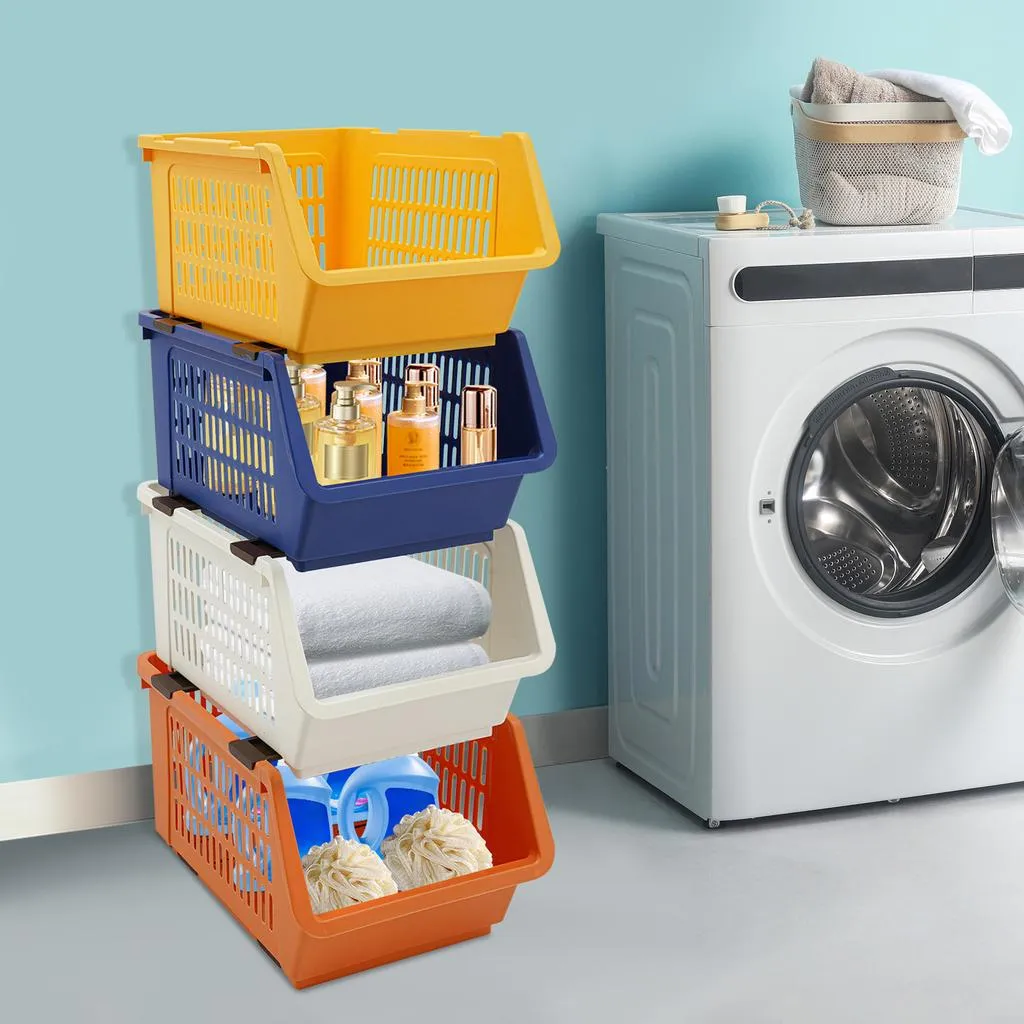
Open front bins stack like building blocks, and the angled opening lets you grab supplies without unstacking anything. Give each bin one category, label the front edge, and keep the stack to three bins high so nothing topples when the top bin is full.
These bins shine for family laundry rooms where several people fetch things daily. Put kids’ swim towels and sports kits in the lowest bin at their height, cleaning refills at the top, and enjoy a system everyone can use without asking where anything lives.
Fold Away Wall Drying Rack
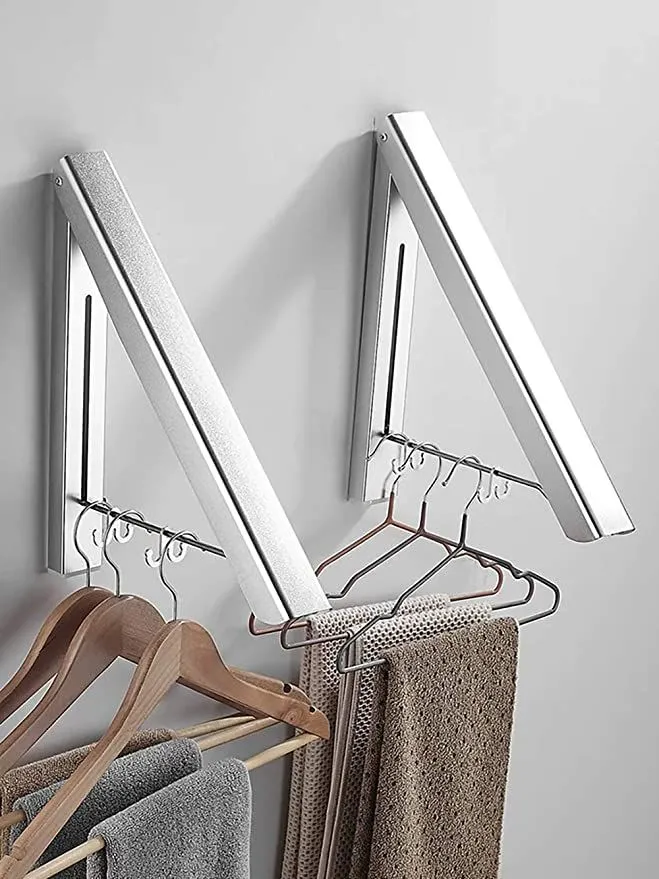
BEFORE: A concertina drying rack lived permanently in the middle of the floor, everyone squeezing past it sideways and knocking socks onto the tiles.
AFTER: An accordion style rack fixed to the wall pulls out for drying day and folds back flat afterwards. The walkway stays open, the rack is always where you left it, and nothing needs storing because the storage is the wall itself.
Wall racks carry surprising weight when fixed into studs, including jeans and bath towels. Fit one above basket height so drips land on washable floor, not stored items, and keep a second smaller rack near the sink if hand washing is part of your weekly routine.
Behind Door Slim Tower
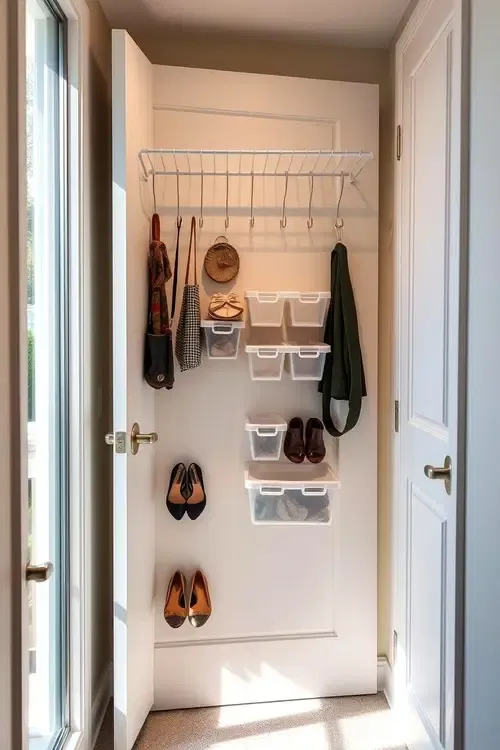
- Open the laundry door fully and measure the gap between door and wall honestly.
- Choose a slim tower or over door shelf unit shallower than that gap, often under 12 centimetres.
- Fit door stoppers so handles never bang into stored bottles.
- Fill the shelves with flat, light items: dryer sheets, cloths, spare sponges and refill pouches.
- Test the door swing with the tower loaded before calling the job done.
Hidden storage feels like a bonus room you did not know you had. Because the tower hides behind the door, it suits very small rooms where every visible shelf adds visual noise you would rather avoid.
Wheeled Woven Hamper
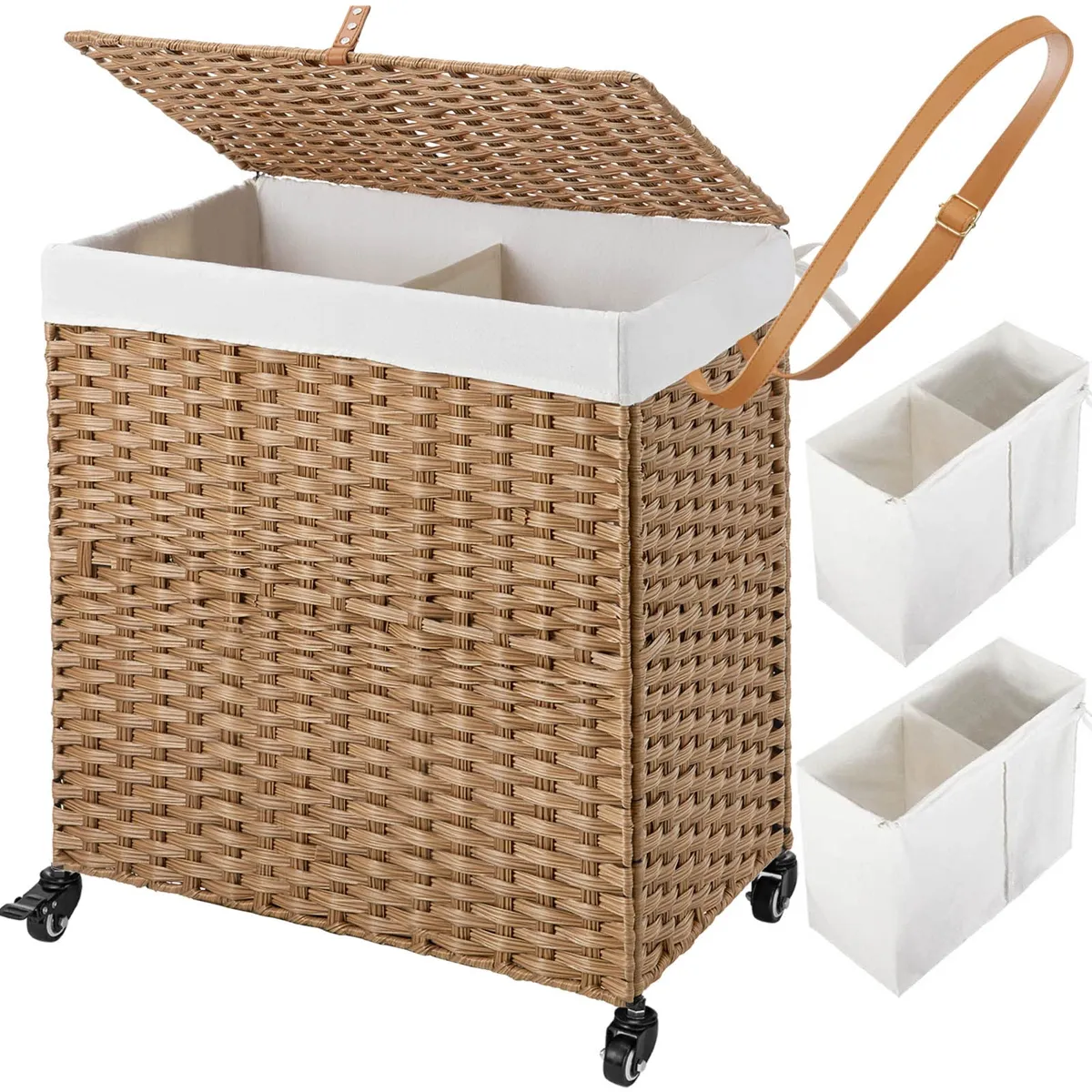
DO:
- Pick a hamper with a washable liner bag that lifts out for carrying.
- Roll it from bedroom to laundry room instead of dragging armfuls of clothes.
- Choose wheels that swivel, so tight doorways and corners stay easy.
- Keep one hamper per person in busy homes, each in a different weave or colour.
DON’T:
- Overfill past the rim, which strains the handles and the weave.
- Store damp towels inside for days, since natural fibres need air.
- Park it against a warm dryer vent where heat dries the fibres out.
A hamper on wheels quietly removes the heaviest chore in laundry: moving the clothes themselves. In my experience it also encourages teenagers to deliver their own washing, which might be the best storage win of all.
Open Cubby Wall Grid
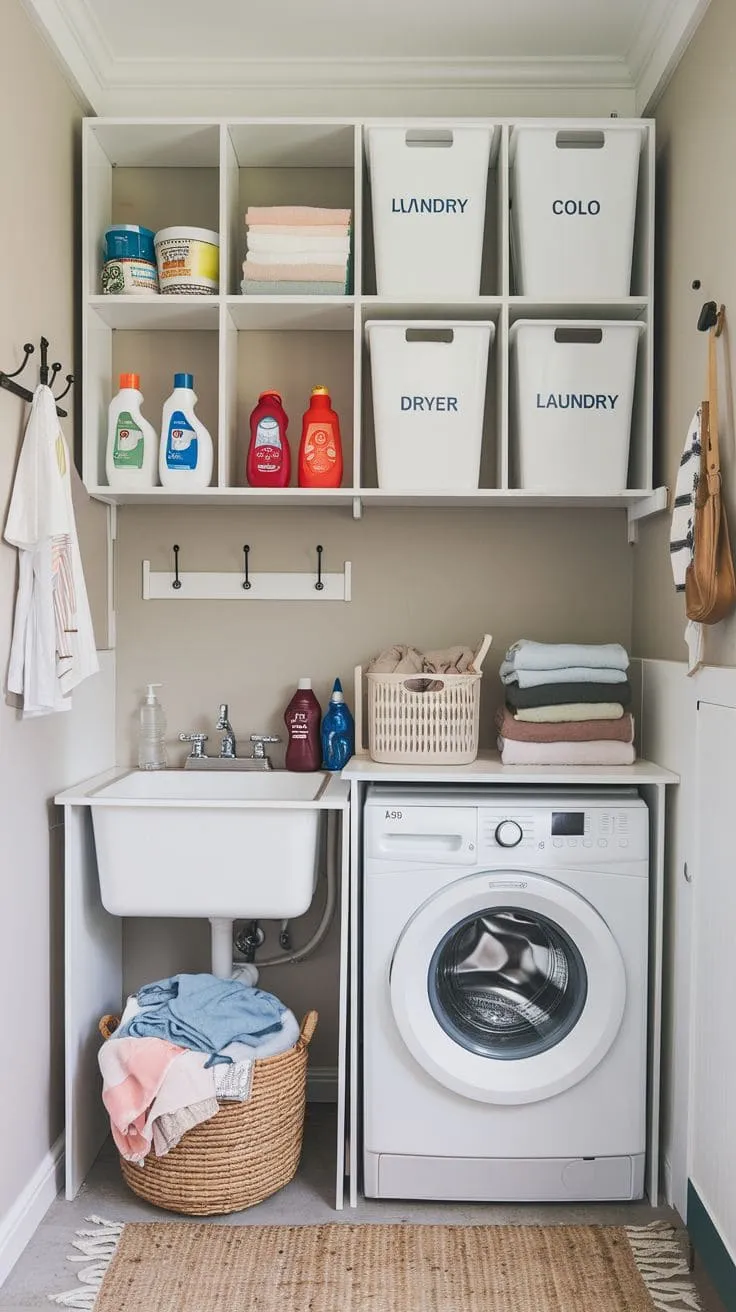
Cost: Mid range for a full grid, low for four boxes
Time: One to two hours with a level and drill
Skill Level: Confident beginner
Best For: Sorted family supplies and folded towel stacks
A grid of open cubby boxes on the wall works like a bookshelf built for laundry. Each square holds one thing well: rolled towels in one, wash bags in another, a plant and a jar of pegs in a third. Because every cubby is open and shallow, nothing hides, nothing stacks into a mess, and the grid itself looks like decor rather than storage furniture.
Hanging Mesh Sorter Bags
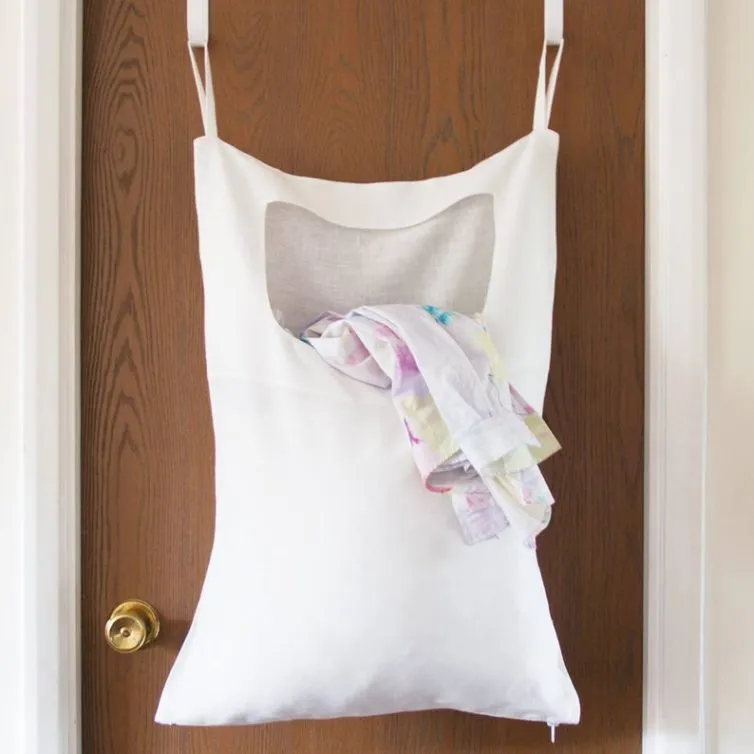
Delicates, socks and wash bags usually end up in a tangled drawer or draped over the tap, yet a row of hanging mesh bags gives each load its own breathable pocket. Hang the bags from hooks or the rail, drop items in through the day, and carry the whole bag to the machine when it fills. Mesh lets air through, so nothing smells stale while it waits for wash day.
Colour code the bags if several people share the room: one colour per person, or one for delicates and one for sports kit. The bags cost very little, wash along with their contents, and fold flat in a drawer when visitors come and you want the room looking minimal.
Wall Mounted Ironing Board
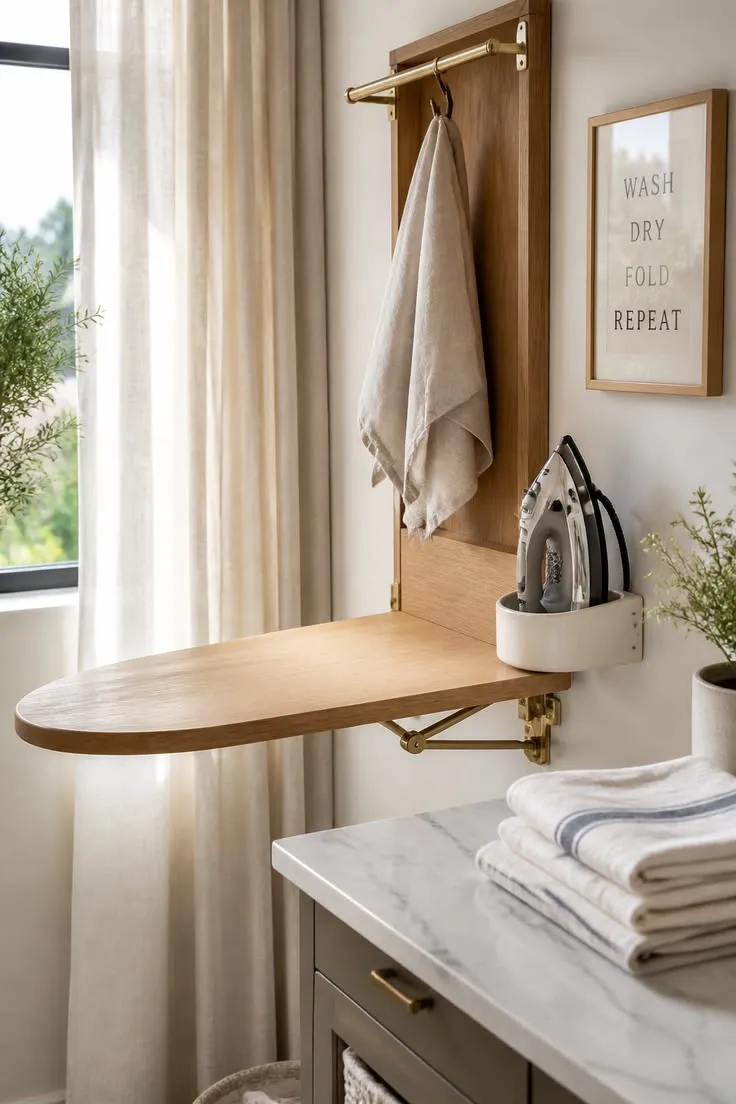
An ironing board leaning in a corner falls over weekly in most homes, so fix its home to the wall instead.
- Fold out boards mount inside a shallow frame and drop down only when ironing calls.
- Simple paired hooks hold a standard board flat behind the door or beside the shelves.
- Keep the iron on a heat safe wall shelf beside the board, cord wrapped neatly.
- A board stored vertically frees floor space for baskets and the sorter stand.
- Check the fold down path is clear of shelves before fixing the frame.
Ironing stops feeling like a production when the board appears in ten seconds and disappears just as fast. Pair it with the garment rack from earlier in this list, and pressing a full load becomes a calm little assembly line.
Conclusion
A room with no cupboards is not a room with no storage, it is a room waiting for smarter spots to be noticed. Shelves, hooks, rails, carts and baskets prove that small laundry room storage without cabinets can look calm, cost little and work beautifully for renters and owners alike. Pick just two ideas from this list this week, live with them, then add the next one when you are ready. Save this article on Pinterest so your future self finds it on makeover day, try one idea this weekend, and share it with a friend whose laundry corner needs the same kindness.


3 Comments