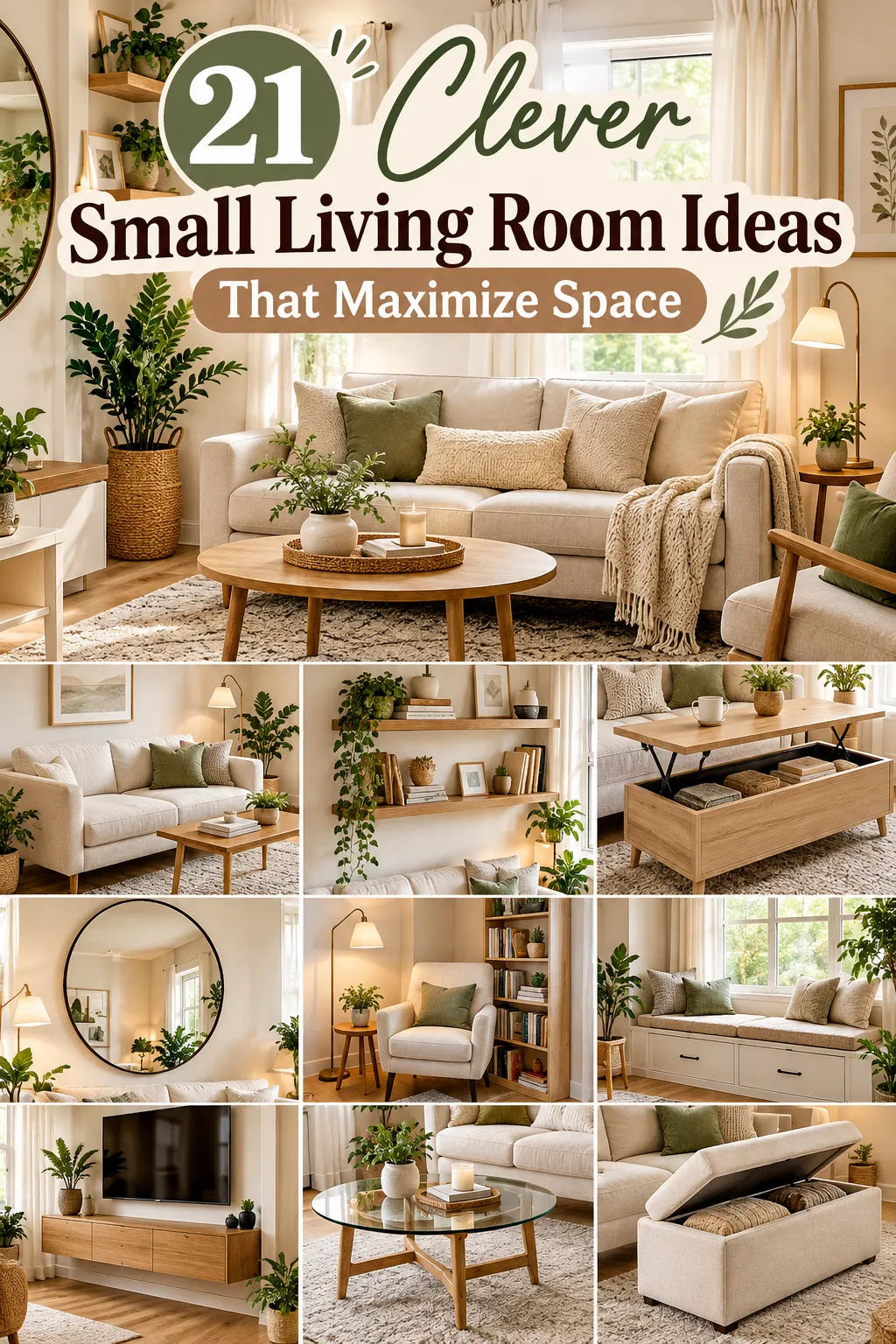
21 Clever Small Living Room Ideas That Maximize Space
A small room does not have to feel cramped, cluttered, or difficult to decorate.
The right furniture, layout, and storage choices can make every inch work harder.
These 21 small living room ideas are designed to help you create a space that feels more open, organized, comfortable, and stylish without requiring a major renovation. You will find practical solutions such as slim furniture, hidden storage, floating pieces, smart lighting, mirrors, and flexible surfaces that make everyday living easier.
In my experience, the biggest improvement often comes from a few thoughtful changes rather than buying lots of new decor. A better furniture scale or a clearer walking path can completely change how a room feels. Whether you live in a small apartment, rental, or compact home, these ideas can help you make the most of the space you already have.
Here are the first three ideas, following your required structure and format rotation.
Slimline Sofa
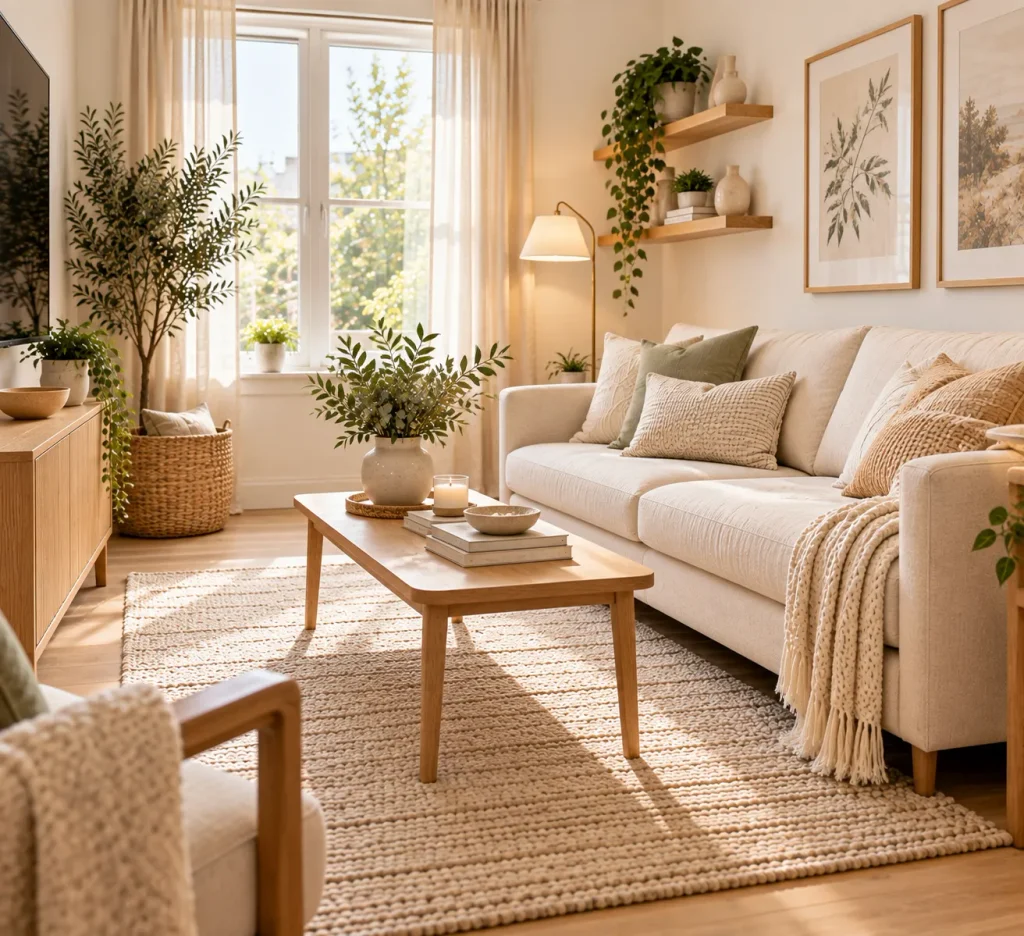
A bulky sofa can quickly consume the walking space in a compact room. Choose a streamlined design with slim arms and a raised base instead. The extra visual breathing room helps the floor feel more open while still providing comfortable seating for everyday use.
In my experience, sofa depth matters just as much as width. A piece around 30 to 34 inches deep can leave noticeably more circulation space than an oversized lounge sofa. Keep the upholstery light and the surrounding furniture simple so the seating area feels balanced rather than crowded.

- Install shelves vertically to draw attention upward.
- Keep shelf depths around 8 to 10 inches for easier circulation.
- Group books, plants, and small decorative pieces in uneven heights.
- Leave some open space between objects to prevent visual clutter.
- Match shelf finishes with nearby wood tones for a cohesive look.
Open shelving keeps useful storage off the floor, which is especially valuable in a small living room. Place everyday items within easy reach, but avoid filling every inch. A few carefully spaced objects create storage without making the walls feel heavy. Floating shelves also work well above sofas, desks, and narrow media units.
Lift Top Coffee Table
Quick Tip:
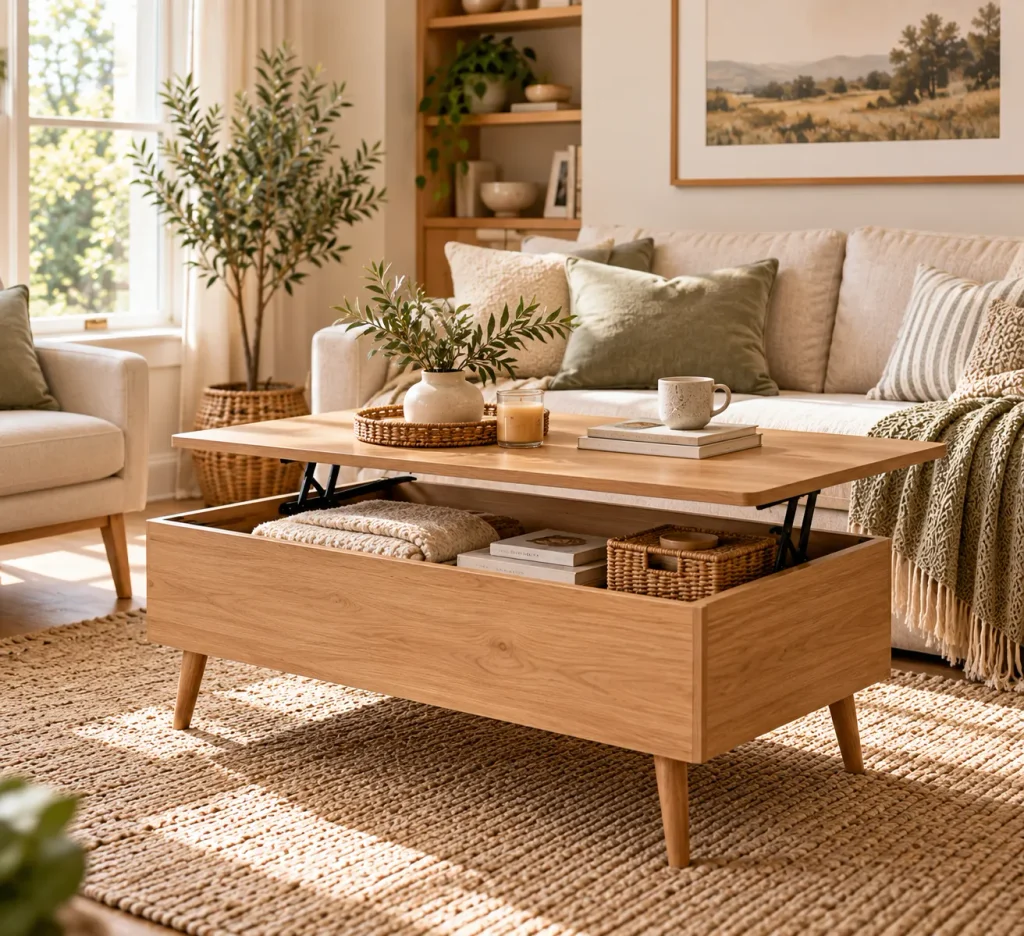
Choose a lift top table with a shallow footprint and hidden storage underneath. Before buying, measure the distance between the sofa and table so the raised surface will still leave a comfortable passage when opened.
A multifunctional table earns its floor space by serving several purposes at once. Use the raised surface for homework, meals, or a laptop, then lower it when the room returns to relaxation mode. Hidden compartments can hold remotes, magazines, chargers, and blankets, keeping visible surfaces pleasantly clear.
Mirror Wall Accent
BEFORE
A compact room with plain walls can feel enclosed, especially when furniture already occupies much of the floor. Dark corners and limited daylight may make the space appear even smaller.
AFTER
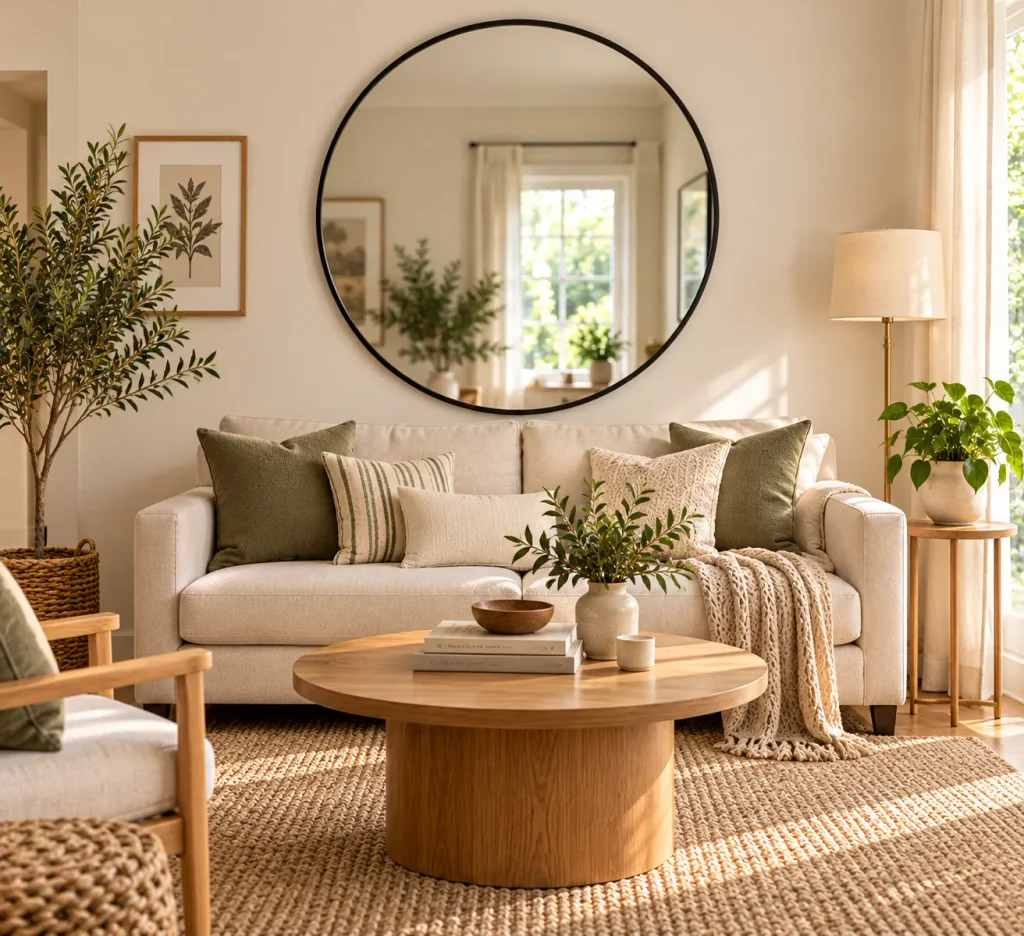
A large mirror reflects available light and creates a stronger sense of depth. Position it where it can capture a window, doorway, or bright wall rather than a cluttered corner.
The placement matters more than adding several smaller mirrors. I’ve noticed that one generously sized piece usually creates a cleaner visual effect than a collection of tiny frames. Keep the surrounding wall relatively simple so the reflection becomes part of the room’s visual depth without introducing extra clutter.
More content : 24 Beautiful Home Aesthetic Ideas for a Cohesive Look
Nested Side Tables
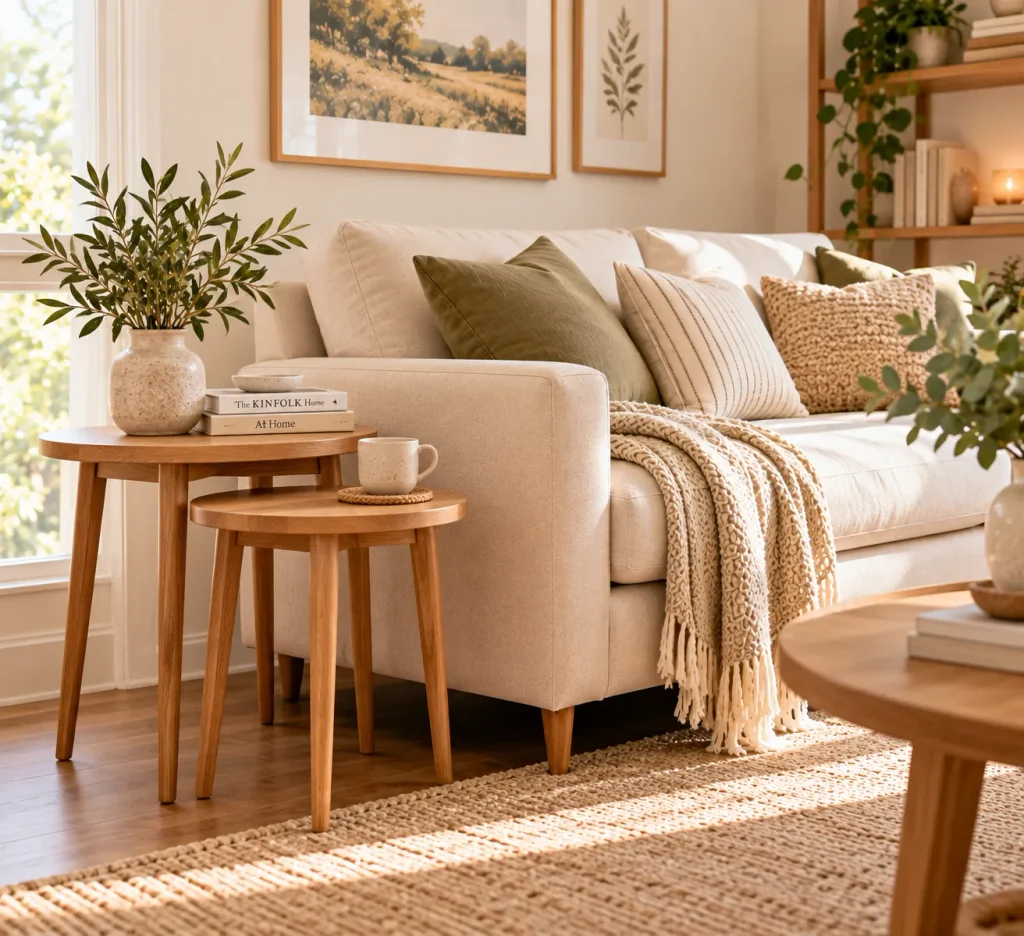
- Measure the available gap beside your sofa before choosing the tables.
- Select nesting tables that can slide completely underneath one another.
- Keep the larger table beside the seating area for daily use.
- Pull out the smaller table only when guests need another surface.
The smartest furniture earns its place by doing more than one job. Nesting tables provide flexible surfaces without permanently taking up the footprint of two separate pieces. When guests leave, slide them together again. This simple arrangement keeps drinks, books, and lamps accessible while preserving valuable walking space.
Storage Ottoman
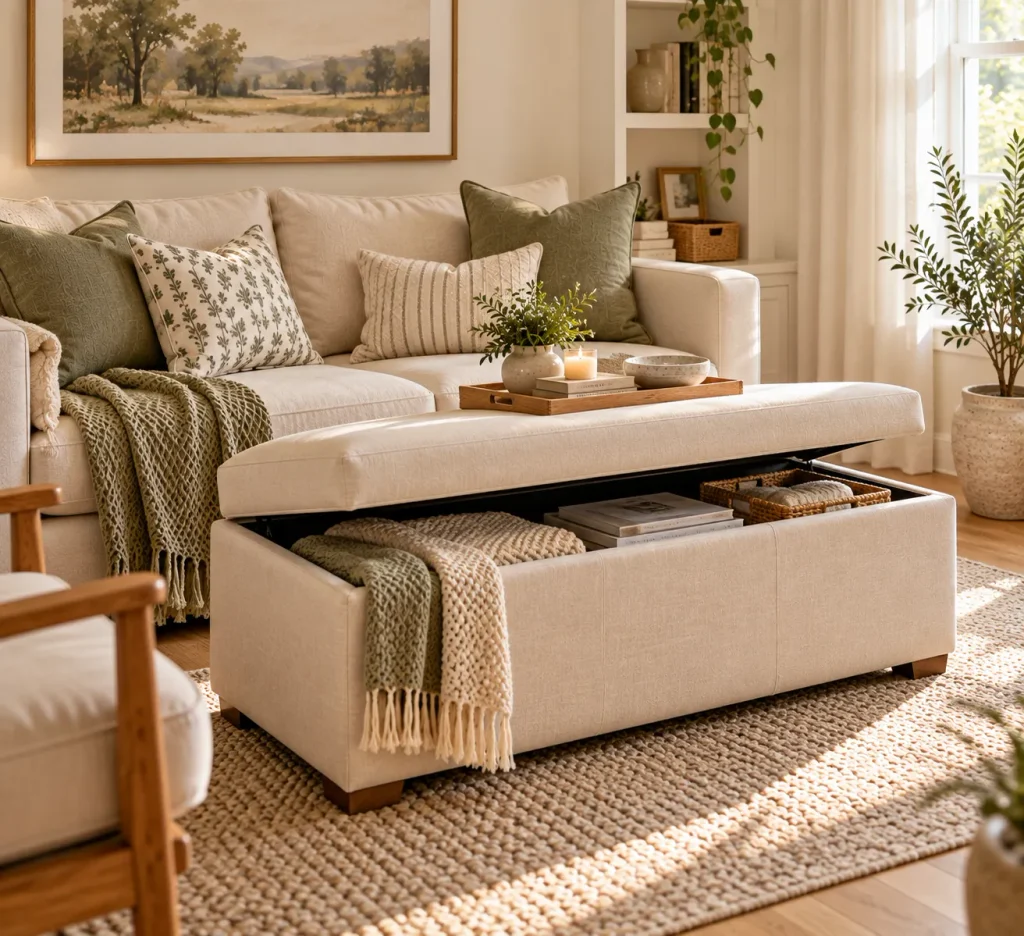
| Feature | Option A: Open Bench | Option B: Storage Ottoman |
| Seating | Extra seat | Extra seat |
| Storage | None | Hidden compartment |
| Surface | Limited | Flexible tray surface |
| Best use | Simple seating | Seating plus organization |
A storage ottoman makes one footprint perform several useful jobs. Use it as a footrest, occasional seat, or coffee table when paired with a sturdy tray. Choose a compact rectangular shape that fits beneath the main seating zone without blocking the walking route through the room.
Floor To Ceiling Curtains
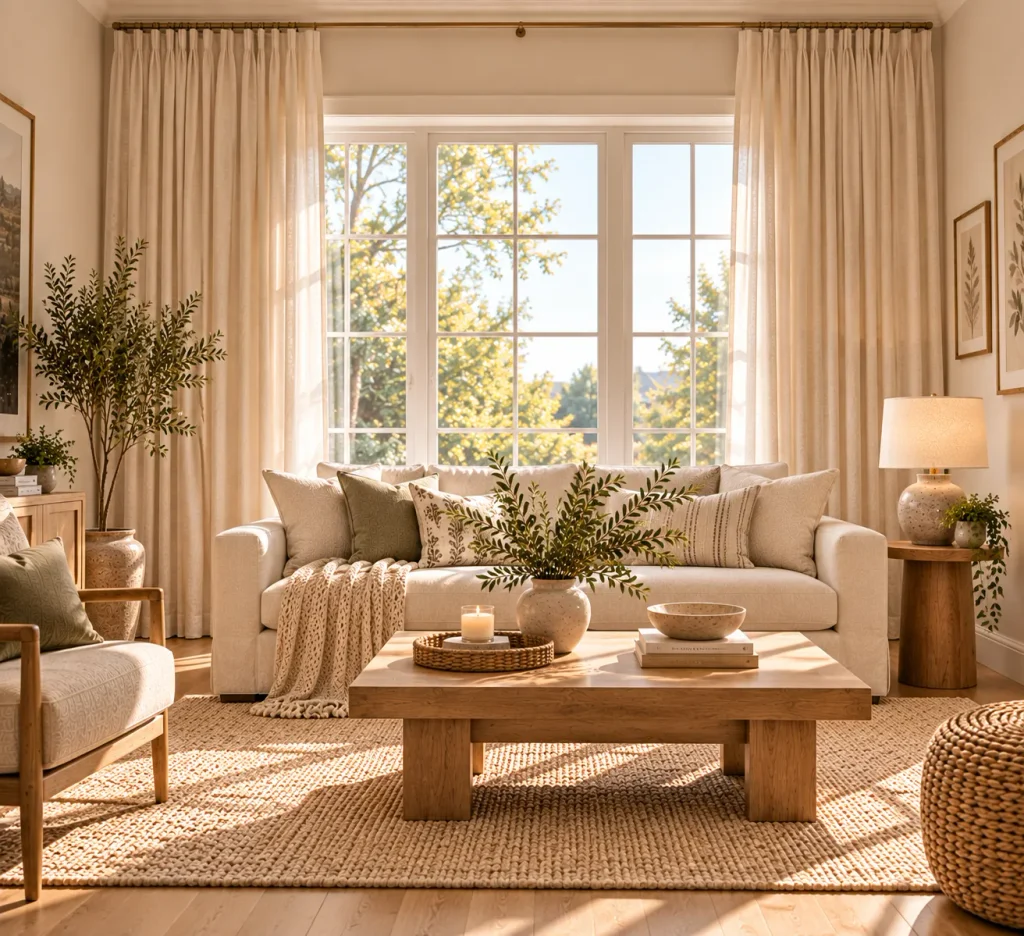
DO
- Mount the curtain rod several inches above the window frame.
- Let the fabric extend close to the floor.
- Choose lightweight linen or cotton blends for an airy effect.
- Keep the curtain color close to the wall tone.
DON’T
- Stop curtains at the bottom of the window.
- Use thick, bulky fabric in a narrow room.
- Choose strong patterns that compete with other furnishings.
- Let excess fabric pool heavily on the floor.
Vertical lines guide the eye upward, making the ceiling feel taller and the room more open. I’ve seen this work especially well in apartments with modest window sizes. Keep the fabric simple and let natural light pass through during the day for a brighter, more spacious atmosphere.
More Info : 23 Dreamy Bedroom Ideas to Create Your Perfect Retreat
Light Color Palette
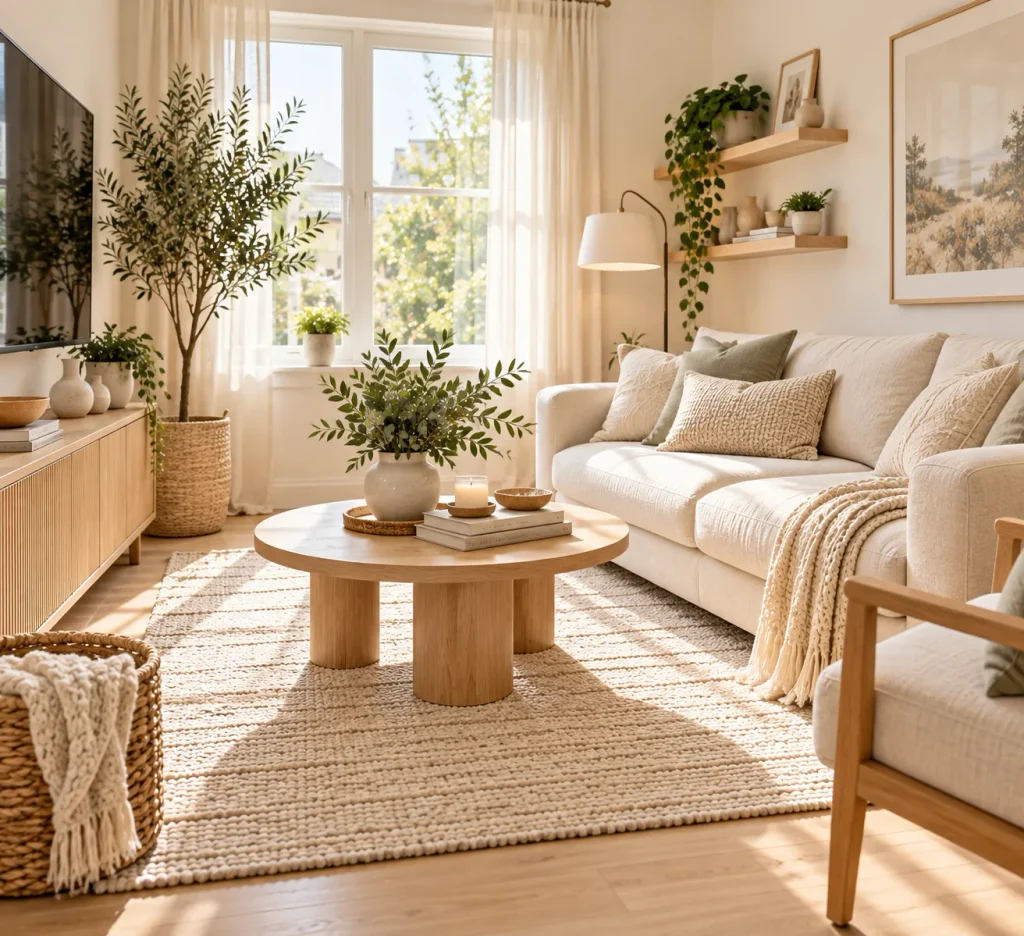
Color: Warm white, cream, beige, pale oak
Lighting: Natural daylight with soft window glow
Best For: Dark or visually crowded rooms
Result: Brighter and more open appearance
Difficulty: Easy
Budget: Flexible, depending on existing furnishings
A restrained palette helps visual boundaries recede, allowing the room to feel less fragmented. You do not need everything to match exactly. Combine two or three light neutrals, then introduce small touches of wood, greenery, or muted color for warmth without making the space feel busy.
Floating Media Console
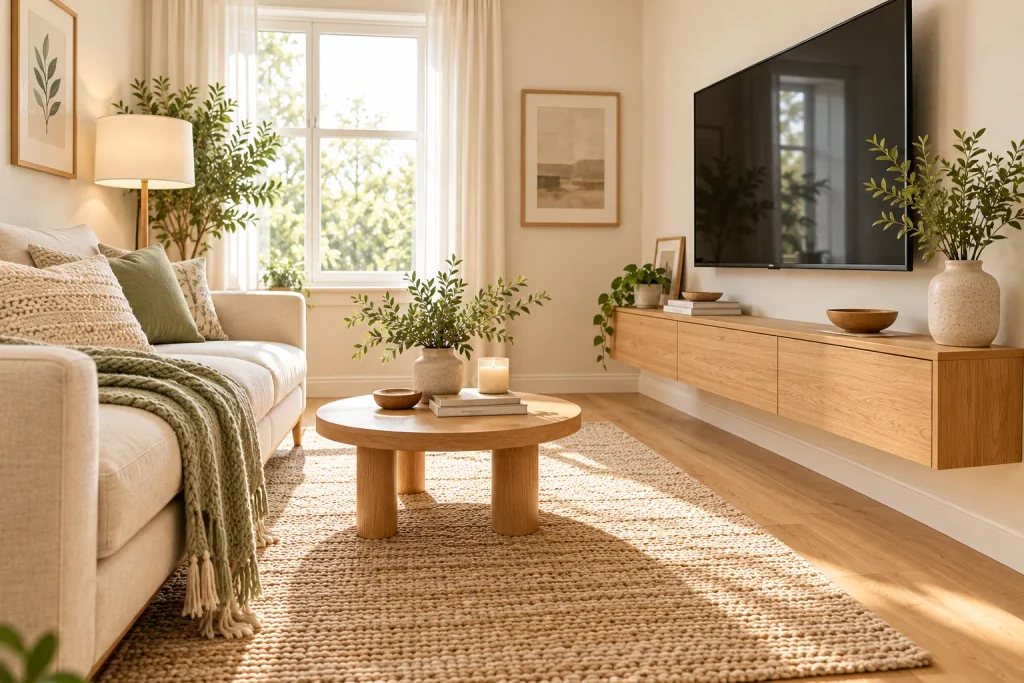
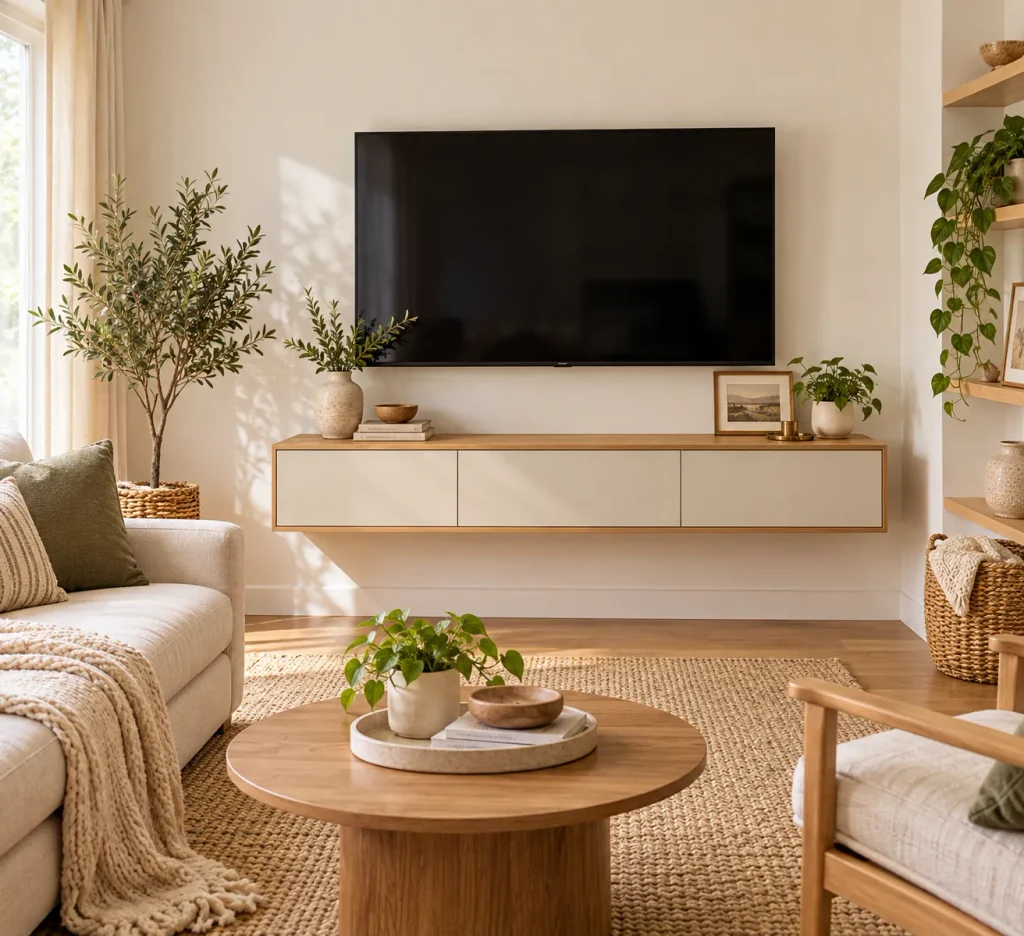
Wall mounted storage clears valuable floor area while keeping entertainment equipment organized. Choose a console with closed compartments for remotes, cables, and gaming accessories, then leave the space underneath completely open. The visible floor continues beneath the furniture, creating a lighter visual footprint and easier cleaning around the room.
Corner Reading Chair

DO
- Choose a chair with narrow arms and a compact frame.
- Place it in an unused corner near natural light.
- Pair it with a slim floor lamp instead of a bulky table lamp.
- Keep a small round side table within easy reach.
DON’T
- Fill the corner with oversized furniture.
- Block a doorway or main walking route.
- Add several decorative pieces around the chair.
- Choose deep seating that extends far into the room.
An unused corner can become a useful seating zone without disrupting the main layout. A compact chair creates a dedicated place for reading, relaxing, or occasional guests. Keep its footprint modest and coordinate the upholstery with your sofa so the room feels connected rather than divided into separate zones.
Vertical Bookcase

Cost: Moderate | Time: One afternoon
Skill Level: Beginner | Best For: Book lovers
Footprint: Narrow floor area | Result: More vertical storage
Tall storage uses the height that often goes unused above eye level. Choose a narrow bookcase with adjustable shelves so books, baskets, and decorative objects can fit comfortably. Keep heavier items lower and lighter pieces higher. A vertical arrangement can hold plenty without spreading storage across the floor.
Glass Coffee Table
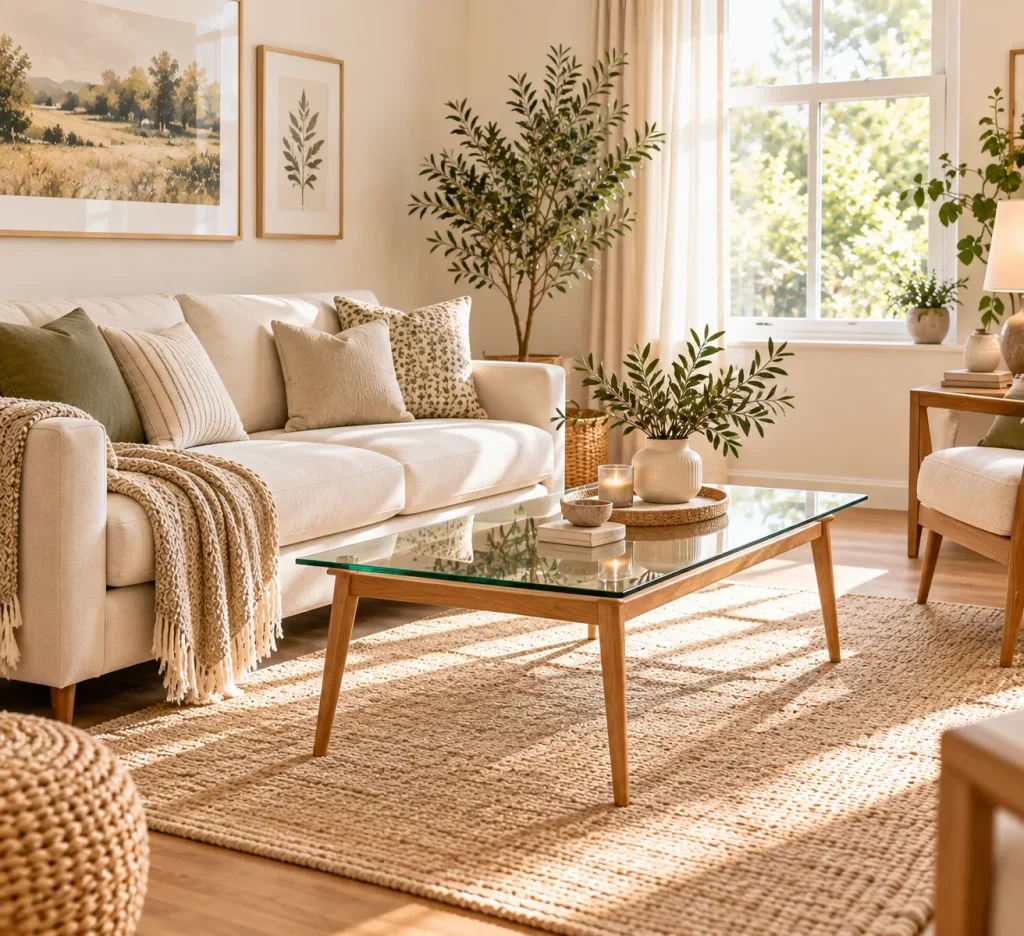
A clear tabletop keeps the visual line of the floor visible, helping the seating area feel less crowded. Choose tempered glass with slim legs and avoid oversized designs. A small tray can organize remotes or decor while keeping the transparent surface practical for everyday use.
Wall Mounted Lighting
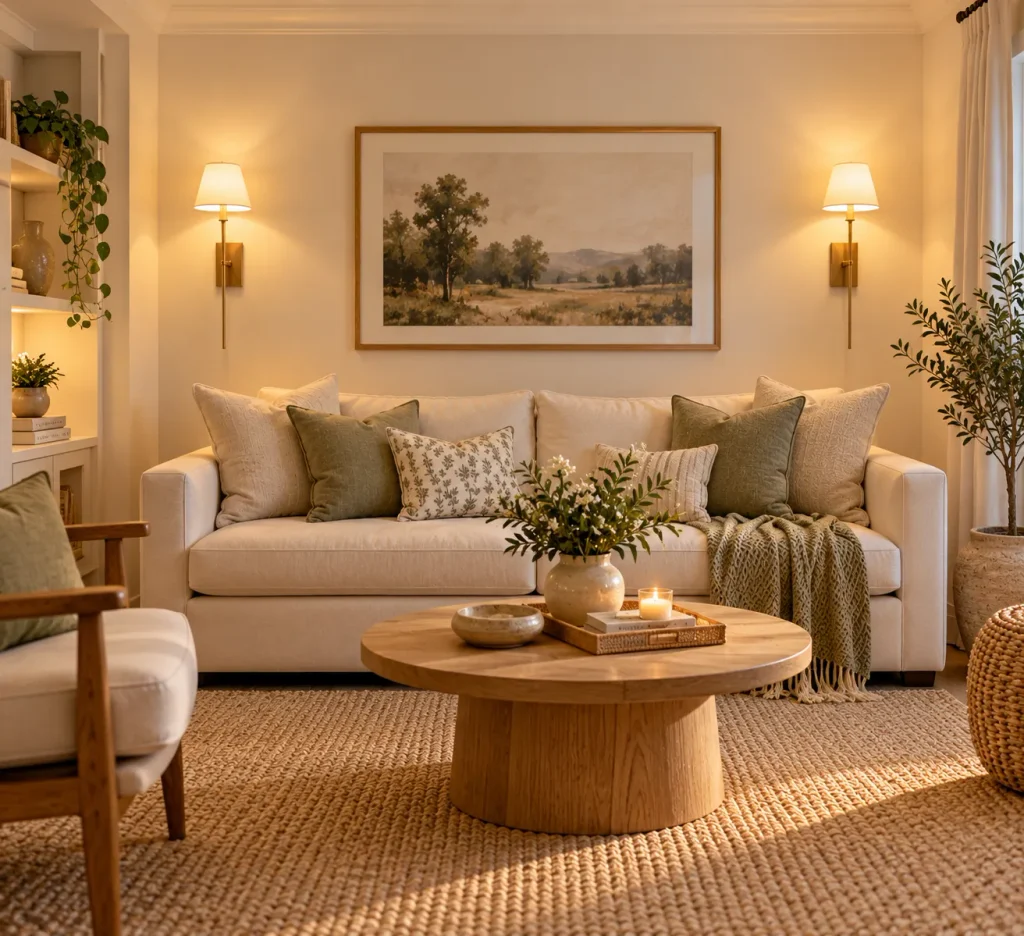
Image Description: Compact living room with two slim brass wall sconces positioned beside a cream sofa, replacing bulky table lamps. Warm white walls, light oak flooring, beige textured rug, soft evening glow, natural linen cushions, muted sage accents, elegant contemporary style, eye level photography.
- Mount sconces beside or slightly above the sofa to provide focused light without using table space.
- Choose adjustable arms if you want reading light that can be directed where needed.
- Match the metal finish with existing hardware for a connected look.
- Use warm white bulbs to create a comfortable evening atmosphere.
- Hide or neatly route cords so the wall stays visually clean.
Wall lighting frees up surfaces that would otherwise hold lamps, making narrow furniture more useful. It also spreads illumination at eye level instead of relying on one ceiling fixture. For renters, plug in sconces can offer a similar effect without permanent electrical changes. Keep the fixtures slim so they complement rather than crowd the seating area.
Dual Purpose Bench

Quick Tip:
Choose a bench that provides both seating and storage whenever possible. A lift top or open lower shelf can hold blankets, books, or baskets while the top remains available for an extra guest seat.
A narrow bench can fill an awkward wall or window zone without the bulk of another armchair. Use it as occasional seating, a place to put bags, or a surface for cushions when needed. I’ve noticed this works particularly well in homes where every piece of furniture needs to serve more than one purpose.
Round Furniture
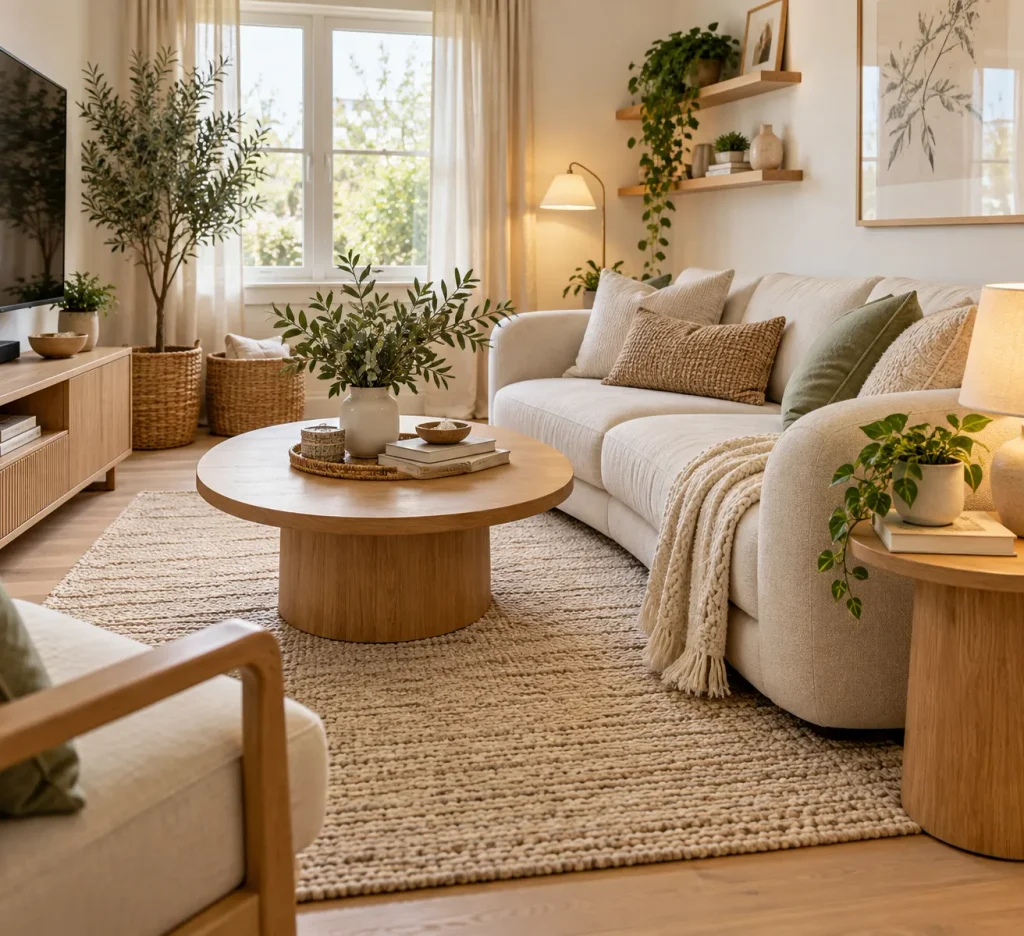
BEFORE
Square furniture can create tight corners and make movement feel restricted. Sharp edges around a coffee table may leave awkward gaps between the sofa, seating, and walking path.
AFTER
A round coffee table creates smoother circulation around the seating area. Curved edges also soften the overall layout while maintaining a useful central surface for drinks, books, and decor.
Measure the available clearance before choosing the table. Aim for enough room to walk comfortably between the seating and tabletop. A smaller circular design can provide the function you need without extending into major pathways, making it especially useful for compact apartments and narrow floor plans.
Under Sofa Storage
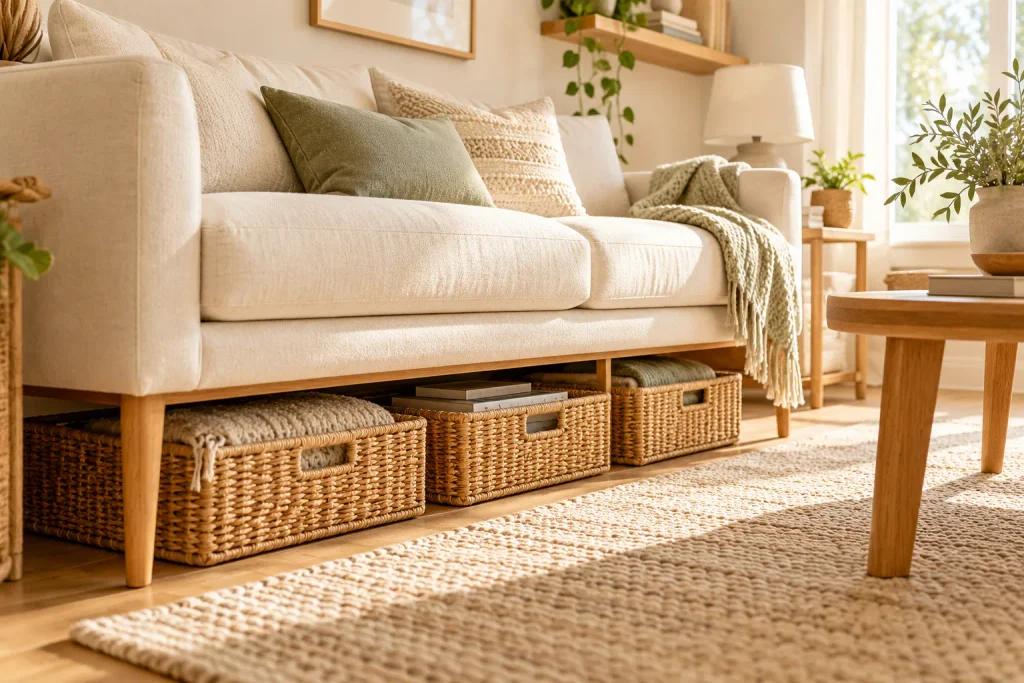
- Measure the clearance beneath your sofa before choosing storage containers.
- Select flat woven baskets or lidded boxes that slide easily underneath.
- Group similar items together, such as blankets, books, or seasonal accessories.
- Keep frequently used items toward the front for quick access.
- Choose containers that match the room’s existing textures and colors.
Hidden storage can turn an overlooked gap into valuable organization space. Look for baskets with handles so they can be pulled out without moving the sofa. Keep the area tidy rather than overfilling it, because easy access matters more than squeezing in every possible item. This approach works particularly well for renters with limited built in storage.
Slim Armchair
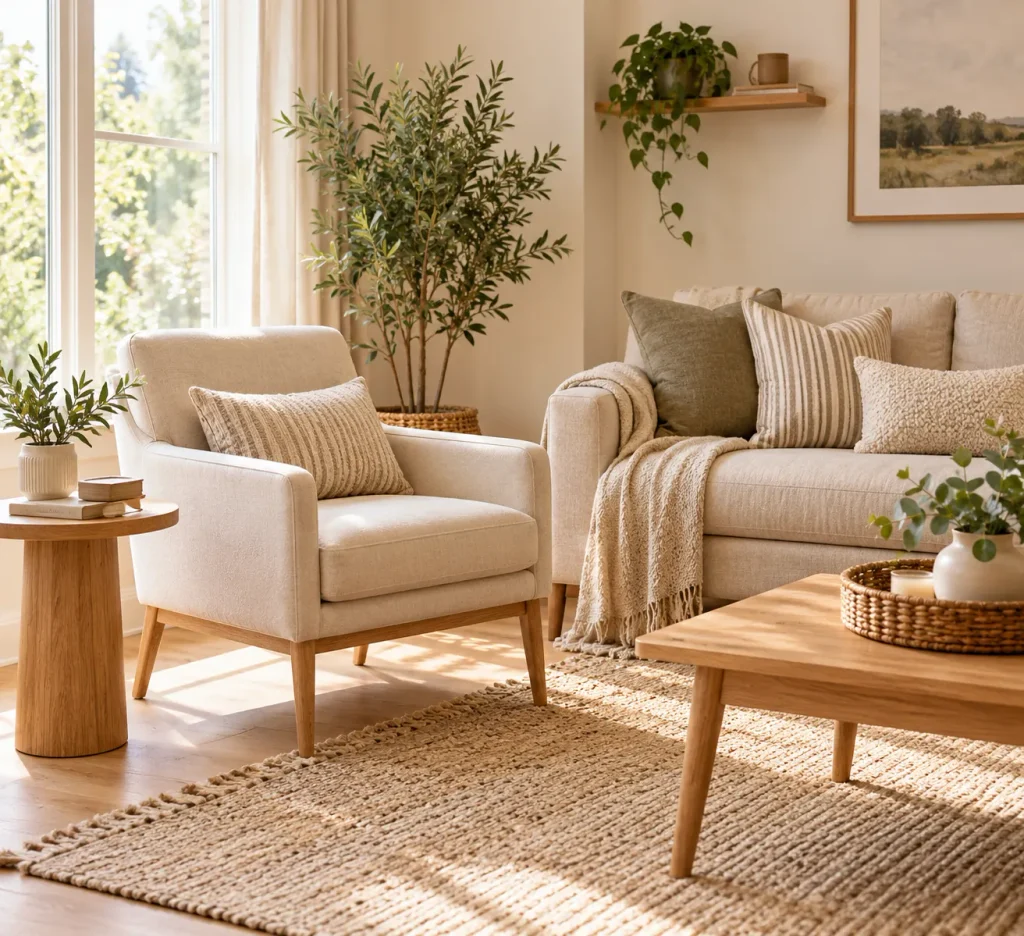
| Feature | Option A: Oversized Chair | Option B: Slim Armchair |
| Footprint | Wider and deeper | Narrower and lighter |
| Circulation | Uses more floor space | Leaves more walking room |
| Seating | Generous lounging | Comfortable occasional seating |
| Visual Weight | Heavier | More open |
A slim chair can provide an extra seat without competing with the main sofa. Look for narrow arms, an upright back, and exposed or raised legs. These details reduce visual weight and help more of the flooring remain visible. Place it near a corner or window where it will not interrupt the primary circulation route.
Hidden Cable Management
Quick Tip:
Group television, speaker, and charging cables before hiding them. Use a simple cable sleeve or cable box to keep loose wires together, then leave enough slack for safe access when equipment needs to be moved or serviced.
Loose cables create small visual distractions that become more noticeable in a compact room. Route them along the back of furniture or through discreet cable channels where appropriate. Keep power connections accessible and avoid overcrowding outlets. A tidy media area makes the entire seating zone appear more organized without requiring additional furniture or decoration.
Leggy Furniture
DO
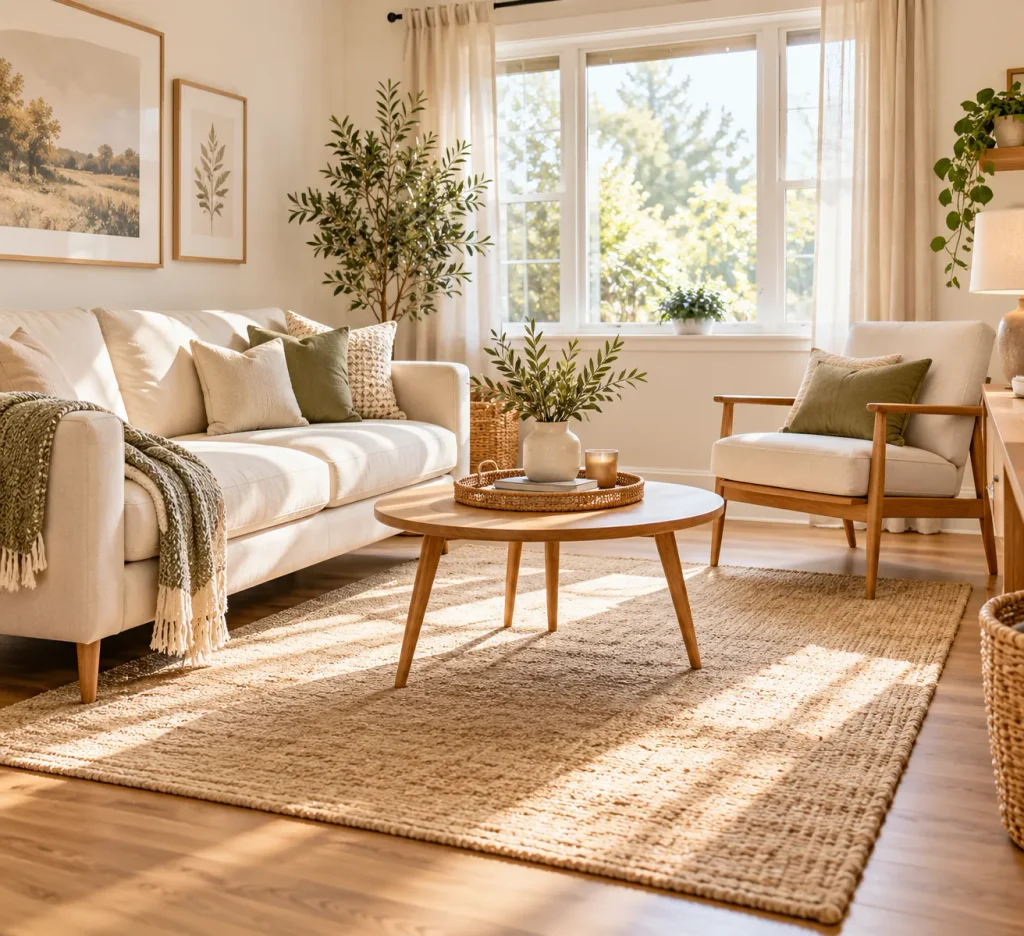
- Choose sofas and chairs with visible space beneath the frame.
- Select tables with slim, elevated legs.
- Keep the exposed flooring free from storage boxes.
- Coordinate wood finishes for a cohesive appearance.
DON’T
- Choose furniture with large solid bases everywhere.
- Fill every gap beneath tables with baskets.
- Mix too many bulky furniture silhouettes.
- Block visible floor space with unnecessary accessories.
Furniture raised above the floor allows more flooring to remain visible, which can make the room feel less dense. The effect is subtle but useful. I’ve noticed that combining a raised sofa with a lightweight coffee table often creates better visual flow than choosing several heavy, enclosed pieces.
Built In Window Seat
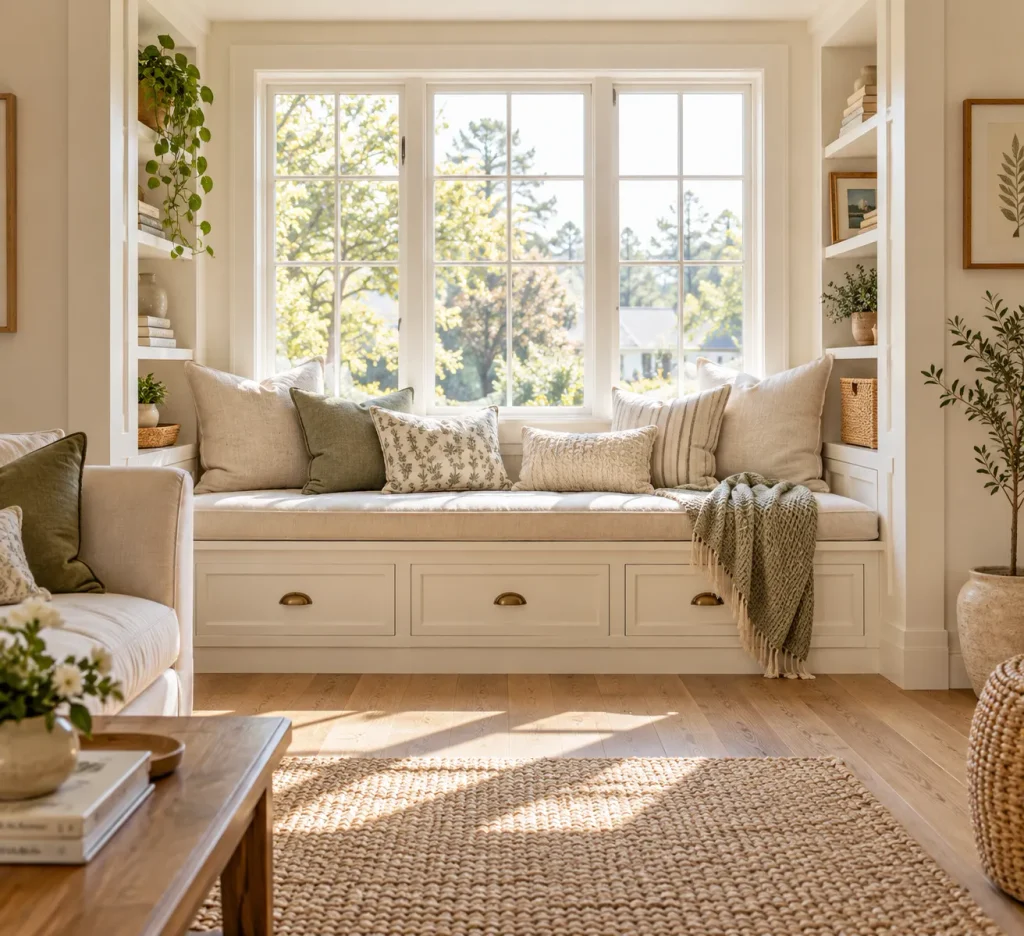
Cost: Moderate to high | Time: Several days
Skill Level: Intermediate | Best For: Deep window areas
Storage: Built in drawers | Result: Seating plus organization
A window seat can turn an otherwise unused wall section into functional seating and storage. Build drawers or lift up compartments underneath for blankets and books. Keep the cushion depth comfortable but avoid extending too far into the room. This works especially well where a standard armchair would interrupt the walking path.
Transparent Side Table
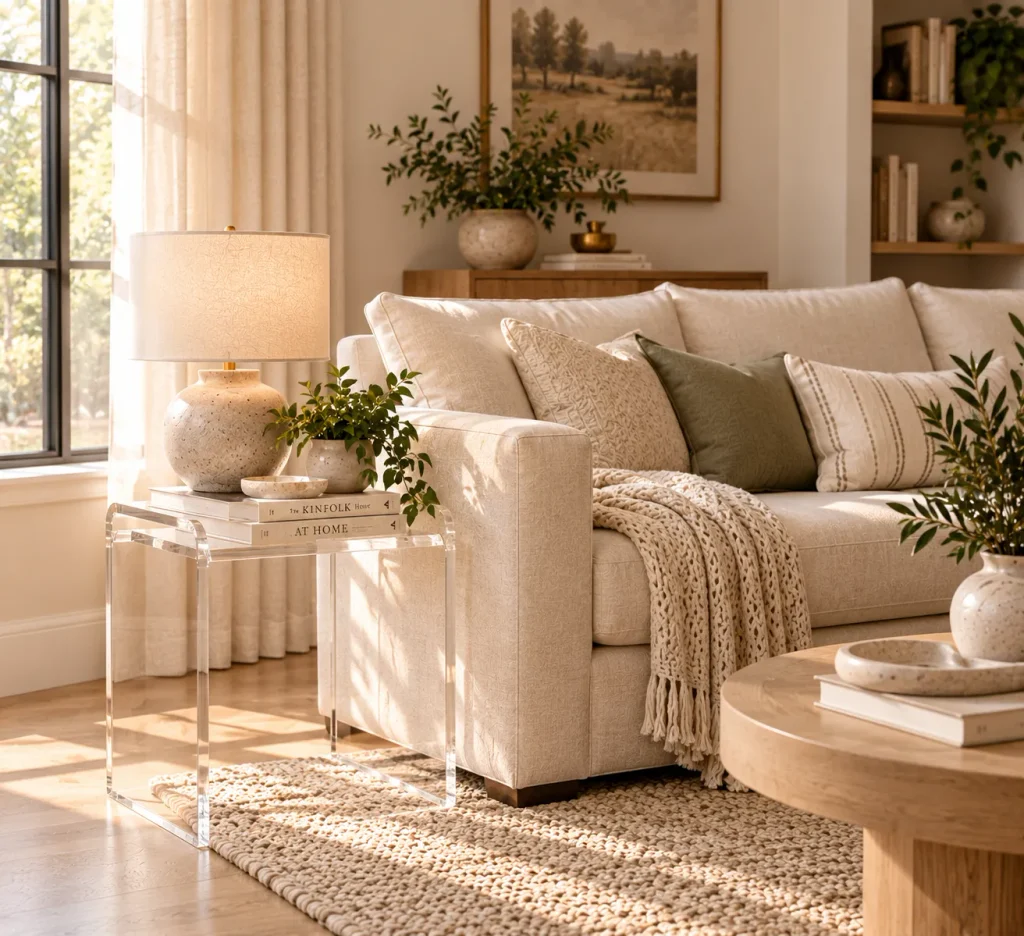
A transparent side table provides a useful surface without adding much visual weight. Place one beside the sofa for a lamp, drink, or book, then keep the tabletop lightly styled. Acrylic and glass surfaces work best when surrounded by solid textures such as linen, wood, wool, or woven baskets for warmth and balance.
CONCLUSION
Making a compact space work well is less about having fewer things and more about choosing pieces that serve a purpose. From vertical storage and multifunctional furniture to lighter colors and clever layouts, small changes can create better flow while keeping the room inviting.
I’ve seen how simple adjustments can completely shift the way a space feels and functions. Start with one idea that solves your biggest problem, then build from there. Save this article on Pinterest so you can revisit these ideas when you’re ready to refresh your small living room. Try your favorites, and share this guide with someone who could use more space without moving to a bigger home.