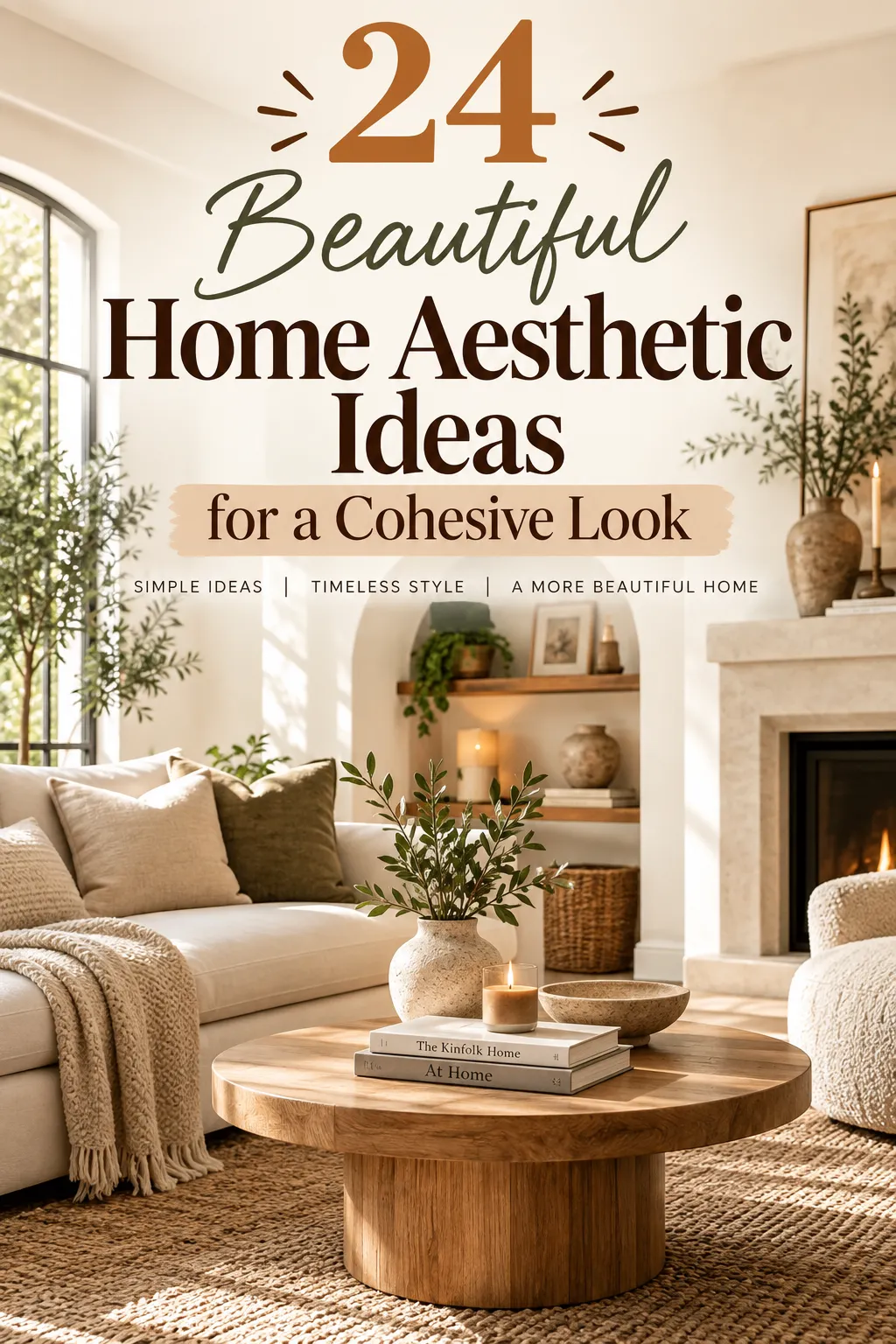
24 Beautiful Home Aesthetic Ideas for a Cohesive Look
A beautiful home does not need matching furniture or an expensive makeover to feel cohesive.
Small choices in color, texture, lighting, and decor can bring every room together.
These 24 home aesthetic ideas are designed to help you create a space that feels connected, comfortable, and personal. From warm neutral palettes and natural wood accents to layered textiles, curved furniture, thoughtful storage, artwork, ceramics, and soft lighting, each idea offers a practical way to improve your rooms.
If your home feels visually scattered, too plain, or filled with pieces that do not seem to work together, start with the basics. Choose a few colors you love, repeat useful materials, and give each room a clear visual direction. In my experience, simple changes often have a bigger impact than buying lots of new decor.
Keep reading to find approachable ideas you can adapt to your home, budget, and personal style.
Warm Neutral Palette
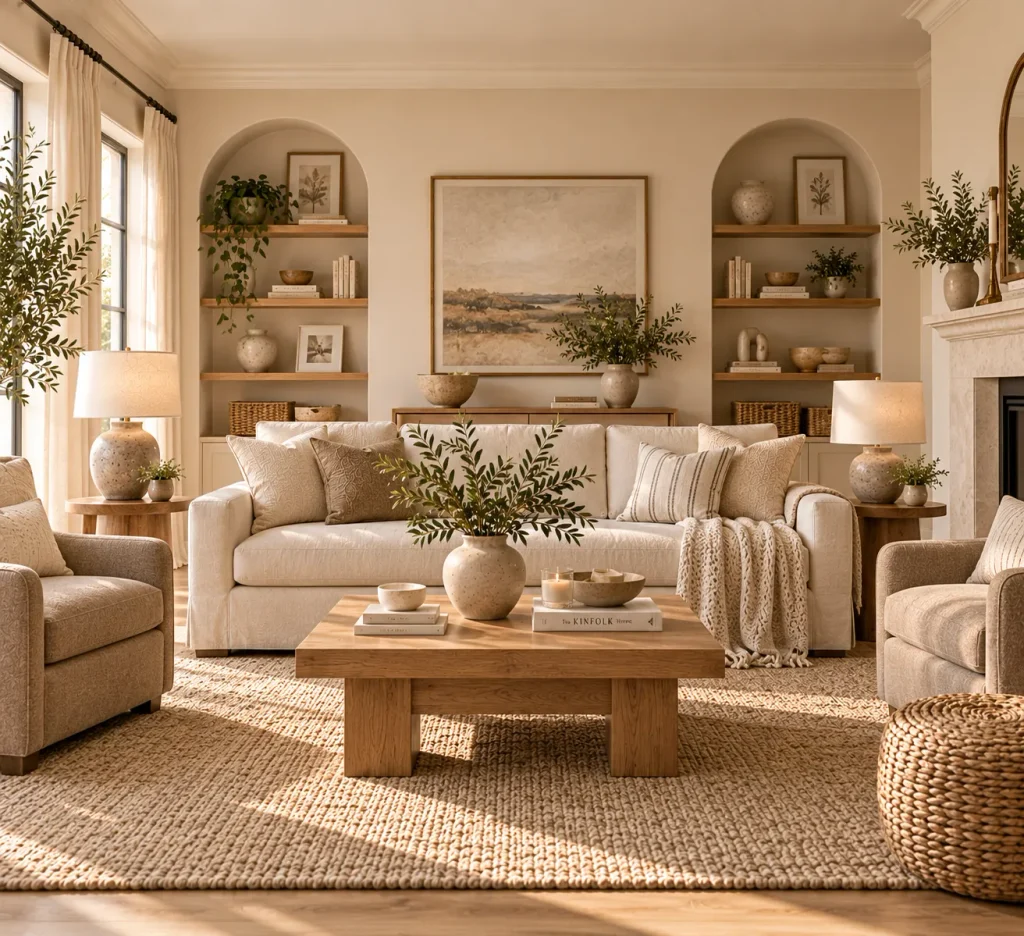
A cohesive room often starts with a calm color foundation. Combine warm white, cream, beige, taupe, and soft brown across walls, furniture, rugs, and accessories. Keeping the colors related helps separate pieces feel connected, even when they come from different collections or were purchased at different times.
Texture keeps a neutral palette from feeling flat. Mix linen curtains with woven baskets, wood furniture, ceramic pieces, and softly patterned rugs. I’ve noticed that repeating two or three key shades throughout a room creates visual rhythm while leaving plenty of freedom to introduce artwork, plants, and seasonal accents later.
Natural Wood Accents

- Choose one dominant wood tone for larger furniture pieces so the room has a clear foundation.
- Repeat smaller wood details through frames, trays, stools, or decorative objects.
- Pair wood with linen, cotton, stone, ceramic, or woven fibers for balanced texture.
- Check undertones before mixing woods, especially when combining pale oak with walnut or darker finishes.
- Keep highly polished wood limited if you prefer a softer, relaxed appearance.
Natural wood brings warmth and visual depth to almost any decorating style. Oak can create a lighter feeling, while walnut adds richness and contrast. The key is repetition rather than perfect matching. A few connected wood tones can make furniture, flooring, and accessories feel like part of one thoughtful scheme.
Layered Ambient Lighting

Quick Tip:
Do not rely on one ceiling light to illuminate the entire room. Combine overhead lighting with a table lamp, floor lamp, or wall light at different heights. Choose warm bulbs for relaxing areas and brighter task lighting where reading, working, or detailed activities take place.
Good lighting can change the mood of a room within minutes. Place lamps near seating, consoles, beds, or reading corners so each area has useful illumination. In my experience, several smaller light sources create a softer evening atmosphere than one strong fixture, while also making the room feel more layered and inviting.
Curved Accent Furniture
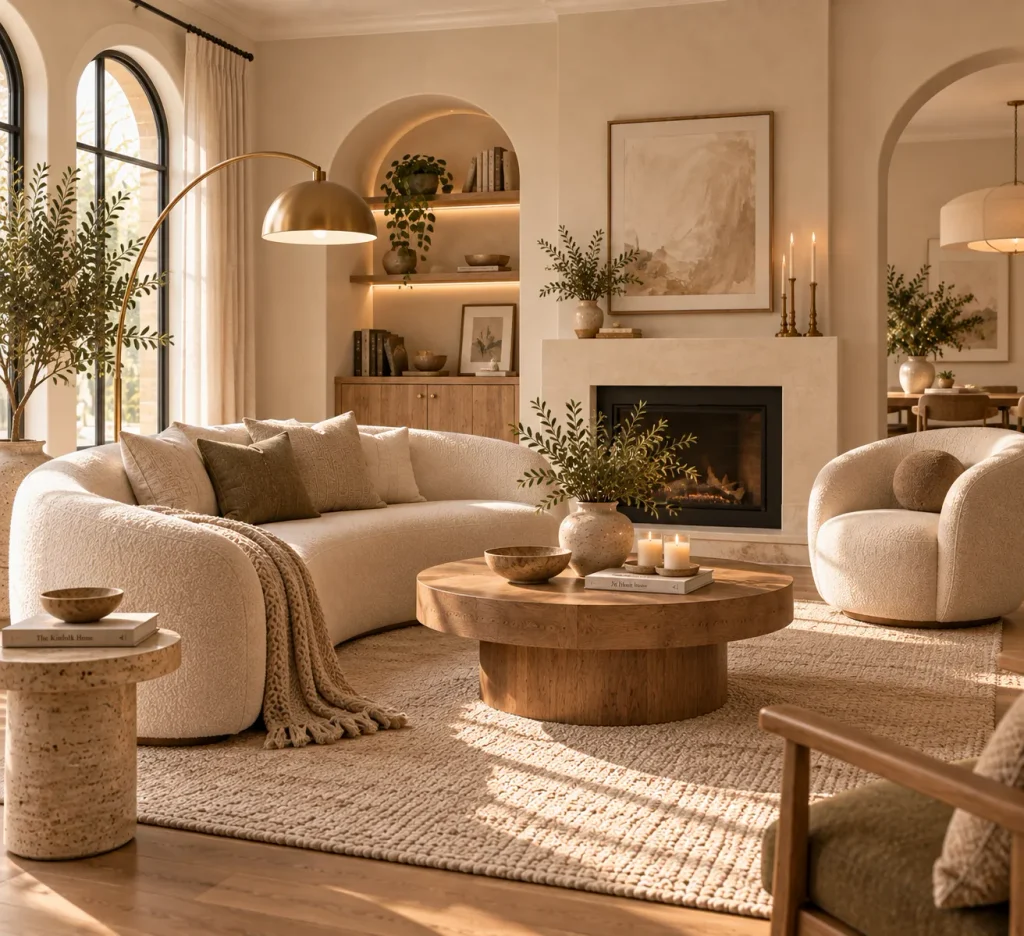
BEFORE: A room dominated by straight sofas, rectangular tables, and boxy storage can feel visually rigid. Too many sharp lines may also make the seating area look more formal than comfortable.
AFTER: Rounded furniture introduces softer shapes and creates a smoother visual flow. A curved sofa, circular table, or rounded chair can balance rectangular architecture without requiring major changes.
Choose one noticeable curved piece rather than filling the room with rounded shapes. Pair it with straight shelving, rectangular artwork, or linear cabinetry for contrast. Check the furniture dimensions carefully before buying, especially in smaller rooms. The goal is better visual movement while keeping enough space for comfortable walking and everyday use.
Coordinated Textiles
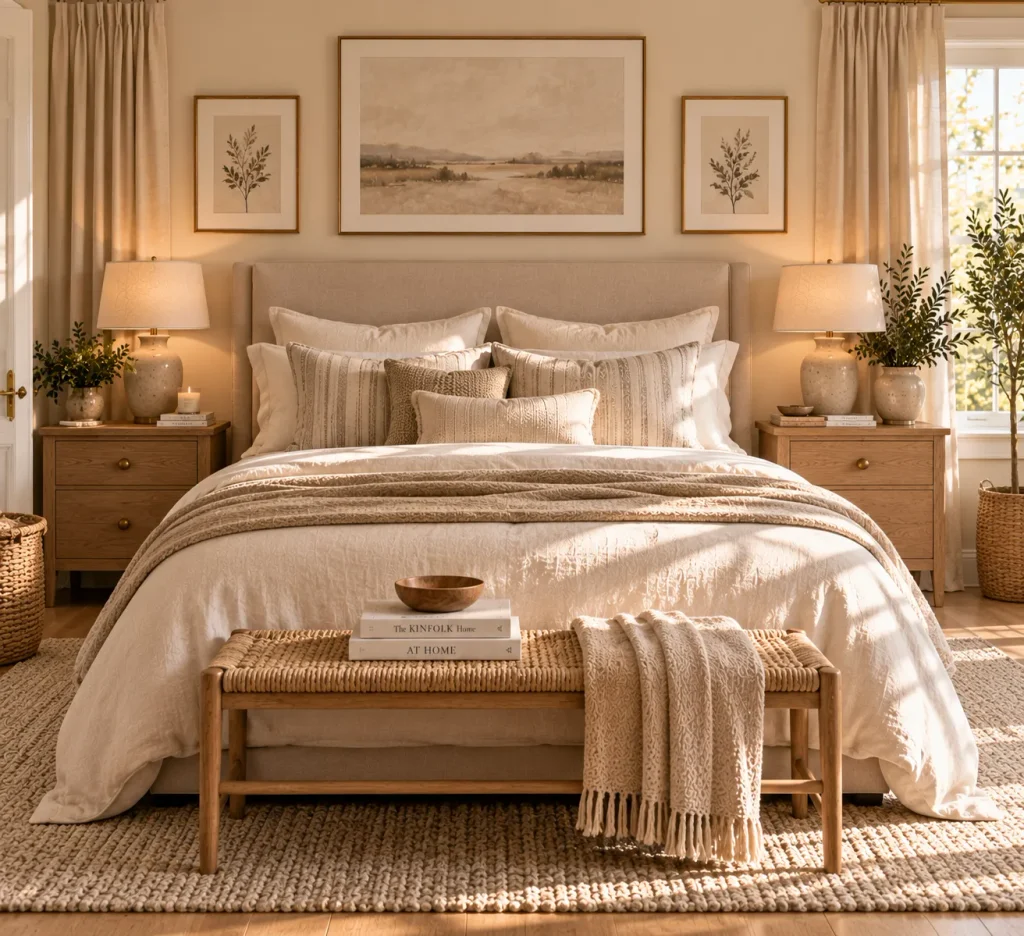
- Choose a base fabric: Start with linen, cotton, wool, or another material that suits the room’s function.
- Set two main colors: Repeat them across curtains, cushions, rugs, bedding, or upholstery.
- Vary the texture: Combine smooth, woven, knitted, or lightly nubby surfaces.
- Add one pattern: Choose a subtle stripe, check, botanical print, or geometric design.
- Edit the layers: Remove anything that competes with the established color and texture balance.
Coordinated textiles can make separate furniture pieces feel connected almost instantly. They also provide an easy way to refresh a room without replacing larger investments. I’ve noticed that repeating a color through three different materials often feels more natural than buying every textile in the exact same fabric or pattern.
Oversized Wall Mirror
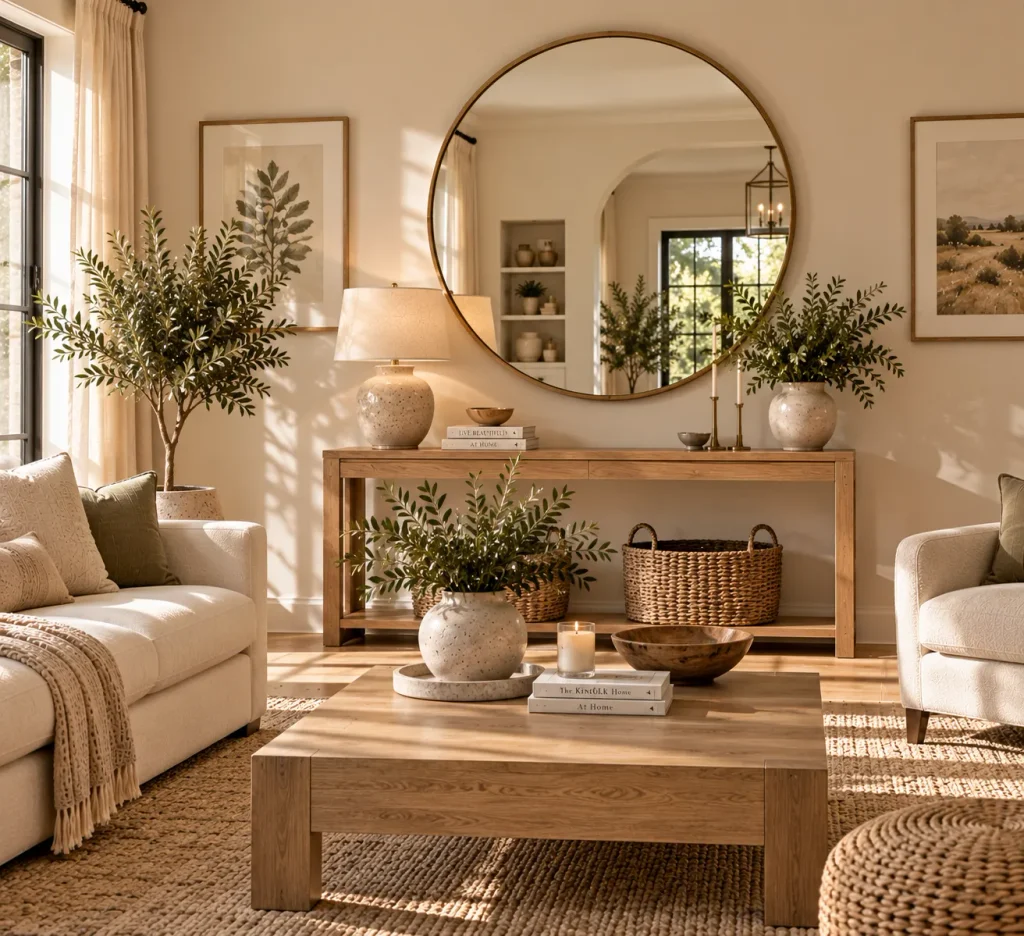
| Feature | Option A: Large Round Mirror | Option B: Large Rectangular Mirror |
| Visual effect | Softer and more organic | Structured and architectural |
| Best pairing | Curved furniture and organic decor | Straight furniture and clean lines |
| Light reflection | Broad and gentle | Wider horizontal reflection |
| Style direction | Relaxed and classic | Modern and transitional |
An oversized mirror can make a room feel brighter while giving an empty wall a strong focal point. Select the shape according to nearby furniture and architecture. A round frame softens angular surroundings, while a rectangular design reinforces clean lines.
Position the mirror where it can reflect useful light or an attractive part of the room rather than clutter or a blank corner. Before mounting, measure the console, sofa, or wall section below it. The right scale should feel substantial without overwhelming nearby furnishings.
Soft Curved Mirrors
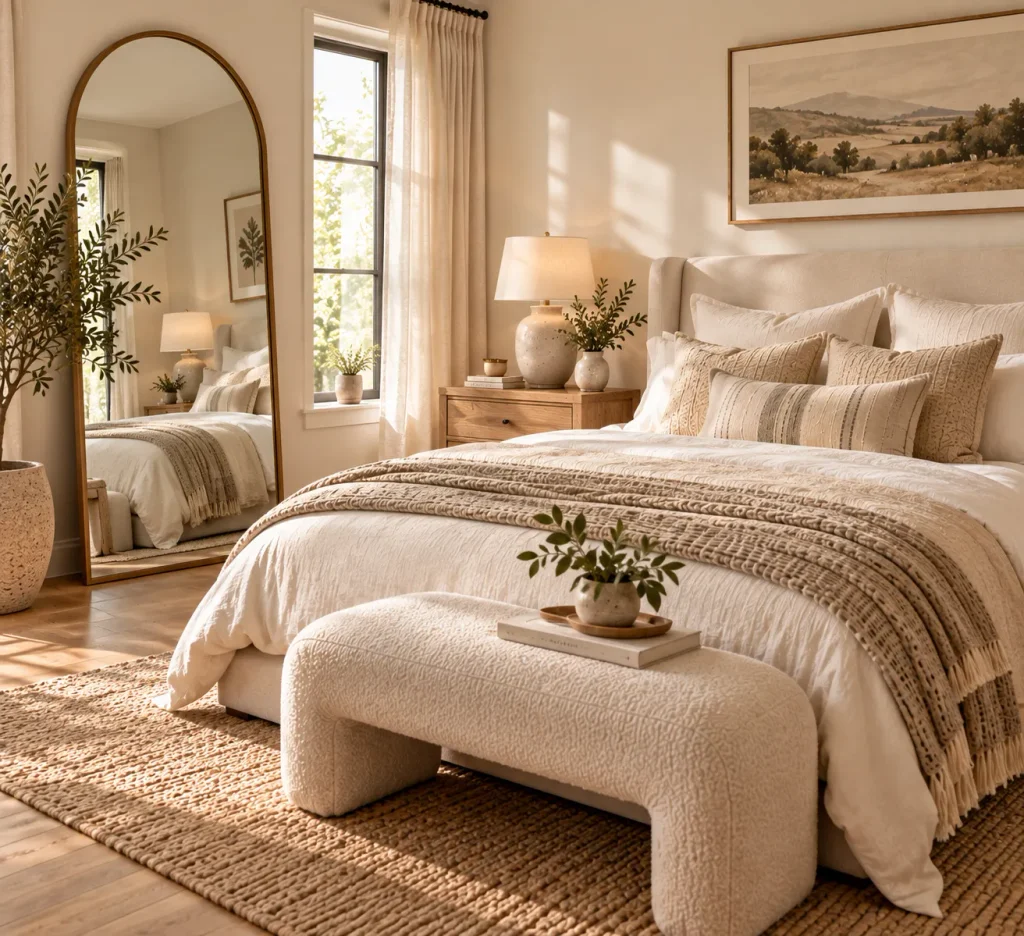
DO:
- Choose a mirror shape that complements nearby furniture.
- Repeat one curved form through a lamp, table, or artwork.
- Leave enough wall space around the mirror for visual breathing room.
- Position it where it can reflect natural or useful artificial light.
DON’T:
- Place it directly opposite an unattractive cluttered area.
- Use several oversized mirrors in one small room.
- Ignore the mirror’s frame finish when selecting nearby hardware.
- Hang it at an awkward height for everyday use.
Curved mirrors bring softness to rooms filled with straight architectural lines. An arched or rounded frame can connect naturally with curved furniture while still working alongside rectangular pieces. I’ve noticed that one well-positioned mirror often provides more visual impact than several smaller reflective accessories competing for attention.
Statement Area Rug
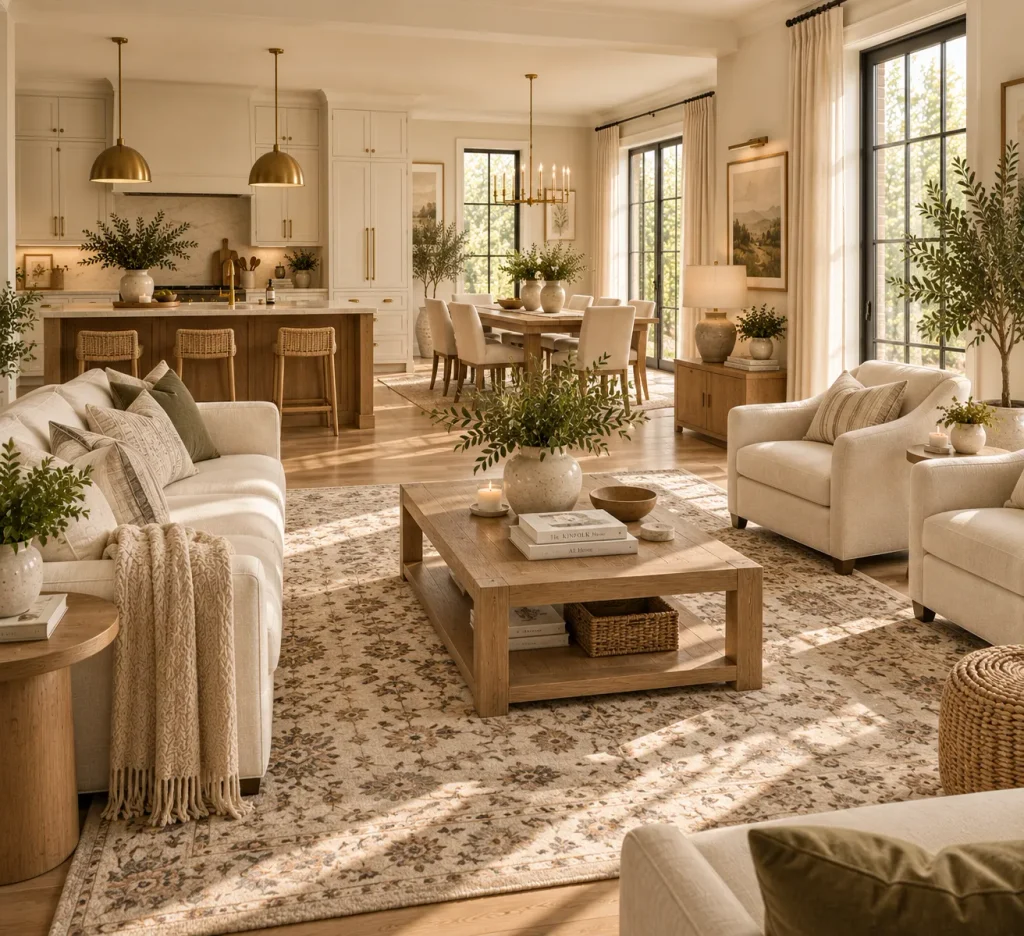
Cost: Moderate | Time: One afternoon | Skill Level: Beginner
Best For: Defining seating areas and adding texture | Works In: Living rooms, bedrooms, dining areas, and open-plan spaces
Result: Stronger room definition with added warmth
A well-sized rug can visually connect furniture that might otherwise feel scattered. Choose a design that includes at least two colors already present in the room, then use its pattern as a guide for smaller accents.
Scale matters more than pattern complexity. A rug that is too small can make a seating arrangement feel disconnected, while an appropriately sized piece helps anchor the furniture. For busy households, consider durability, cleaning requirements, and pile height before choosing a delicate material.
Consistent Hardware Finishes

Choosing a consistent hardware finish can quietly tie different parts of a home together. Repeat a finish across cabinet pulls, door handles, lighting, faucets, or small decorative details rather than introducing a new metal in every room.
The finish does not have to match everywhere perfectly. Aged brass and brushed brass, for example, can work together when their tones are compatible. I’ve noticed that repeating one dominant metal helps rooms feel connected, especially in open-plan homes where the kitchen, dining area, and living room are visible at the same time.
More Info : 22 Inspiring Home Decor Ideas You’ll Love for Years
Textured Feature Wall
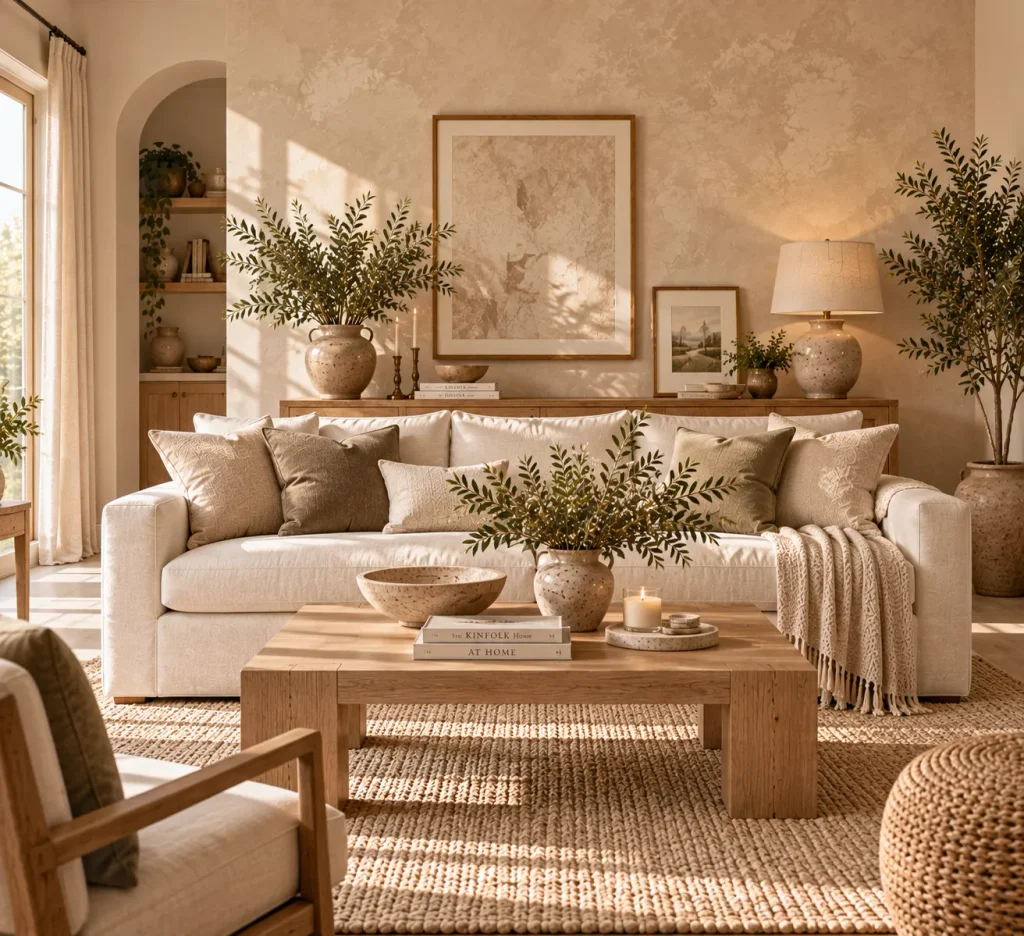
- Use limewash, subtle plaster, textured wallpaper, or another suitable wall finish.
- Keep surrounding furniture relatively simple so the wall remains visually important.
- Choose a tone related to your existing wall color for a quieter result.
- Test samples under both daylight and evening lighting before committing.
A textured wall adds depth without depending on bold patterns or strong colors. Subtle plaster effects, grasscloth-inspired wallpaper, or limewash can create gentle variation across a large surface. This approach works particularly well behind a bed, sofa, fireplace, or dining area where a clear focal point is useful.
Natural Fiber Decor
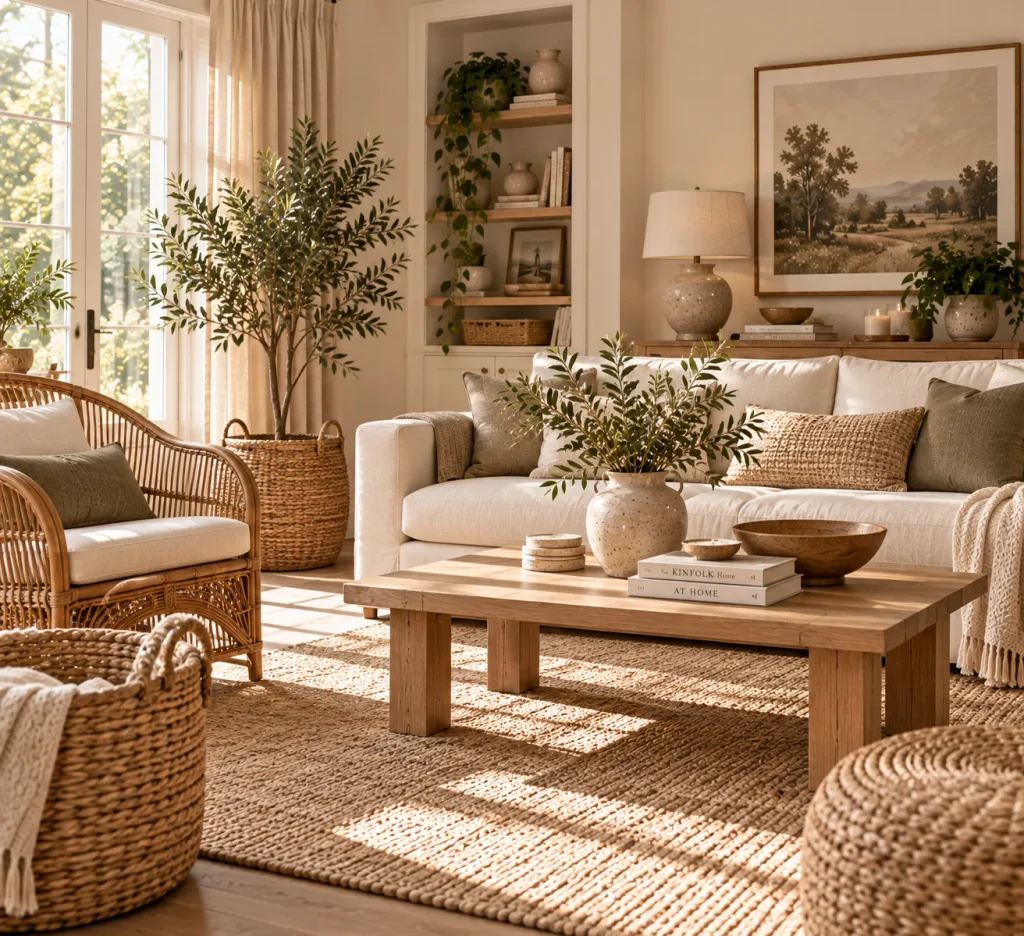
Quick Tip:
Start with one large natural fiber piece, such as a jute rug or rattan chair, then add smaller woven details gradually. Mixing several fibers creates richer texture, but keeping their colors within the same earthy range prevents the room from feeling visually scattered.
Natural fibers bring warmth and tactile interest to neutral interiors. Jute, rattan, seagrass, cane, and woven cotton can work across living rooms, bedrooms, entryways, and dining spaces. I’ve seen this approach work especially well in homes where smooth furniture surfaces need more texture without adding strong color.
Balanced Shelf Styling
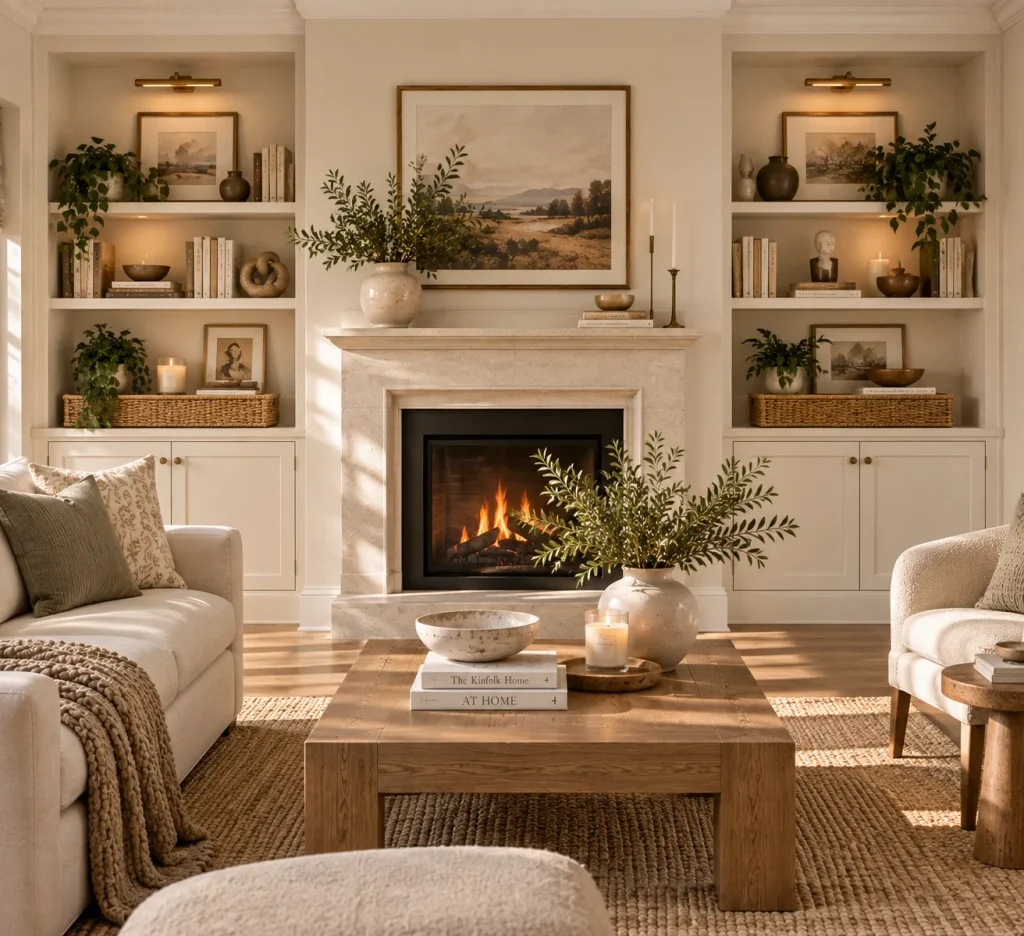
BEFORE: Shelves filled with similarly sized objects can look flat, crowded, or overly arranged. Too many decorative pieces may also make useful storage difficult to access.
AFTER: Varying heights, shapes, and textures create a more natural rhythm. Leaving a few open spaces allows individual objects to stand out while keeping the overall arrangement calm.
Begin with larger pieces before filling smaller gaps. Stack books horizontally beside vertical artwork, then add ceramics or greenery to soften the arrangement. Keep related colors together and avoid placing every decorative object at the front edge. A balanced shelf should provide visual interest while still leaving room for practical storage.
Layered Window Treatments
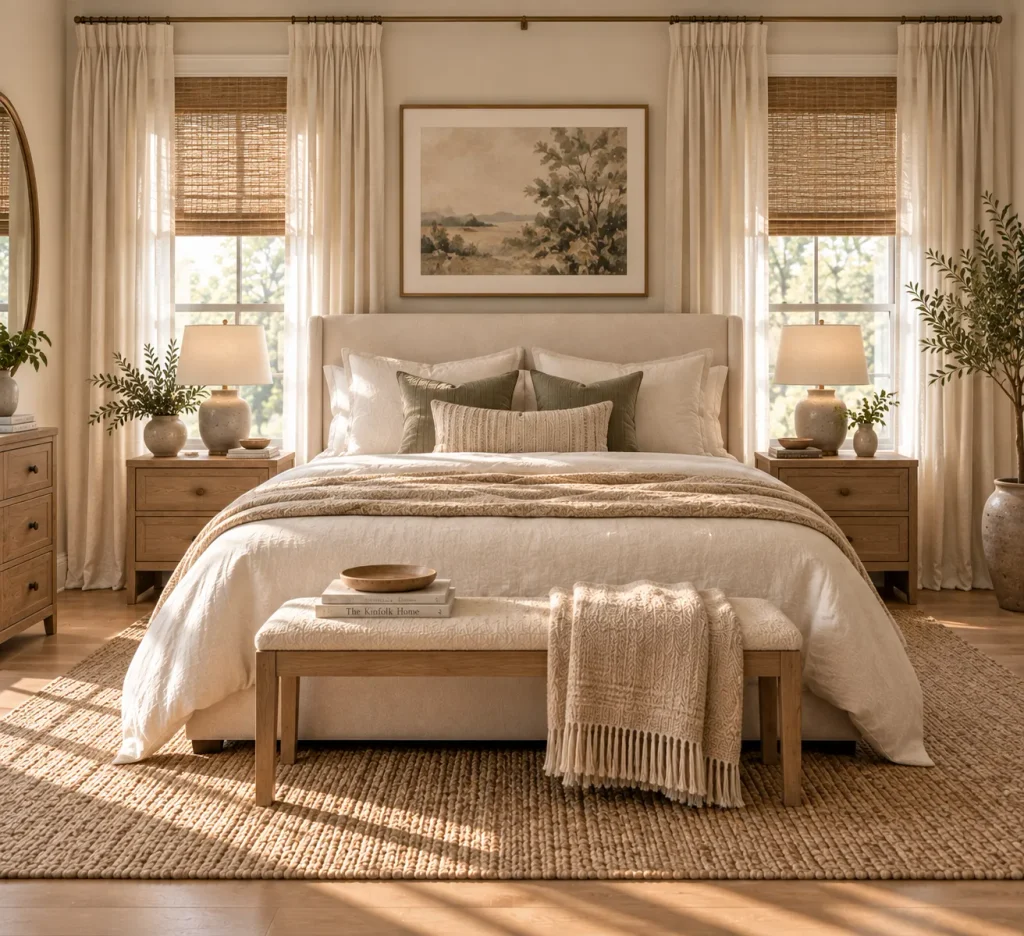
- Choose the base layer: Start with a shade, blind, or sheer panel that provides the privacy and light control you actually need.
- Add decorative curtains: Select full-length panels in a neutral tone that relates to the walls or upholstery.
- Set the rod height: Mount the curtain hardware appropriately to create a taller visual line.
- Check the fullness: Allow enough fabric for soft folds rather than a flat, sparse appearance.
Layered window treatments combine practical light control with softness and texture. Linen curtains paired with woven shades can make a room feel finished while giving you more flexibility throughout the day. Choose moisture-resistant materials for suitable areas and consider how much direct sunlight the fabrics will receive.
Mixed Material Furniture
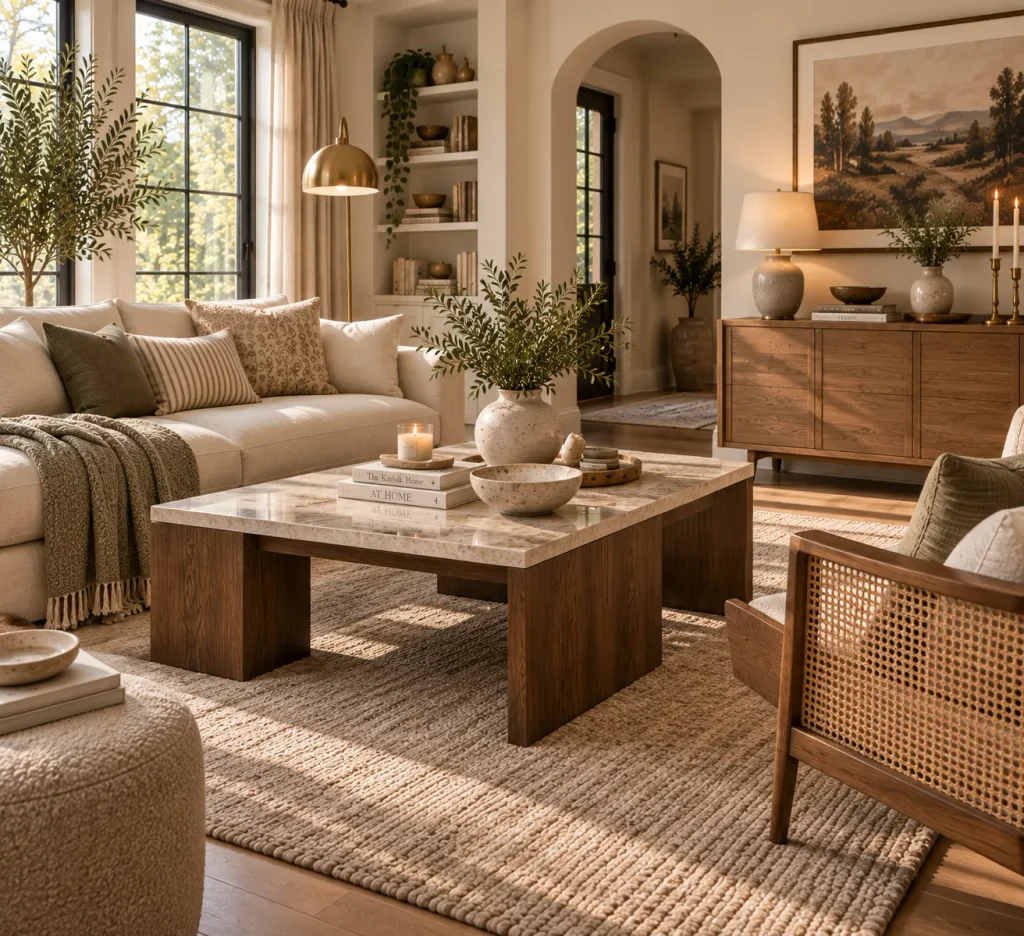
| Feature | Option A: Matching Materials | Option B: Mixed Materials |
| Visual effect | Clean and uniform | Layered and varied |
| Texture | More consistent | More noticeable |
| Styling flexibility | Simple | Higher |
| Best use | Minimal rooms | Warm, collected interiors |
Mixing materials keeps a room from feeling like every piece came from the same collection. Pair smooth stone with textured wood, woven fibers with linen, or brushed metal with ceramic surfaces. The contrast creates depth while a restrained color palette keeps the arrangement connected.
Start with two or three dominant materials and repeat them throughout the room. Too many unrelated finishes can create visual noise, especially in smaller spaces. I’ve noticed that repeating one material in several locations helps even very different furniture pieces feel like part of the same decorating plan.
Intentional Decor Editing
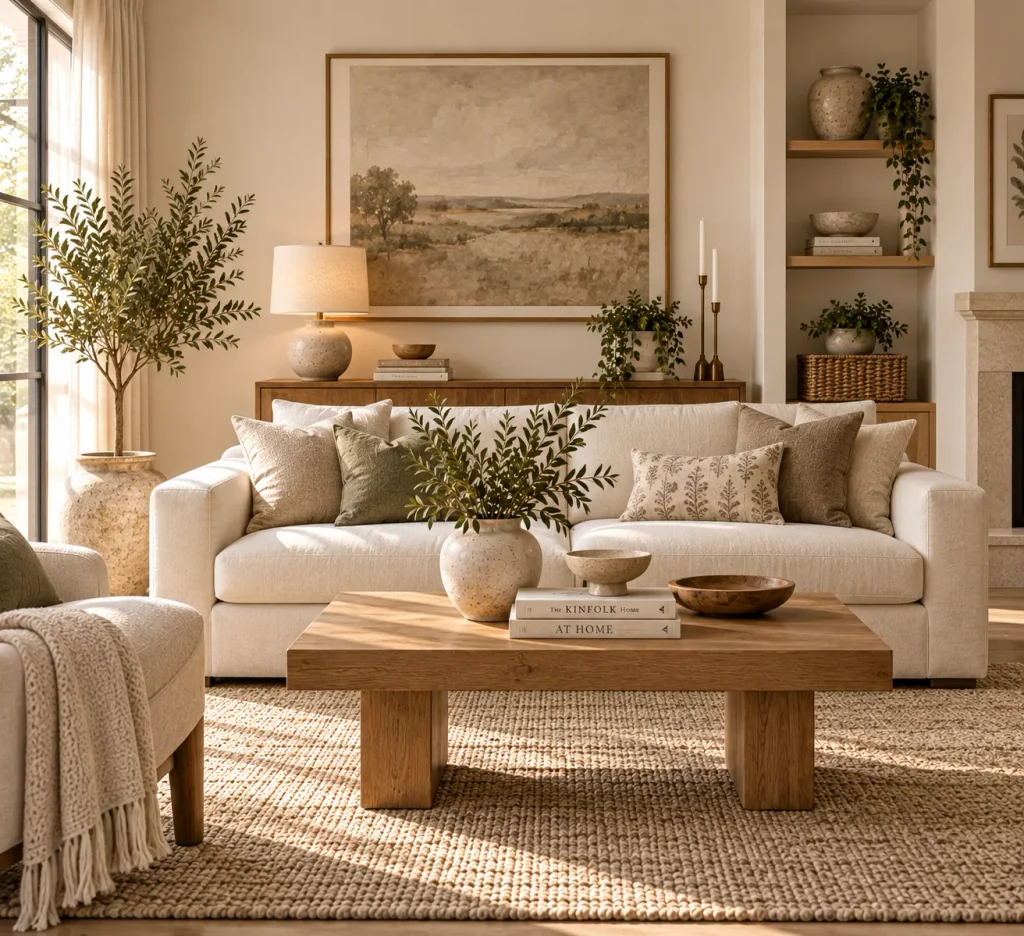
DO:
- Keep only accessories that serve a decorative or practical purpose.
- Group small objects in odd-numbered arrangements.
- Leave visible empty space around important pieces.
- Repeat colors or materials already present in the room.
DON’T:
- Fill every shelf, tabletop, or corner.
- Keep accessories simply because there is an empty surface.
- Mix too many unrelated colors in one small area.
- Hide useful furniture beneath excessive decoration.
A cohesive room often improves more through editing than through adding another accessory. Remove pieces that feel unrelated, then reassess the remaining arrangement. In my experience, giving favorite objects more breathing room makes them easier to notice and helps the entire room feel calmer, more intentional, and easier to maintain.
Personalized Display Shelves
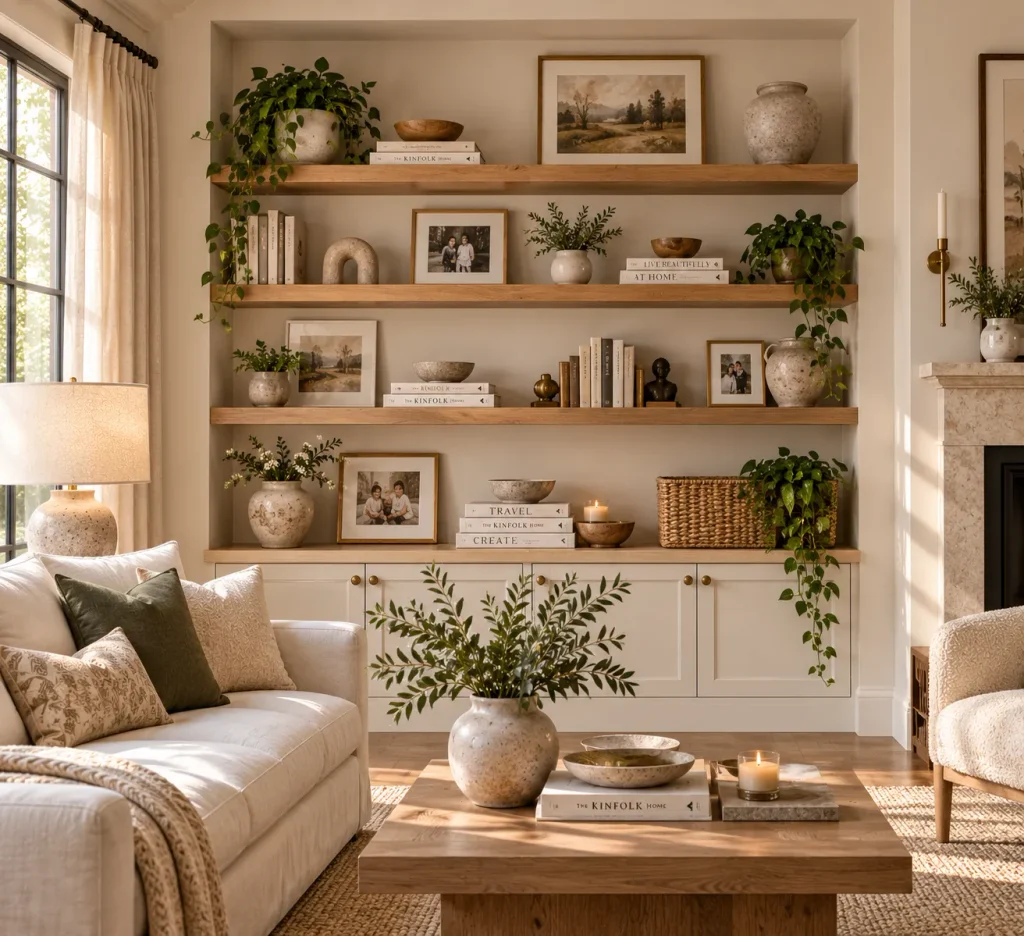
Cost: Low to moderate | Time: 1 to 2 hours | Skill Level: Beginner
Best For: Living rooms, bedrooms, offices, and entryways | Works In: Modern, organic, transitional, and classic interiors
Result: More personality and visual depth
Open shelves become more meaningful when they display things connected to your life. Mix books, photographs, handmade ceramics, small artwork, travel finds, and natural elements rather than filling every space with matching accessories.
Keep taller pieces beside shorter objects and leave a few empty areas between groups. I’ve noticed that personal items often make a neutral room feel warmer and more authentic. Choose pieces you genuinely enjoy seeing instead of decorating every shelf simply because there is available space.
Cohesive Accent Colors
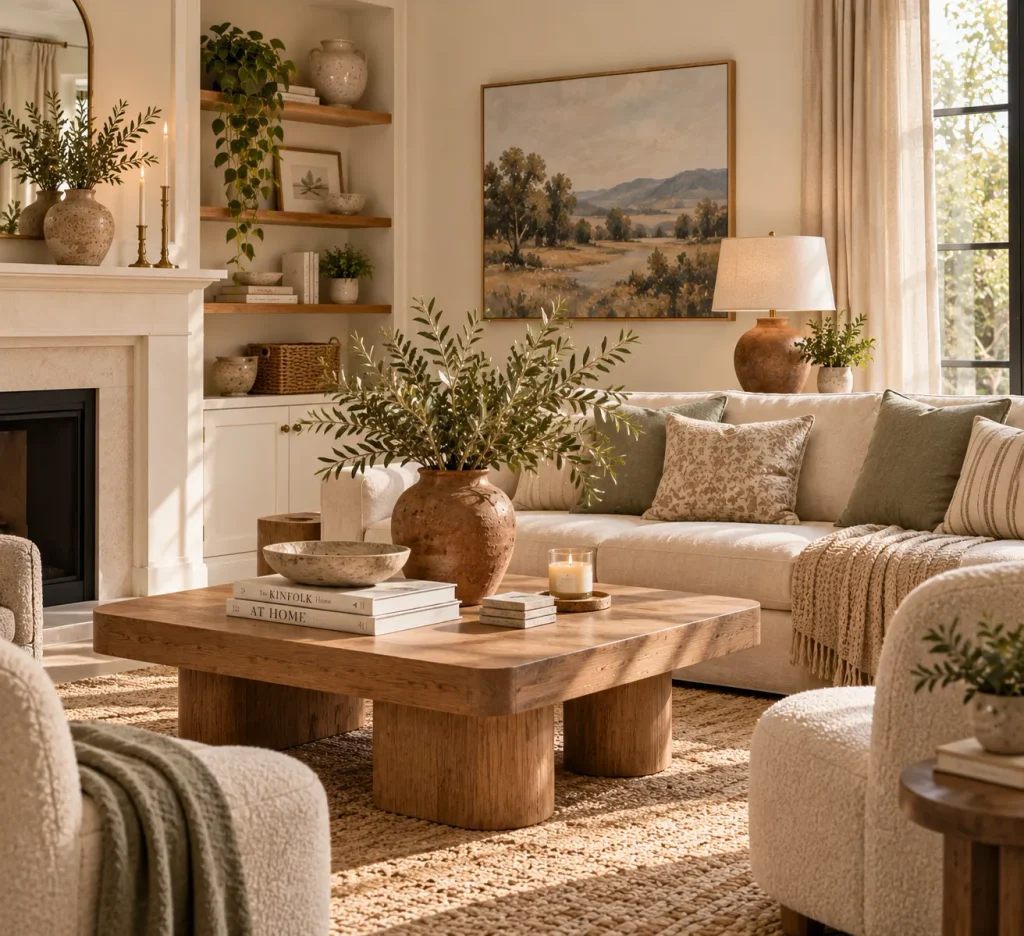
A small group of accent colors can give a room personality without making the overall palette feel scattered. Choose one main accent and one supporting shade, then repeat them through cushions, artwork, ceramics, throws, or small decorative pieces.
Keep most large furniture and permanent finishes relatively neutral so the accents remain easy to change. For example, muted sage can appear in artwork and greenery while warm clay shows up in a vase or cushion. This approach makes seasonal updates simple because the foundation remains consistent.
More Content Like : 23 Dreamy Bedroom Ideas to Create Your Perfect Retreat
Statement Coffee Table
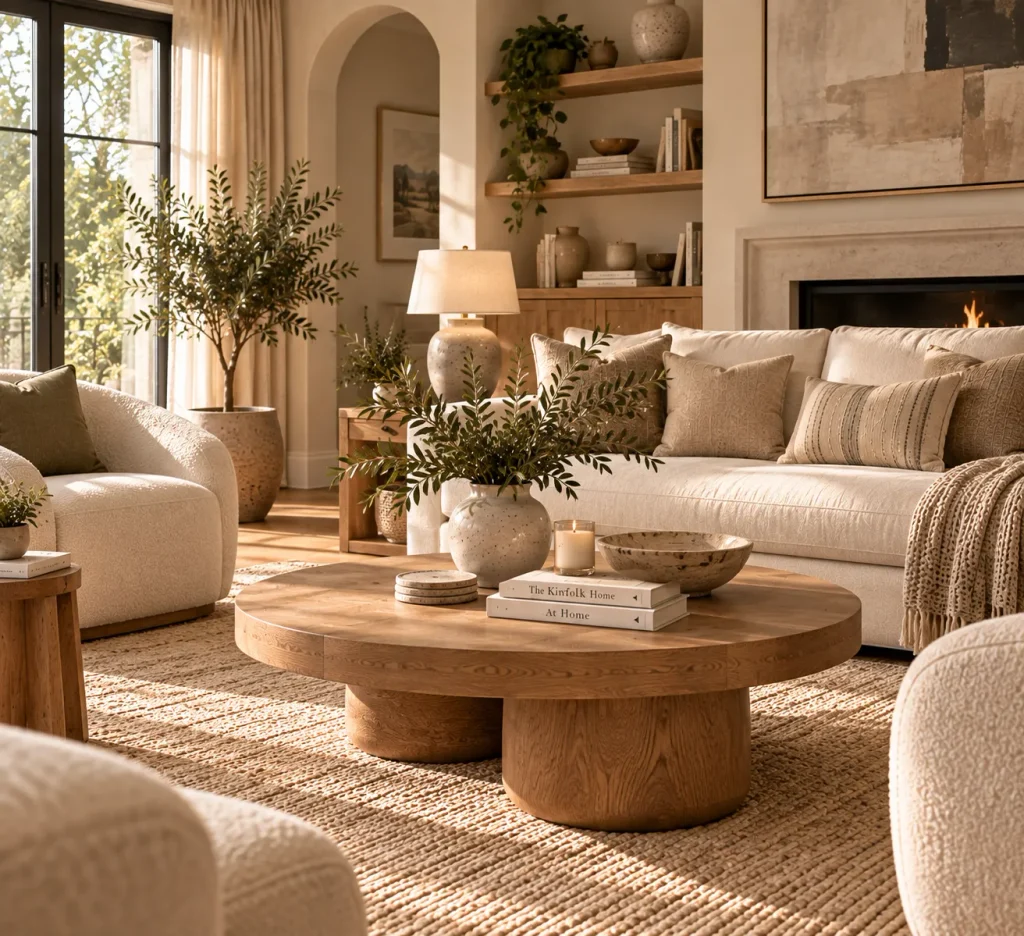
- Choose a table with enough surface area for everyday use without overwhelming the seating arrangement.
- Select a shape that balances the surrounding furniture, such as a round table with angular seating.
- Leave comfortable walking space around the table.
- Style the surface with a small tray, books, and one decorative object.
- Consider durable materials if the table will receive frequent daily use.
A distinctive coffee table can become the visual anchor of a seating area while remaining practical. Look for interesting wood grain, stone surfaces, rounded edges, or sculptural bases that complement the rest of the room.
Keep the surrounding furniture quieter if the table has a strong shape or material. I’ve noticed that a few carefully chosen objects are usually enough because the table itself provides much of the visual interest. The result feels intentional without becoming overly decorated.
Elegant Built-In Shelving
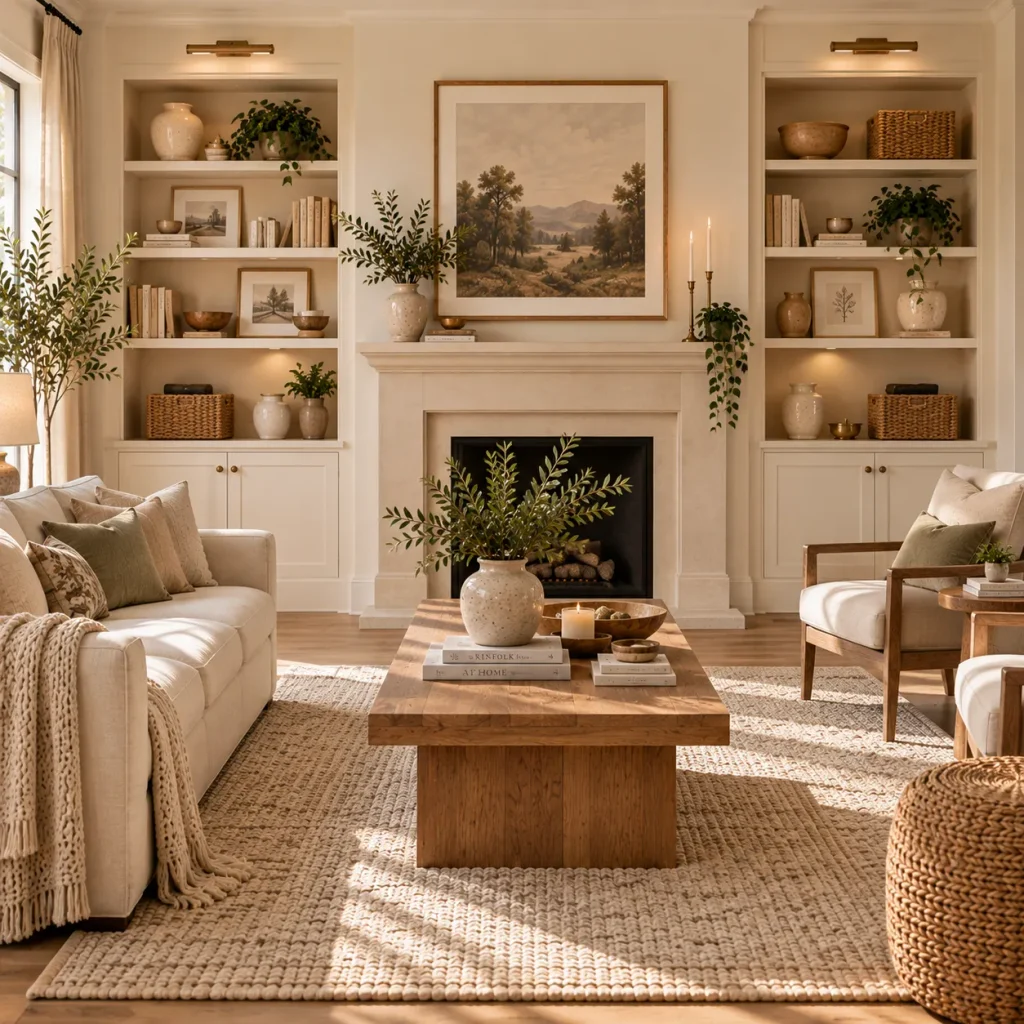
Cost: Moderate to high | Time: Several days | Skill Level: Professional installation for permanent units
Best For: Empty walls, fireplaces, offices, and living rooms | Works In: Transitional, classic, organic, and contemporary interiors
Result: More storage with stronger architectural character
Built-in shelving can make an empty wall feel intentional while providing useful storage. Keep the cabinetry simple, then introduce personality through books, artwork, ceramics, baskets, and greenery. Closed lower cabinets are useful for hiding everyday clutter while open shelves can display pieces worth seeing.
Plan the shelf spacing around the objects you actually own rather than filling every compartment equally. I’ve noticed that leaving some sections open gives decorative pieces more impact and prevents the arrangement from looking crowded. Repeat one or two materials from nearby furniture to connect the shelving with the rest of the room.
Soft Linen Curtains

Soft curtains can instantly make a room feel warmer and more finished. Linen or linen-look panels add subtle texture while allowing natural light to remain part of the room. Choose a shade close to your walls for a quiet effect or a slightly deeper neutral for gentle contrast.
Full-length panels can visually emphasize ceiling height when installed at an appropriate position above the window. Consider lining based on privacy and sunlight needs. In my experience, simple neutral curtains remain flexible through furniture changes, making them a useful foundation for bedrooms, living rooms, and dining spaces.
Decorative Ceramic Pieces
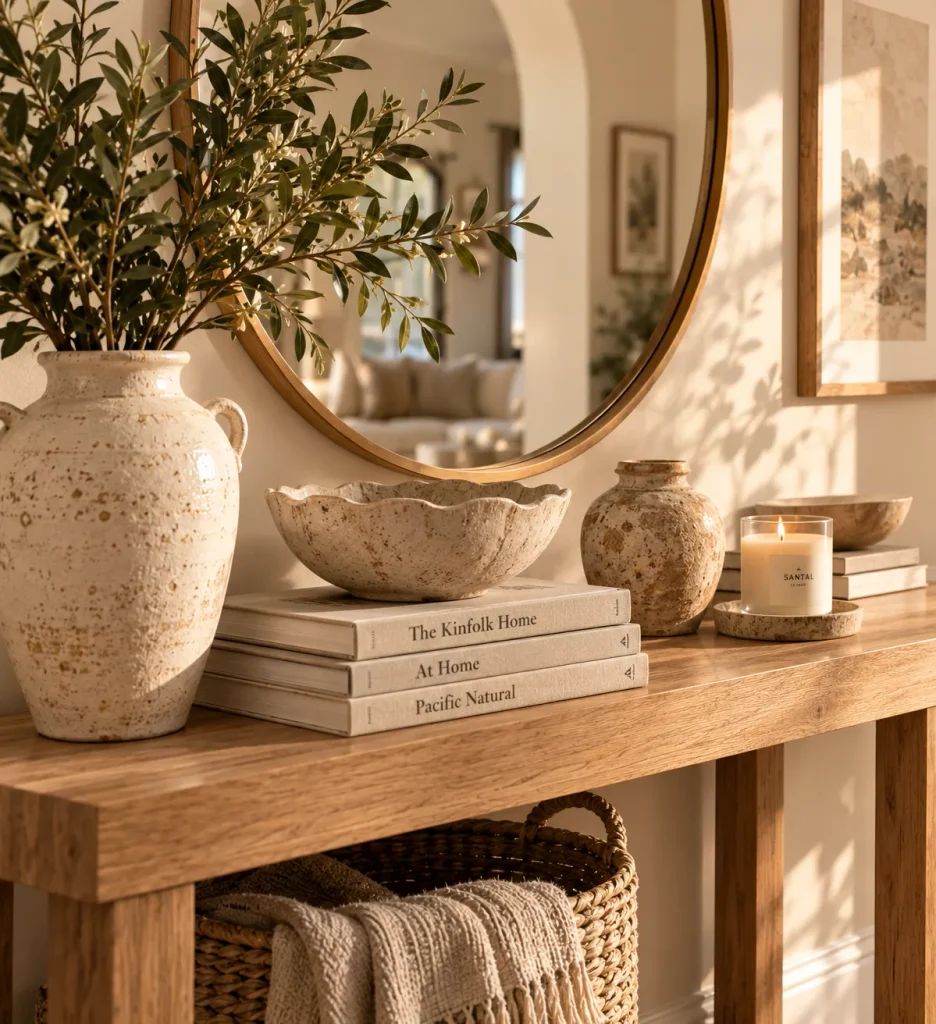
- Group ceramics in different heights to create a natural visual rhythm.
- Choose related tones such as cream, sand, warm white, or muted clay.
- Mix smooth glazed pieces with matte or handmade textures.
- Place larger vessels near furniture corners or shelves for visual balance.
- Leave open space around decorative pieces so their shapes remain visible.
Ceramics add quiet texture and handcrafted character without requiring strong colors or elaborate patterns. A handmade vase, shallow bowl, or sculptural vessel can bring personality to shelves, consoles, coffee tables, and dining areas.
Look for small variations rather than identical pieces if you want a collected appearance. Keep the palette connected to nearby furniture and textiles. A few well-placed ceramic objects can make a room feel personal while maintaining the calm, cohesive look that works well across changing seasons.
Arched Doorway Details
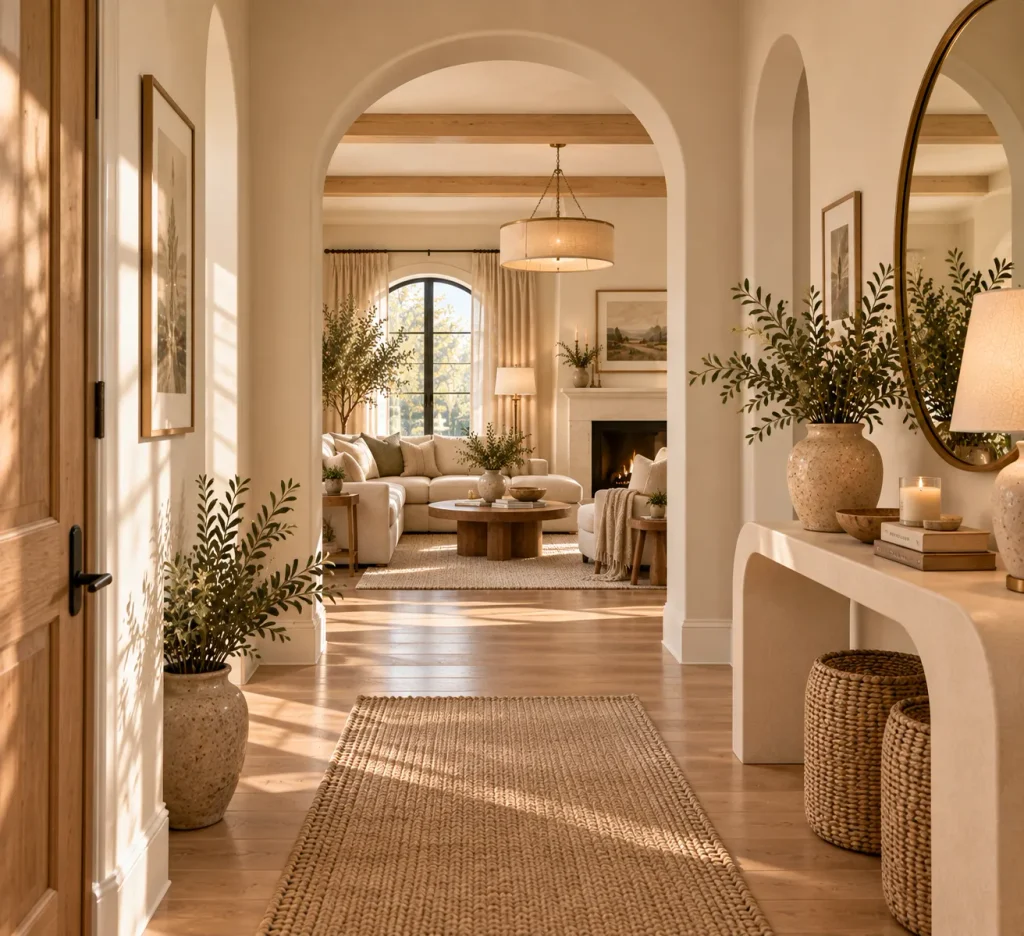
Cost: Moderate to high | Time: Depends on project | Skill Level: Professional for structural changes
Best For: Hallways, living rooms, and transitions between spaces | Works In: Organic, Mediterranean, transitional, and contemporary interiors
Result: Softer architectural flow
Rounded doorways can soften rooms filled with straight walls, rectangular furniture, and sharp architectural lines. An arch also creates a natural transition between connected spaces without requiring bold colors or elaborate decoration.
For a simpler approach, repeat the shape through an arched mirror, curved console, or rounded artwork. If altering an existing opening, confirm structural requirements before work begins. A curved architectural detail is most effective when nearby furniture and decor support the shape without repeating it excessively.
Layered Wall Artwork
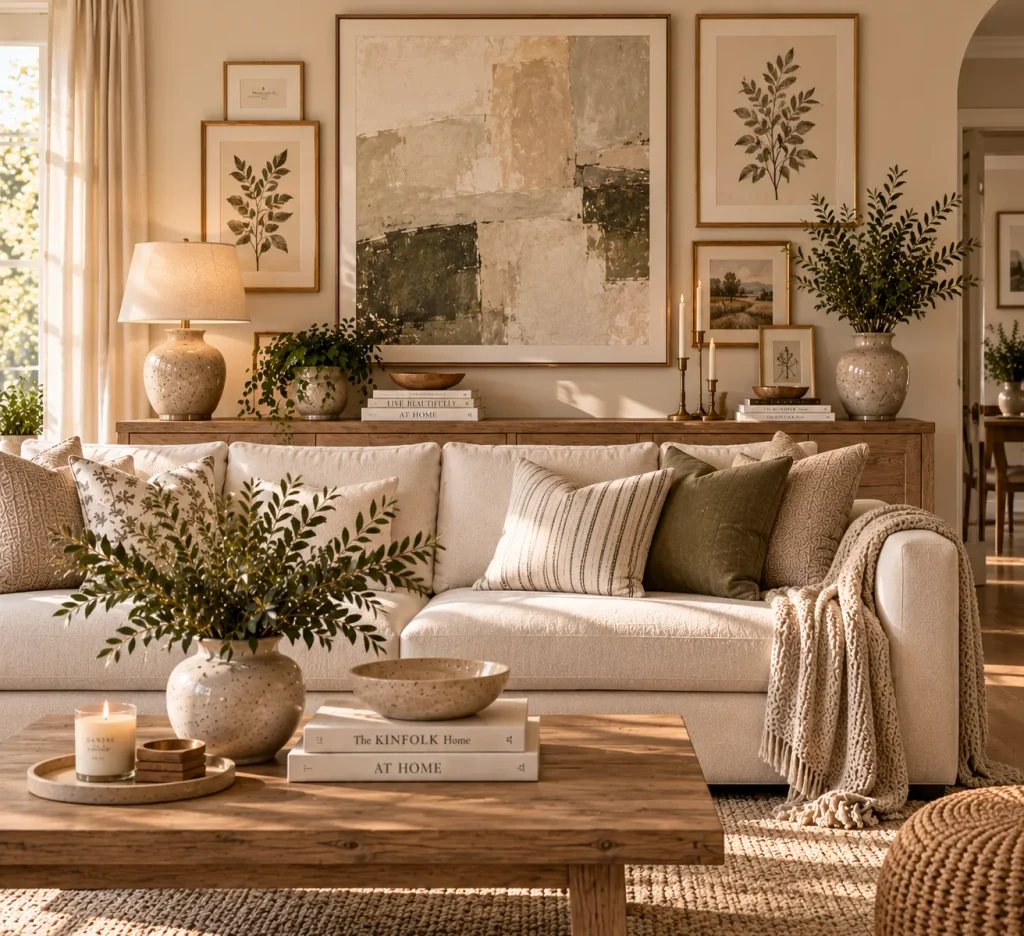
Artwork becomes more interesting when different sizes and textures share a visual connection. Start with one larger piece, then add smaller prints, photographs, or handmade artwork around it. Use a common color, frame finish, or subject to make the collection feel related without making every piece identical.
Leave enough breathing room between frames so the arrangement does not become crowded. I’ve noticed that mixing personal photographs with simple artwork makes a room feel much more lived-in. Before hanging anything, arrange the pieces on the floor and adjust their spacing until the overall composition feels balanced.
Hidden Clutter Storage
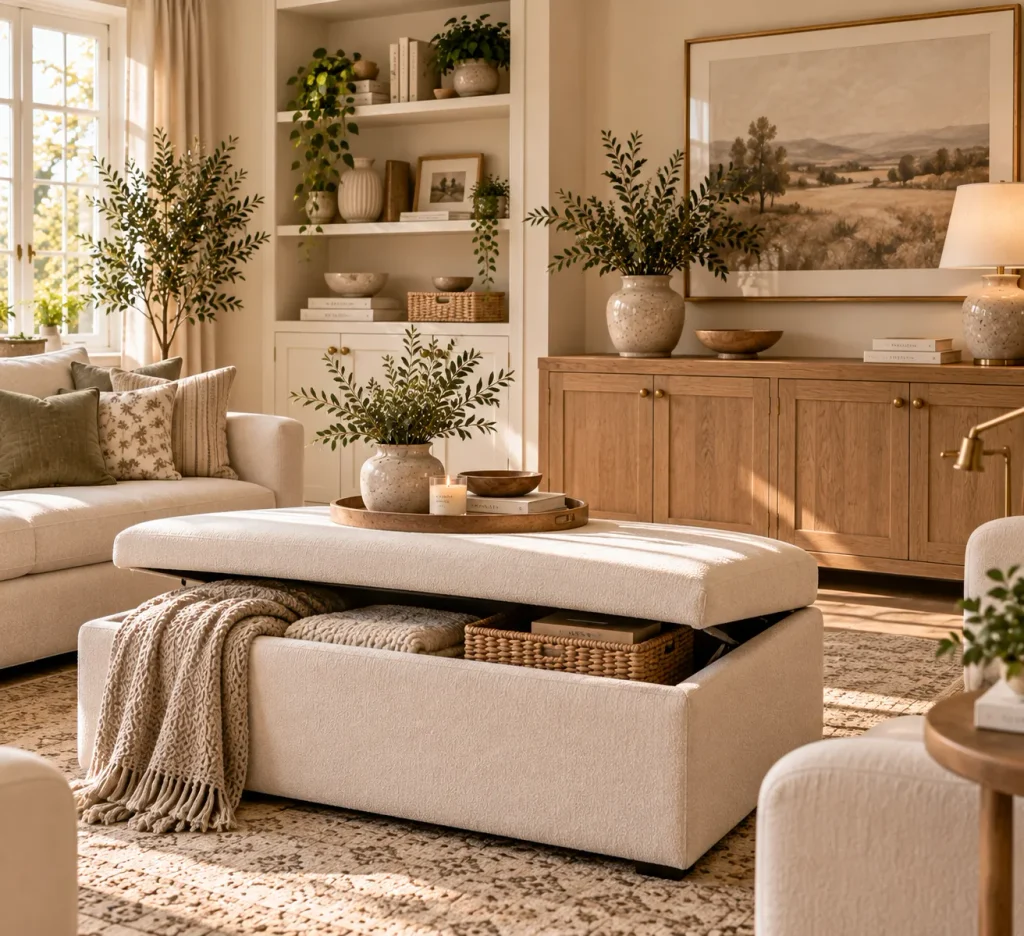
- Give frequently misplaced items a dedicated storage location close to where they are used.
- Choose baskets, ottomans, sideboards, or cabinets that match the room’s existing materials.
- Keep attractive everyday pieces accessible while hiding visually distracting supplies.
- Label hidden containers when several people share the storage system.
- Review stored items occasionally so unused belongings do not fill valuable space.
A cohesive room is easier to maintain when everyday clutter has somewhere convenient to go. Closed storage keeps visual surfaces calm while baskets and ottomans provide flexible solutions without adding bulky furniture.
Start by identifying where clutter collects most often, such as near the sofa, entryway, or dining table. Then place storage directly in that area. This simple approach makes tidying faster and helps the room retain its polished appearance during busy days.
CONCLUSION
Creating a cohesive home is about making thoughtful choices that work together rather than following every decorating trend. These home aesthetic ideas can help you bring more balance, warmth, texture, and personality into your rooms while keeping them practical for everyday life.
I’ve noticed that even small changes, such as repeating a color, improving lighting, or removing unnecessary clutter, can completely change how a room feels. Start with one idea that fits your space, then build gradually. Save this article on Pinterest for future inspiration, try your favorite ideas, and share it with someone planning a home refresh. Your most beautiful rooms can begin with one simple change.




2 Comments