
21 Brilliant Front Yard Landscaping Ideas to Try Today
A beautiful front yard can make your entire home feel more welcoming, even with a small budget. You don’t need expensive renovations or complicated garden designs to create a space you’ll love coming home to.
These front yard landscaping ideas will help you turn ordinary outdoor areas into attractive, inviting spaces with colorful flowers, neat pathways, decorative stones, beautiful shrubs, and charming garden features. Whether your yard feels bare, looks untidy, or simply needs a fresh look, you’ll find practical inspiration to suit different styles and spaces.
I’ve noticed that small details, such as adding a defined flower border or choosing plants with different heights, can make a garden feel much more finished. The key is to start with ideas that fit your space, sunlight, and maintenance needs. Explore these 21 ideas, discover your favorite designs, and find simple ways to boost curb appeal while creating a front yard that feels uniquely yours.
Curved Flower Borders

Curved flower borders can make the front of your home feel softer and more inviting. Instead of straight planting lines, use gentle curves to guide the eye from the walkway toward the entrance. Mark the shape with a garden hose before digging to see how it fits the lawn.
Choose flowers and shrubs with different heights, then repeat a few colors throughout the bed for a coordinated appearance. Place taller plants near the house and shorter varieties along the lawn edge. In my experience, repeating familiar plants creates a more polished look than mixing too many unrelated varieties.
Layered Foundation Plants
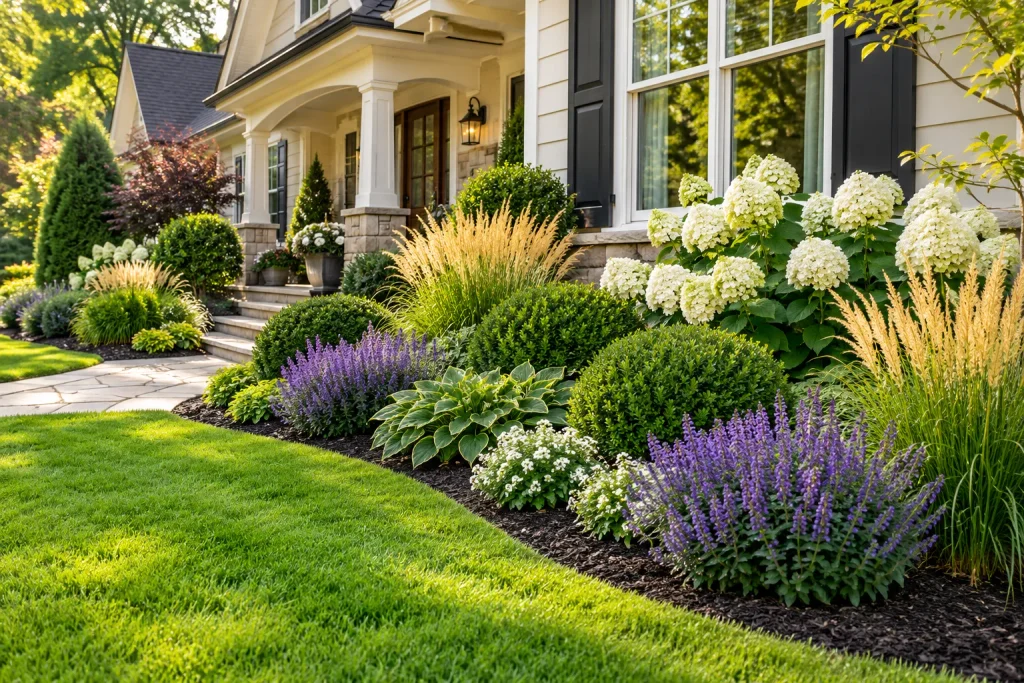
- Place taller shrubs near the house, leaving windows and vents unobstructed.
- Add medium-height flowering plants in front of the shrubs.
- Use compact perennials along the front edge to soften the lawn boundary.
- Repeat plant varieties to create visual rhythm across the facade.
- Check mature plant sizes before deciding spacing.
Layered planting gives the front of your home depth and helps connect the building with the surrounding garden. Choose varieties suited to your sunlight, soil, and climate so they remain healthy with manageable care. Leave enough room between shrubs and walls for airflow, maintenance, and future growth.
Stone Walkway Borders
Quick Tip:
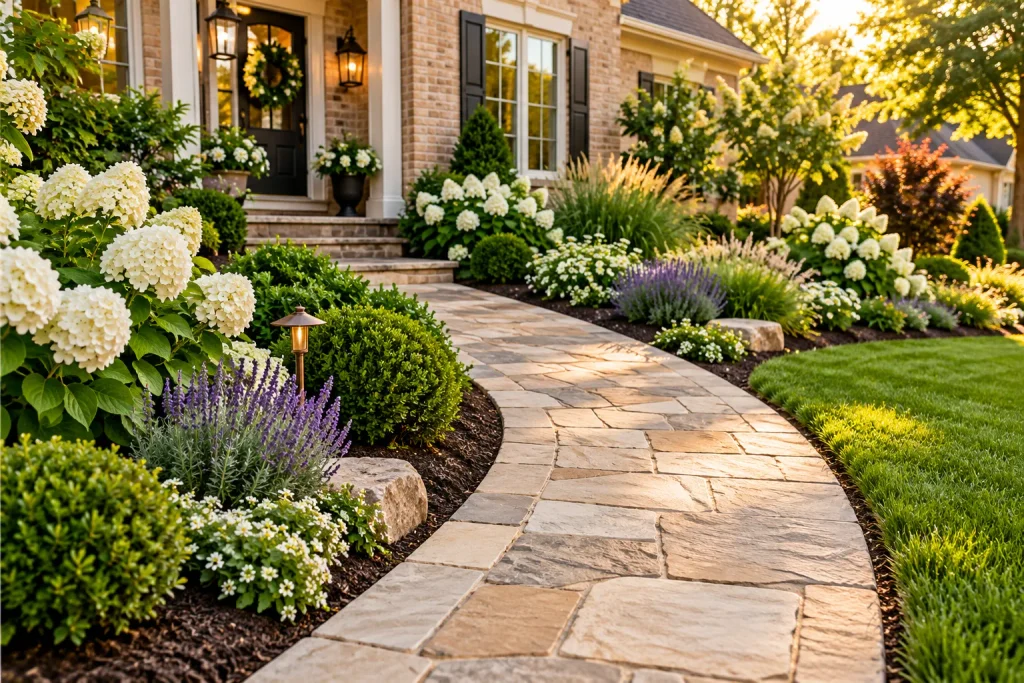
Define both sides of your front walkway with a consistent edging material, such as natural stone or brick. Keep plants low enough to preserve a clear walking route, and choose varieties that will not spread across the paving as they mature.
A bordered walkway makes the entrance easier to follow and gives the entire front garden a more finished appearance. Match the edging to your home’s exterior or existing paving for a connected design. For frequently used paths, ensure the surface stays stable and level to make walking safer in different weather conditions.
MORE INFO : 24 Beautiful Home Aesthetic Ideas for a Cohesive Look
Colorful Entryway Planters
BEFORE
A front entrance can feel plain when the doorway has no greenery or decorative details. Empty steps and bare corners may also make the transition between the walkway and the house look unfinished.
AFTER
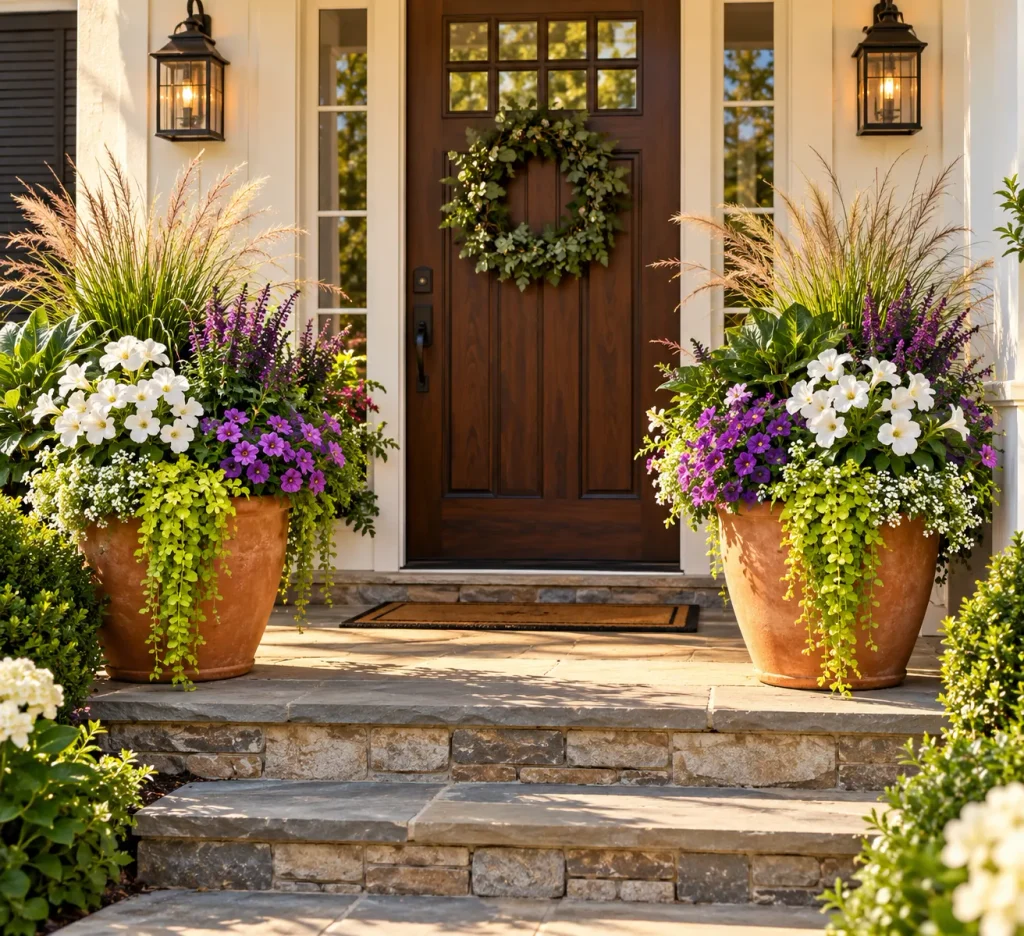
Matching planters introduce color, texture, and a clear focal point around the entrance. Seasonal flowers or evergreen arrangements can make the doorway feel welcoming without requiring a full garden redesign.
Choose containers that suit the width of your steps and leave enough room for people to pass comfortably. Use pots with drainage holes, and select plants suited to the amount of direct sunlight the entrance receives. Repeating the same planter style on both sides creates a balanced appearance.
Low Evergreen Hedges
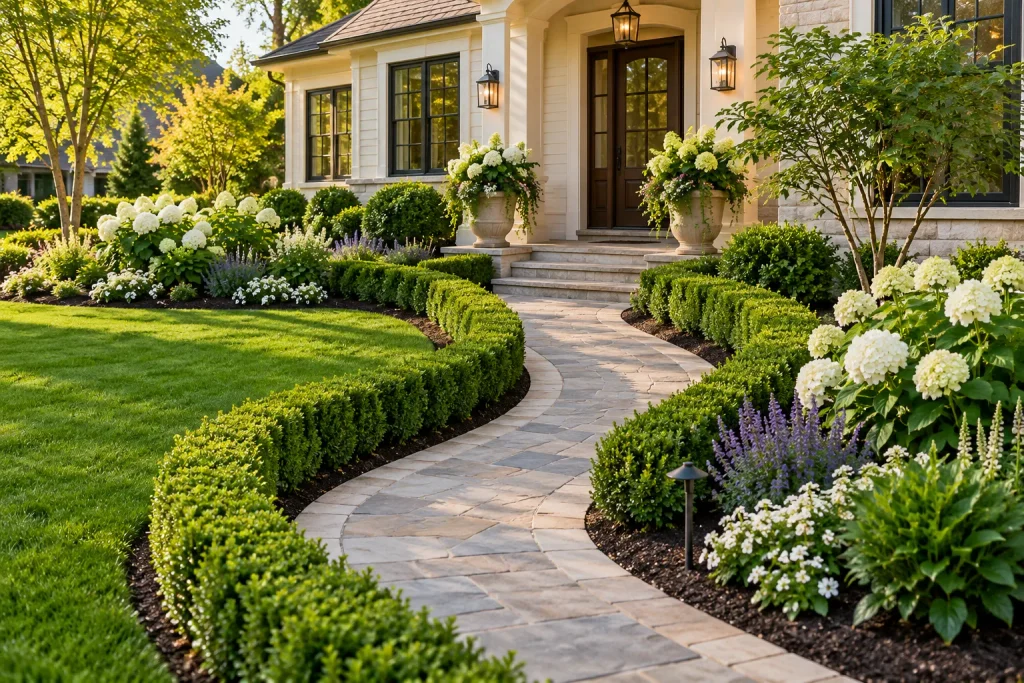
- Mark the hedge line: Use string to create a straight or gently curved boundary along the path or lawn.
- Choose compact shrubs: Select evergreen varieties suited to your climate and the mature height you want.
- Measure spacing: Follow plant recommendations so the hedge can fill out without becoming overcrowded.
- Prepare the soil: Improve drainage and soil conditions before planting where necessary.
- Water consistently: Give new shrubs suitable moisture while their roots establish.
Low hedges create a tidy boundary that helps separate the lawn from paths and planting beds. Their year-round foliage provides structure even when seasonal flowers fade. Choose slow-growing varieties if you prefer less frequent trimming, and leave enough space around corners to preserve visibility near entrances and driveways.
Decorative Lawn Edging

| Feature | Option A: Plastic Edging | Option B: Natural Stone |
| Appearance | Simple and understated | Textured and substantial |
| Installation | Often lightweight and flexible | May require a prepared base |
| Durability | Depends on material and exposure | Generally long-lasting when installed well |
| Best For | Curved or budget-conscious borders | Defined, decorative lawn edges |
A clear lawn edge gives the front garden a maintained appearance and helps keep grass from spreading into flower beds. Choose an edging material that suits your budget, soil, and garden style. Install it at a consistent height, and make sure it does not create a raised obstacle along frequently used walking routes.
Flowering Mailbox Garden
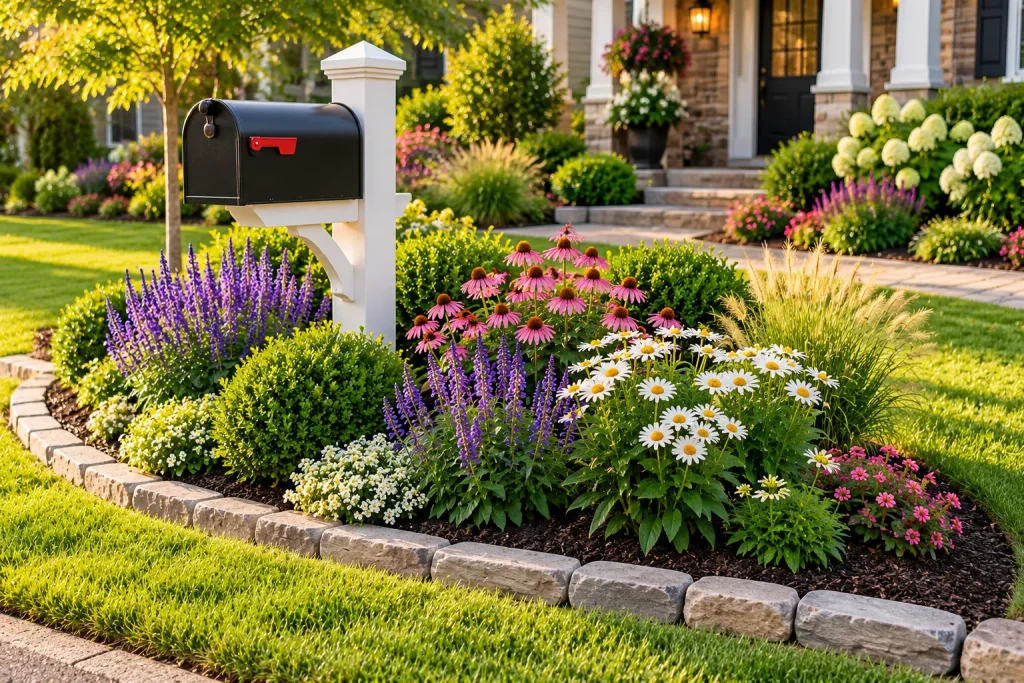
DO
- Plant compact flowers that complement your home’s exterior colors.
- Use low-growing varieties near the mailbox for easy access.
- Add a neat stone or brick border around the planting bed.
- Choose flowers suited to your local climate and sunlight.
DON’T
- Block the mailbox opening with tall plants.
- Let thorny shrubs crowd the post or approach.
- Plant varieties that spread aggressively into the lawn.
- Forget to leave clear access for mail delivery.
A flowering mailbox garden adds color to an often-overlooked part of the front yard. Keep the planting bed compact and repeat two or three flower colors for a coordinated look. In my experience, a simple border and a few well-chosen plants can make even a basic mailbox feel like part of the landscape design.
Symmetrical Entrance Shrubs
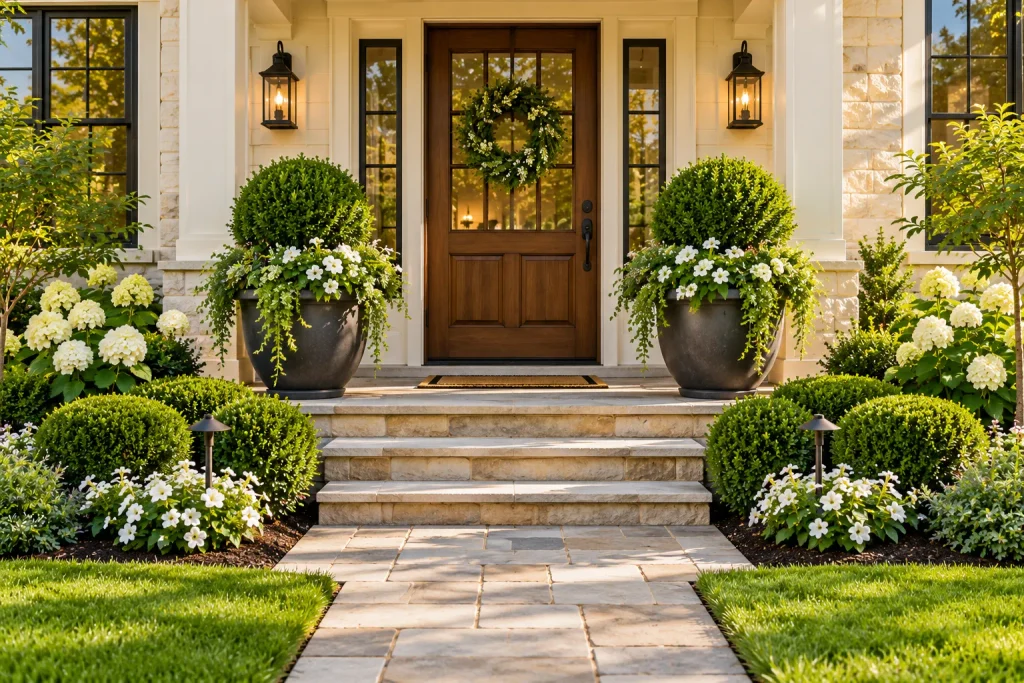
Cost: Moderate | Time: One afternoon | Skill Level: Beginner
Best For: Front doors, porch steps, and covered entrances
Plant Choices: Compact evergreens suited to local conditions
Result: A balanced and organized entryway
Matching shrubs create a clear visual frame around your front entrance. Choose plants that stay proportionate to the doorway and select containers with drainage holes if you are planting in pots. Leave enough space for doors to open fully and for visitors to walk comfortably around the planters.
Curved Garden Borders

Gentle curves can make a front garden feel more natural and guide attention toward the entrance. Mark the proposed shape with a garden hose before removing grass, then view it from the street and front door to check the proportions.
Use a consistent edging material and repeat selected plants along the curve to connect the different sections. Avoid making the border too narrow for the plants you choose. A little extra planting depth gives shrubs and flowers room to mature while keeping the lawn edge easy to maintain.
More Content : 22 Inspiring Home Decor Ideas You’ll Love for Years
Raised Stone Flower Beds
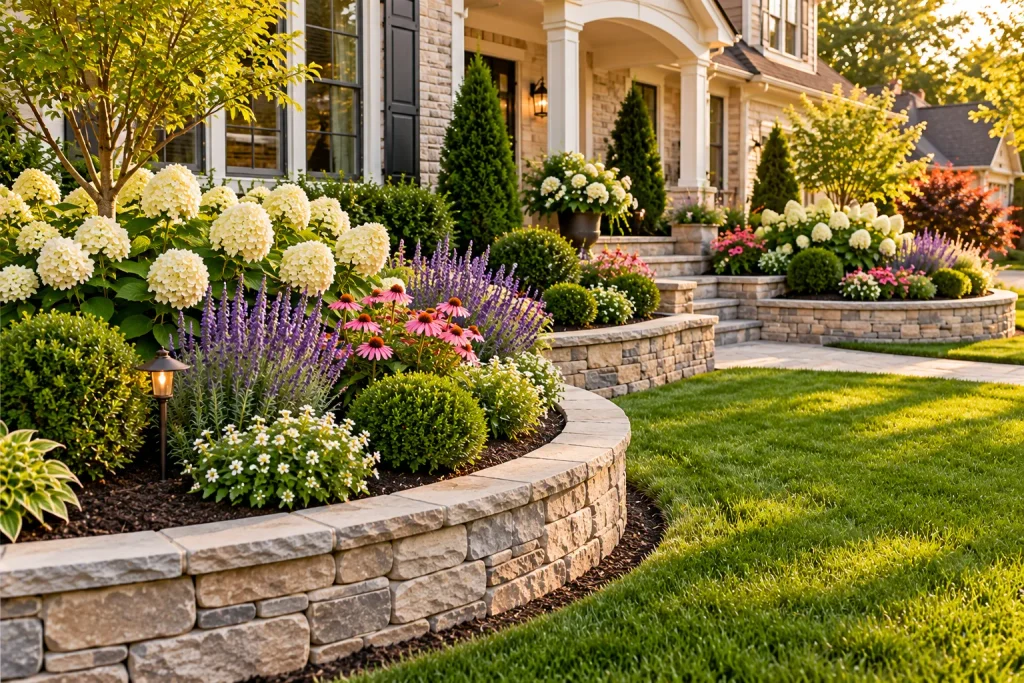
BEFORE
Flat planting areas can look messy when grass spreads into flower beds or soil washes onto the walkway. Plants may also lack a clear visual boundary, making the front garden feel unfinished.
AFTER
Raised stone beds create a defined planting area with extra depth and texture. Their sturdy edges separate flowers from the lawn and can help organize sloped sections when designed with suitable drainage.
Choose stone that complements your home’s exterior and keep the bed height proportionate to nearby steps and windows. Use a suitable base and plan drainage carefully, especially on slopes. Leave enough planting depth for healthy roots without creating an awkward barrier beside the entrance.
Front Yard Rock Garden

- Choose the location: Select a sunny area or a spot where grass struggles to grow.
- Arrange the stones: Place larger boulders first, then group smaller stones naturally around them.
- Prepare the ground: Remove weeds and address drainage before spreading gravel.
- Add suitable plants: Choose varieties that match the light, soil, and moisture conditions.
- Finish with gravel: Spread an even layer while leaving plant crowns and stems appropriately exposed.
A rock garden adds structure and texture while reducing the area that needs mowing. Combine a few stone sizes with carefully selected plants instead of scattering rocks randomly. For a cohesive result, repeat the same gravel color near the walkway or other garden features.
Front Walkway Lighting

| Feature | Option A: Solar Path Lights | Option B: Wired Landscape Lights |
| Installation | Usually simple | May require professional work |
| Power | Sunlight and stored energy | Electrical supply |
| Placement | Flexible where sunlight is available | Flexible with suitable wiring |
| Maintenance | Battery and panel care | Fixture and electrical checks |
Path lighting helps visitors see the route to your front door after sunset while highlighting garden edges. Place fixtures near steps, turns, and changes in the walkway rather than lining every inch with lights. Choose outdoor-rated products and position beams carefully to avoid glare toward windows or the street.
Flowering Ground Cover
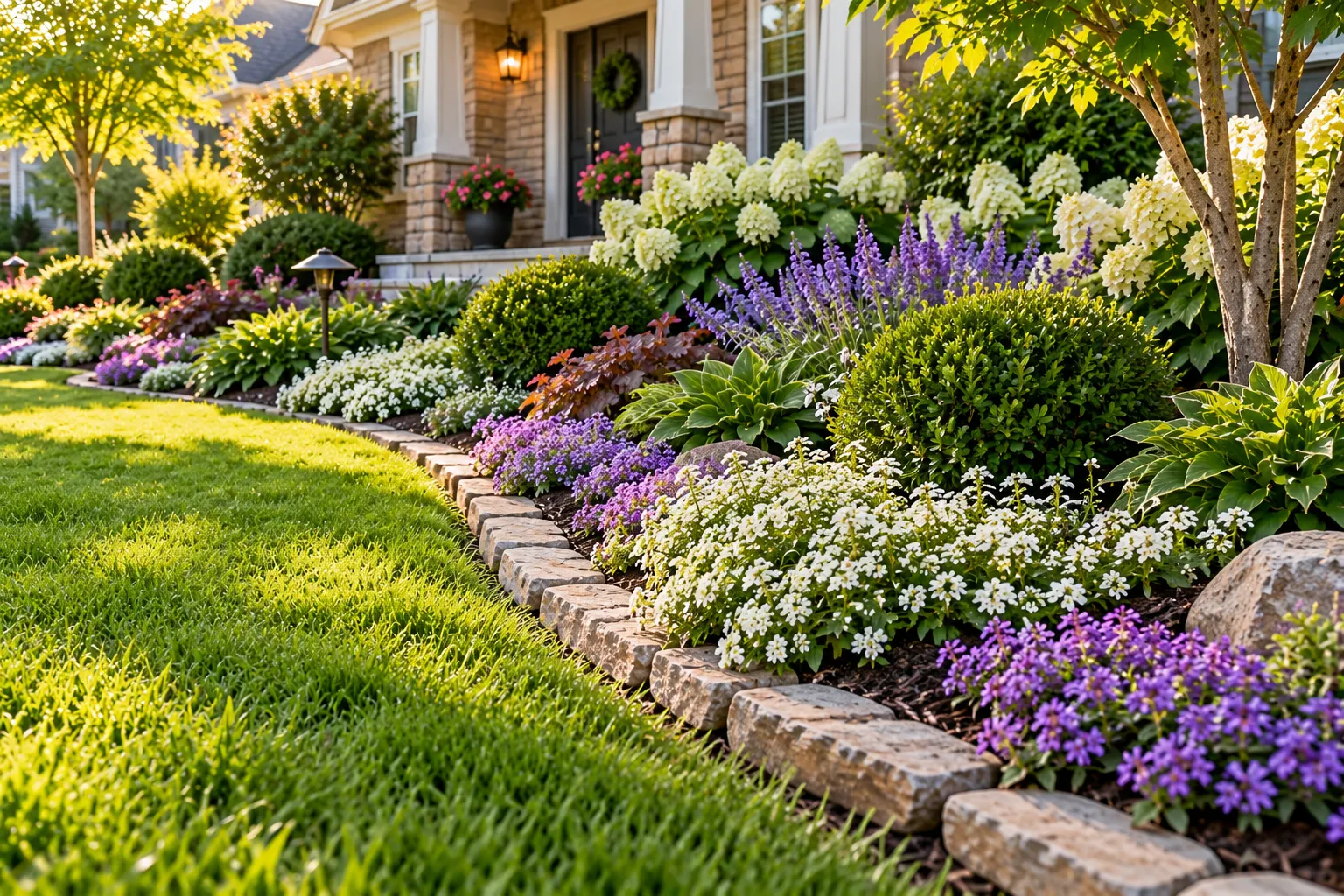
- Choose a ground cover suited to your climate, soil, and sunlight.
- Remove weeds and loosen the soil before planting.
- Space plants according to their expected mature width.
- Water regularly while the roots become established.
- Add a neat border to keep the planting area defined.
Flowering ground cover fills bare patches and softens the edges between lawns, paths, and taller plants. It can also reduce the need to mow awkward corners. Choose varieties that stay manageable and avoid invasive spreaders. Leave enough room around walkways so plants do not become slippery or create tripping hazards.
Ornamental Specimen Tree
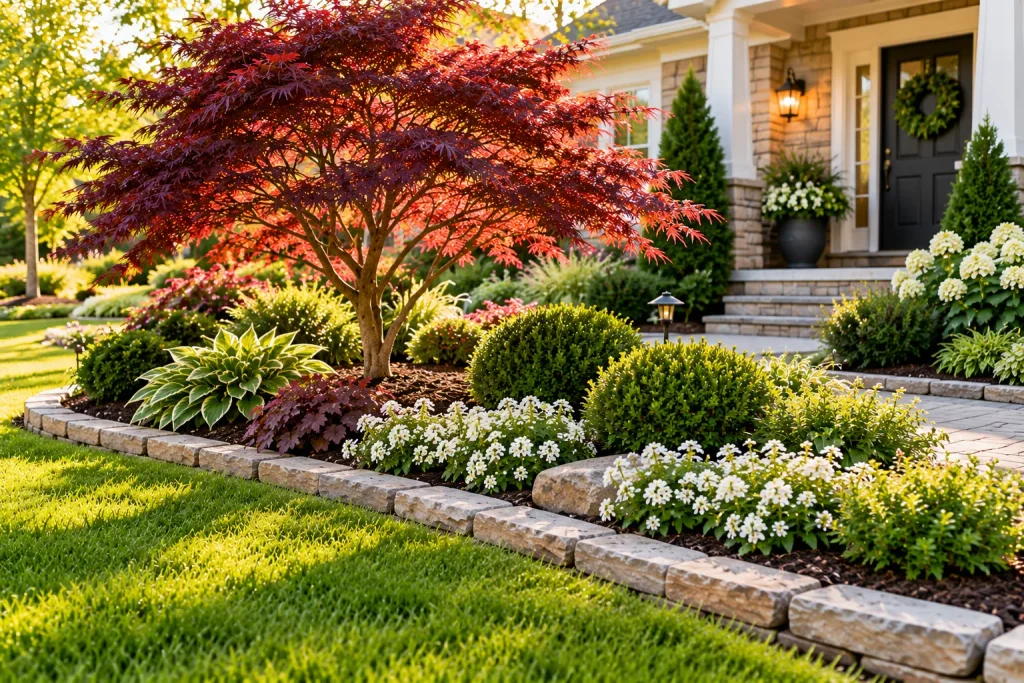
| Feature | Flowering Dogwood | Japanese Maple |
| Visual appeal | Seasonal spring flowers | Distinctive leaf colors and shapes |
| Best placement | Partly shaded garden areas | Sheltered areas suited to the variety |
| Maintenance | Pruning as needed | Protection from harsh conditions when required |
| Overall effect | Soft, classic charm | Sculptural, elegant focal point |
A small ornamental tree can give the front yard a clear focal point without overwhelming the house. Choose a variety that fits the available space at maturity, and check its sunlight and soil requirements before planting. Keep the trunk visible, allow room for roots, and avoid placing it where mature branches will block windows or pathways.
Gravel Driveway Border
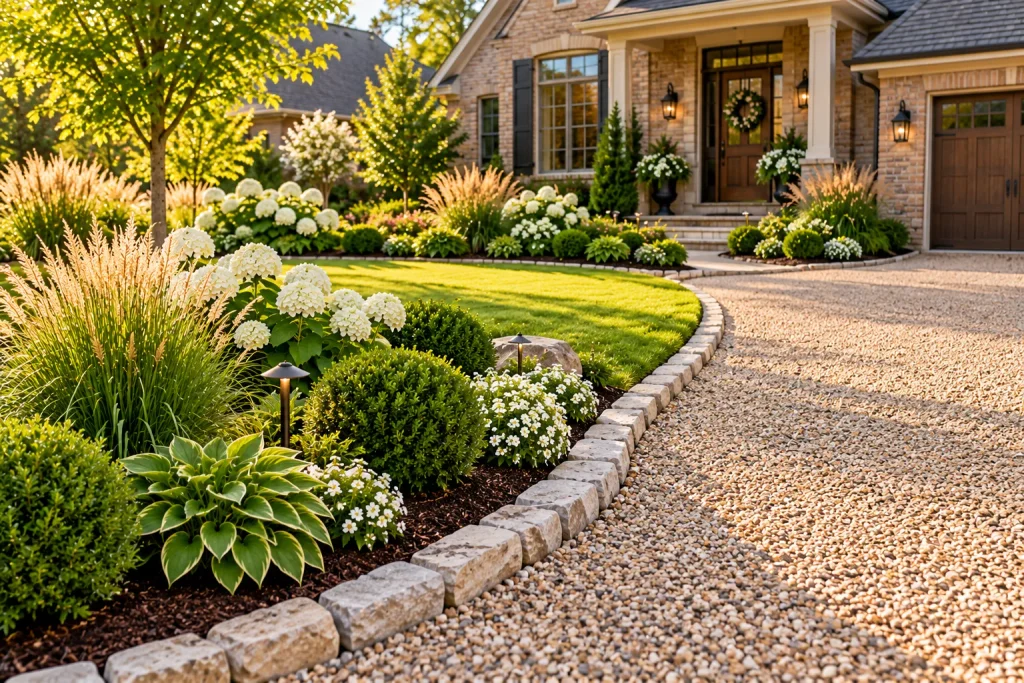
DO:
- Use edging to keep gravel from spreading onto the lawn.
- Choose plants that tolerate the driveway’s sun and drainage conditions.
- Repeat a few plant varieties for a tidy, connected look.
- Leave enough clearance for vehicles and doors.
DON’T:
- Place large rocks where tires need to turn.
- Plant thorny shrubs beside areas where people walk.
- Allow gravel to cover nearby drains.
- Choose delicate plants that cannot handle reflected heat.
A defined driveway border makes the entrance look more finished and connects the driveway with the rest of the garden. Gravel, stone edging, and hardy plants work well together when their colors complement the house. Keep the planting strip practical, especially near turning areas, gates, and places where visitors need to step out of a vehicle.
Drought Tolerant Plants

- Identify sunny or dry areas where water is limited.
- Select plants suited to your local climate and soil.
- Improve drainage if your chosen plants dislike soggy roots.
- Group plants with similar watering needs.
- Add mulch or gravel to help manage moisture and weeds.
Drought-tolerant planting can make a front garden easier to maintain once plants are established. Lavender, ornamental grasses, and suitable succulents offer different shapes and textures without requiring a crowded layout. Check local growing conditions before choosing varieties, and water new plants as needed while their roots develop. Lower water use does not mean no watering.
Decorative Garden Boulders
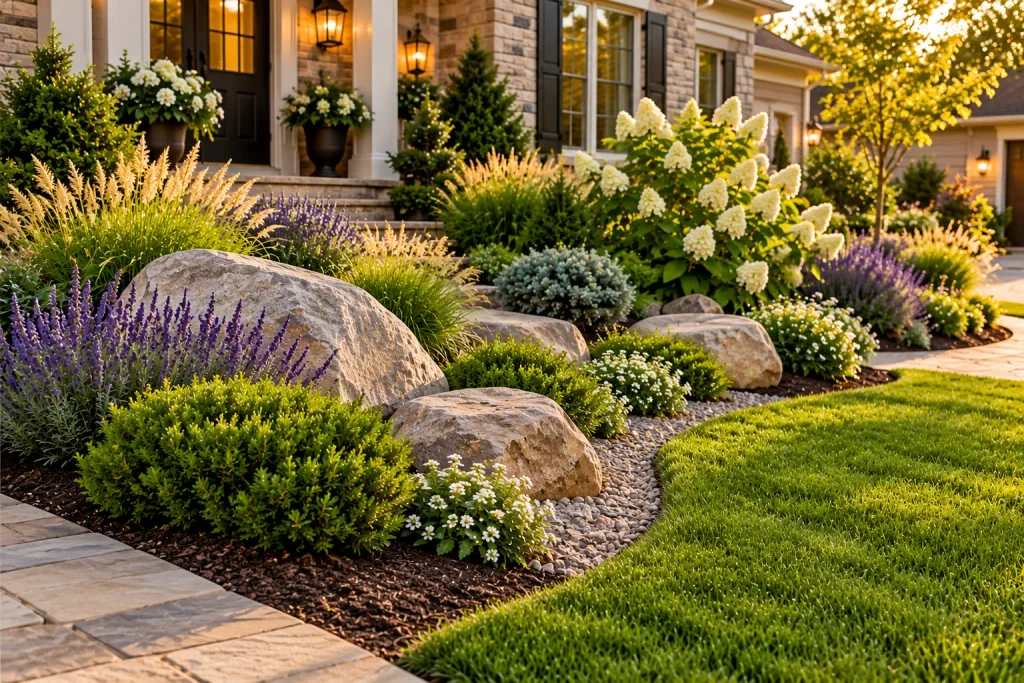
| Design choice | Large Feature Boulder | Grouped Small Rocks |
| Visual effect | Creates one strong focal point | Adds texture across a wider area |
| Best location | Open planting bed or lawn corner | Along garden borders or pathways |
| Installation | Often needs careful positioning | Usually easier to arrange individually |
| Plant pairing | Ornamental grasses and low shrubs | Ground cover and compact perennials |
Natural boulders add structure to a front yard throughout the year, even when flowers are not in bloom. Choose stones that suit the house and surrounding landscape, then arrange them so they look naturally placed rather than scattered randomly. Set heavy rocks securely, keep them clear of walking routes, and leave enough space for nearby plants to grow.
Rain Garden Planting

DO:
- Observe where rainwater naturally collects or flows.
- Choose locally suitable plants that tolerate the site’s wet and dry periods.
- Direct runoff away from the house foundation.
- Use stones or ground cover to reduce soil erosion.
DON’T:
- Place the garden where water could enter the home.
- Assume every soil type drains at the same rate.
- Plant species that cannot tolerate occasional wet conditions.
- Ignore underground utilities or existing drainage lines.
A rain garden can turn a problem area into an attractive planting feature while helping manage runoff. Native plants are often a useful starting point because they may be adapted to local weather and soil conditions. Check drainage carefully before digging, and make sure water can collect safely without remaining where it could damage nearby structures.
Seasonal Flower Displays

Seasonal flowers keep the front garden looking fresh as the weather changes. Choose a small color palette so different blooms work together instead of competing for attention. In spring, consider pansies or snapdragons; in warmer months, use suitable zinnias or marigolds. Check your local planting calendar, sunlight, and watering needs before choosing varieties.
Mixing flowers with evergreen plants also helps the garden look appealing between blooming seasons. Place taller flowers toward the back of the bed and shorter varieties near the edge for a layered appearance. Remove faded blooms when appropriate, watch for weeds, and leave enough space between plants for healthy growth and airflow.
Front Yard Privacy Shrubs
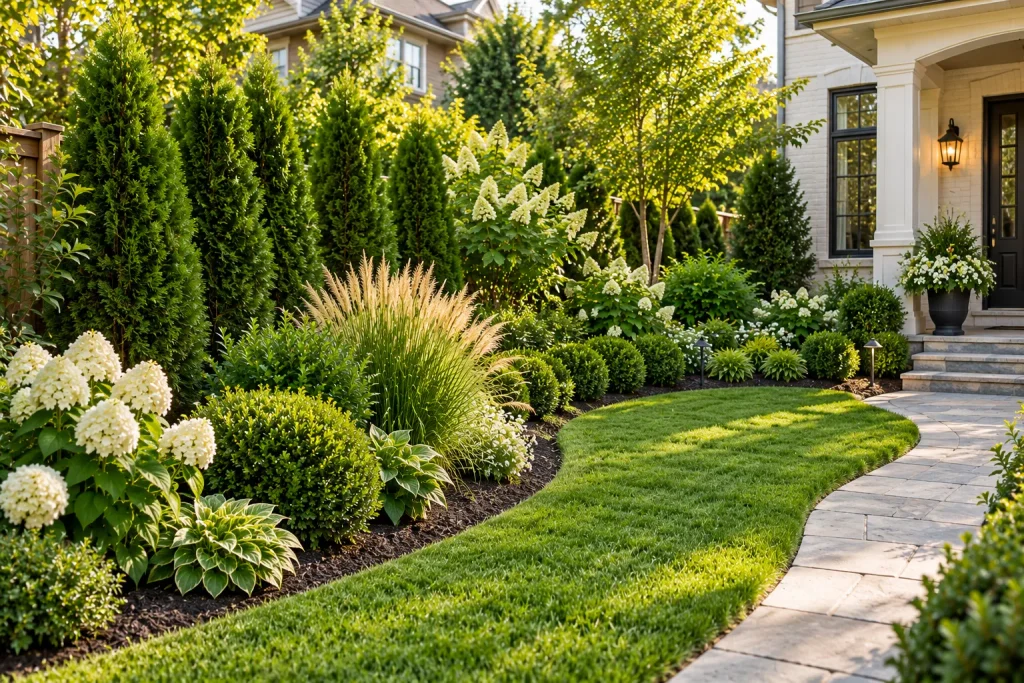
| Planting option | Evergreen Shrubs | Mixed Shrubs |
| Appearance | Consistent greenery throughout the year | Varied foliage, flowers, and seasonal color |
| Privacy | Useful for a continuous screen | Can provide a softer, less uniform screen |
| Maintenance | Depends on growth rate and pruning needs | Requires care suited to each plant variety |
| Best for | A neat, defined boundary | A natural-looking layered garden |
Shrubs can create a sense of privacy without making the front yard feel closed off. Select varieties that suit your climate and grow to an appropriate mature height. Staggering plants slightly can produce a fuller look, while mixing foliage shapes adds visual interest. Keep shrubs away from sightlines near driveways and entrances so people can move safely.
Welcoming Garden Bench

DO:
- Choose a level spot with enough room to sit comfortably.
- Place the bench where it complements the garden and entrance.
- Add a few flowers or compact shrubs nearby.
- Select weather-resistant materials suited to your climate.
DON’T:
- Block the main walkway or front door.
- Place the bench on unstable or uneven ground.
- Crowd the seating area with oversized plants.
- Forget that wood and metal may need seasonal care.
A small garden bench makes the front yard feel more personal and gives you a place to enjoy the flowers or take a short break outdoors. Keep the surrounding design simple, with a clear path and a few well-chosen plants. Even a modest seating corner can add charm when its materials and colors complement the home’s exterior.
CONCLUSION
Creating a welcoming front yard doesn’t have to happen all at once. With these front yard landscaping ideas, you can start small, add color and texture, and gradually build an outdoor space that complements your home. A simple stone border, a few flowering plants, or a cozy garden bench can make a meaningful difference.
Choose one idea that fits your budget and available space, then enjoy the process of making it your own. Save this article on Pinterest so you can revisit your favorite designs, and share it with friends or family looking for garden inspiration. Your beautiful front yard can begin with one small, thoughtful change today!