24 Stunning Backyard Landscaping Ideas That Add Curb Appeal
A beautiful backyard can make your home feel more welcoming, colorful, and connected to nature. The right landscaping choices can turn an ordinary lawn into an outdoor space you love spending time in.
Whether your yard feels plain, has awkward corners, or needs more color and structure, these backyard landscaping ideas offer practical inspiration for creating a more attractive garden. From curved flower beds and stepping stone paths to decorative borders, evergreen shrubs, and peaceful water features, there are options for different layouts, budgets, and gardening experience levels.
In my experience, a well-planned backyard does not need dozens of plant varieties or expensive materials. Repeating a few complementary plants, defining lawn edges, and choosing features that suit your space can create a more cohesive result. The key is to consider sunlight, drainage, and mature plant sizes before getting started.
Explore these 24 ideas to find simple ways to improve your garden’s appearance, make outdoor areas more useful, and create a landscape that feels like your own.
Curved Garden Borders
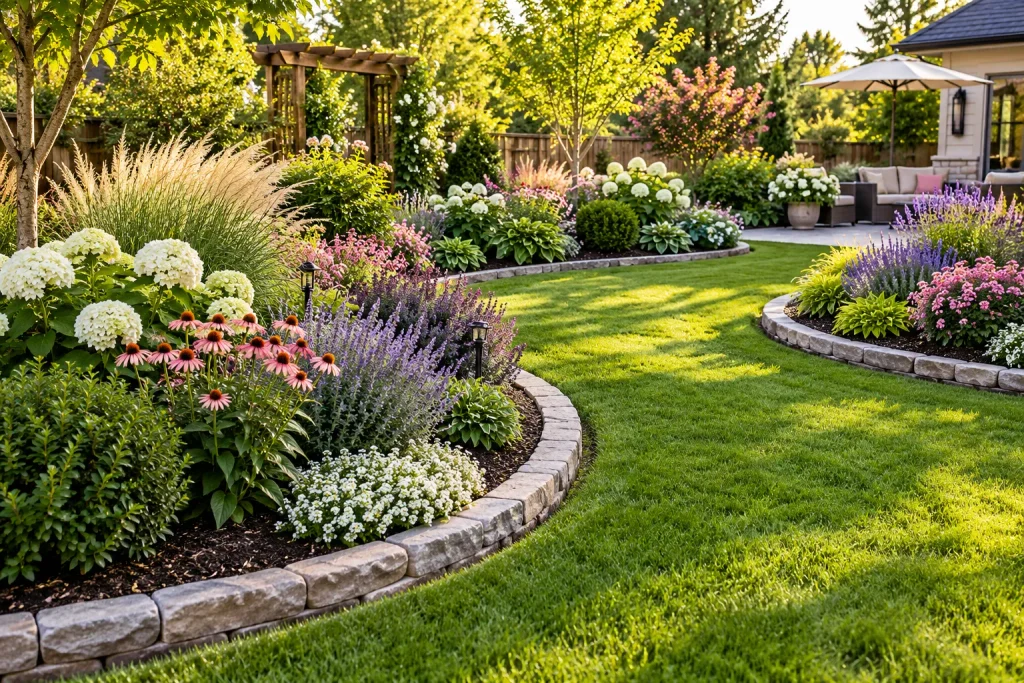
Curved garden borders can make a plain backyard feel more natural and thoughtfully designed. Instead of running straight lines along every fence, create gentle curves that guide the eye around the lawn and toward colorful planting beds. Use a garden hose to test the shape before digging.
Choose plants with different heights, leaf textures, and flowering seasons to keep the border interesting throughout the year. Place taller shrubs toward the back and shorter flowers along the front edge. In my experience, repeating a few plant varieties creates a more cohesive look than filling every gap with something different.
Layered Flower Beds
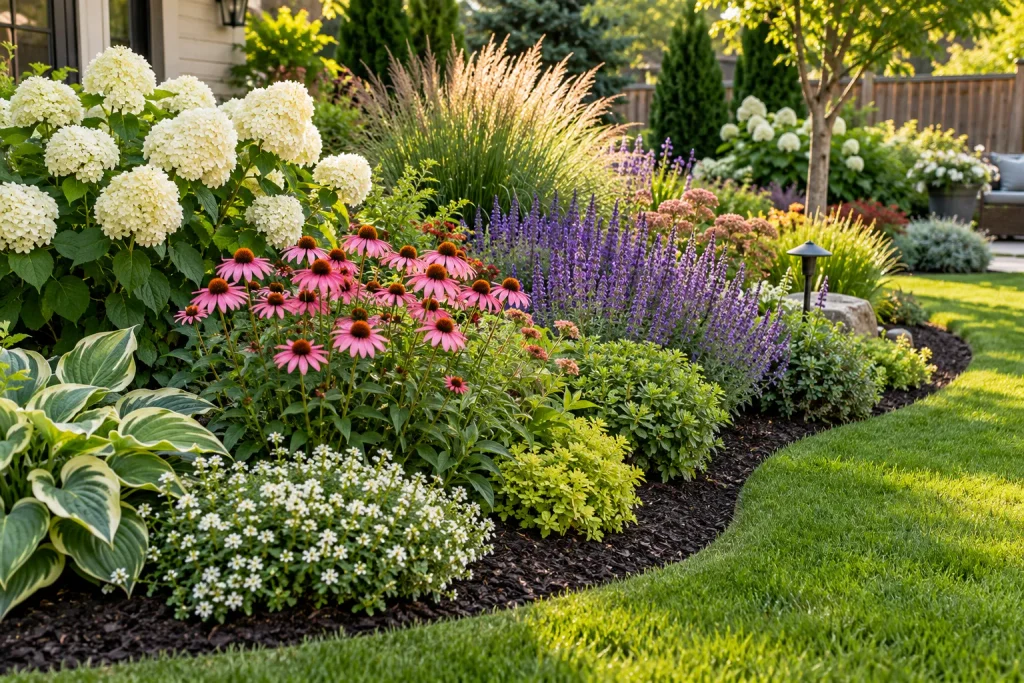
- Place taller shrubs and flowering plants toward the back of the bed.
- Arrange medium-height plants in groups rather than isolated single specimens.
- Use low-growing flowers or ground covers along the front edge.
- Repeat two or three flower colors to create a connected palette.
- Add mulch to help retain soil moisture and reduce weed growth.
Layered planting gives a backyard more depth because each row contributes a different height, color, and texture. Check the mature width and sunlight needs of every plant before arranging them. Leaving enough growing room helps prevent overcrowding and reduces the need to move plants after they become established.
More Content : 23 Dreamy Bedroom Ideas to Create Your Perfect Retreat
Stepping Stone Path

Quick Tip:
Lay the stones out on the ground before installing them so you can test the walking distance and direction. Keep spacing comfortable for a natural stride, and make sure each stone sits firmly and level to reduce tripping risks.
A stepping stone path connects different backyard areas while adding structure without covering the entire lawn. Choose stone shapes and colors that complement your home, garden edging, or patio materials. For frequently used routes, prepare a stable base and secure the stones properly so they remain level through regular use and changing weather.
Decorative Rock Garden

BEFORE
A bare backyard corner can look unfinished, especially where grass struggles to grow or watering is difficult. Repeatedly planting flowers in this area may require more maintenance than the location deserves.
AFTER
A decorative rock garden creates a defined feature using gravel, stones, boulders, and plants suited to the local climate. The combination adds texture and structure while reducing the amount of lawn that needs regular care.
Start by checking drainage and removing unwanted weeds before placing a suitable landscape fabric or preparing the soil as needed. Group stones in varied sizes and leave enough room for mature plants. Choose materials that complement nearby paving and house colors for a connected appearance.
Raised Wooden Planters

- Choose a sunny location: Check how many hours of sunlight the area receives before deciding what to plant.
- Select durable timber: Use wood suitable for outdoor contact and follow appropriate guidance for safe planting materials.
- Prepare drainage: Ensure excess water can drain properly instead of collecting at the bottom.
- Fill with suitable soil: Use a growing mix matched to your flowers, herbs, or vegetables.
- Arrange plants by height: Place taller varieties toward the back and shorter ones near the front.
Raised planters make planting easier to organize and bring greenery closer to patios, pathways, and seating areas. They can also help define different backyard zones without constructing a permanent garden bed. Keep the planter width manageable so you can reach the center comfortably from either side.
Evergreen Privacy Hedge

| Feature | Option A: Mixed Flower Border | Option B: Evergreen Hedge |
| Main purpose | Color and seasonal interest | Privacy and year-round structure |
| Visual texture | Varied flowers and foliage | Consistent green foliage |
| Maintenance | Deadheading and seasonal care | Pruning and watering |
| Growth pattern | Changes with the seasons | Depends on evergreen species |
An evergreen hedge can create a green backdrop that makes flower beds and lawn edges appear more defined. Select species that suit your climate, soil, available width, and desired mature height. Space plants according to their expected growth rather than placing them too close together for an instantly dense screen.
More Info : 25 Clever Bathroom Decor Ideas for a Stylish Space
Circular Flower Island
DO
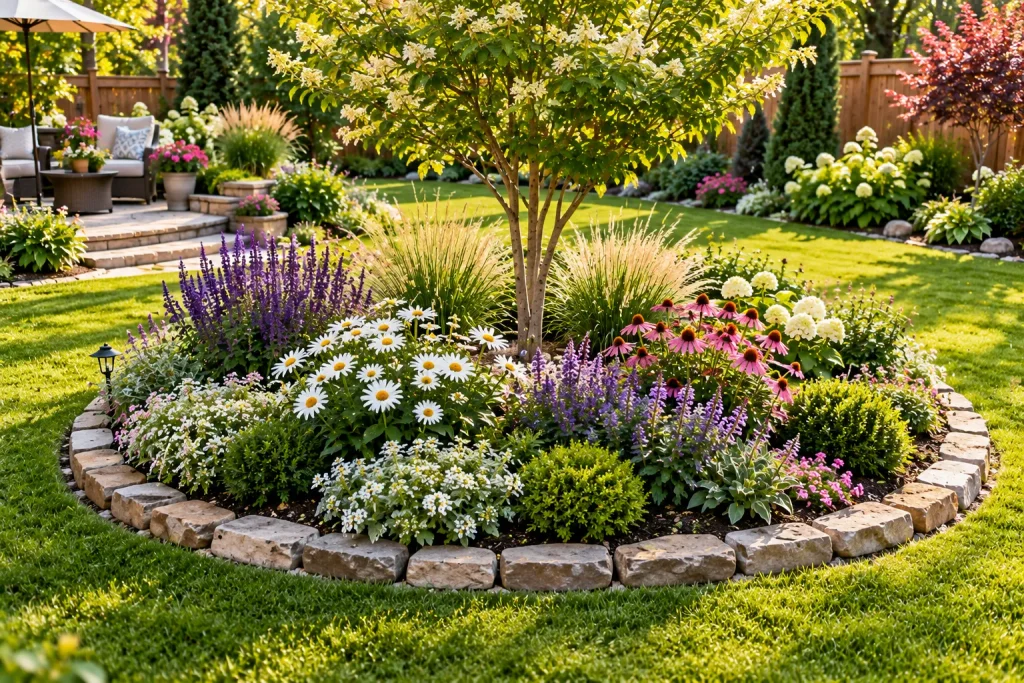
- Place the island where it can be viewed from several angles.
- Choose a small ornamental tree or tall plant as the central focal point.
- Arrange flowers in repeating groups around the center.
- Use natural stone or brick edging to define the circular shape.
DON’T
- Make the bed so large that it interrupts the main lawn area.
- Mix plants with very different watering needs.
- Forget to leave room for mowing around the edges.
- Plant tall varieties where they block important views.
A circular flower island adds a focal point to an open lawn and breaks up large stretches of grass. Keep the center slightly taller and gradually lower the surrounding plants for a balanced shape. I’ve noticed that repeating a small selection of flower colors makes this feature look intentional from every side.
Gravel Garden Borders

Cost: Low to moderate | Time: One weekend, depending on size | Skill Level: Beginner to intermediate
Best For: Sunny borders and areas needing a defined edge
Materials: Landscape gravel, edging, suitable plants
Result: A tidy, textured garden boundary
Gravel borders create a clean transition between lawn areas, planting beds, fences, and patios. Select a gravel size and color that complement nearby paving, then install suitable edging to keep stones from spreading into the grass. Prepare the ground carefully and choose plants suited to the drainage and moisture conditions.
Small Backyard Pond
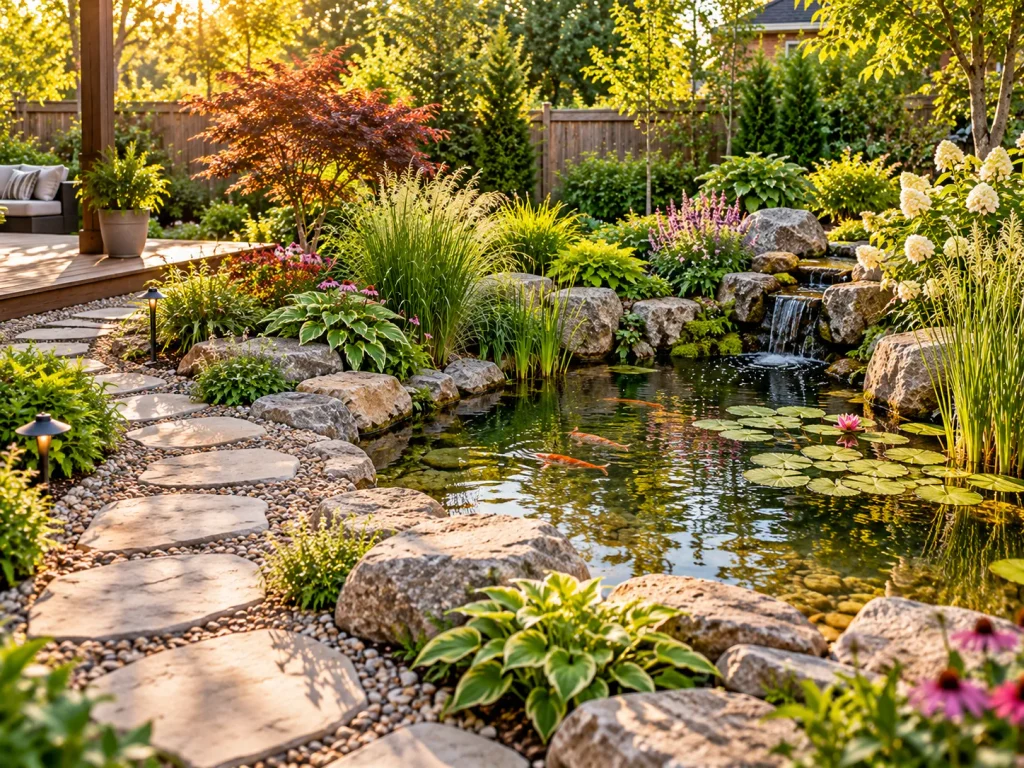
A small pond introduces movement, reflections, and a peaceful focal point to a garden. Even a compact water feature can complement nearby flowers and stones while creating a distinct corner away from the main lawn.
Choose a location where the pond is visible from a patio or seating area, and plan for proper drainage, water maintenance, and safe access. If children or pets use the backyard, consider barriers or a safer shallow design. A simple shape and a restrained selection of aquatic plants will keep the feature easier to maintain.
Wooden Garden Arbor

A wooden arbor can give a backyard entrance a clear focal point while making a simple path feel more inviting. Position it at the beginning of a garden walkway or between two planting beds, then add climbing roses, clematis, or another suitable vine for seasonal interest.
Choose weather-resistant timber and secure the structure properly according to the manufacturer’s instructions. Leave enough room for the plants to grow without blocking the passage underneath. Repeating flowers from nearby borders can help the arbor feel connected to the rest of the garden instead of looking like a separate feature.
Lawn Edging Stones
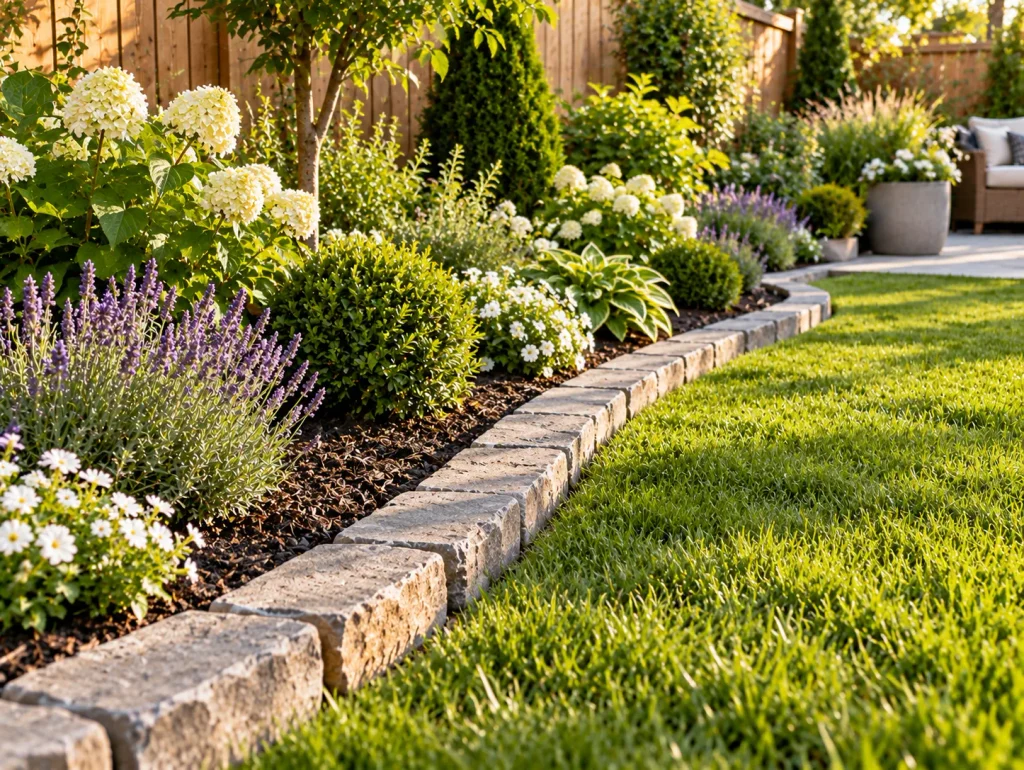
- Mark the boundary: Use a garden hose or string to map the edge before digging.
- Prepare the base: Create a level, stable foundation appropriate for the chosen edging material.
- Set the stones: Place each stone firmly and maintain consistent spacing along the border.
- Check the alignment: Step back regularly to spot uneven sections and adjust them.
- Finish the edges: Refill gaps and tidy the soil or mulch beside the stones.
Stone edging creates a clean boundary between grass and planting beds, helping the whole yard look more organized. Choose stones that suit your home’s exterior and nearby paving. A gentle curve can soften the layout, while straight lines often complement contemporary homes. Keep the finished edge easy to reach with a mower or trimmer.
Mixed Height Shrubs
| Feature | Option A: Uniform Shrubs | Option B: Mixed Height Shrubs |
| Overall look | Formal and consistent | Layered and natural |
| Visual depth | More even | Greater variation |
| Seasonal interest | Depends on chosen species | Can combine foliage and flowers |
| Maintenance | Often simpler to shape | Varies by plant type |
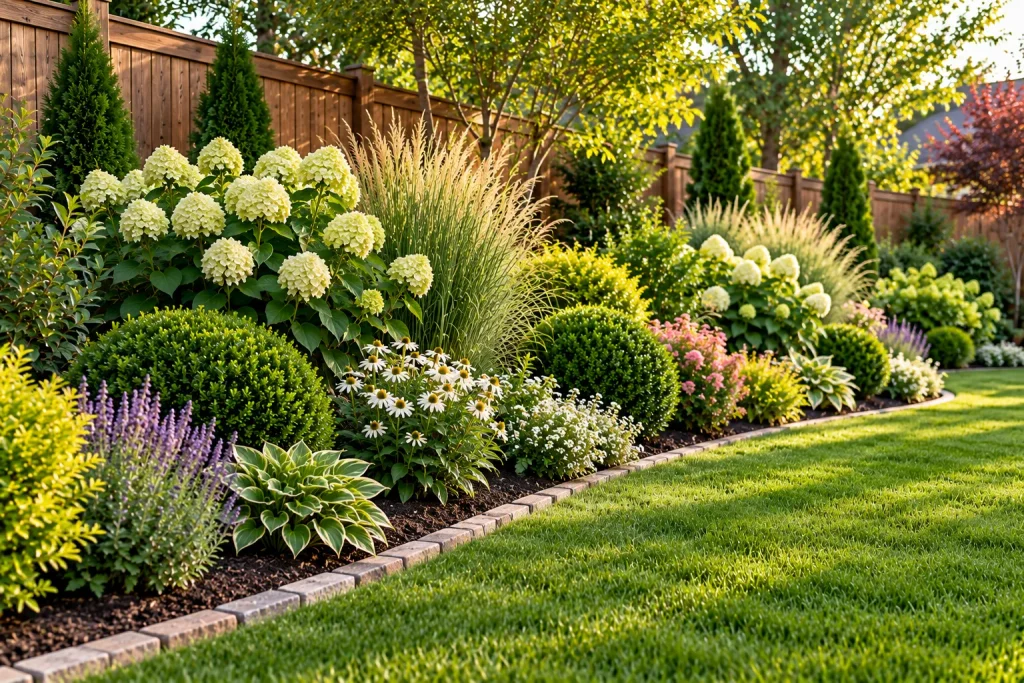
Combining shrubs of different heights adds depth and creates a fuller-looking planting bed throughout the year. Place taller plants toward the back, medium shrubs in the middle, and low-growing varieties near the lawn. Check mature sizes and sunlight needs before planting so each shrub has enough room to develop without constant trimming.
Decorative Garden Lighting

DO
- Place path lights near steps, turns, and frequently used walkways.
- Use uplights to highlight attractive trees or textured garden walls.
- Choose outdoor-rated fixtures designed for your local weather conditions.
- Keep lighting warm and subtle for a welcoming evening atmosphere.
DON’T
- Point bright lights directly toward windows or neighboring properties.
- Space fixtures so closely that the garden looks overly illuminated.
- Leave electrical connections exposed to moisture.
- Ignore safe installation requirements for outdoor wiring.
Thoughtful lighting makes garden paths easier to navigate and highlights attractive features after sunset. Start with essential routes, then add a few accent lights around trees or planting beds. I’ve noticed that a restrained lighting plan often looks more polished than placing a light beside every plant.
Native Plant Borders

Cost: Low to moderate | Time: Varies by planting area | Skill Level: Beginner
Best For: Gardens suited to local growing conditions
Maintenance: Depends on plant selection and establishment
Result: A natural-looking border with seasonal interest
Native plants are often well adapted to local soil and climate, making them useful choices for a practical garden border. Once established, suitable species may need less supplemental watering than plants poorly matched to the site. Ask a local nursery or extension service which varieties grow well in your area and support local pollinators.
Backyard Seating Circle

A circular seating arrangement gives the backyard a natural gathering point and makes an open lawn feel more purposeful. Place chairs around a low table or suitable outdoor focal feature, leaving enough room to pull seats out and walk comfortably between them.
Define the area with gravel, pavers, or a compact outdoor rug rated for exterior use. Keep the surface level and choose furniture that can withstand local weather. For a flexible layout, use lightweight chairs that can move easily when you need extra room for gardening or outdoor activities.
Vertical Garden Wall
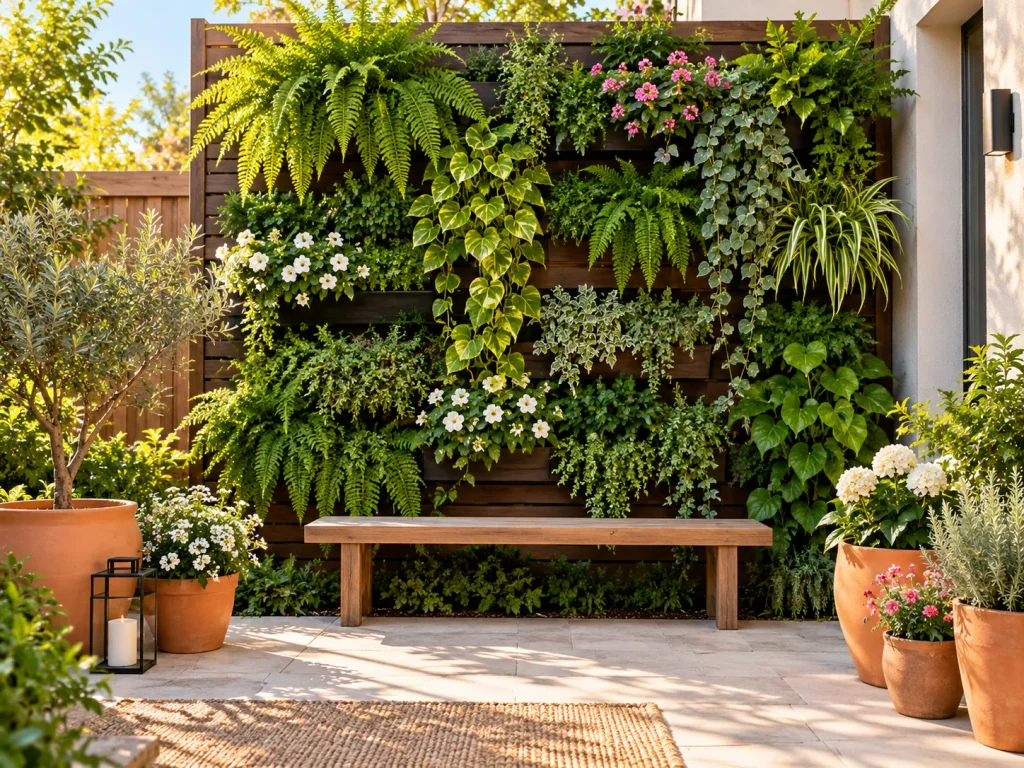
A vertical garden wall brings greenery to a bare fence or exterior wall without using much ground space. It works especially well in narrow backyards where traditional planting beds would reduce the room available for seating or walking.
Choose a sturdy outdoor-rated frame and plants suited to the wall’s sunlight and wind exposure. Plan for easy watering and drainage before installing the system, since moisture can affect the surface behind it. Group plants with similar care needs together to keep maintenance manageable as the greenery grows.
Mulched Tree Rings
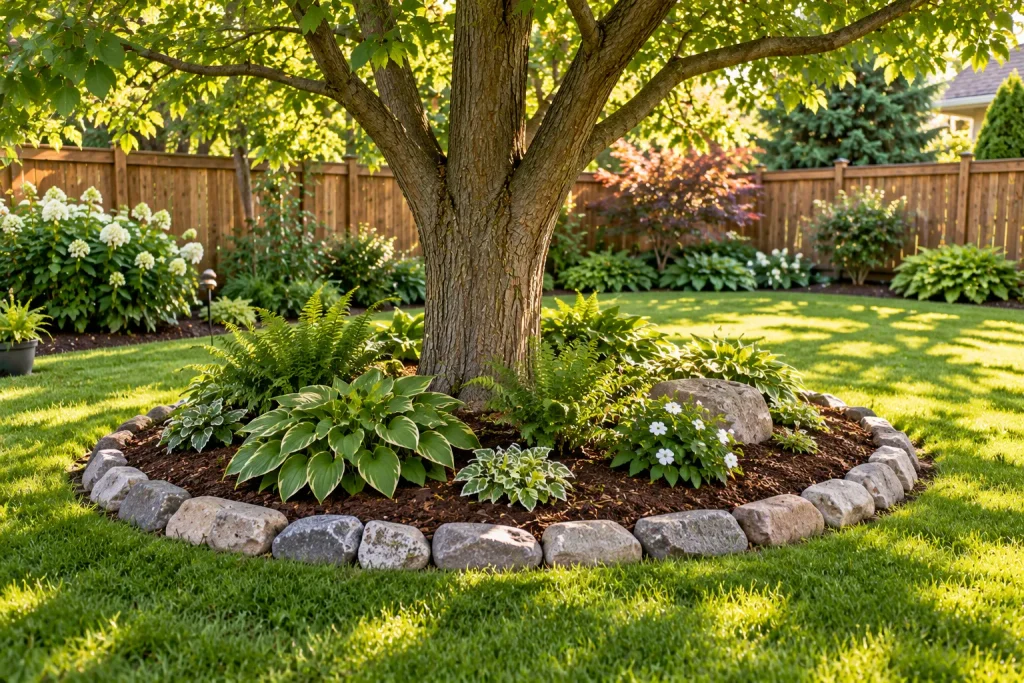
- Mark the circle: Outline a generous ring around the tree, keeping the shape proportionate to its size.
- Remove grass carefully: Avoid digging deeply or damaging surface roots.
- Apply organic mulch: Spread a moderate, even layer over the prepared area.
- Protect the trunk: Keep mulch several inches away from the bark instead of piling it against the tree.
- Finish the edge: Use a simple cut edge or suitable border to keep the ring tidy.
A clean mulch ring gives a mature tree more visual presence while making lawn maintenance around its base easier. Organic mulch can help conserve soil moisture and moderate soil temperature as it breaks down. Keep the root flare visible and avoid excessive mulch depth, which can harm the tree over time.
Flowering Climbing Vines
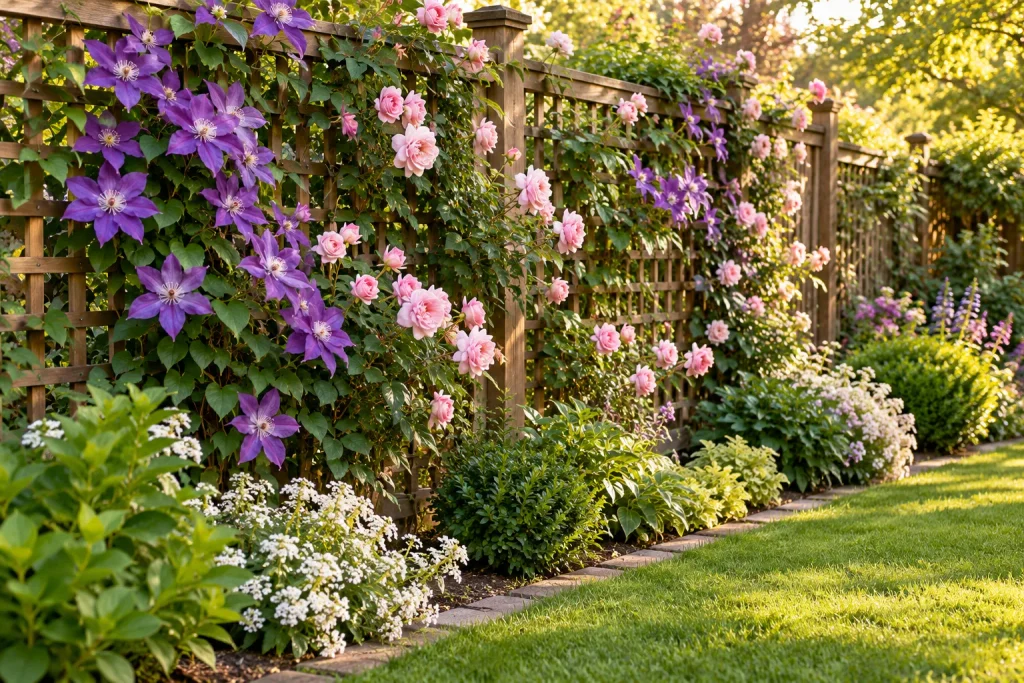
| Feature | Option A: Freestanding Shrubs | Option B: Climbing Vines |
| Space use | Spreads outward | Grows vertically with support |
| Visual effect | Rounded planting shapes | Softens walls and fences |
| Support | Usually not required | Trellis or suitable structure may be needed |
| Maintenance | Pruning depends on species | Training and pruning may be needed |
Climbing vines can soften plain fences and introduce flowers at eye level without filling the entire yard with shrubs. Choose a variety suited to your climate and available sunlight, then provide a sturdy trellis or support system. Check the plant’s growth habits before planting so it does not damage siding, gutters, or nearby structures.
Modern Concrete Pavers
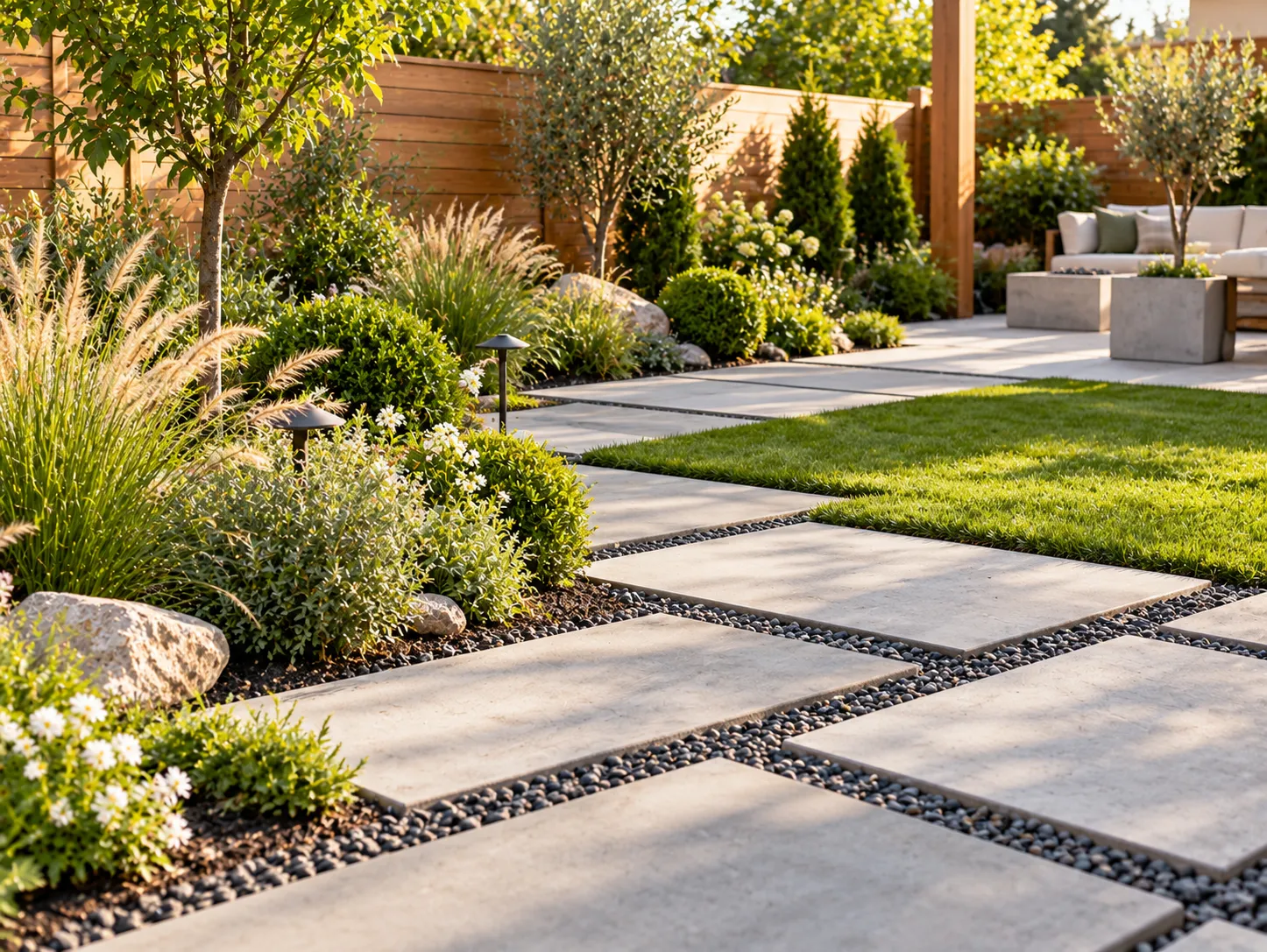
A geometric paver layout can give a backyard a clean, organized appearance while creating a practical route between the patio, lawn, and garden. Choose concrete pavers in a color that complements your home’s exterior, such as pale gray, warm beige, or charcoal.
Before installation, prepare a stable, well-drained base and check that the finished surface sits level and does not direct water toward the house. Leave consistent gaps between pavers for gravel or suitable ground cover. Repeating the same shape and spacing helps the entire layout look intentional rather than scattered.
Edible Garden Beds
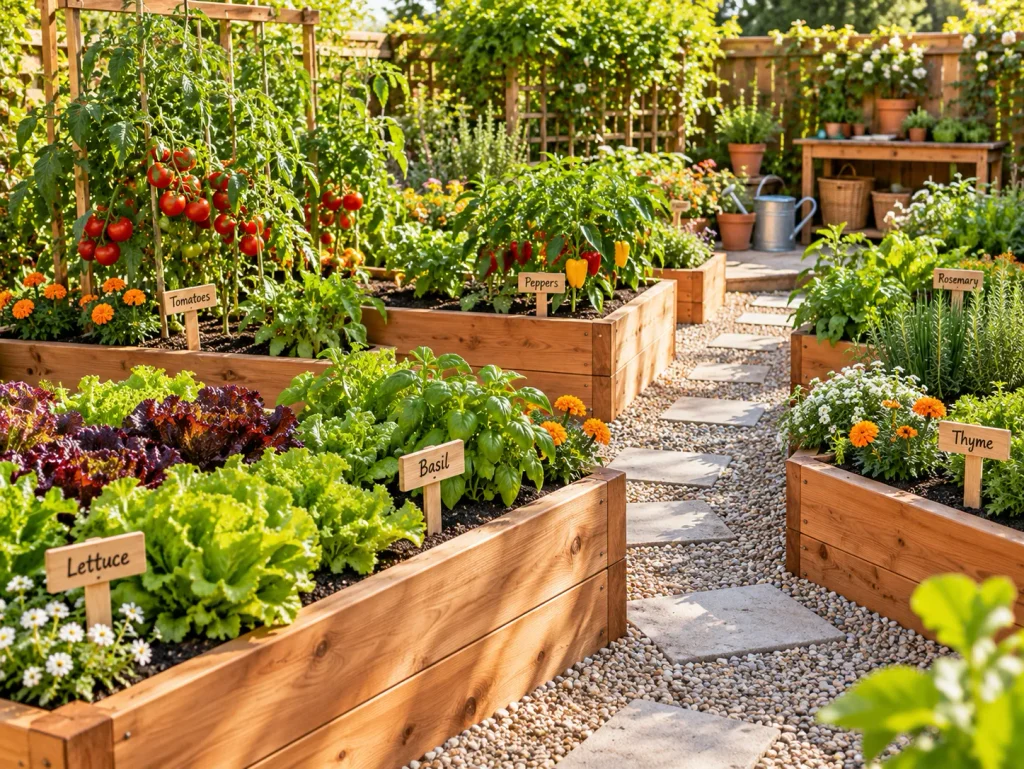
- Group vegetables according to their sunlight and watering needs.
- Place frequently harvested herbs near the easiest access point.
- Leave clear paths wide enough to carry tools and harvest baskets.
- Add compost or suitable soil amendments based on your soil’s needs.
- Include flowers that attract pollinators and bring color to the beds.
An edible garden can make your backyard more useful while adding lush foliage and seasonal color. Raised beds help organize planting areas, and clearly defined paths keep the space easier to maintain. Start with a few reliable crops suited to your climate rather than planting everything at once.
Backyard Water Feature
Quick Tip:
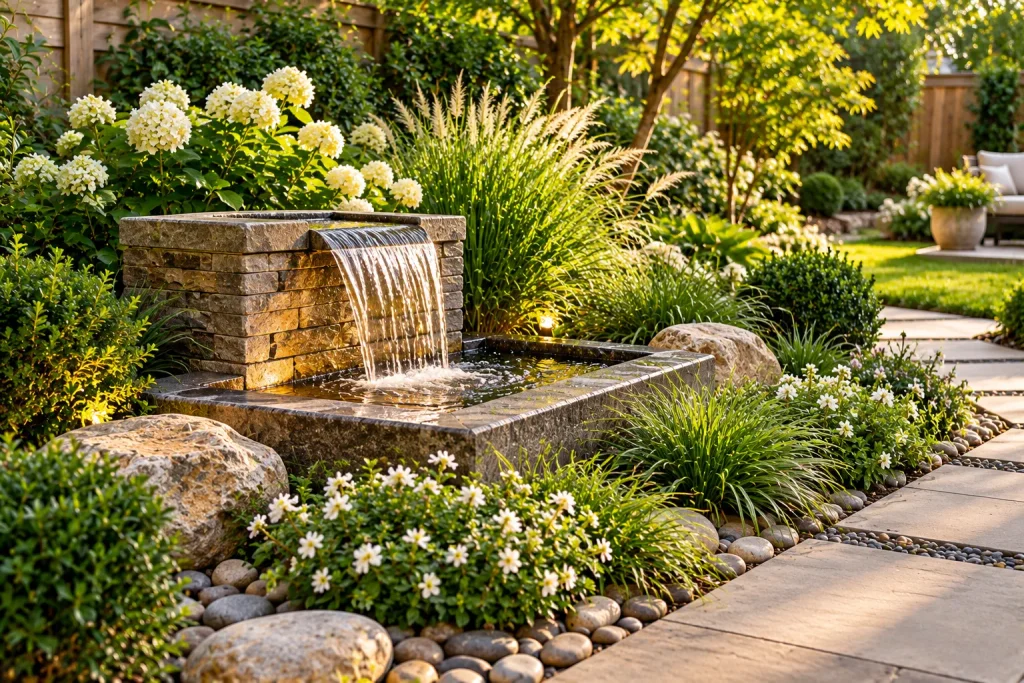
Choose a water feature that fits the scale of your backyard and is easy to access for cleaning. Check the manufacturer’s instructions for power, drainage, and water circulation, and position the feature where its sound and appearance can be enjoyed from a patio or seating area.
A fountain adds movement and a gentle focal point without requiring a large pond. Compact recirculating models can suit smaller yards, while a larger stone feature may work better in an open garden. Surround the base with a restrained mix of pebbles and suitable plants so the water feature feels connected to the landscape.
Low Maintenance Ground Cover

DO
- Choose ground cover suited to your local climate and soil.
- Check how much sunlight the planting area receives.
- Use low-growing varieties between suitable stepping stones.
- Prepare the soil and remove weeds before planting.
DON’T
- Assume every ground cover tolerates foot traffic.
- Plant vigorous spreaders without checking their growth habits.
- Cover drainage areas with plants that need consistently wet soil.
- Skip watering while new plants establish.
Low-growing ground cover can soften bare soil and create a fuller appearance between larger plants. Suitable varieties may also reduce the need for mowing in difficult corners. Ask a local nursery about noninvasive options that suit your conditions, and allow enough space for plants to spread without overtaking nearby flower beds.
Decorative Fence Planters
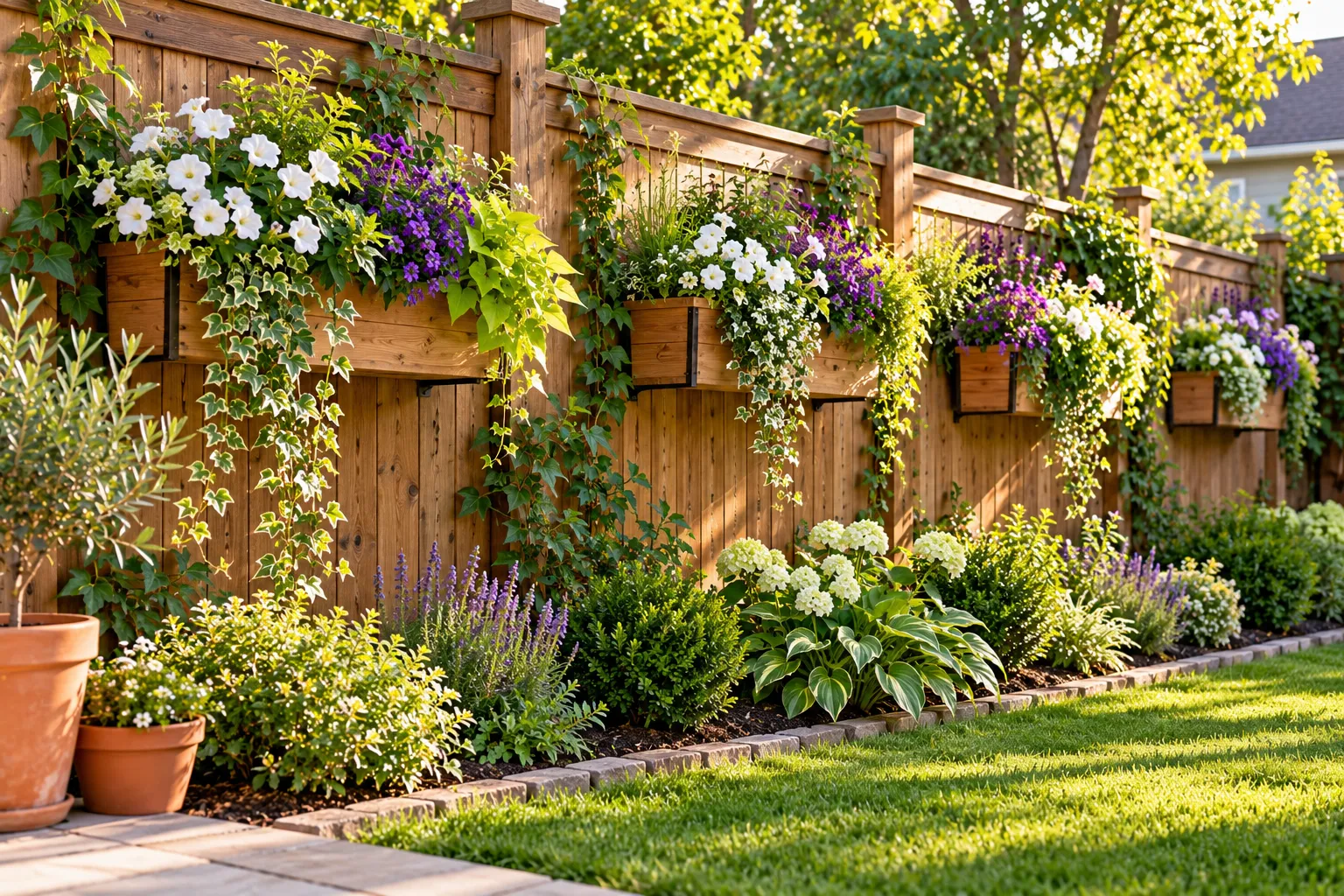
Cost: Low to moderate | Time: A few hours | Skill Level: Beginner
Best For: Small yards and plain fence lines
Materials: Outdoor-rated planters, secure brackets, suitable potting mix
Result: Vertical color without using much ground space
Fence planters turn an ordinary boundary into a colorful garden feature while leaving the lawn open for other uses. Select containers designed for outdoor conditions and attach them securely to a fence that can support their weight when filled with wet soil. Use plants with similar sunlight and watering needs in each planter.
Layered Evergreen Borders
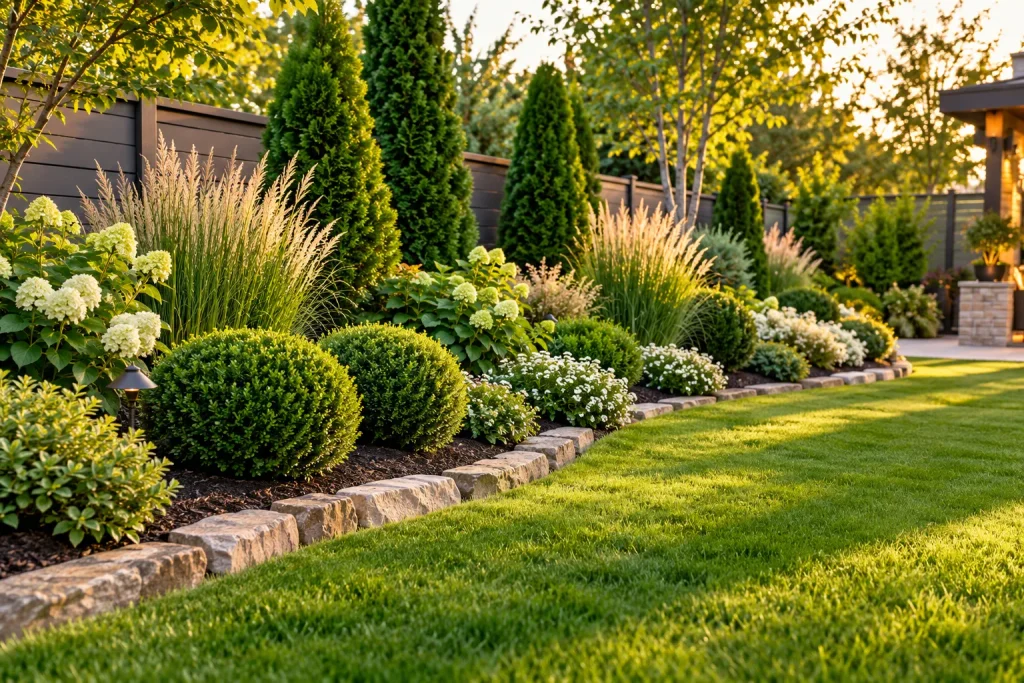
Layered evergreen borders provide structure even when seasonal flowers are no longer blooming. Combine rounded shrubs, upright forms, and low ground cover to create varied shapes without relying on constant color changes. Check each plant’s mature height and width before planting, and leave room for air circulation and maintenance.
CONCLUSION
A more attractive backyard can begin with one thoughtful change. Defined garden borders, layered planting, natural stone paths, evergreen shrubs, and carefully placed lighting can add structure, color, and year-round interest to your outdoor space.
Choose ideas that suit your climate, available space, maintenance preferences, and budget. Start small, observe how your plants grow, and build on what works. I’ve noticed that repeating a few colors and materials often helps a garden feel more connected and intentional.
Save this article on Pinterest, try your favorite ideas, and share it with someone planning a garden refresh. Your dream outdoor space can grow one step at a time.


