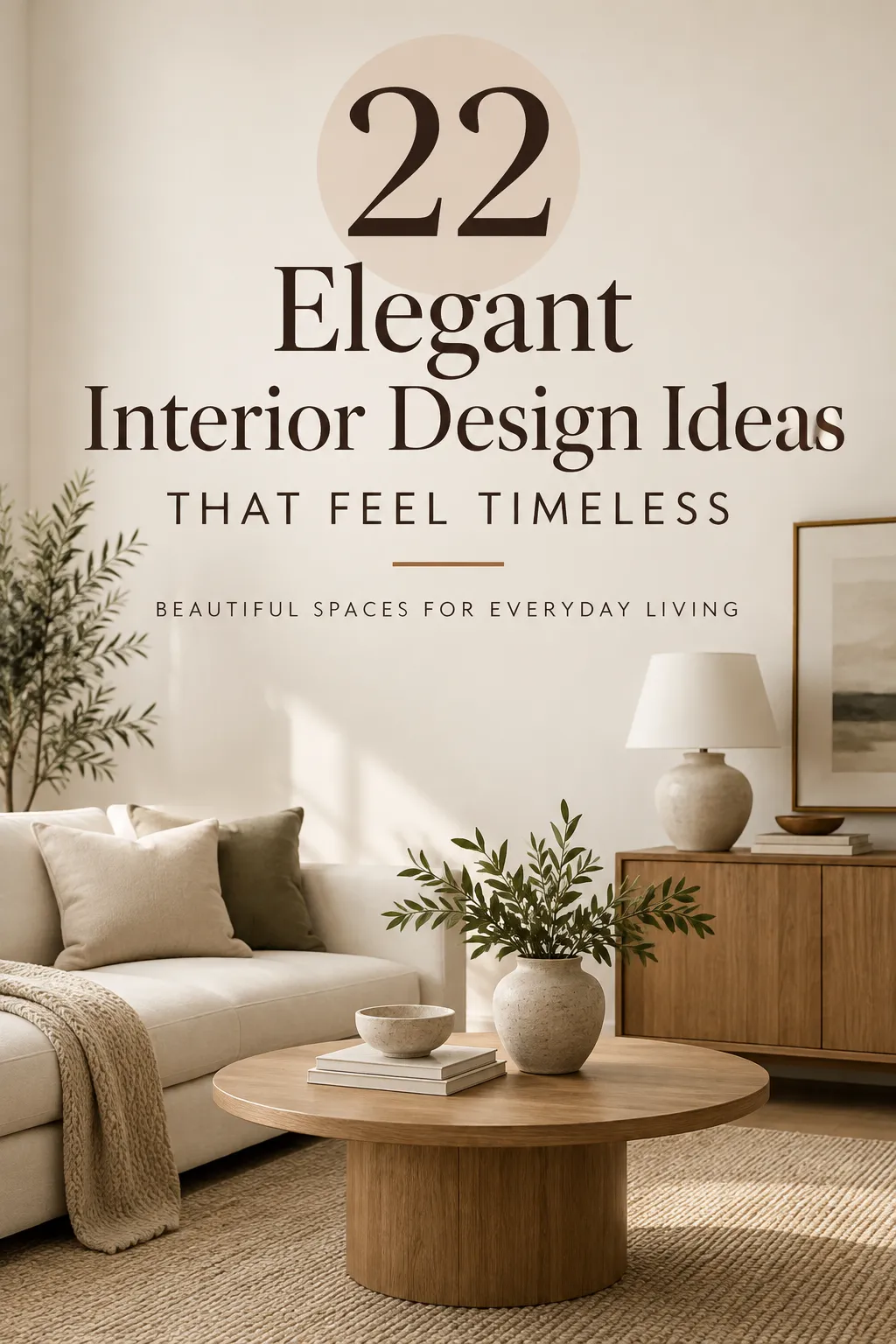
22 Elegant Interior Design Ideas That Feel Timeless
Your home can feel elegant without looking overly formal or following every passing trend.
The secret is choosing details that feel beautiful today and still work years from now.
This article brings together 22 timeless interior design ideas for creating a home that feels warm, balanced, personal, and comfortable. From layered neutral tones and natural wood to classic furniture, soft lighting, textured fabrics, thoughtful storage, and meaningful decor, each idea offers a practical way to improve the look and feel of your rooms.
These suggestions are especially useful if your home feels plain, cluttered, mismatched, or stuck between different styles. You do not need to replace everything at once. Start with one area, make a thoughtful change, and build from there. In my experience, small adjustments in lighting, texture, furniture placement, and color can have a surprisingly noticeable effect.
Keep reading for ideas you can adapt to your own home, budget, and personal taste.
Layered Neutral Tones
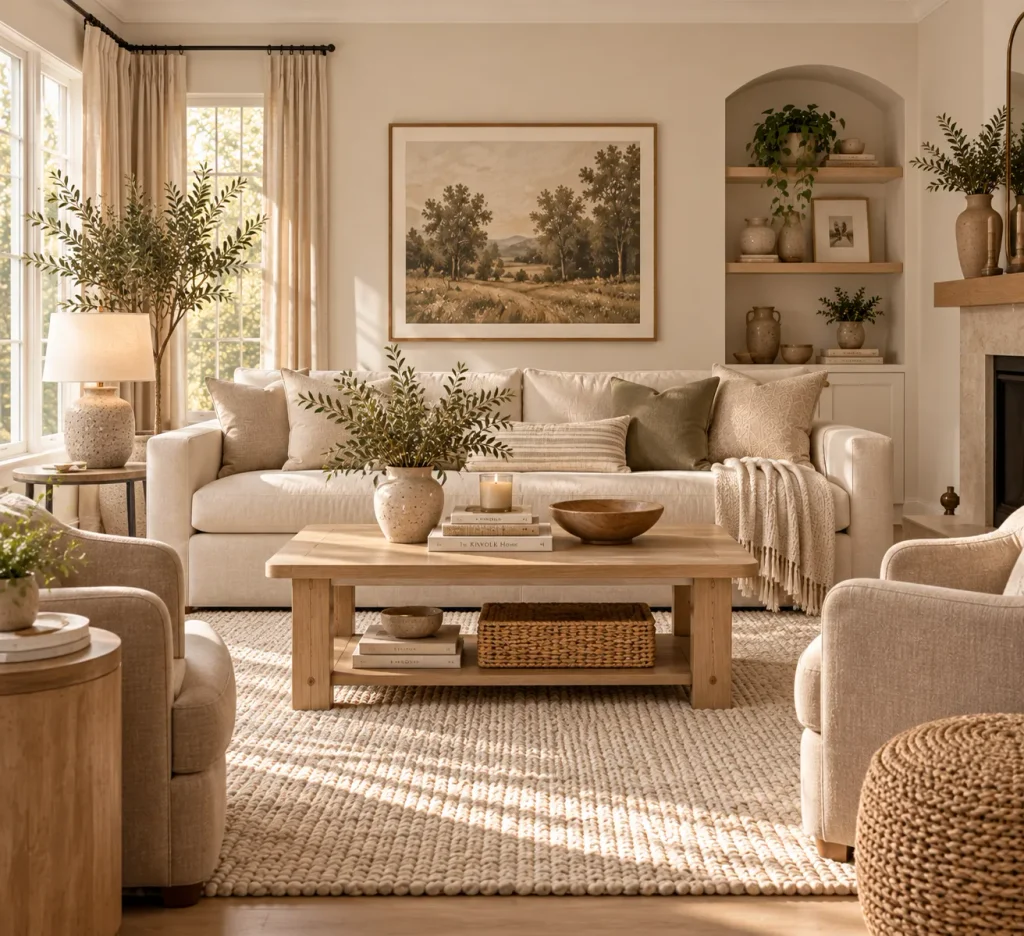
A room with several soft neutral tones feels collected without becoming visually flat. Combine warm white, cream, beige, taupe, and gentle brown through walls, upholstery, rugs, curtains, and accessories. Keeping each shade slightly different creates depth while preserving a calm foundation that can adapt as your style changes.
Texture becomes especially important when color stays restrained. Pair smooth ceramics with woven baskets, linen, boucle, wood grain, or a softly patterned rug. I’ve noticed that repeating two or three neutral shades throughout a room helps separate pieces feel connected, even when they were purchased at different times.
Classic Furniture Shapes
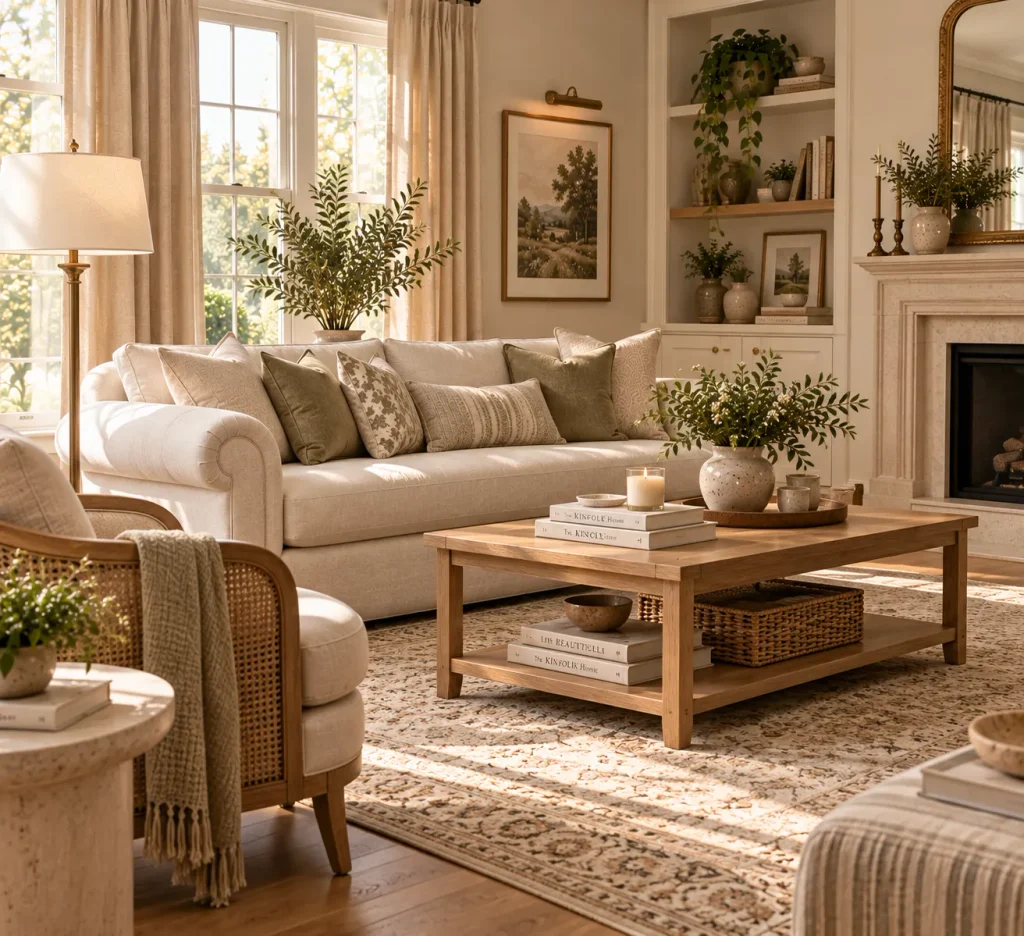
- Choose sofas and chairs with simple proportions rather than highly unusual silhouettes.
- Look for rounded arms, gently curved backs, or clean tapered legs that can suit different styles.
- Keep larger furniture pieces in adaptable colors such as cream, beige, camel, or soft gray.
- Add personality through smaller pieces that are easier to replace later.
- Check the furniture scale against the room before purchasing.
Timeless furniture does not need to look traditional or formal. The goal is a shape that remains useful as trends change. A well-proportioned sofa, sturdy wood table, or comfortable accent chair can become a reliable foundation, while cushions, artwork, and accessories provide easier opportunities for seasonal updates.
Natural Wood Accents
Quick Tip:
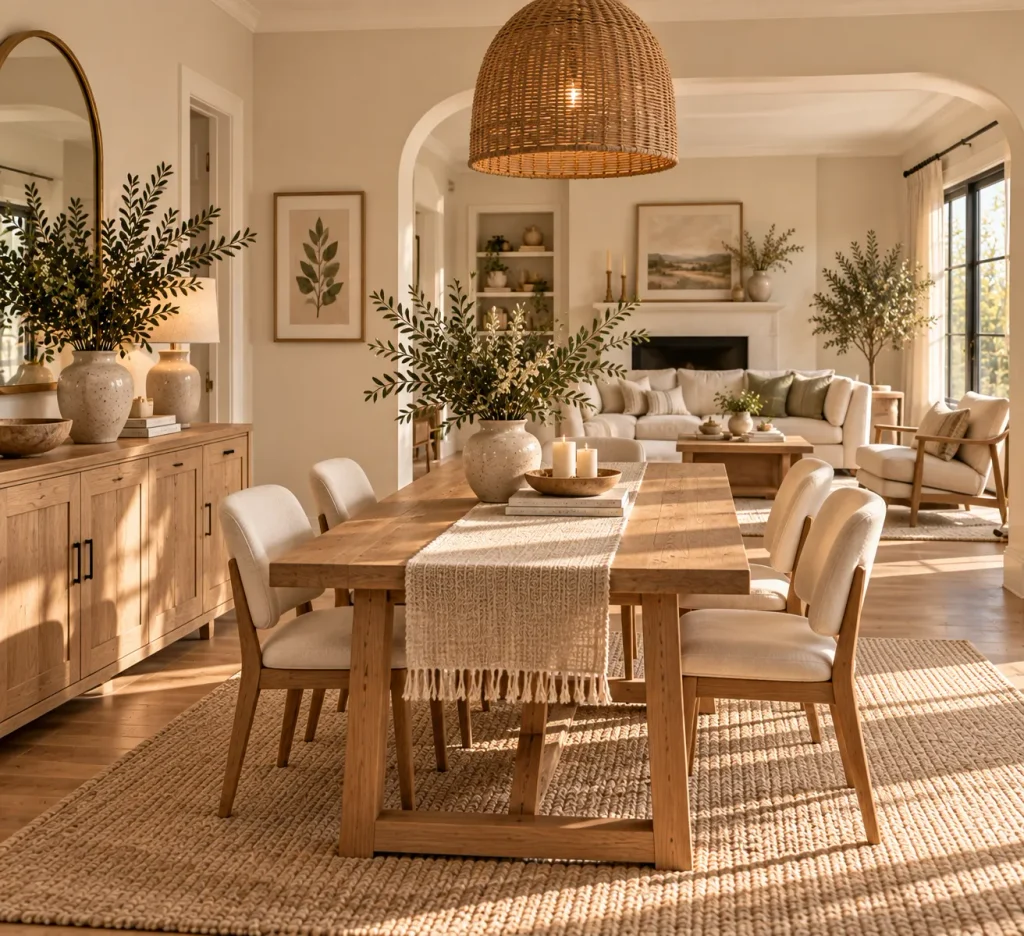
Choose one main wood tone and repeat it across two or three visible pieces. If your room already has mixed woods, connect them through similar undertones rather than trying to make every finish identical. A small wood accessory can also bridge lighter and darker furniture finishes.
Natural wood adds warmth that helps neutral rooms feel lived-in rather than overly polished. Oak, walnut, ash, and other wood finishes each create a different mood, so consider the existing flooring and furniture before adding another tone.
In my experience, wood works especially well alongside linen, stone, woven fibers, and ceramic pieces. These materials create visual variety without relying on bold colors, helping the room maintain a relaxed and enduring character.
Arched Architectural Details
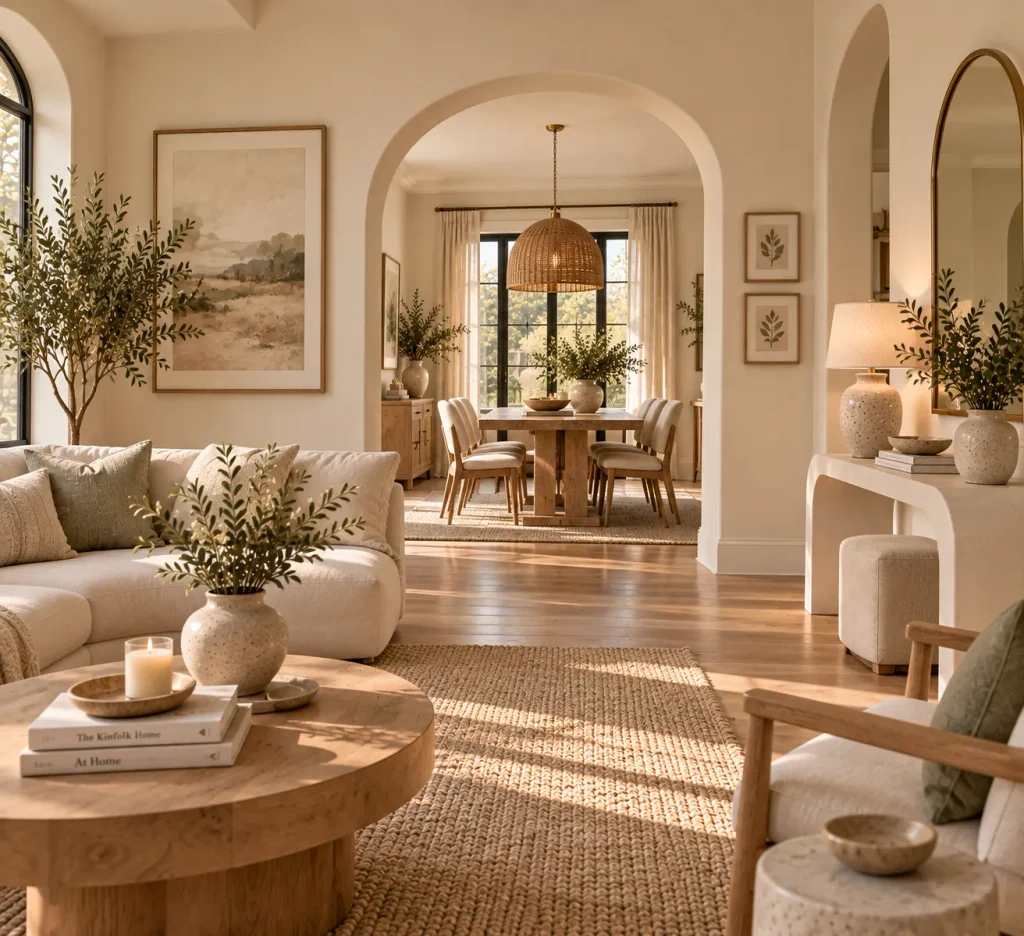
BEFORE: A room filled with sharp rectangular furniture and straight architectural lines can sometimes feel visually rigid. Plain openings and boxy shapes may also leave the walls looking unfinished.
AFTER: A gentle arch introduces softer geometry and creates a natural focal point. The curved form can be repeated through mirrors, furniture, lighting, or artwork to make the room feel more cohesive.
Architectural changes require more planning, but the same visual effect can often be achieved with an arched mirror, curved bookcase, rounded doorway trim, or sculptural furniture. Keep the surrounding palette simple so the curved feature remains noticeable. For renters, removable decor with rounded shapes offers a practical alternative without altering the structure.
Balanced Furniture Layout
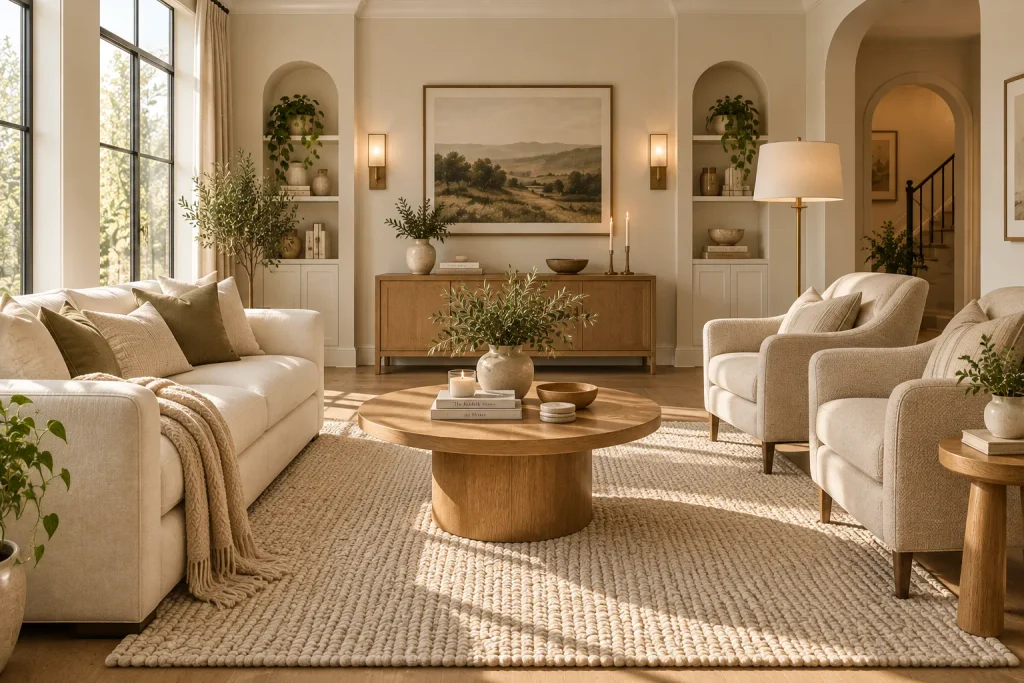
- Start with the focal point: Position the main seating toward a fireplace, large window, artwork, or another natural feature.
- Create conversation zones: Keep chairs and sofas close enough for comfortable conversation without blocking movement.
- Anchor the seating: Place the main furniture on a properly sized rug where possible.
- Check walking paths: Leave comfortable clearance around doors, cabinets, and frequently used routes.
- Balance visual weight: Distribute larger furniture pieces instead of placing everything against one wall.
Good furniture placement can make an elegant room feel comfortable rather than staged. Before moving heavy pieces, sketch the layout or mark dimensions on the floor with removable tape. I’ve noticed that even a small adjustment to spacing can improve movement, conversation, and the amount of open space a room appears to have.
Linen Window Treatments
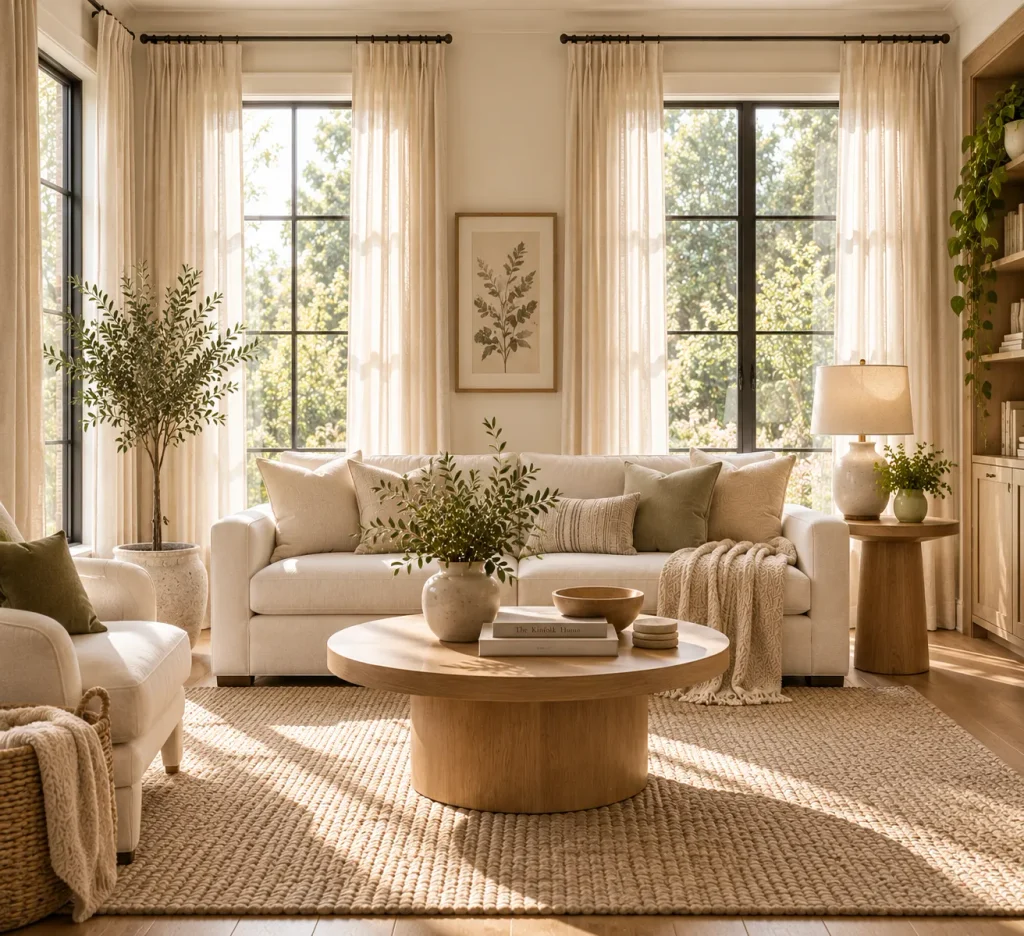
| Feature | Option A: Light Curtains | Option B: Layered Curtains |
| Visual effect | Simple and airy | Richer and more dimensional |
| Privacy | Moderate | Higher flexibility |
| Light control | Limited to moderate | More adjustable |
| Best use | Bright rooms | Bedrooms and living areas |
Window treatments influence both the mood and proportions of a room. Full-length linen curtains can make windows feel taller, especially when the rod is positioned appropriately above the frame. Choose a fabric weight that suits the amount of privacy and light control the room actually needs.
For a timeless result, stay close to the wall color or use a soft complementary neutral. Avoid overly short panels that stop awkwardly above the floor. In rooms with strong sunlight, consider lining or layering the fabric to protect furnishings and give you more control throughout the day.
Statement Pendant Lighting
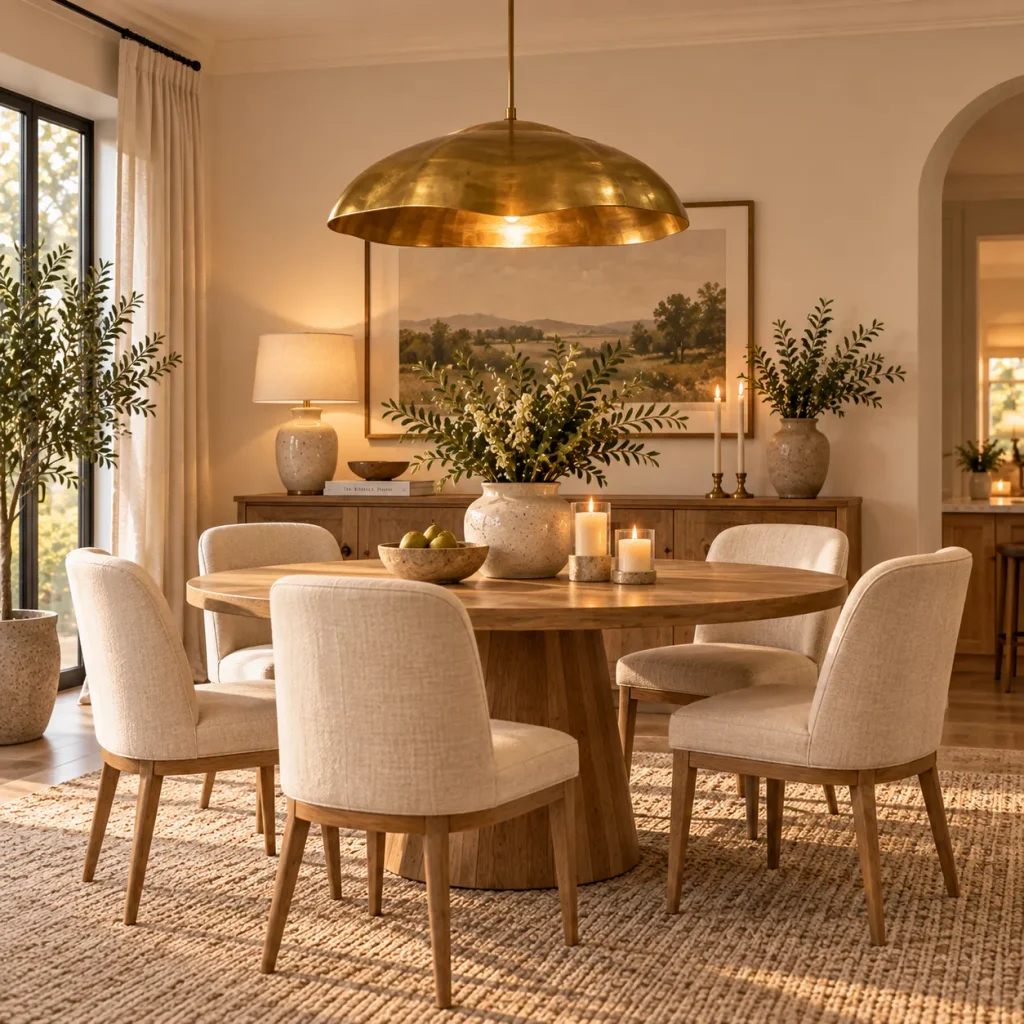
DO:
- Choose a fixture sized appropriately for the room and furniture below it.
- Repeat its finish through one or two smaller details.
- Use warm white bulbs for a softer evening atmosphere.
- Keep surrounding decor simple when the fixture has a strong shape.
DON’T:
- Choose an oversized fixture without checking ceiling height and room proportions.
- Mix several competing statement lights in one small area.
- Ignore the fixture’s cleaning and maintenance requirements.
- Let decorative lighting interfere with doors, sightlines, or everyday movement.
A distinctive light fixture can act like functional artwork while improving the atmosphere after sunset. Look for materials and silhouettes that can remain appealing as other furnishings change. A sculptural pendant, classic chandelier, or simple oversized shade can anchor a room without requiring bold wall color or trendy accessories.
Natural Stone Surfaces

Cost: Moderate to high | Time: Depends on project | Skill Level: Professional installation recommended for major surfaces
Best For: Kitchens, bathrooms, fireplaces, and accent tables | Works In: Organic, transitional, classic, and contemporary interiors
Result: Natural texture with long-term visual appeal
Stone brings subtle variation that manufactured surfaces often cannot fully reproduce. Limestone, marble, travertine, and soapstone each have distinct patterns, colors, and maintenance needs, so samples are worth viewing in your actual lighting before making a large purchase.
For a restrained look, choose stone with movement that complements rather than competes with nearby finishes. Repeat a related tone through wood, textiles, or ceramics. Always check sealing, cleaning, heat, and moisture requirements because the most suitable material depends on where the surface will be installed.
Timeless Artwork Layers

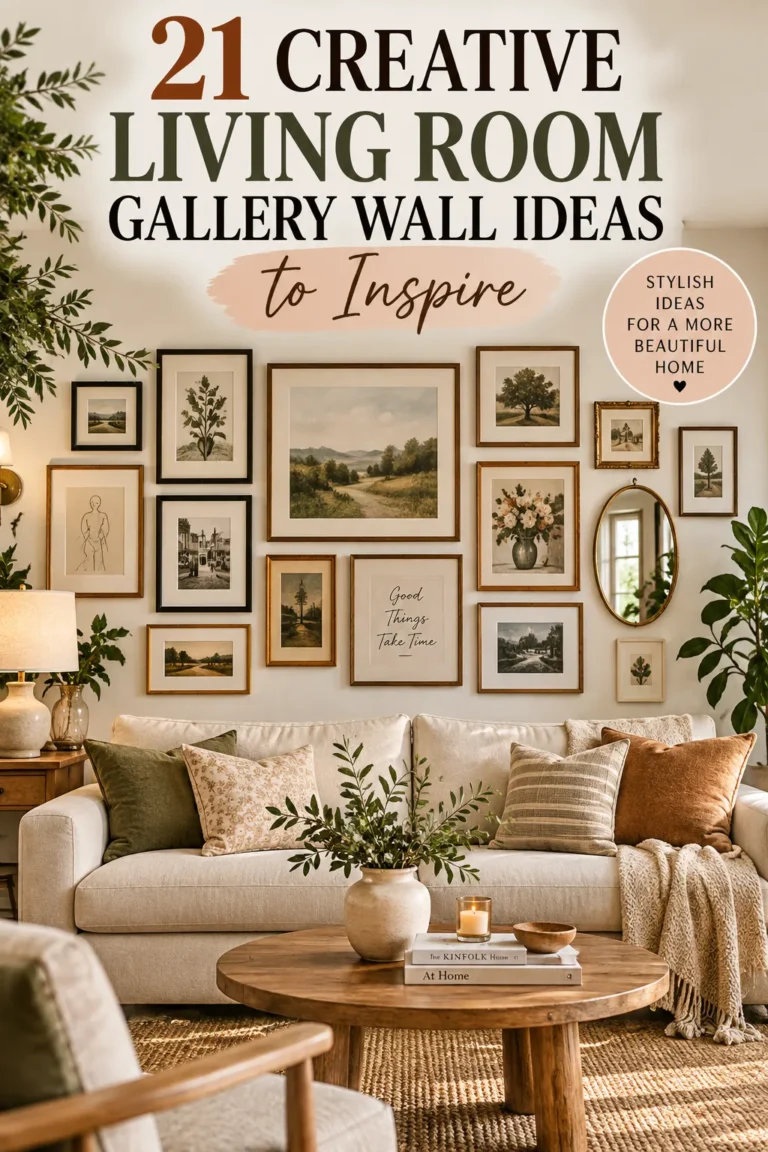
Art can give a neutral room personality without forcing the entire palette into a trend. Start with one larger piece that connects to your existing colors, then add smaller prints, photographs, or handmade pieces around it when the wall has enough space.
The most successful arrangements usually have some connection through color, framing, subject, or scale rather than matching everything exactly. I’ve noticed that mixing one or two personal pieces with simpler artwork makes a room feel more authentic. Leave enough breathing room between frames so each piece remains easy to appreciate.
Warm Brass Details

- Repeat brushed brass through two or three smaller elements, such as lighting, handles, or picture frames.
- Pair brass with warm neutrals, natural wood, stone, or soft textiles.
- Choose brushed or aged finishes for a quieter appearance than highly polished metal.
- Keep other metallic finishes limited so the room feels visually connected.
- Test samples beside existing furniture before replacing multiple hardware pieces.
Warm metal details can bring subtle richness to an otherwise neutral room. The finish does not need to dominate. A brass lamp beside an oak table or brass handles on cream cabinetry can provide enough contrast to make the surrounding materials feel more layered and considered.
Soft Textural Layers
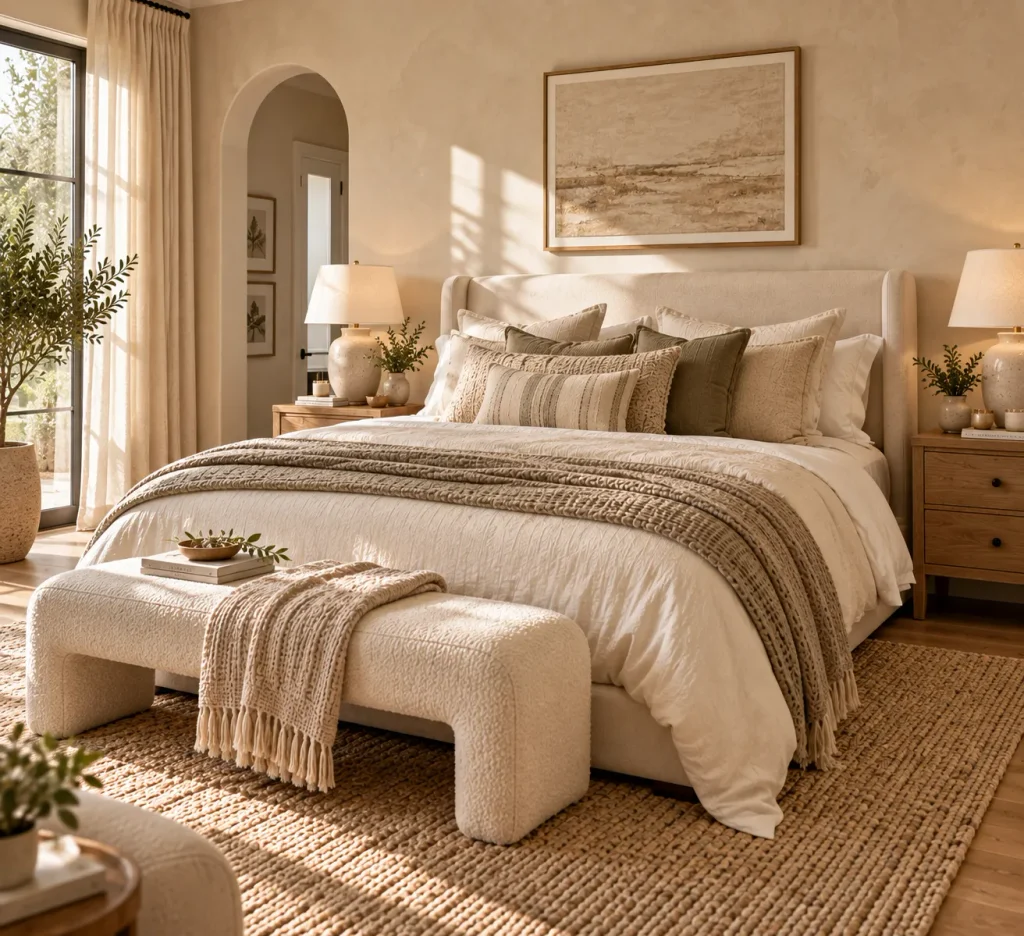
Quick Tip:
Build texture from the largest surfaces downward. Start with a rug or curtains, add upholstered furniture and bedding, then finish with smaller woven, ceramic, or wood accessories. Keeping the colors related allows different textures to create interest without making the room feel busy.
Texture gives a restrained color palette more depth and makes rooms feel comfortable rather than overly formal. Mix materials with noticeably different surfaces, such as linen beside wood, wool beside stone, or boucle beside smooth ceramic.
I’ve noticed that textured layers are especially useful in rooms with mostly neutral colors. They create visual movement while keeping the overall look calm. Changeable pieces such as cushions and throws also make it easy to refresh the room without replacing major furniture.
New Ideas Now : 22 Inspiring Home Decor Ideas You’ll Love for Years
Curved Accent Furniture
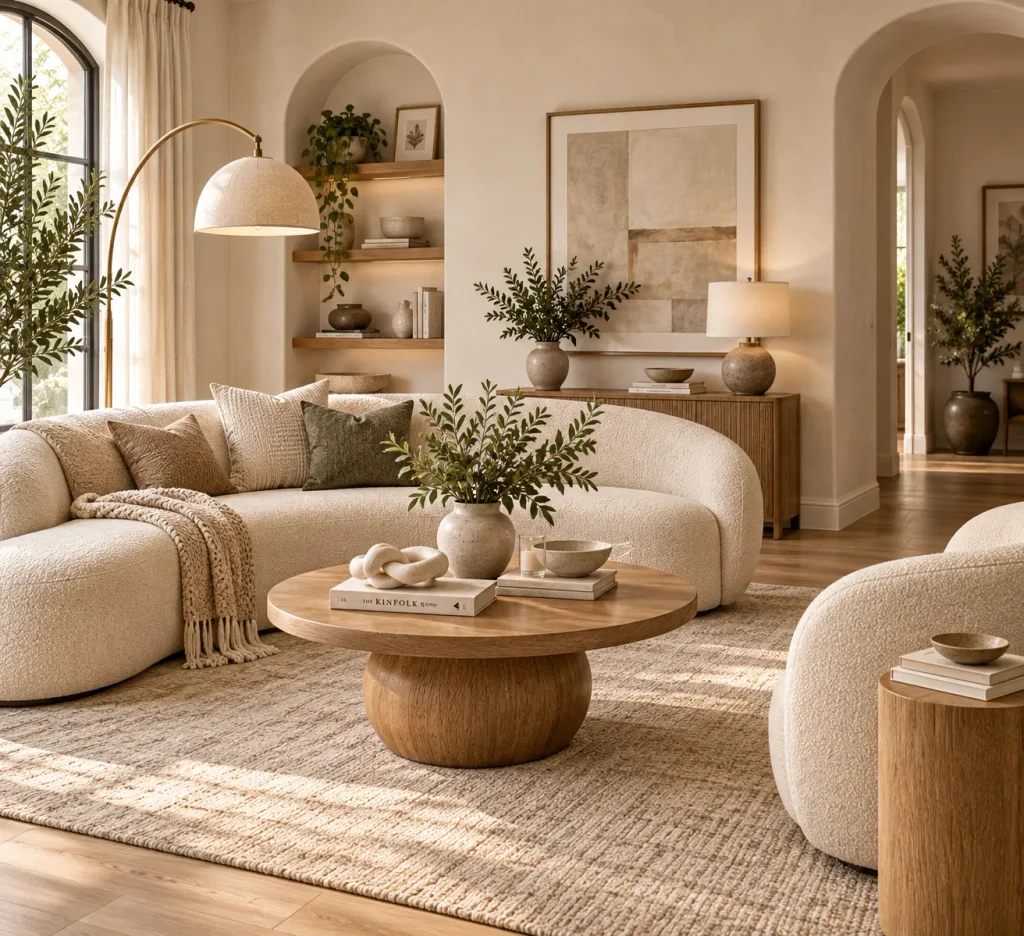
- Start with one curve: Choose a rounded chair, sofa, ottoman, or table as the main sculptural piece.
- Balance straight lines: Place curved furniture near rectangular cabinets, shelving, or artwork for contrast.
- Repeat softly: Add a small rounded accessory or mirror without filling the room with identical shapes.
- Check proportions: Make sure the curved piece leaves comfortable walking space around it.
Rounded furniture can soften rooms dominated by straight architectural lines and rectangular storage. A curved sofa or chair also creates a more relaxed visual flow around seating areas. Choose durable upholstery and practical proportions if the piece will receive frequent daily use.
Classic Wood Flooring

| Feature | Option A: Light Wood | Option B: Dark Wood |
| Visual effect | Airy and relaxed | Rich and grounded |
| Maintenance visibility | Often shows less dust | Can show more dust and scratches |
| Room feel | Bright and spacious | Warm and dramatic |
| Best pairing | Cream, beige, soft colors | Ivory, camel, muted greens |
Wood flooring provides a durable visual foundation that can work with many furniture styles over time. Light oak creates an airy feeling, while walnut and deeper finishes add richness. The best choice depends on existing doors, cabinetry, natural light, and how much contrast you want.
Use rugs to define seating or dining zones without hiding too much of the flooring. Before selecting a finish, view large samples in morning and evening light. Wood tones can appear noticeably different depending on the surrounding colors and amount of natural sunlight.
Elegant Built-In Shelving

Cost: Moderate to high | Time: Several days | Skill Level: Professional installation for permanent units
Best For: Empty walls, fireplaces, home offices, and living rooms | Works In: Traditional, transitional, contemporary, and organic interiors
Result: Organized storage with architectural character
Built-in shelving can turn an unused wall into both storage and a decorative focal point. Keep the larger structure simple, then use books, ceramics, framed artwork, baskets, and greenery to create layers without overcrowding every shelf.
Leave some open space between objects so the arrangement feels intentional. I’ve noticed that mixing tall, short, textured, and flat pieces creates more visual interest than placing similar objects together. Closed cabinets at the bottom can hide less attractive essentials while open shelves display the pieces you actually want to see.
Refined Entryway Styling
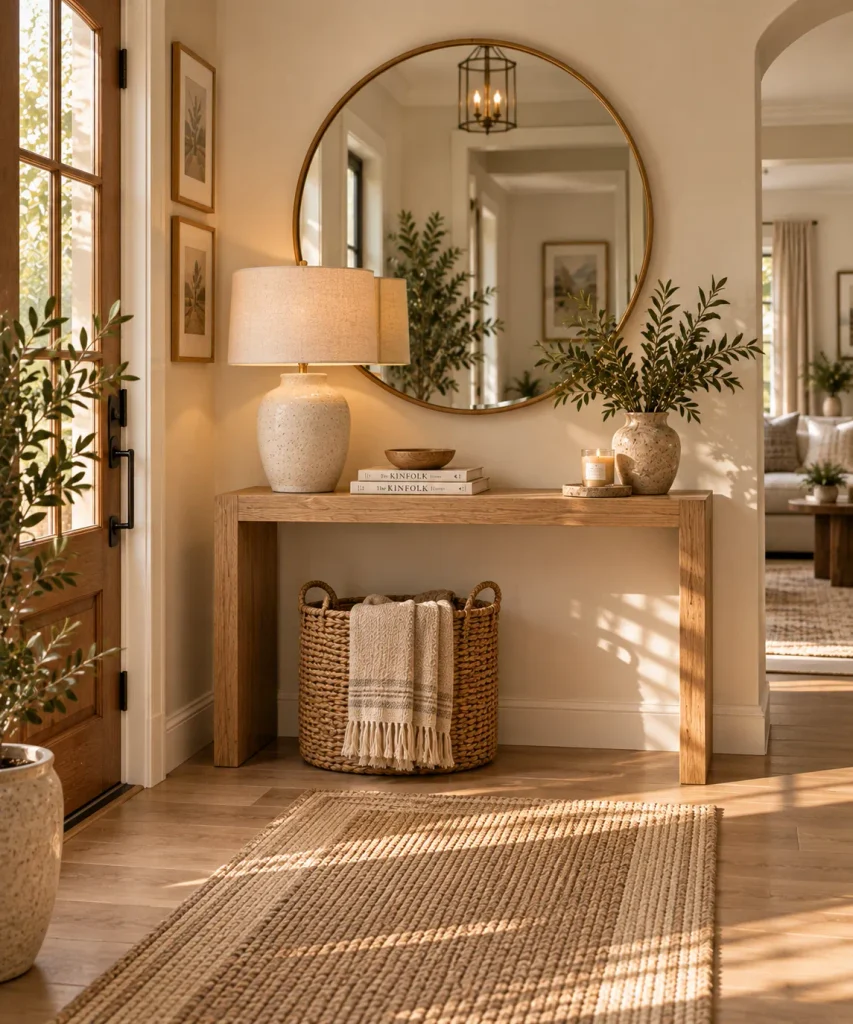
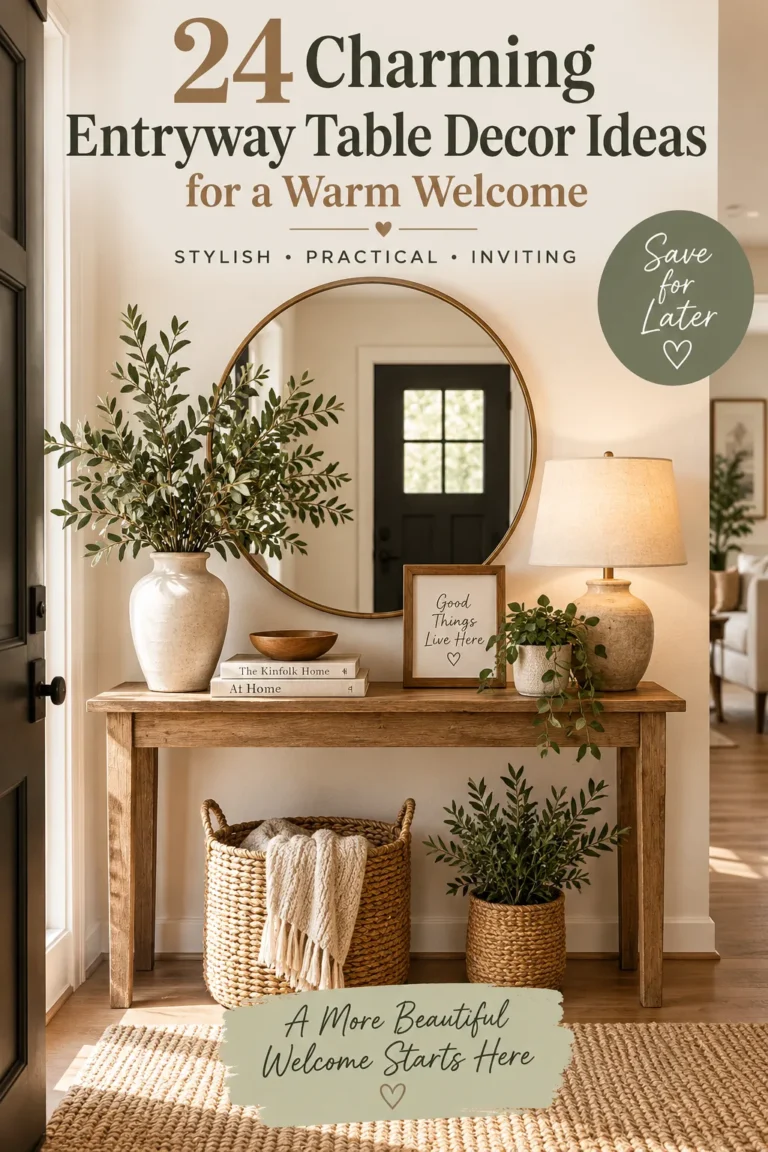
The entryway sets the tone before anyone reaches the main living areas. A slim console, useful storage basket, mirror, and one or two decorative objects can create a welcoming arrangement without taking much floor space.
Keep the surface practical by leaving room for everyday items such as keys or mail. A runner can add softness while defining the walkway. In my experience, the best entryways balance decoration with function, so the area looks polished but still works during busy mornings and quick trips in and out.
More info : 24 Stunning Living Room Decor Ideas That Wow Guests
Layered Area Rugs
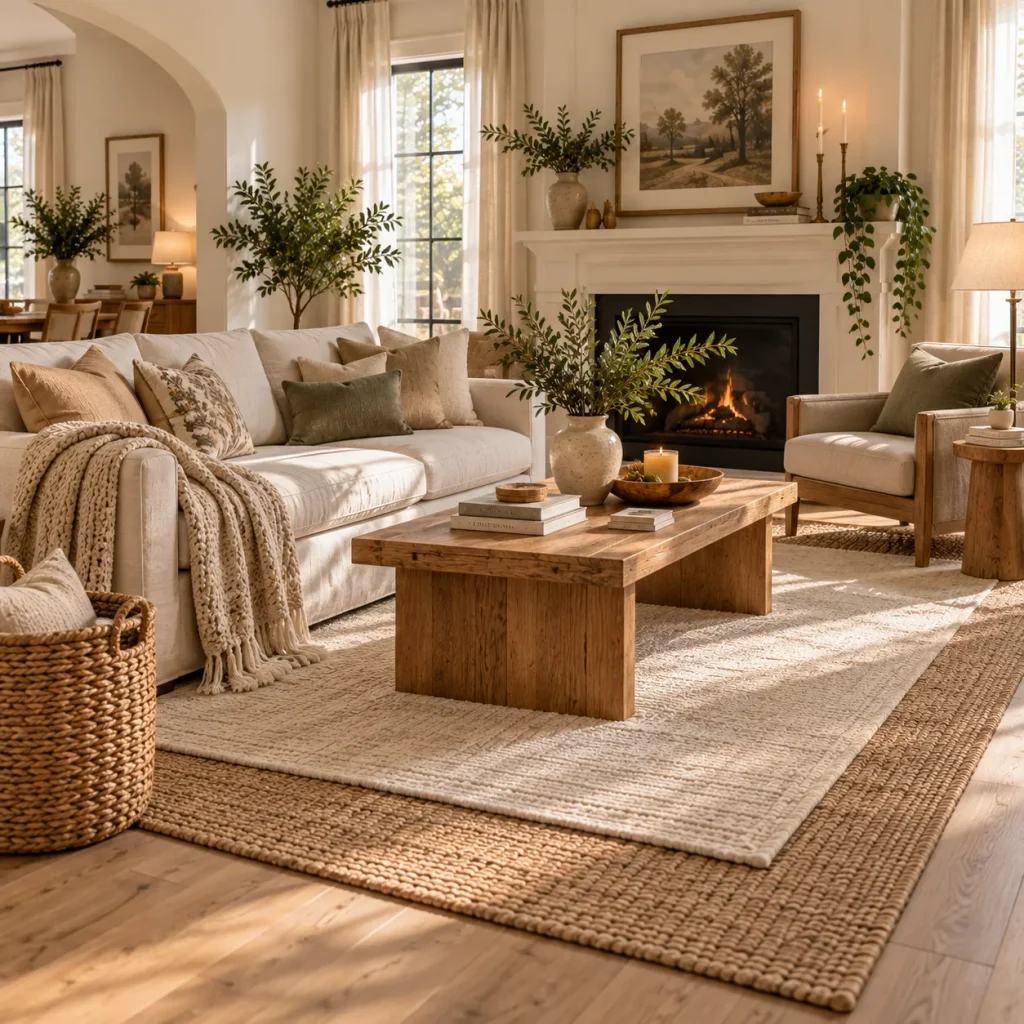
- Start with a large neutral rug that anchors the main furniture group.
- Add a smaller patterned or textured rug only when the room has enough visual space.
- Keep the rug colors related so the layers feel connected.
- Make sure furniture sits securely on the appropriate rug area.
- Choose low-pile combinations where doors or walking paths could become obstructed.
Layering rugs can define separate zones while introducing warmth and texture underfoot. A natural fiber base paired with a softer wool or cotton rug creates useful contrast without requiring bold colors. This approach works particularly well in open-plan rooms where furniture needs visual boundaries.
Pay attention to proportions before buying. The lower rug should extend beyond the smaller layer enough to remain visible. I’ve noticed that restrained patterns work best when several rugs share at least one color, keeping the overall arrangement cohesive rather than visually crowded.
Statement Stone Fireplace
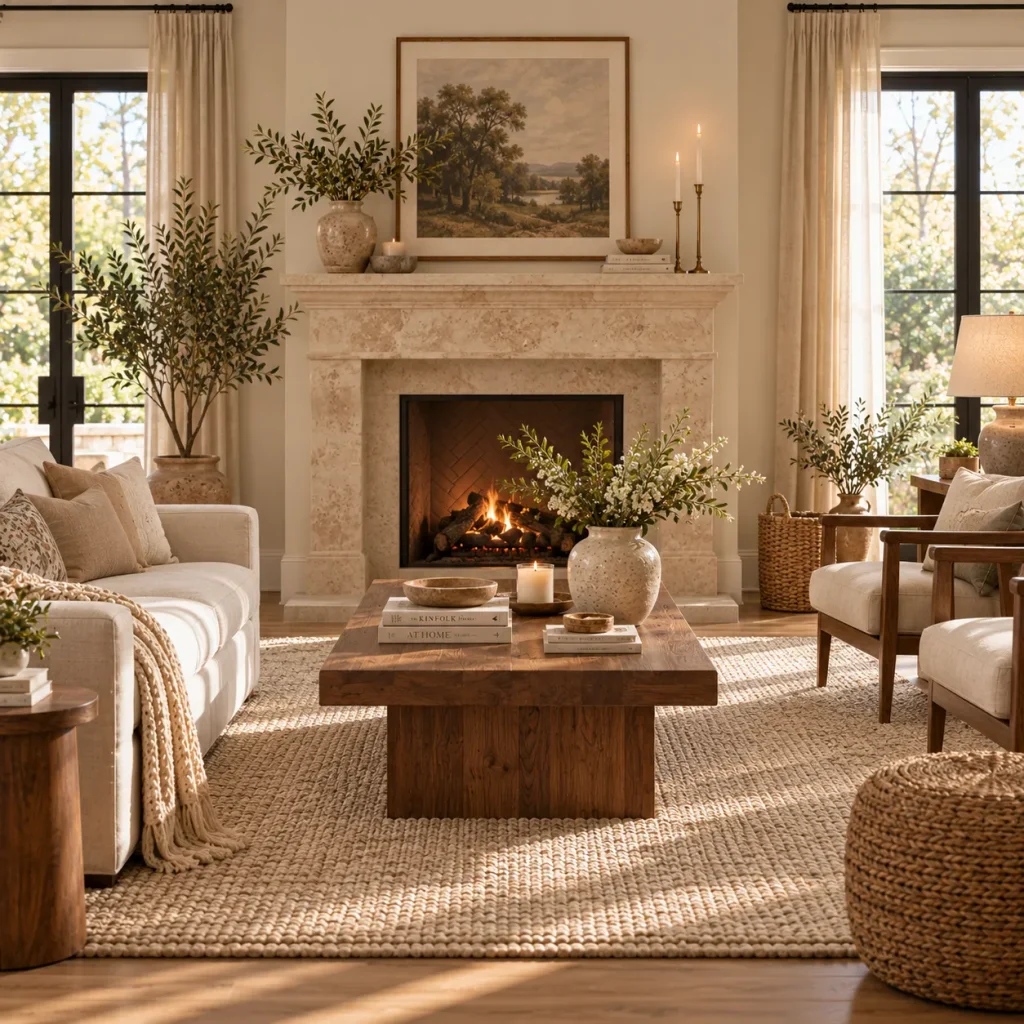
Cost: Moderate to high | Time: Several days to weeks | Skill Level: Professional installation for major changes
Best For: Living rooms and open entertaining spaces | Works In: Traditional, transitional, organic, and contemporary interiors
Result: Strong architectural focal point with lasting visual appeal
A stone fireplace can anchor an entire room through texture, scale, and natural variation. Limestone, marble, and other stone options each create a different character, so review large samples before committing to a finish.
Keep the mantel styling restrained if the stone has noticeable movement. A few ceramics, books, or branches can add personality without covering the material that makes the fireplace distinctive. For existing fireplaces, confirm heat and installation requirements before changing surrounding finishes.
Quiet Color Blocking
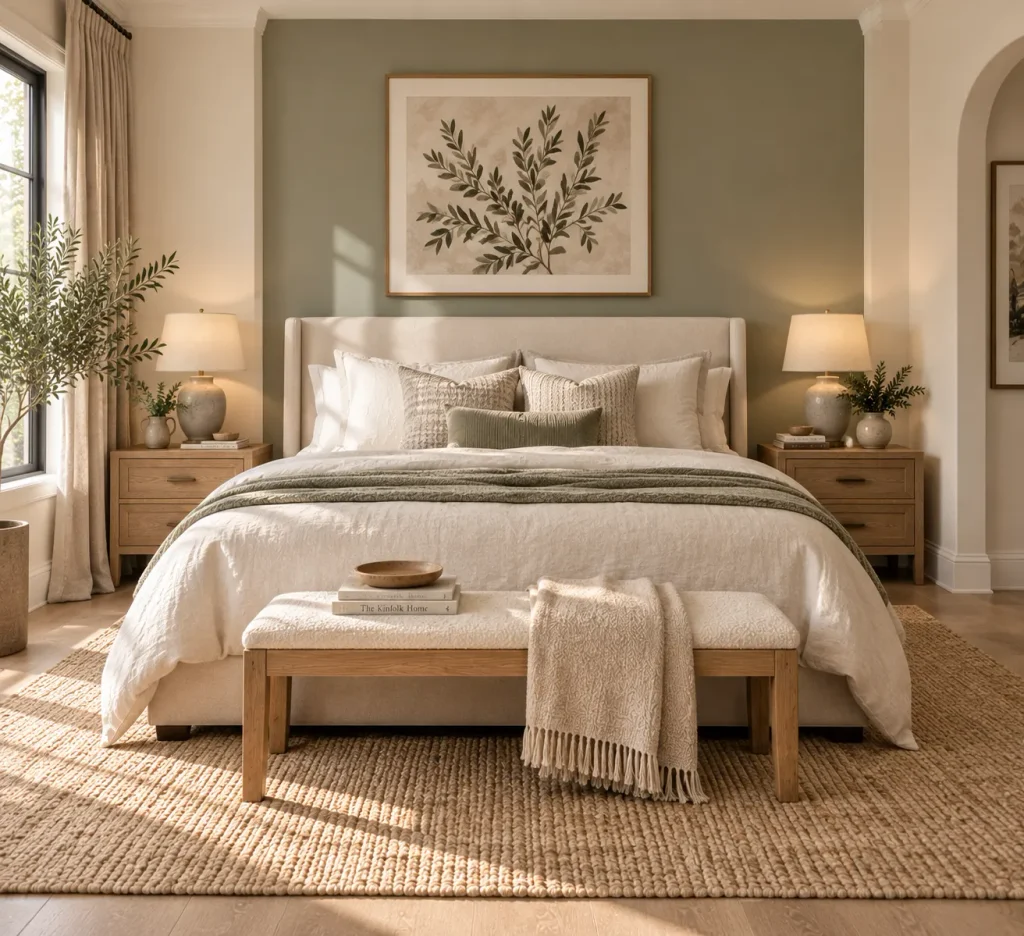
A restrained color block can give a room structure without overwhelming its timeless character. Instead of covering every wall in a strong shade, use one muted color on a selected wall, architectural section, cabinetry, or built-in feature.
Choose colors with soft undertones that work alongside existing flooring and furniture. I’ve noticed that muted sage, dusty blue, warm clay, and gentle taupe can add personality while remaining adaptable. Repeat the chosen shade in one or two smaller details, such as cushions or artwork, so the accent feels connected.
Polished Console Styling

- Start with one large anchor, such as a mirror or artwork, above the console.
- Add a lamp or taller object to create vertical variation.
- Use books or a shallow tray to introduce horizontal layers.
- Include one natural element, such as a small branch or plant.
- Leave part of the surface open for visual breathing room.
A console becomes more useful and attractive when its styling has clear height, texture, and purpose. Pairing a tall lamp with lower objects creates balance without making the surface feel crowded. Choose materials that repeat elsewhere in the room, such as wood, brass, ceramic, or woven fibers.
Keep everyday storage nearby if the console sits in an entryway. A basket underneath can hold shoes or accessories, while a small tray can contain keys and other essentials. The result should look polished enough for guests but remain practical for daily routines.
Vintage Accent Pieces

Cost: Varies | Time: One afternoon | Skill Level: Beginner
Best For: Adding personality without replacing major furniture | Works In: Traditional, transitional, organic, and contemporary rooms
Result: More character and visual depth
A few older or vintage-inspired pieces can give interior design a sense of history without making the room feel dated. Look for solid wood, aged brass, handmade ceramics, framed artwork, or objects with visible craftsmanship.
Avoid filling every surface with vintage finds. One distinctive piece can often create more interest than a collection of similar accessories. Check condition before purchasing secondhand furniture, especially joints, upholstery, finishes, and hardware. Pairing an older accent with simple contemporary furniture creates a balanced look that feels personal rather than themed.
Personalized Display Shelves
| Feature | Option A: Minimal Display | Option B: Collected Display |
| Visual effect | Clean and understated | Personal and layered |
| Styling effort | Lower | Moderate |
| Best pieces | Ceramics, books, simple artwork | Photos, travel finds, heirlooms |
| Overall feel | Calm and modern | Warm and individual |
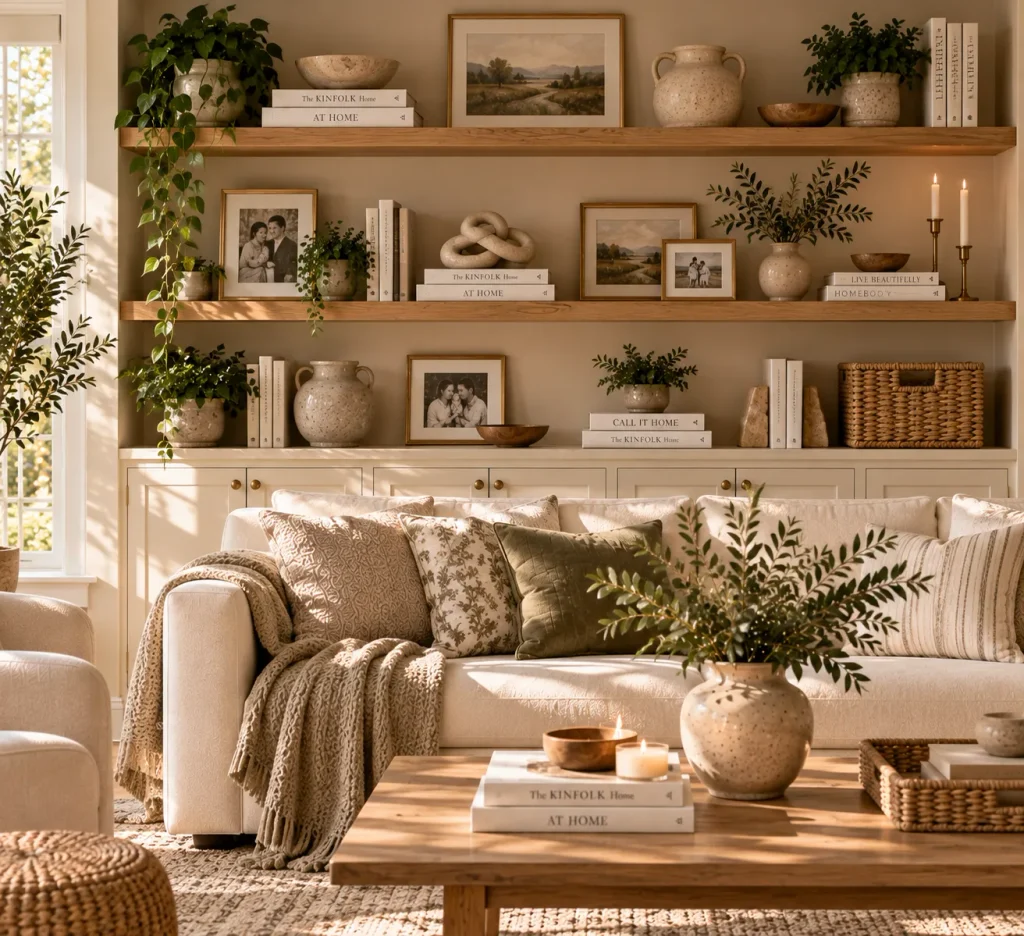
Open shelves become much more meaningful when they show pieces connected to your life rather than only decorative objects. A few books, family photographs, handmade ceramics, travel souvenirs, or inherited pieces can give a room character while keeping the overall arrangement refined.
Avoid filling every shelf from edge to edge. Leave open areas between groups and vary the height of displayed objects to create rhythm. I’ve noticed that personal pieces often make a neutral room feel more welcoming than perfectly matched accessories. Choose items you genuinely enjoy seeing every day.
CONCLUSION
Creating a timeless home is less about following a perfect formula and more about choosing pieces, colors, textures, and layouts that work beautifully together. These interior design ideas can help you create rooms that feel comfortable, practical, personal, and polished without relying on short-lived trends.
I’ve noticed that the most inviting spaces often combine simple foundations with meaningful details. Start with one idea that suits your home and build gradually. Save this article on Pinterest for future inspiration, try your favorite ideas, and share it with someone planning a home refresh. Small thoughtful changes can create a home you enjoy for years.