
24 Stunning Living Room Decor Ideas That Wow Guests
A living room should feel welcoming the moment guests walk through the door.
The right details can make an ordinary space feel warm, polished, and personal.
Whether your room feels empty, cluttered, outdated, or simply lacks character, these 24 living room decor ideas offer practical ways to refresh it without starting from scratch. You’ll find inspiration for furniture placement, lighting, wall treatments, textiles, greenery, storage, and decorative accents. Each idea focuses on details that look inviting while still making sense for everyday life.
In my experience, the rooms people enjoy most are not necessarily filled with expensive furniture. They usually have thoughtful textures, comfortable seating, balanced lighting, and a few personal touches. I’ve noticed that even one well-chosen change, such as a larger rug or better lighting, can noticeably improve how a room feels. Use these ideas to find the details that fit your style, budget, and daily routine.
Layered Neutral Textures
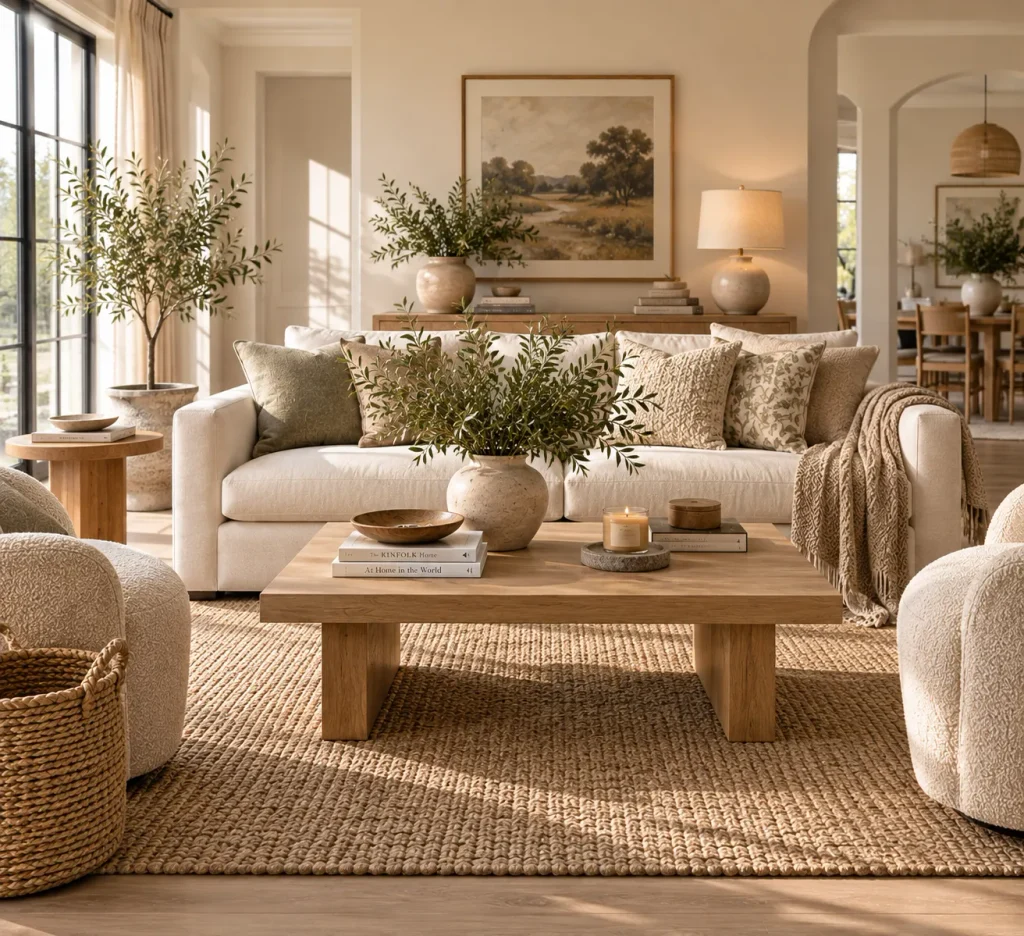
The fastest way to make a sitting area feel thoughtfully finished is to layer textures, not simply add more accessories. Combine linen cushions, a boucle chair, a woven rug, smooth ceramics, and natural wood. Keep the colors close so the different surfaces create interest without making the room feel cluttered.
I’ve noticed that texture works especially well when the furniture is simple. A chunky throw across a sofa, a woven basket beside an armchair, or a ribbed vase on the coffee table can add depth without demanding much space. The result feels warm, comfortable, and visually rich while remaining easy to maintain.
Statement Gallery Wall
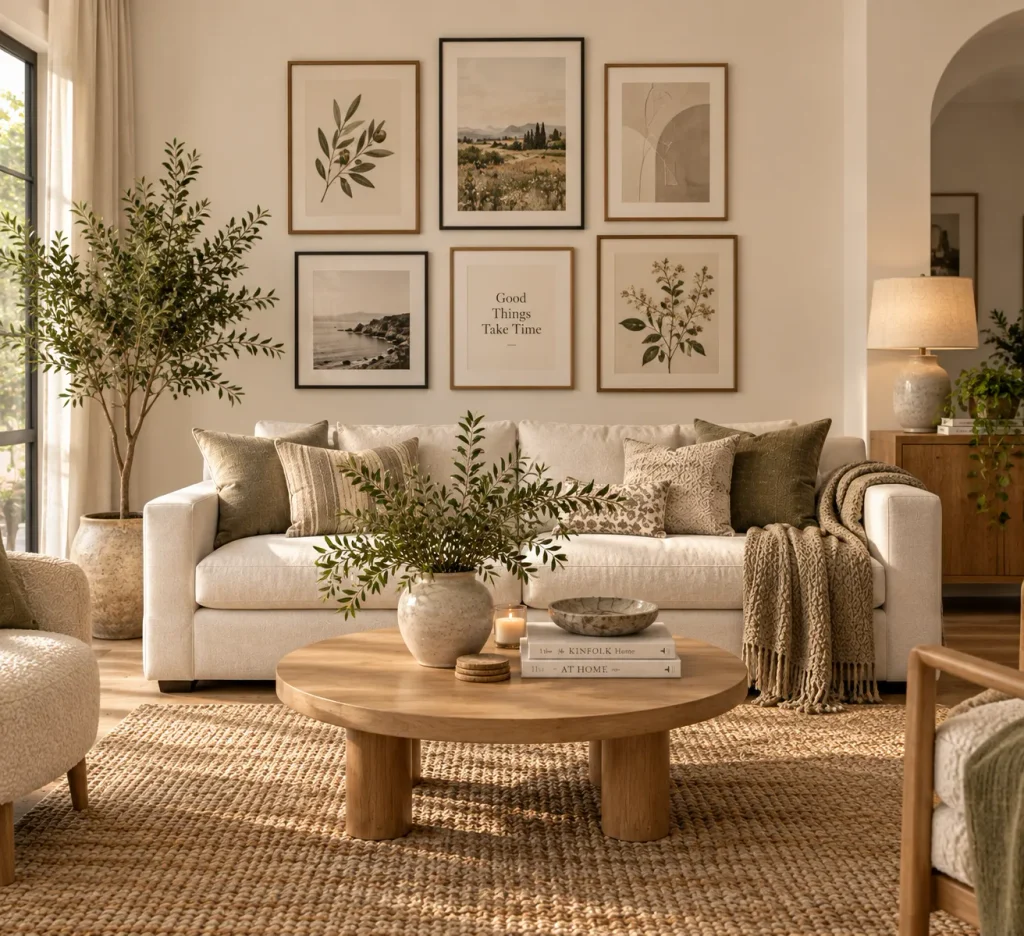
- Start with one large artwork as the visual anchor, then build smaller pieces around it.
- Keep frame spacing consistent, usually around 2 to 4 inches for a cohesive arrangement.
- Repeat two or three colors across the artwork so different prints feel connected.
- Arrange frames on the floor first and photograph the layout before hanging.
- Keep the center of the overall display around comfortable eye level.
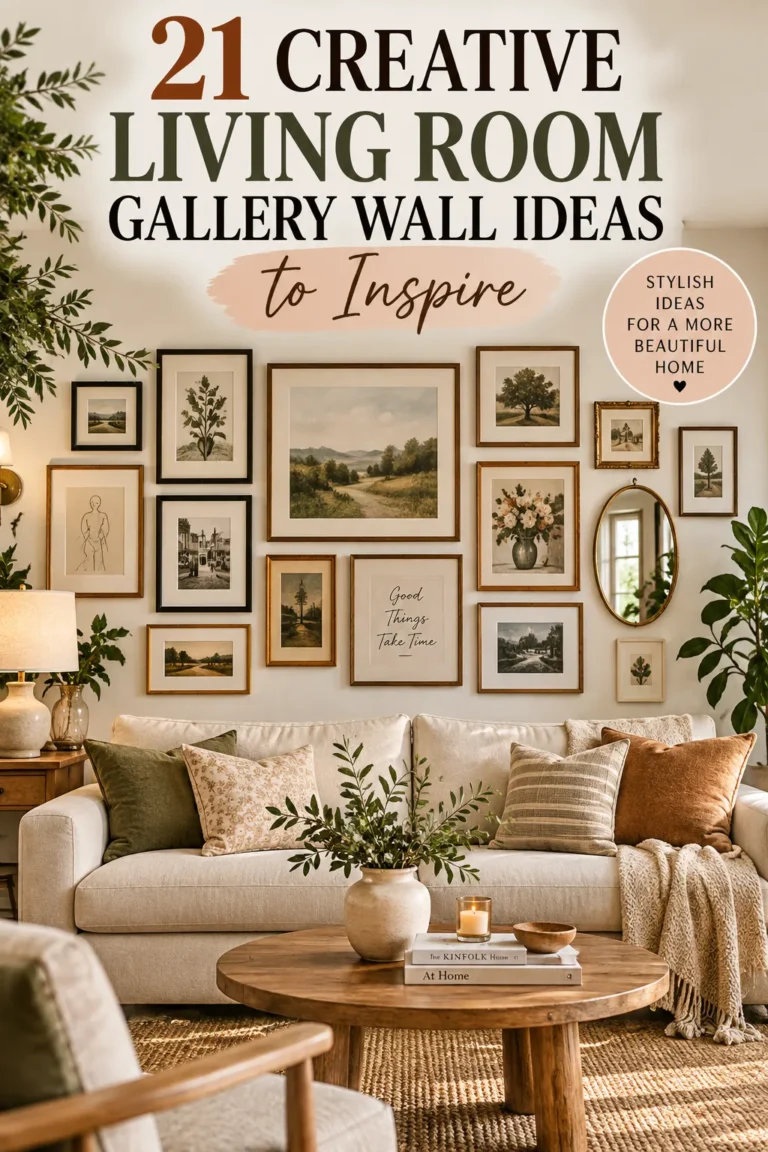
A gallery wall gives personality to an otherwise quiet wall while making the seating area feel more intentional. Mix family photographs, botanical prints, sketches, or abstract pieces that share a common color thread. For smaller rooms, fewer larger frames usually create a cleaner result than many tiny pieces.
Warm Layered Lighting
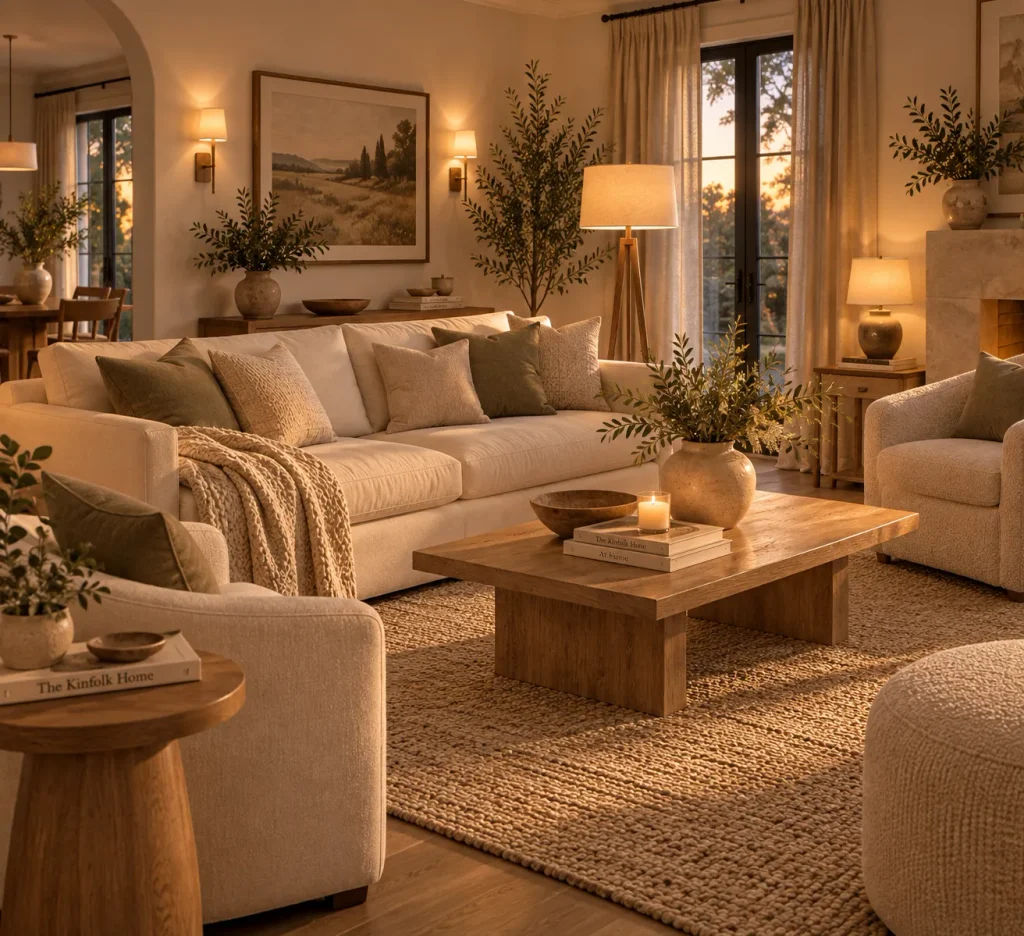
Quick Tip:
Use at least three light sources at different heights instead of depending on one ceiling fixture. Place a floor lamp beside seating, a table lamp on a console, and softer overhead lighting on a separate switch when possible.
Good lighting changes how the entire room feels after sunset. Warm bulbs create a relaxed atmosphere, while strategically placed lamps prevent dark corners from disappearing visually. In my experience, moving a floor lamp closer to a reading chair or sofa can make that area feel more useful without buying new furniture.
Oversized Area Rug
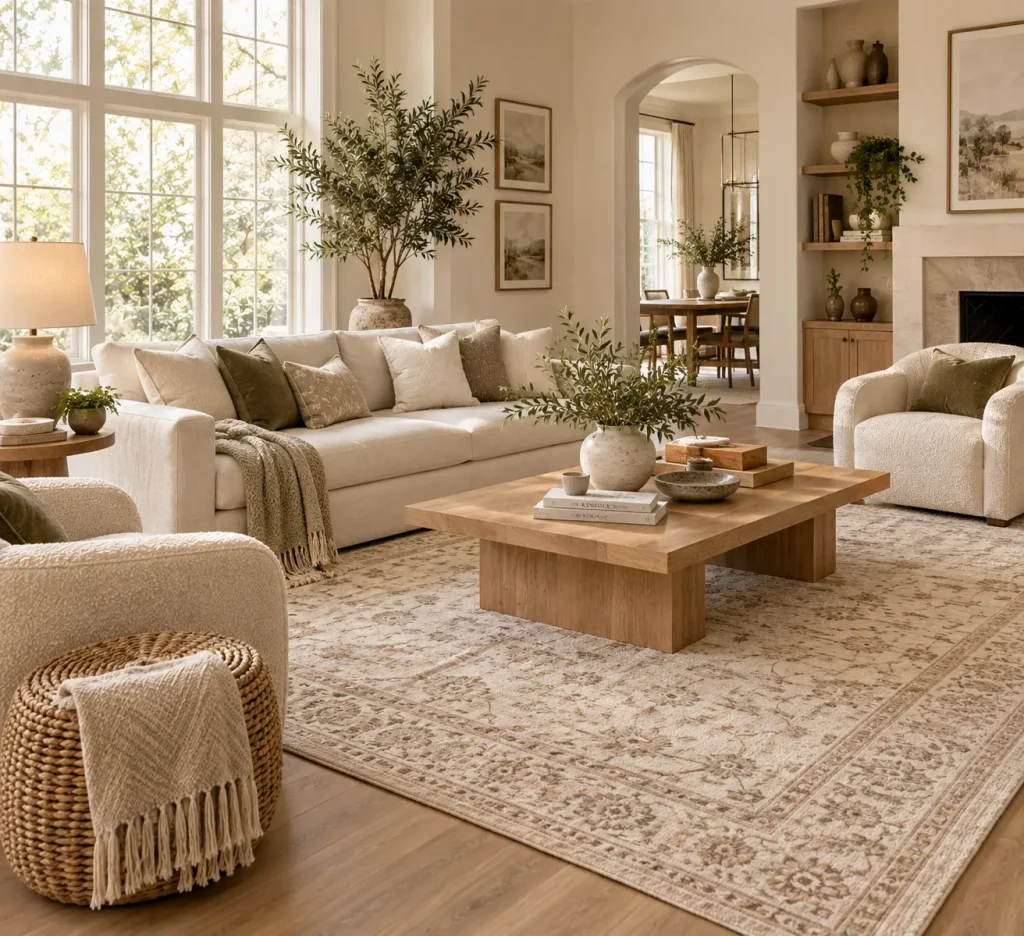
BEFORE: A small rug sits beneath the coffee table while the sofa and chairs remain outside its edges. The furniture feels visually disconnected, and the seating area lacks a clear boundary.
AFTER: A larger rug extends beneath the front legs of the main seating pieces. The furniture now feels grouped into one comfortable zone, while the floor gains another layer of texture.
Measure the seating area before buying a rug, then mark the intended size with painter’s tape. Leave enough floor visible around the edges to maintain balance. A neutral pattern can hide everyday marks while adding subtle interest. For busy households, choose a durable, easy-clean material that suits your routine.
Curved Furniture
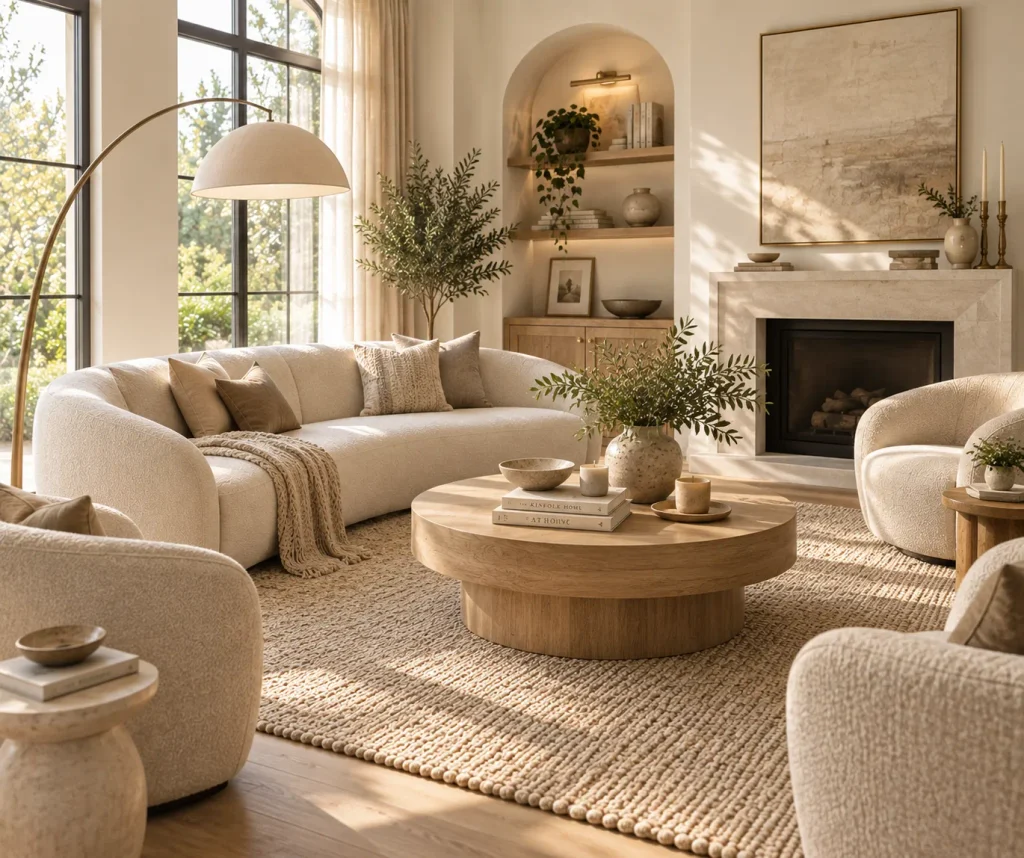
- Start with one curve: Choose a rounded sofa, armchair, or coffee table as the main focal piece.
- Repeat gently: Add one smaller curved element nearby, such as a round side table or arched lamp.
- Balance straight lines: Keep some rectangular furniture or artwork so the room does not feel overly rounded.
- Check circulation: Leave clear walking paths around curved pieces before finalizing their positions.
Rounded furniture can soften a room filled with straight shelves, square tables, and rectangular artwork. The shapes also create a more relaxed visual flow around seating areas. Keep the number of curved pieces controlled, especially in smaller rooms, so each one remains noticeable instead of competing with the others.
Built-In Media Wall
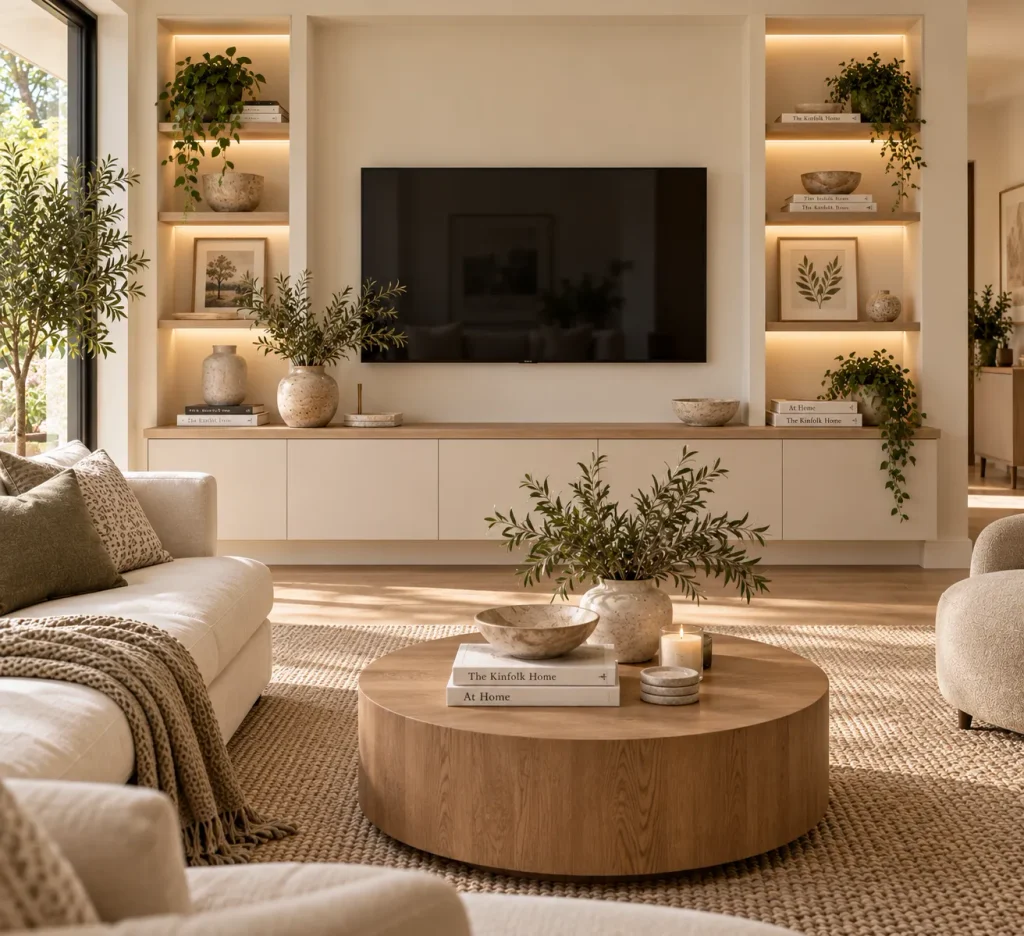
| Feature | Option A: Freestanding Unit | Option B: Built-In Wall |
| Storage | Limited or movable | More integrated storage |
| Visual effect | Flexible and casual | Clean and structured |
| Installation | Usually simpler | Requires more planning |
| Best use | Renters or frequent movers | Long-term home layouts |
A media wall can organize electronics while giving the main seating area a stronger visual anchor. Include closed storage for cables, remotes, and accessories, then reserve open shelves for books and a few decorative pieces. Before installation, plan ventilation and access around electronic equipment according to manufacturer requirements.
Natural Wood Coffee Table
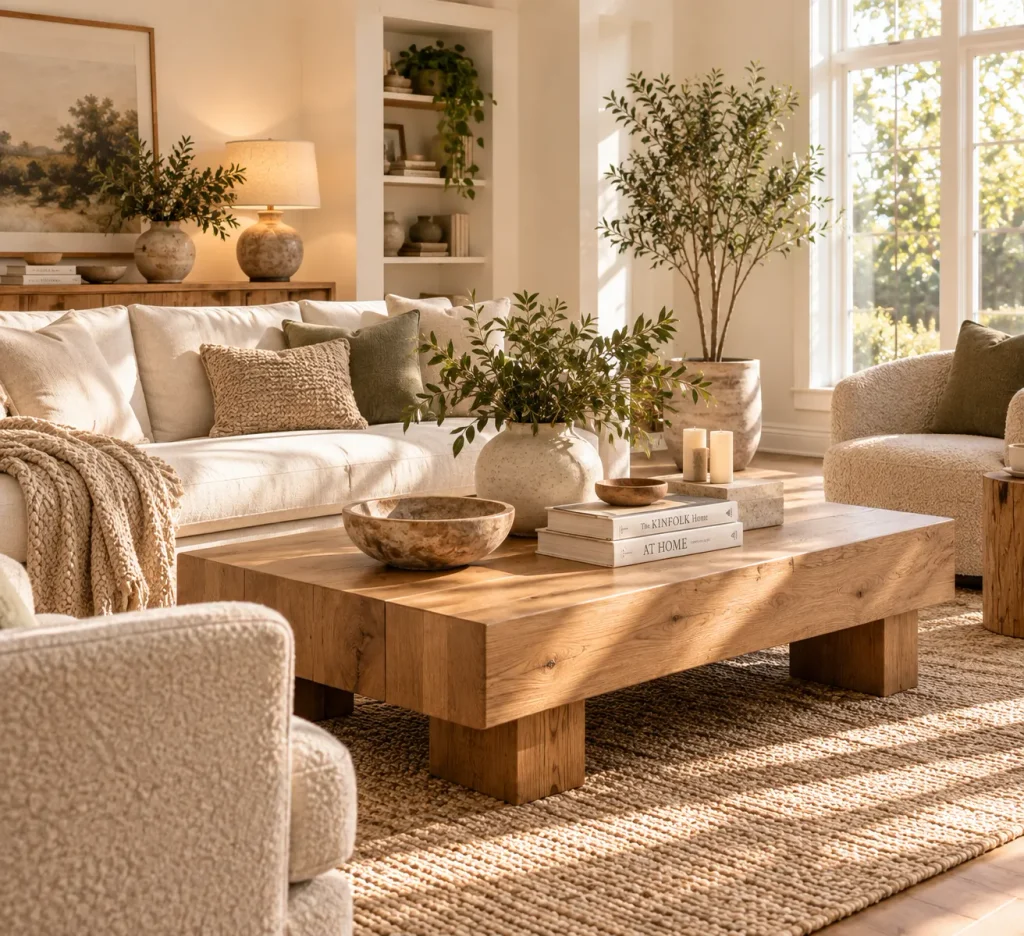
DO:
- Choose a table size that leaves comfortable walking space around it.
- Match the wood tone with at least one existing element.
- Keep the tabletop styling low enough for easy conversation.
- Use a tray to group smaller decorative objects.
DON’T:
- Choose an oversized table that crowds the seating.
- Mix several unrelated wood finishes without a visual connection.
- Cover the entire surface with accessories.
- Ignore the table’s height compared with the sofa.
A natural wood table adds warmth while giving the seating arrangement a practical center. Look for visible grain, rounded edges, or a simple handcrafted shape if you want extra character. I’ve noticed that a restrained tabletop arrangement usually works better than a crowded display, especially in rooms used by families every day.
Layered Window Treatments
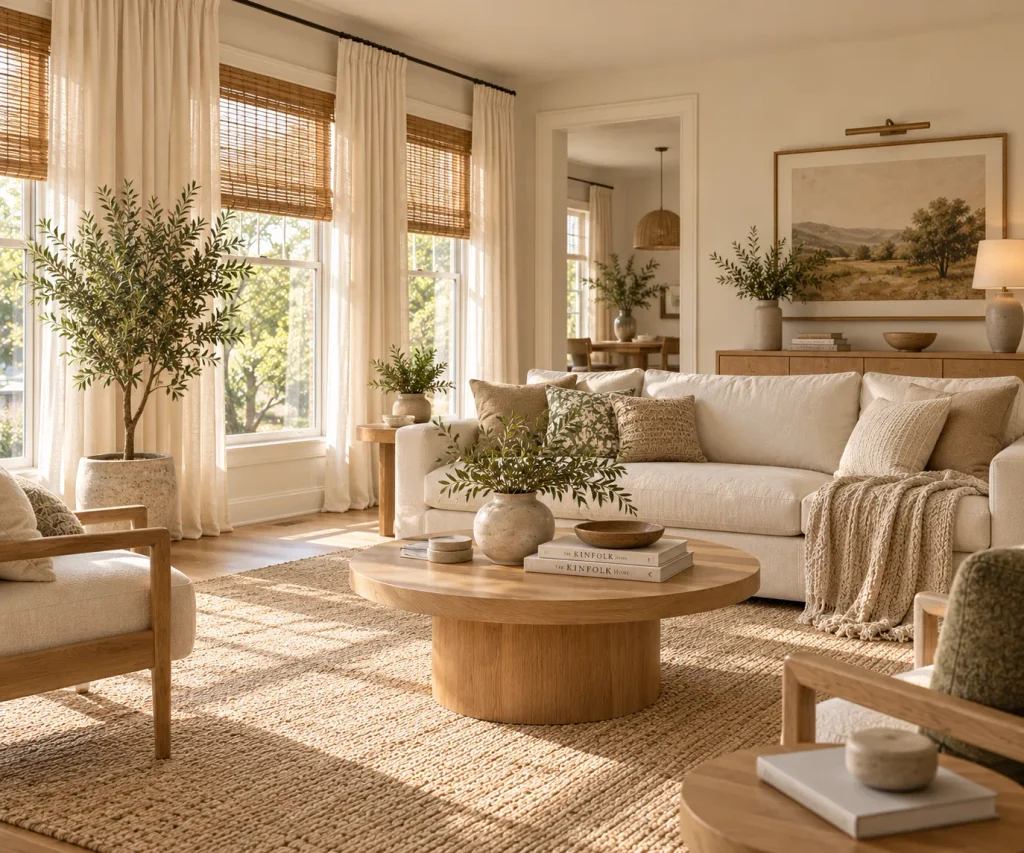
Cost: Moderate | Time: 1 to 3 hours | Skill Level: Beginner
Best For: Large windows, living areas, and rooms needing flexible light control | Works In: Traditional, modern, coastal, and organic interiors
Result: Softer windows with adjustable privacy and daylight
Windows can become a stronger design feature when two simple treatments work together. Pair woven shades with lightweight curtains to control brightness while adding texture. Choose colors that stay close to the wall and upholstery so the window treatment supports the room rather than becoming an unrelated focal point.
Measure the window and mounting area carefully before purchasing hardware. Curtains should generally have enough width to create soft folds when closed, while the shade should fit the window appropriately. For a relaxed appearance, natural fibers and linen-look fabrics pair especially well with wood furniture and neutral seating.
Styled Console Table
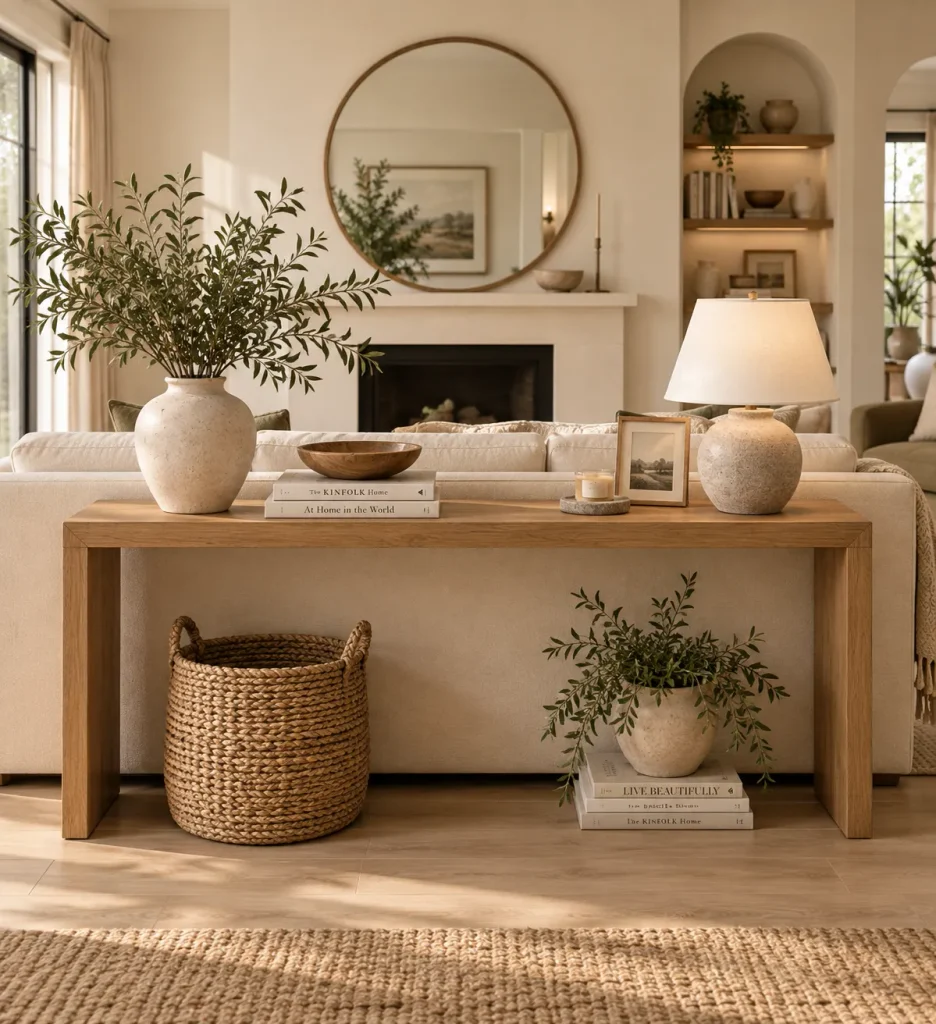
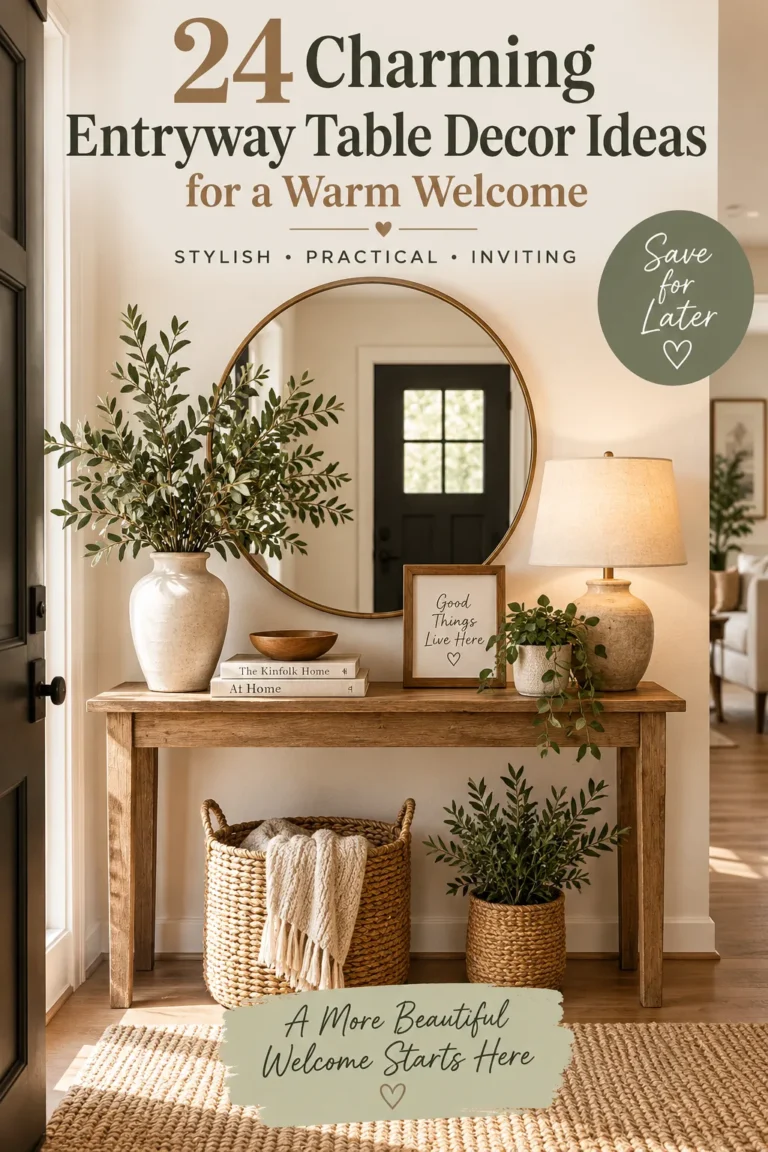
A console table can turn an overlooked wall or sofa back into a useful styling zone. Keep the arrangement simple with one tall piece, one medium object, and a lower stack such as books or a shallow tray. This creates height variation without filling the entire surface.
For a balanced living room decor arrangement, repeat materials already found elsewhere in the space. If your coffee table has oak, bring a similar wood tone to the console. If the sofa has cream upholstery, add ceramic or linen accents nearby. Leave enough open surface for practical items so the display remains functional.
Accent Wall Molding
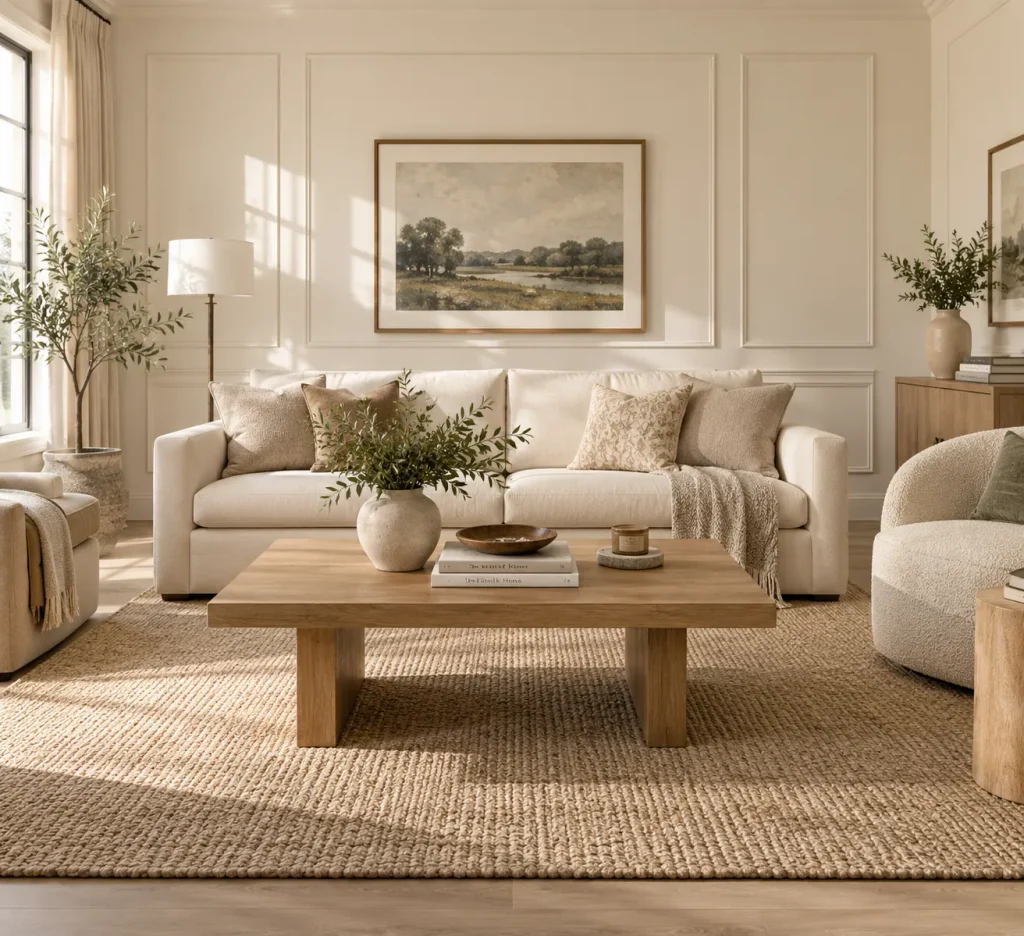
- Map the wall: Measure the full surface and mark the centerline before deciding on the molding layout.
- Plan the rectangles: Use painter’s tape to test panel sizes and spacing before cutting materials.
- Match the scale: Keep the panels proportional to the wall and furniture beneath them.
- Paint consistently: Use the same wall color on the trim for a subtle architectural effect.
- Style lightly: Let the wall detail remain visible instead of covering it with oversized artwork.
Wall molding adds architectural character without requiring bold wallpaper or strong color. Simple rectangular panels work particularly well behind a sofa because they create structure across a large surface. I’ve tried similar layouts with evenly spaced sections, and careful measuring makes the finished result look far more professional.
ALSO VIEWS: 22 Inspiring Home Decor Ideas You’ll Love for Years
Statement Floor Lamp
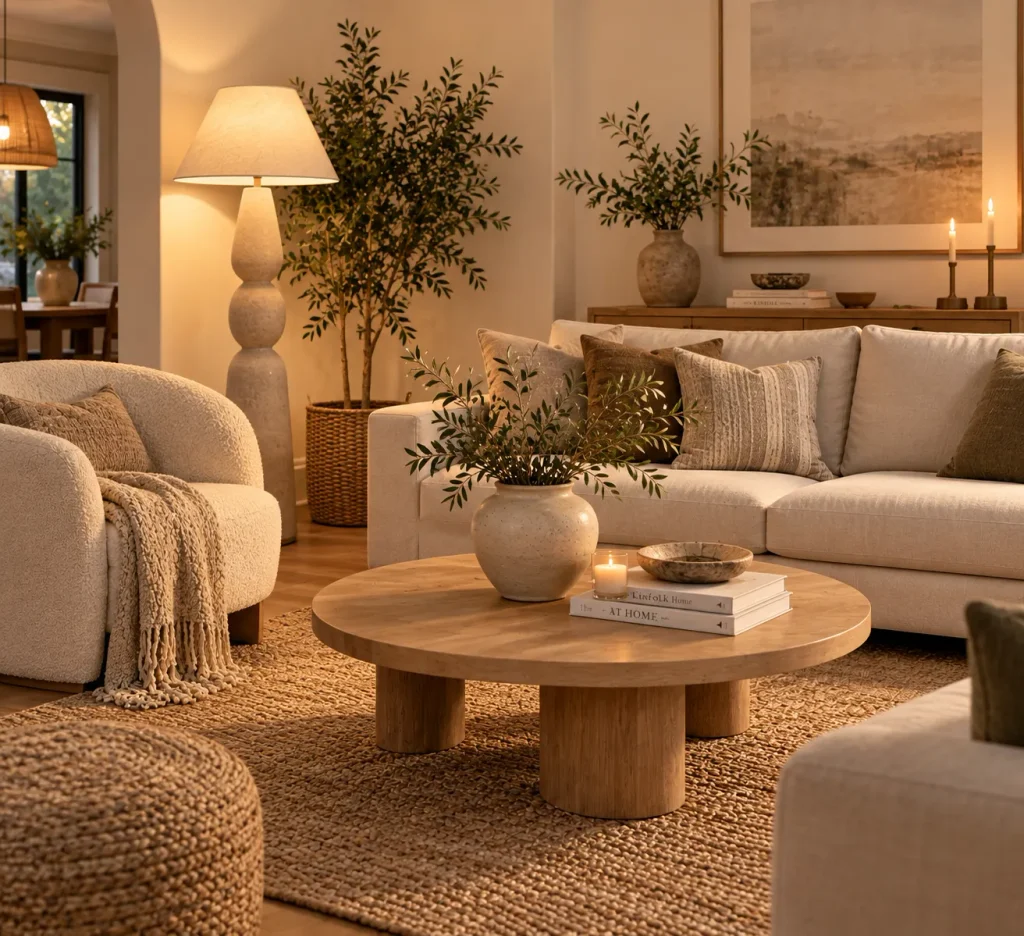
Image Description: Stylish living room featuring a tall sculptural floor lamp beside a cream boucle chair, linen sofa, round oak coffee table, woven rug, ceramic vase, and leafy plant. Warm ambient lighting creates a soft evening glow against cream walls. Contemporary organic palette, eye-level Pinterest interior photography.
| Feature | Option A: Standard Lamp | Option B: Sculptural Lamp |
| Visual role | Mainly functional | Functional focal point |
| Shape | Simple and compact | More distinctive |
| Styling impact | Subtle | Stronger |
| Best placement | Beside seating | Beside seating or an empty corner |
A floor lamp can fill an unused vertical space while providing useful light for reading or relaxing. Look for an adjustable shade when function matters most, or choose a sculptural silhouette if the lamp will also act as decor. Keep its base away from main walking paths to prevent awkward traffic flow.
Check the lamp’s height against nearby furniture before purchasing. A shade that sits around eye level while seated can provide comfortable illumination without shining directly into your eyes. For a cohesive look, repeat the lamp’s finish through smaller details such as picture frames, hardware, or nearby decorative objects.
Cozy Throw Layers
DO:
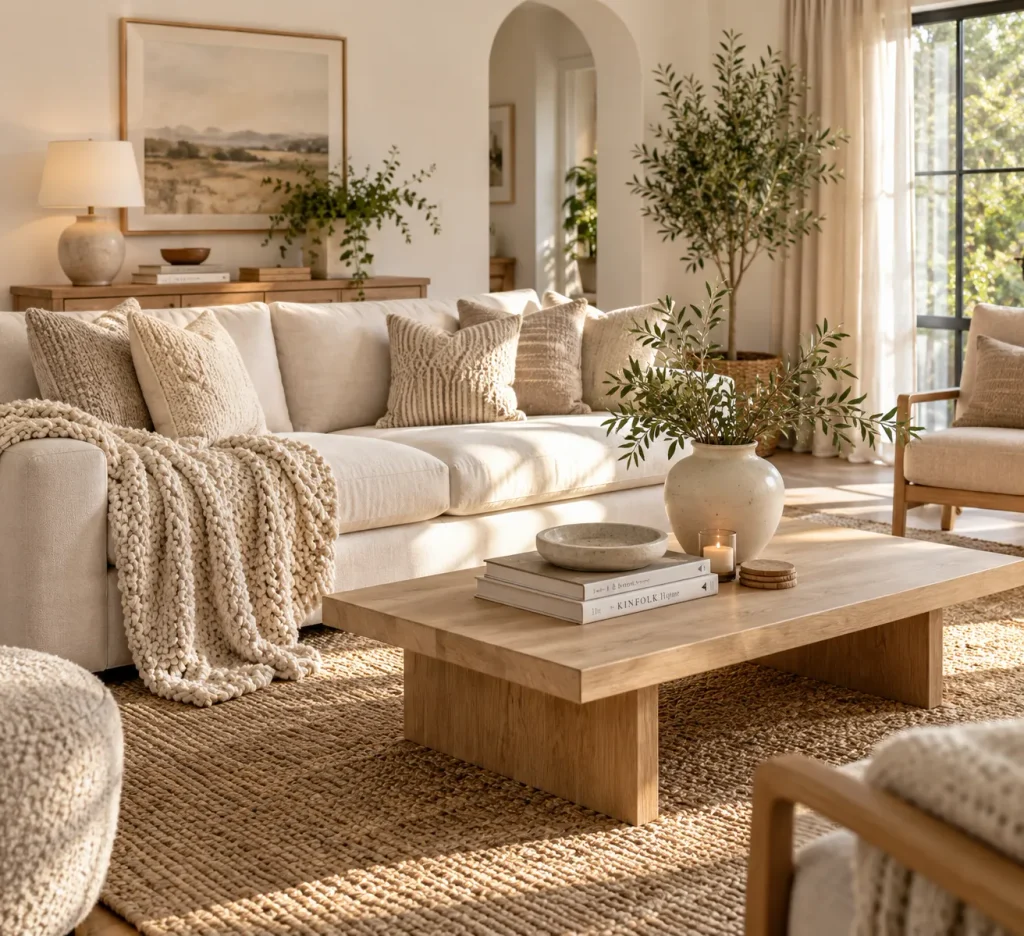
- Drape one textured throw naturally over an arm or sofa corner.
- Choose cushions with different fabrics but related colors.
- Keep one area of the sofa open for comfortable sitting.
- Wash or rotate soft textiles according to their care instructions.
DON’T:
- Cover every seat with decorative blankets.
- Combine too many competing patterns.
- Use delicate fabrics where frequent spills are likely.
- Let throws trail across walking areas.
Soft textiles make seating feel more inviting while adding layers of color and texture. Combine a knitted throw with linen or cotton cushions for contrast. For a polished result, choose pieces from the same general color family and vary their texture instead of adding several unrelated prints.
Built-In Bookcase Styling
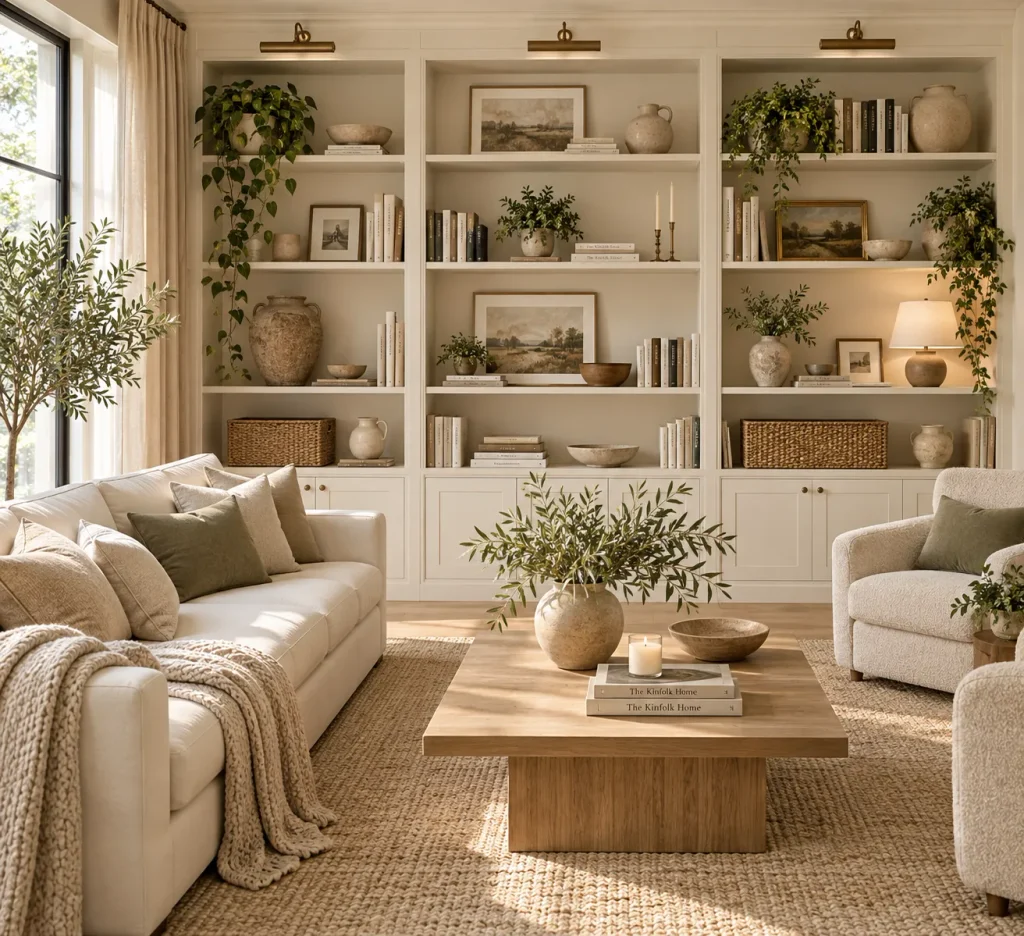
Cost: Moderate to high | Time: One to several days | Skill Level: Intermediate
Best For: Empty walls, reading areas, and media spaces | Works In: Traditional, transitional, modern, and organic interiors
Result: Organized storage with a strong architectural focal point
A bookcase feels more polished when books and decorative objects share the shelves. Start by placing larger books in a few horizontal and vertical groups, then add ceramics, framed prints, baskets, and small plants around them. Leave some open sections so the display has room to breathe.
Use repeated colors to connect the shelves with the rest of the room. Warm wood, cream ceramics, muted artwork, and greenery create a calm combination that does not compete with seating. Keep frequently used books within easy reach and reserve higher shelves for lighter decorative pieces that need less handling.
Balanced Furniture Layout
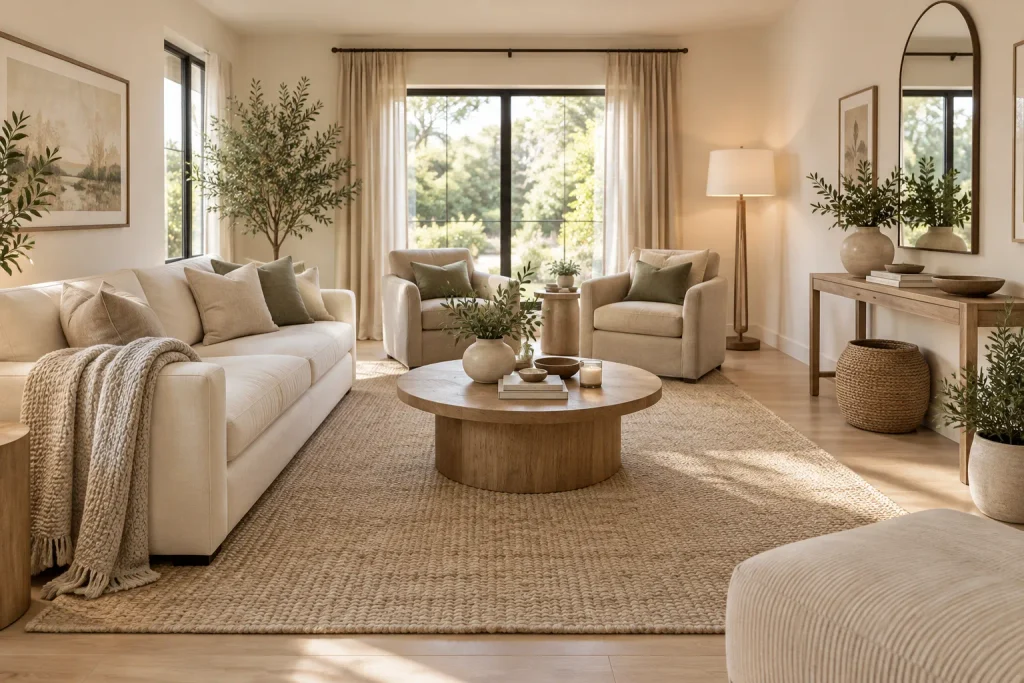
The right furniture arrangement can make a room feel larger before anything new is purchased. Start by identifying the main conversation area, then position seating close enough for comfortable conversation while maintaining clear paths around the group.
Measure before moving heavy pieces repeatedly. Leave practical clearance between the coffee table and seating, and keep doorways, heating vents, and frequently used walkways unobstructed. In my experience, pulling sofas slightly away from walls can sometimes create a more intentional arrangement, especially in medium and large rooms.
Color-Coordinated Cushions
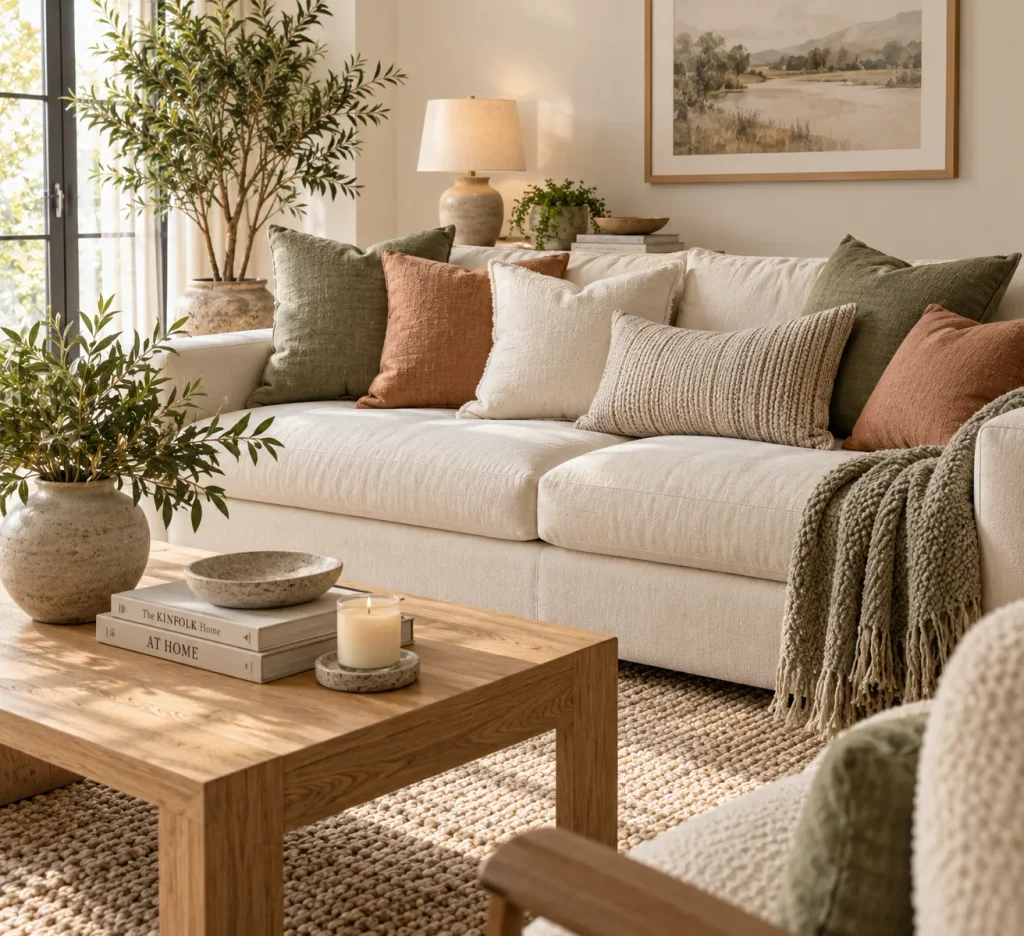
Image Description: Cream sofa styled with six cushions in sage green, muted terracotta, ivory, and beige, featuring linen, cotton, and subtle woven textures. Natural oak coffee table, soft rug, leafy plant, warm white walls, bright window light, inviting contemporary organic aesthetic, close three-quarter Pinterest photography.
- Choose a base: Start with one neutral cushion color that matches the sofa or surrounding furniture.
- Add one accent: Introduce a muted color already found elsewhere in the room.
- Mix textures: Combine linen, cotton, woven, or lightly quilted fabrics.
- Vary sizes: Place larger cushions behind smaller lumbar or square cushions.
- Keep breathing room: Avoid covering every available section of the sofa.
Cushions are an easy way to refresh a seating area without replacing larger pieces. Pick two or three related shades, then vary the patterns and textures for depth. I’ve noticed that repeating a cushion color in artwork, rugs, or small accessories helps the entire room feel connected rather than decorated in isolated sections.
Textured Feature Wall
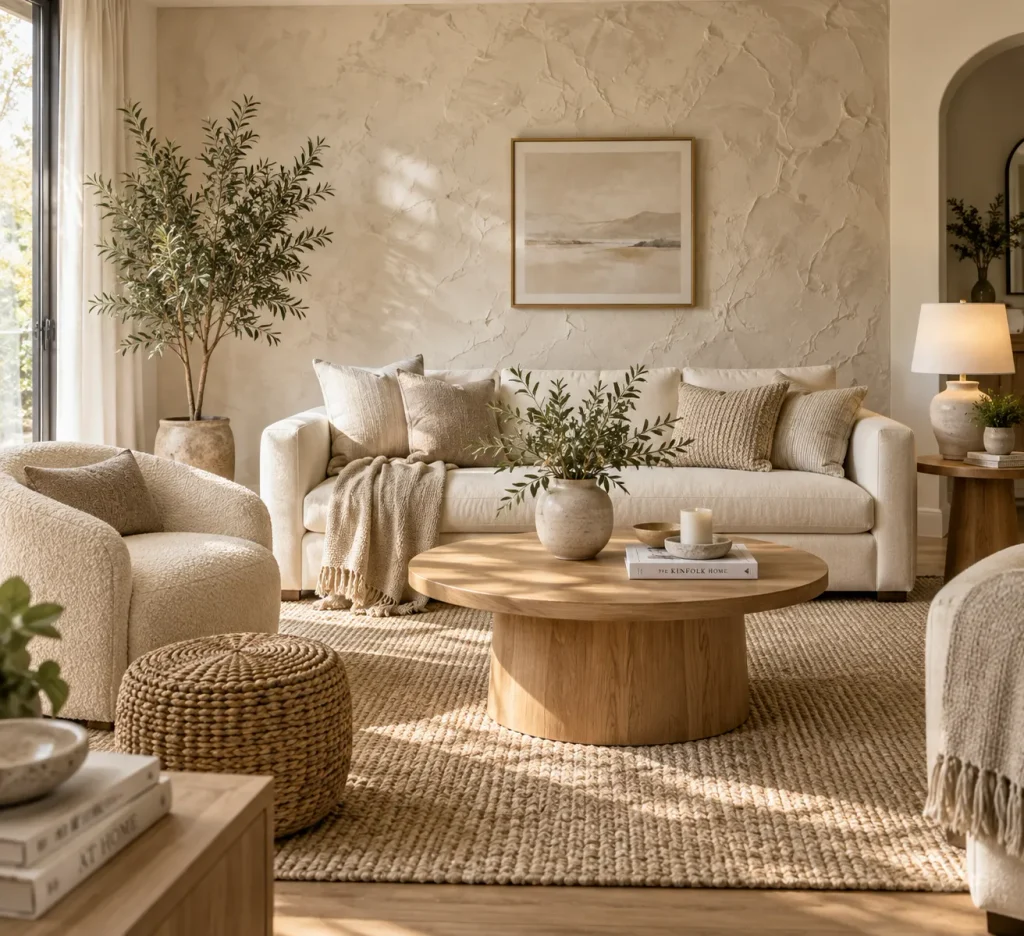
| Feature | Option A: Painted Wall | Option B: Textured Wall |
| Visual effect | Clean and simple | Adds depth and dimension |
| Maintenance | Usually easier | Depends on material |
| Cost | Often lower | Can require more preparation |
| Best use | Minimal interiors | Rooms needing surface interest |
A textured wall can create a focal point without relying on bright color or oversized artwork. Limewash, subtle plaster finishes, grasscloth-style wallpaper, or other approved wall treatments can introduce depth while keeping the palette restrained.
Choose the finish based on the room’s lighting and maintenance needs. Strong texture can look different throughout the day as shadows move across the surface. Keep nearby furniture and accessories relatively simple so the wall remains the main visual layer rather than competing with several decorative features.
Statement Coffee Table
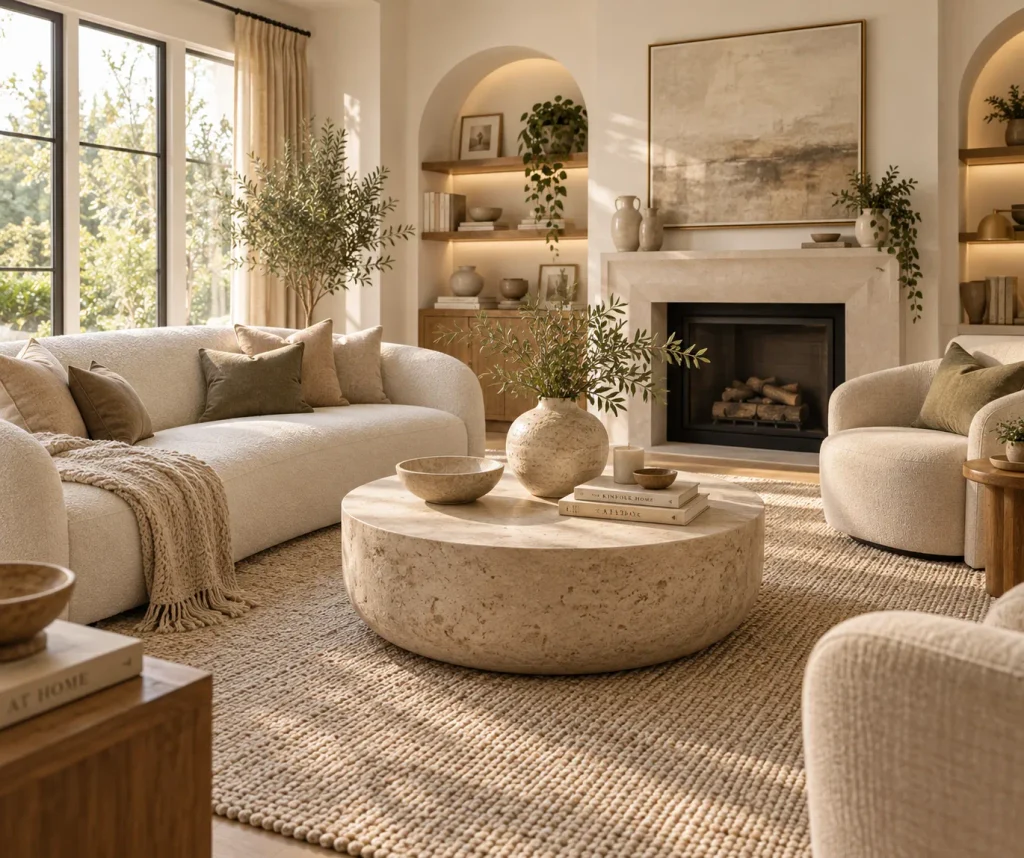
Quick Tip:
Let the coffee table become the main focal point by keeping the surrounding pieces visually quiet. Choose a distinctive shape, material, or base, then repeat one small detail from it elsewhere, such as stone, wood, or a similar neutral tone.
A statement table works best when its scale matches the seating around it. Leave enough clearance for people to walk and sit comfortably, then style the surface with only a few useful pieces. I’ve noticed that sculptural tables need less decoration because their shape already provides visual interest.
Soft Neutral Color Palette
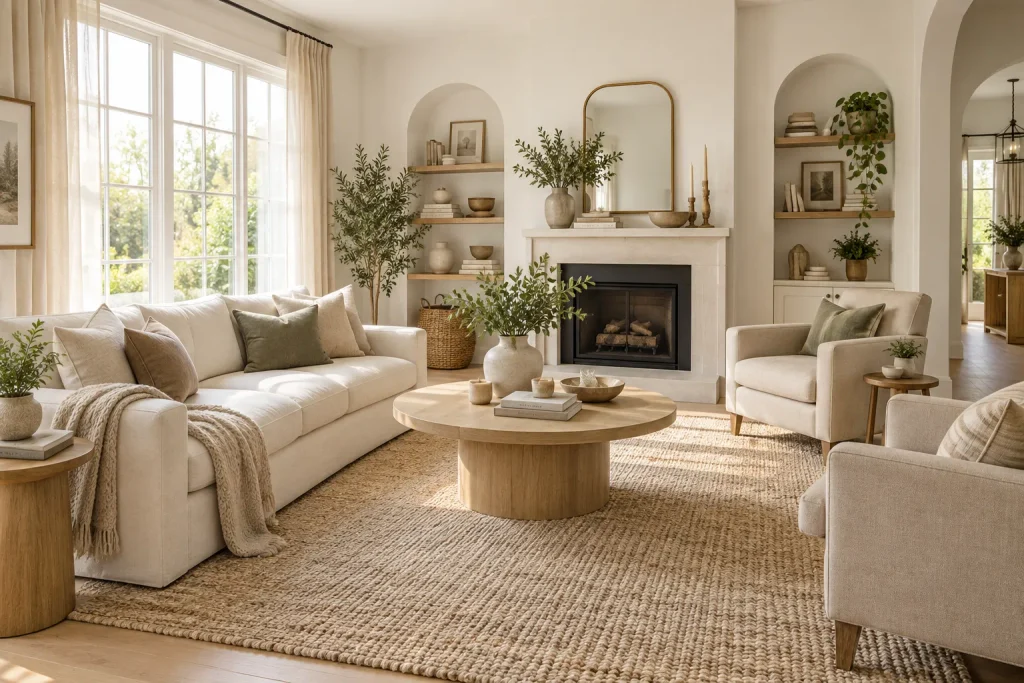
BEFORE: The room contains several unrelated colors across cushions, artwork, furniture, and accessories. The result feels visually scattered, even though each individual item works on its own.
AFTER: A restrained palette of cream, beige, taupe, warm white, and muted natural accents creates a connected appearance. Different textures provide variety without introducing many competing colors.
Start with one dominant neutral, then add two supporting shades and a small accent color. Repeat these tones throughout the seating, rug, artwork, and accessories. This approach makes future updates easier because new pieces can be checked against an established palette before you bring them into the room.
Layered Wall Art
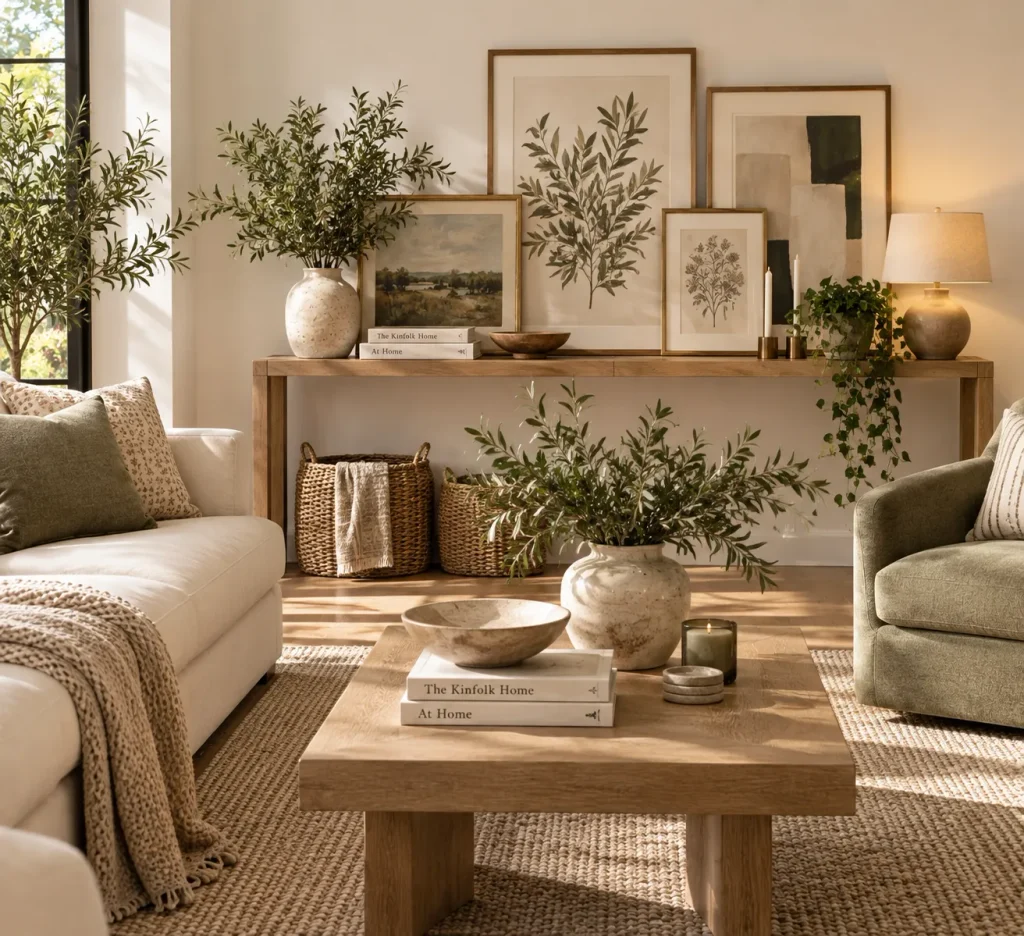
Cost: Low to moderate | Time: 30 to 60 minutes | Skill Level: Beginner
Best For: Consoles, shelves, and empty wall sections | Works In: Modern, organic, farmhouse, and transitional rooms
Result: Depth and personality without permanent wall changes
Artwork feels more collected when pieces are layered instead of hung in a perfectly uniform line. Place a larger frame at the back, lean a smaller print in front, then add one low accessory beside them. Keep overlapping pieces stable and avoid blocking important walkways or electrical controls.
Choose artwork with at least one shared color so the arrangement feels connected. A botanical print beside a simple abstract piece can work beautifully when both contain similar earthy tones. This setup is also easy to refresh because changing one frame can give the whole display a slightly different look.
Conversation Seating
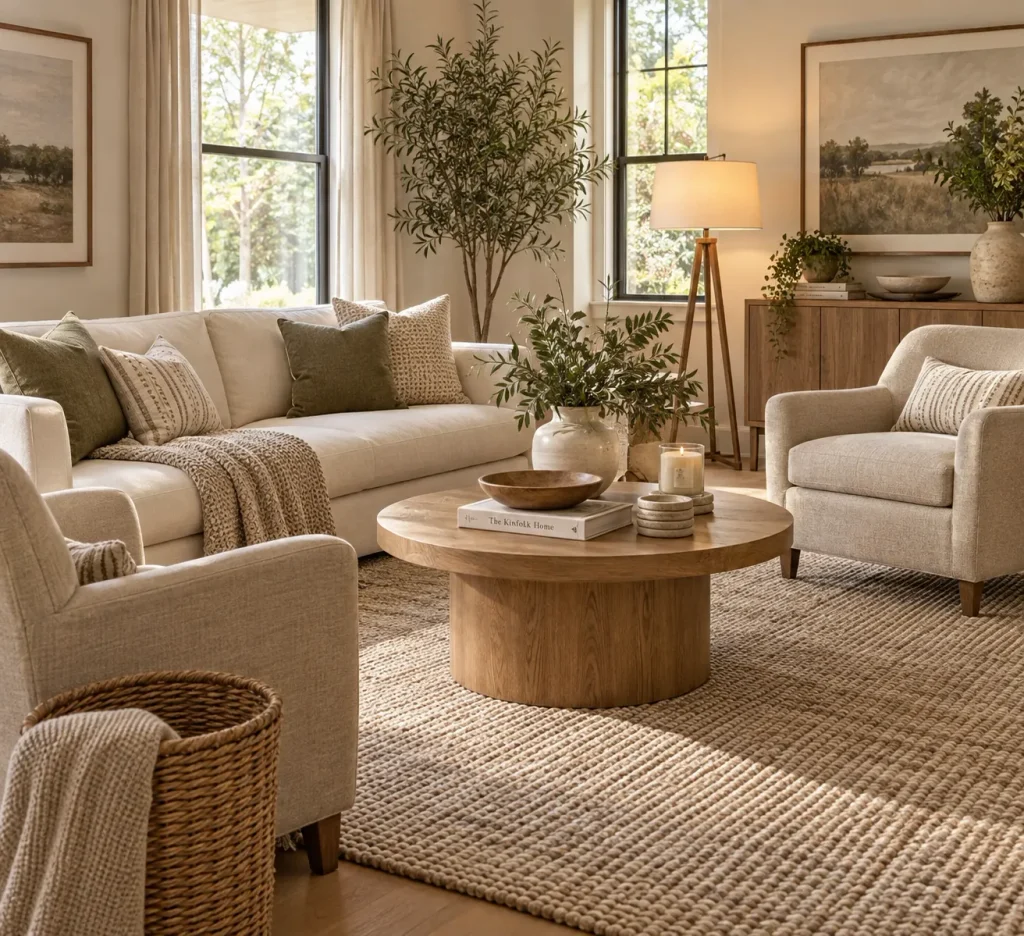
The seating arrangement matters just as much as the furniture itself. Position chairs and sofas so people can comfortably see and talk to each other rather than directing every seat toward the television.
Leave a practical path behind or beside the seating group, especially near doors and frequently used areas. A round coffee table can soften the arrangement and make movement easier around corners. In my experience, creating a clear conversation zone makes a living area feel more welcoming even when the furniture itself is simple.
Decorative Ceramic Collection
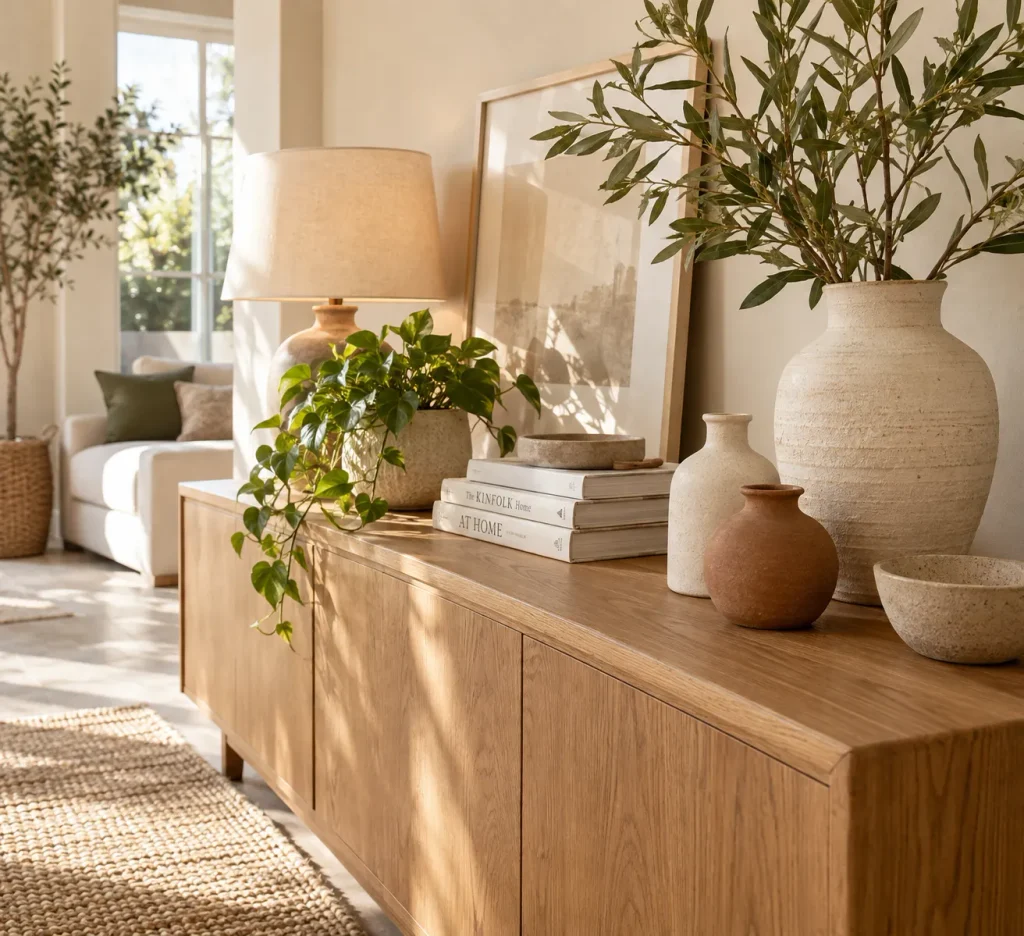
- Group ceramics in odd numbers, such as three or five pieces, for a natural arrangement.
- Mix rounded, narrow, and slightly irregular shapes to create visual variety.
- Keep the color palette limited to two or three related tones.
- Place taller vessels behind shorter pieces for visible depth.
- Add branches or greenery to one vessel for a natural contrast.
Ceramics add shape and handcrafted texture without requiring strong patterns or bright colors. Look for pieces with different silhouettes but similar finishes, then spread small groups across the room rather than placing everything together. A few carefully chosen vessels on a console, shelf, or coffee table can provide detail while keeping surfaces uncluttered.
Natural Greenery Corners
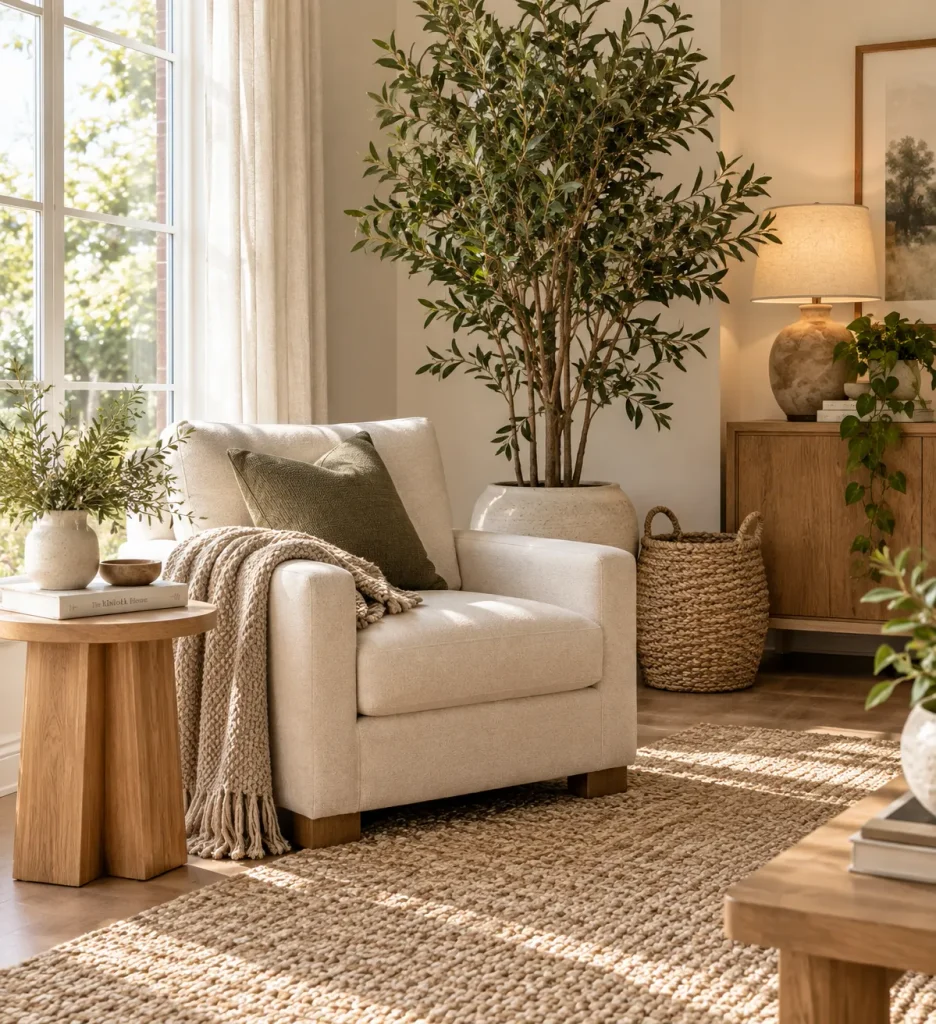
Cost: Low to moderate | Time: 30 minutes | Skill Level: Beginner
Best For: Empty corners and seating areas | Works In: Most interior styles with suitable plant choices
Result: Added color, texture, and visual height
An empty corner can feel purposeful with one well-sized plant and a simple planter. Choose a plant based on the actual light available rather than selecting one only for appearance. A tall plant can fill vertical space, while a smaller plant works well beside a table or cabinet.
Use a basket planter or textured ceramic pot to connect greenery with other materials in the room. Keep enough clearance around the leaves for comfortable movement and regular care. If real plants are not practical, quality artificial foliage can provide a similar visual layer without adding watering responsibilities.
Statement Accent Chair
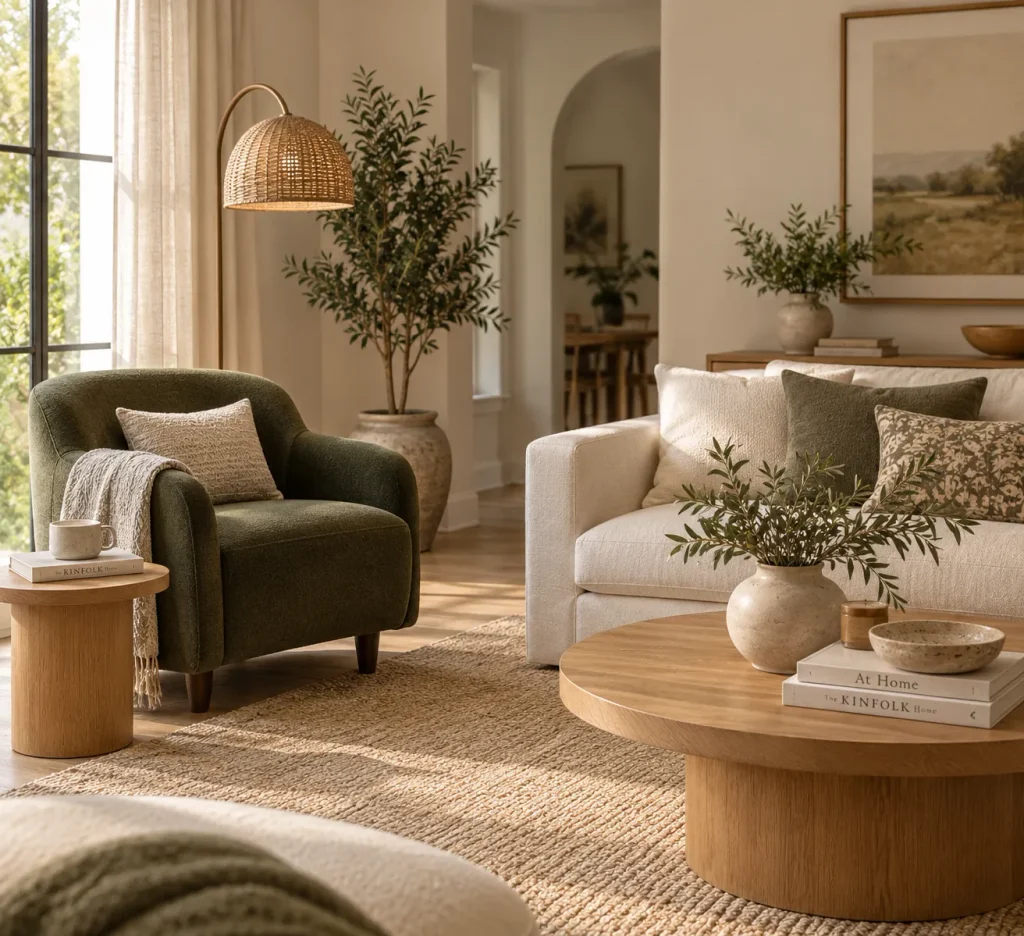
A single accent chair can introduce personality without requiring a complete furniture change. Choose a color, shape, or fabric that contrasts gently with the main sofa while still connecting to another detail in the room.
Check the chair’s dimensions before buying, especially in smaller living areas. Leave enough space for the door, coffee table, and nearby seating to remain easy to use. I’ve noticed that repeating the chair’s accent color in a cushion, artwork detail, or plant pot helps the piece feel naturally integrated.
Floating Media Console
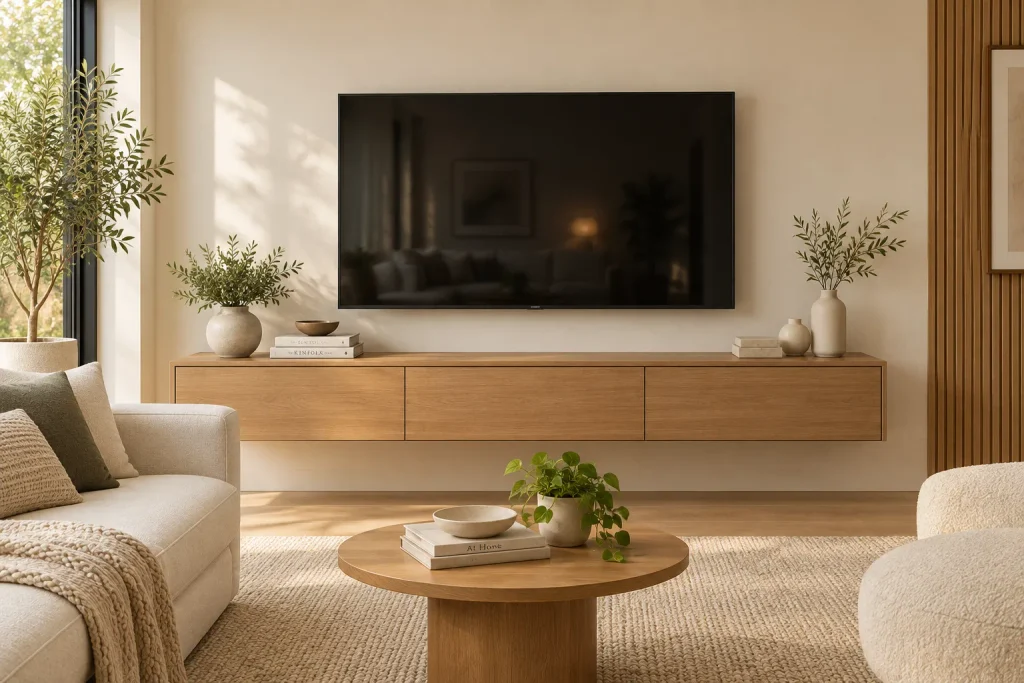
- Measure the wall: Check the television width, available wall space, and desired console length before purchasing.
- Plan cable access: Identify where power outlets and cables will sit so connections remain practical and accessible.
- Choose closed storage: Use cabinets to hide remotes, gaming accessories, cables, and other everyday items.
- Keep styling simple: Add a few ceramics, books, or greenery without blocking ventilation or access points.
- Check mounting requirements: Follow the manufacturer’s guidance and use suitable wall hardware for the surface.
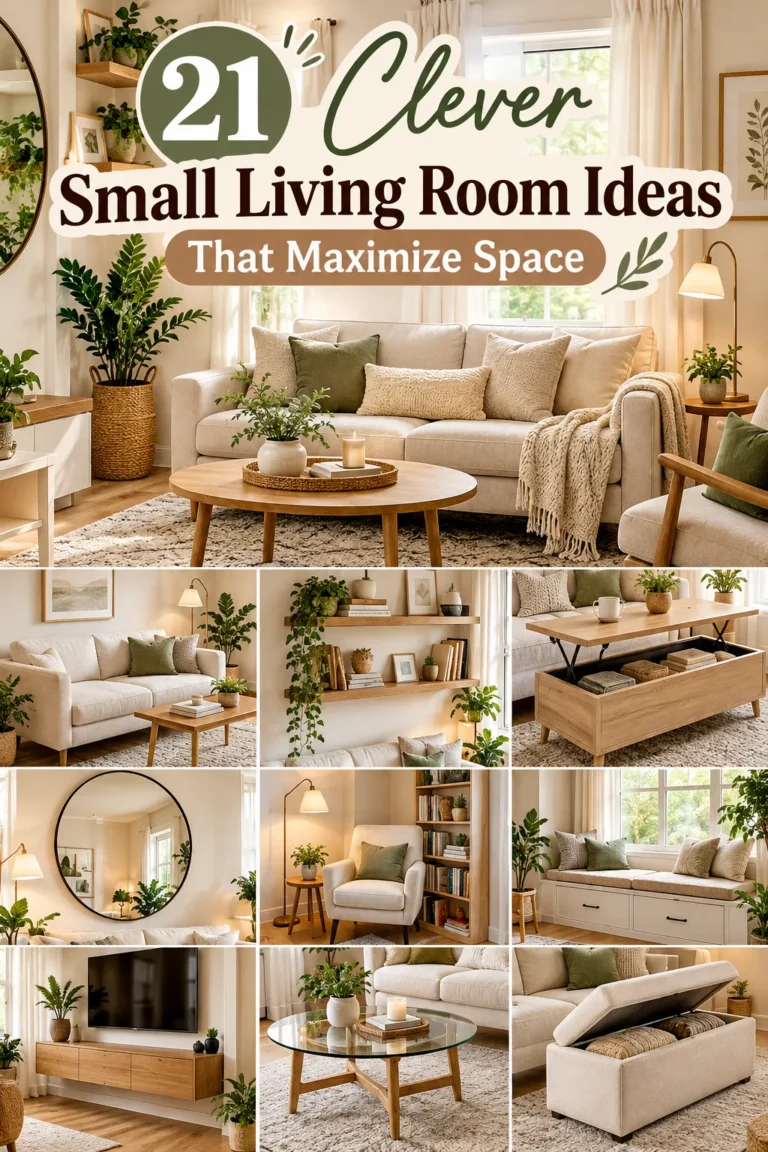
A floating console keeps the floor visually open while providing valuable hidden storage. This setup works particularly well in smaller living rooms where bulky furniture can make the floor feel crowded. Keep the cabinetry finish related to existing wood tones, then use a few neutral accessories to maintain a calm and organized appearance.
CONCLUSION
Creating a welcoming living room does not require replacing everything at once. Small, thoughtful updates can bring more warmth, comfort, texture, personality, and function to the space you already have. From layered lighting and natural materials to better seating arrangements and carefully chosen accessories, these ideas give you plenty of practical inspiration.
I’ve seen how small changes can completely shift the way a room feels. Choose one idea that suits your space and start there. Save this article on Pinterest so you can return to your favorite ideas later, and share it with someone looking for fresh living room decor inspiration. Your next beautiful update may be simpler than you think.



One Comment