
21 Brilliant Kitchen Decor Ideas for a Fresh New Look
A kitchen can feel completely different without a full renovation. Sometimes, the right shelf, light fixture, rug, or pop of color is enough to make the room feel fresher and more inviting.
These kitchen decor ideas are designed for homeowners and renters who want noticeable style changes without taking on a major remodeling project. From warm wood shelves and colorful countertop accents to statement lighting and layered textiles, each idea focuses on simple updates that add personality while keeping the space practical.
I’ve noticed that the most successful kitchen refreshes usually balance beauty with everyday function. A decorative change should still make cooking, cleaning, and organizing easier. As you explore these ideas, look for the updates that fit your budget, layout, and personal style. You may find one small change that inspires an entirely new direction for your space.
Warm Wood Shelving
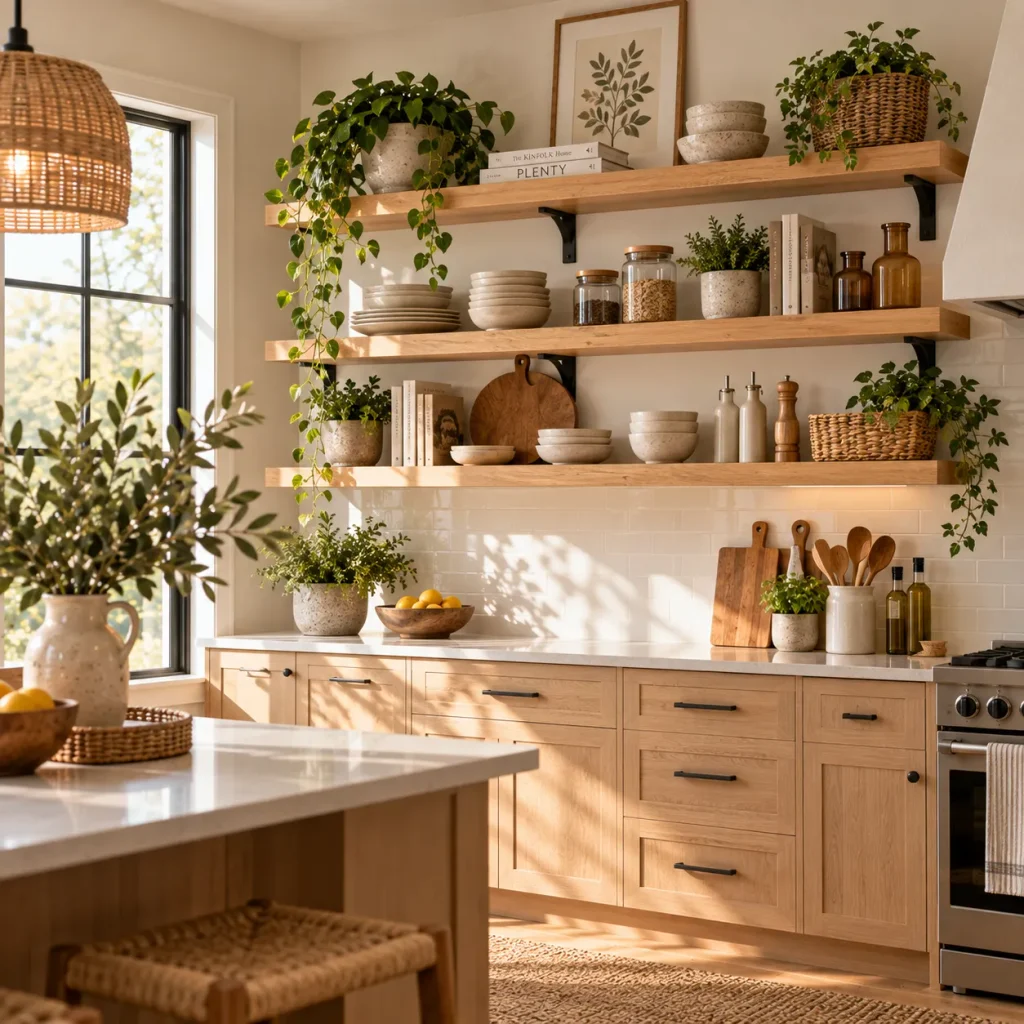
Open shelves can make a kitchen feel lighter while giving everyday pieces a decorative purpose. Choose two or three sturdy wood shelves and keep the display simple. Stack neutral plates, lean a small cutting board against the wall, and add one or two plants for a relaxed finish.
I’ve noticed that open shelving works best when useful items also look intentional. Keep the most attractive dishes within easy reach and store less decorative pieces behind closed doors. A limited color palette, such as cream, brown, and muted green, prevents the shelves from becoming visually crowded.
Statement Pendant Lights
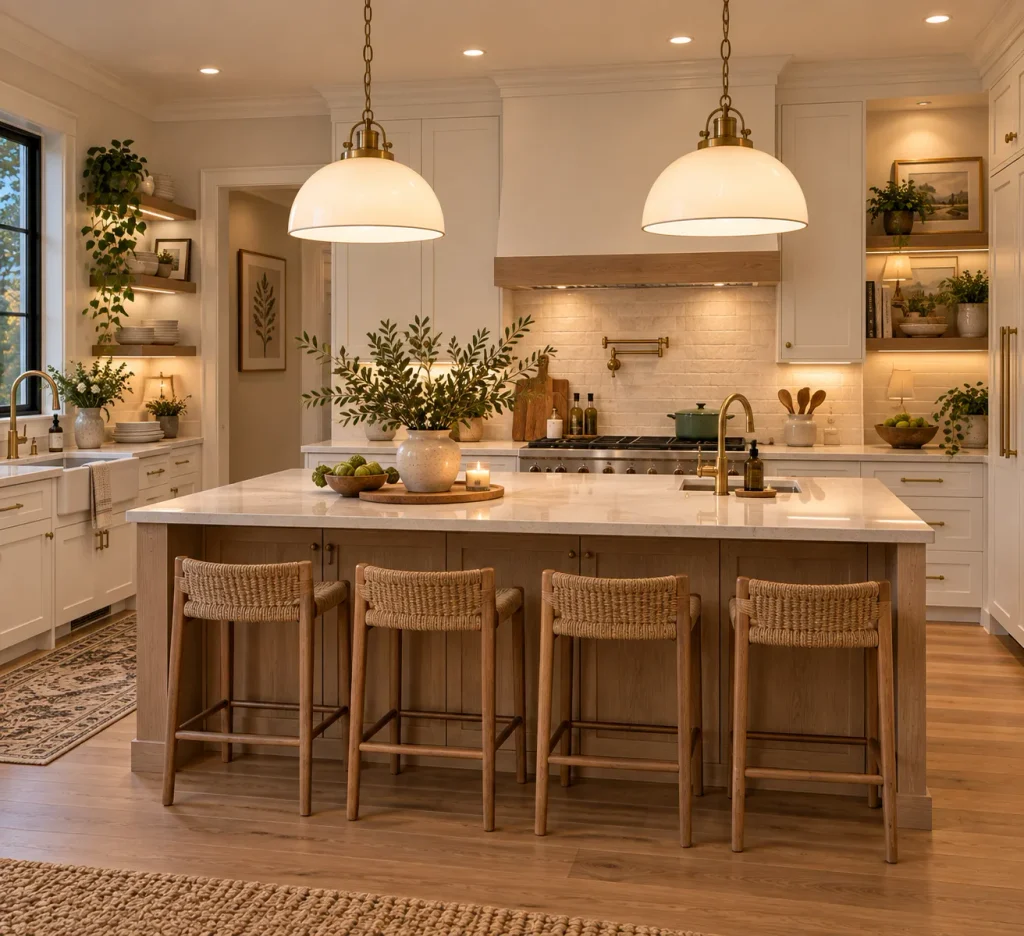
- Choose fixtures that complement the cabinet hardware rather than competing with it.
- Hang pendants high enough to preserve a clear sightline across the island.
- Use warm white bulbs for a softer evening atmosphere.
- Repeat one finish, such as brass or black, elsewhere in the room.
- Pick shades that provide useful light over food preparation and seating areas.
Lighting changes the mood of a room faster than many decorative updates. For a balanced look, center two matching pendants over a longer island or use one larger fixture above a compact surface. The result feels intentional without requiring new cabinets, flooring, or major construction.
Colorful Countertop Accents
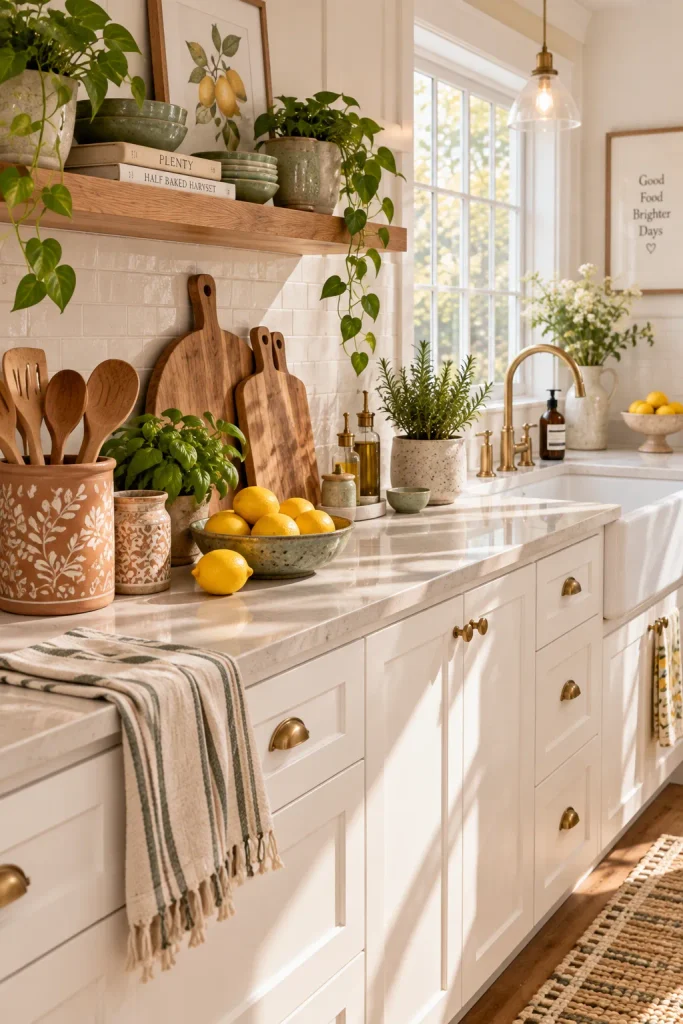
Quick Tip: Choose three accent colors before buying decorative pieces. Repeat those shades through ceramics, textiles, fruit bowls, or small appliances so the countertop feels coordinated rather than crowded. Keep larger surfaces mostly clear, leaving enough open space for cooking and daily routines.
Small countertop details can give a neutral kitchen much more personality. A colorful bowl filled with fresh fruit, a patterned tea towel, or a ceramic utensil crock can provide an easy visual refresh. In my experience, repeating the same accent shade in two or three places creates a polished look without overdecorating.
More Read : 22 Inspiring Home Decor Ideas You’ll Love for Years
Painted Cabinet Refresh
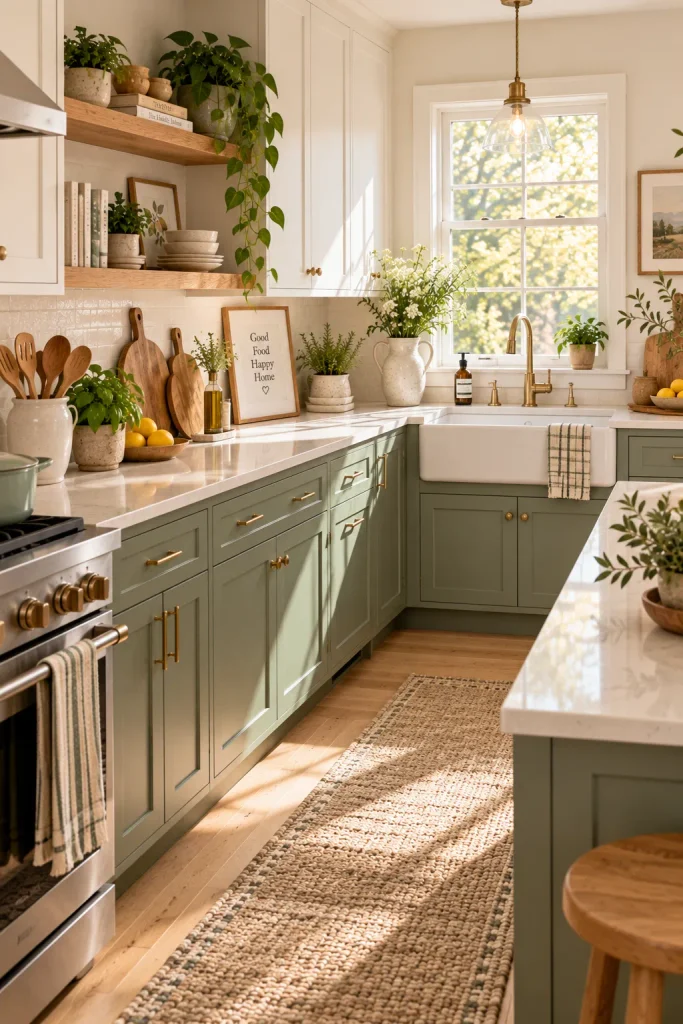
BEFORE: Dated or worn cabinet doors make the whole room feel tired, even when the layout still works well. Dark hardware and mismatched finishes can add to the cluttered appearance.
AFTER: A fresh cabinet color creates a cleaner visual foundation. New hardware in a coordinated finish adds another layer of polish without changing the existing layout.
Painting cabinets requires preparation, but the payoff can be substantial. Clean and lightly sand the surfaces, repair visible damage, then apply a suitable primer before painting. Soft white, sage, muted blue, or warm beige can work especially well when paired with natural wood and simple countertop accessories.
Layered Cutting Boards
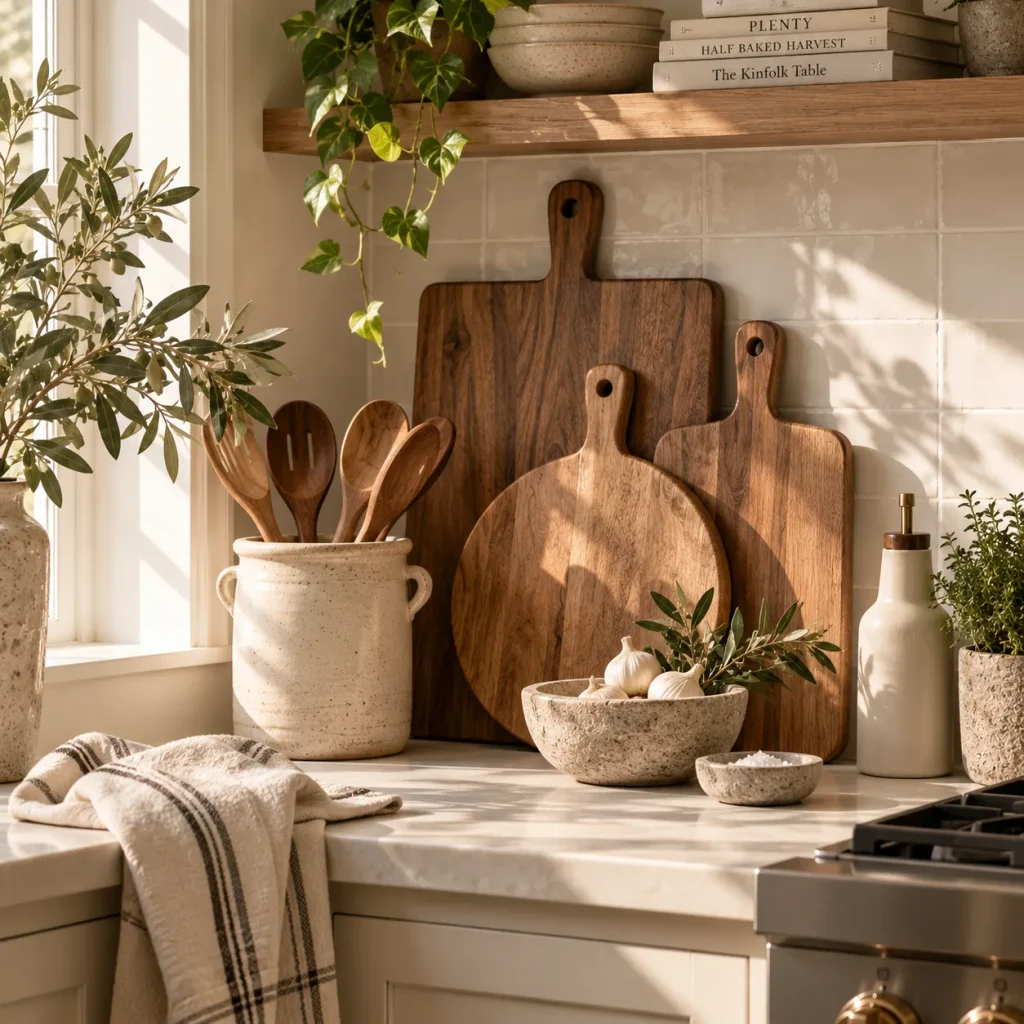
- Select two or three boards with different sizes and silhouettes.
- Lean the largest board against the backsplash, then place smaller boards slightly in front.
- Add one practical accessory, such as a ceramic crock or linen towel, beside the stack.
- Leave nearby counter space open for everyday food preparation.
Layered boards add height and natural texture without taking over valuable workspace. Look for boards with rounded edges, visible grain, or simple handles. Mixing walnut, oak, and lighter wood tones can create depth, while keeping the surrounding accessories neutral helps the arrangement stay calm and functional.
Open Coffee Station
| Feature | Option A | Option B |
| Setup | Open counter | Small cabinet |
| Storage | Visible jars and mugs | Hidden supplies |
| Best For | Daily coffee drinkers | Small kitchens |
| Style | Casual and welcoming | Clean and minimal |
A dedicated coffee corner gives everyday items a clear home and makes a small section of the room feel intentional. Keep coffee, mugs, and sweeteners together, then use one tray to visually group them. I’ve seen compact stations work particularly well in apartments because they organize clutter without requiring extra cabinetry.
Coordinated Countertop Textures
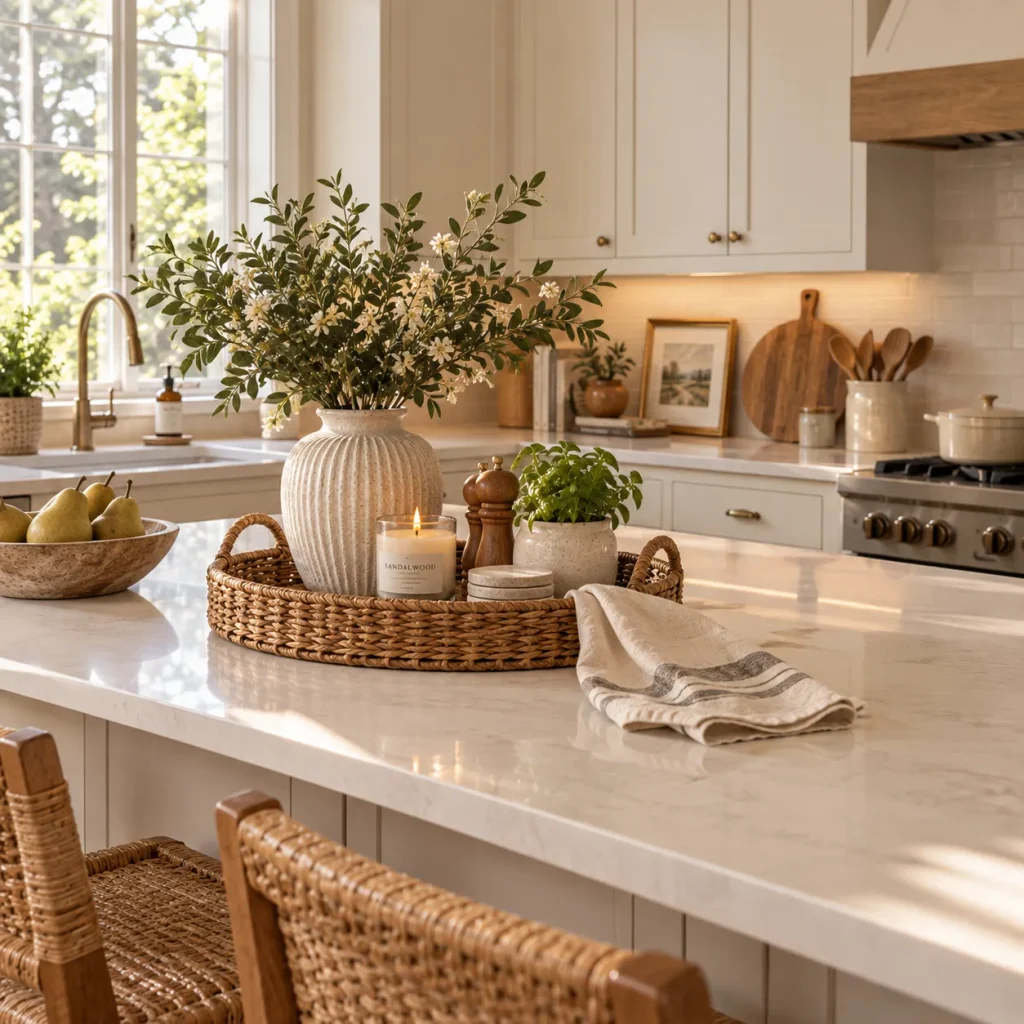
DO:
- Mix wood, ceramic, glass, and woven textures.
- Keep most accessories within two or three neutral shades.
- Group small items on one tray.
- Leave generous open counter space around decorative pieces.
DON’T:
- Cover every section of the countertop.
- Mix too many competing patterns.
- Place fragile pieces beside busy cooking areas.
- Choose accessories only for appearance when they lack practical use.
Texture gives a neutral room visual depth without requiring bold colors. A wooden tray beside a ribbed ceramic container and linen towel creates enough contrast to keep the counter interesting. I’ve noticed that limiting each surface to a few purposeful pieces makes everyday kitchens feel calmer and easier to maintain.
More INFO : 24 Stunning Living Room Decor Ideas That Wow Guests
Glass Storage Jars
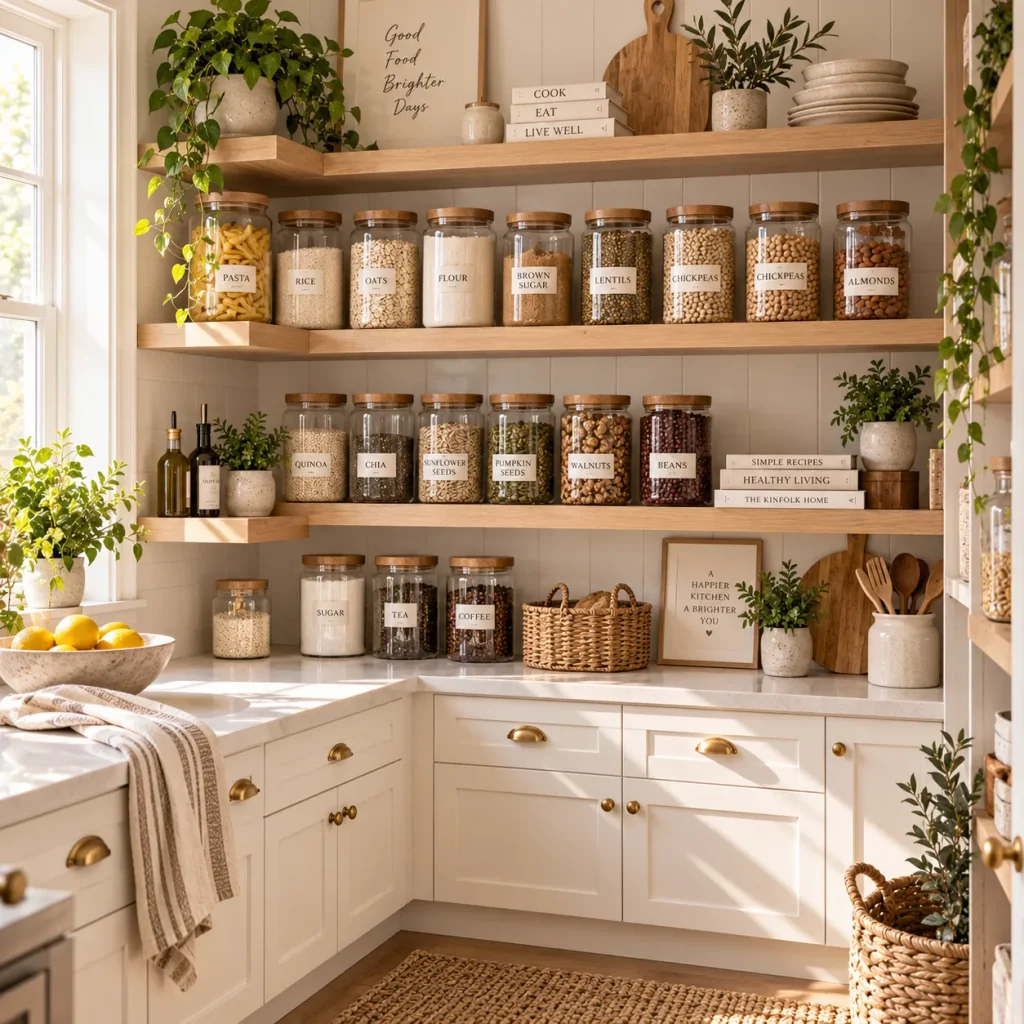
Cost: Low to moderate | Time: One afternoon | Skill Level: Beginner
Best For: Pantry staples | Style: Clean and organized
Result: Less visual packaging clutter
Clear containers make frequently used ingredients easier to see while giving open shelves a consistent appearance. Choose jars in similar shapes and sizes, then add simple labels for quick identification. For safety and freshness, use airtight containers for dry goods and keep them away from direct heat or moisture.
Layered Kitchen Rugs
A well-placed rug can soften hard flooring and introduce pattern without changing permanent finishes. Choose a washable runner for areas near the sink or cooking zone, especially where spills are common. For extra warmth, pair a subtle pattern with neutral cabinets and repeat one rug color in nearby towels or ceramics.
Styled Open Cabinets

- Group dishes by color instead of mixing every shade together.
- Stack plates and bowls in small, practical groups.
- Add one woven basket to hide less attractive essentials.
- Place a small plant or artwork at one end for height.
- Leave some shelf space empty so the display can breathe.
Open cabinets work best when storage and styling serve the same purpose. Keep everyday dishes toward the front and decorative pieces slightly behind them. A restrained palette of cream, white, wood, and green helps the display feel organized. Rotate seasonal pieces occasionally instead of buying new accessories for every refresh.
Herb Window Garden
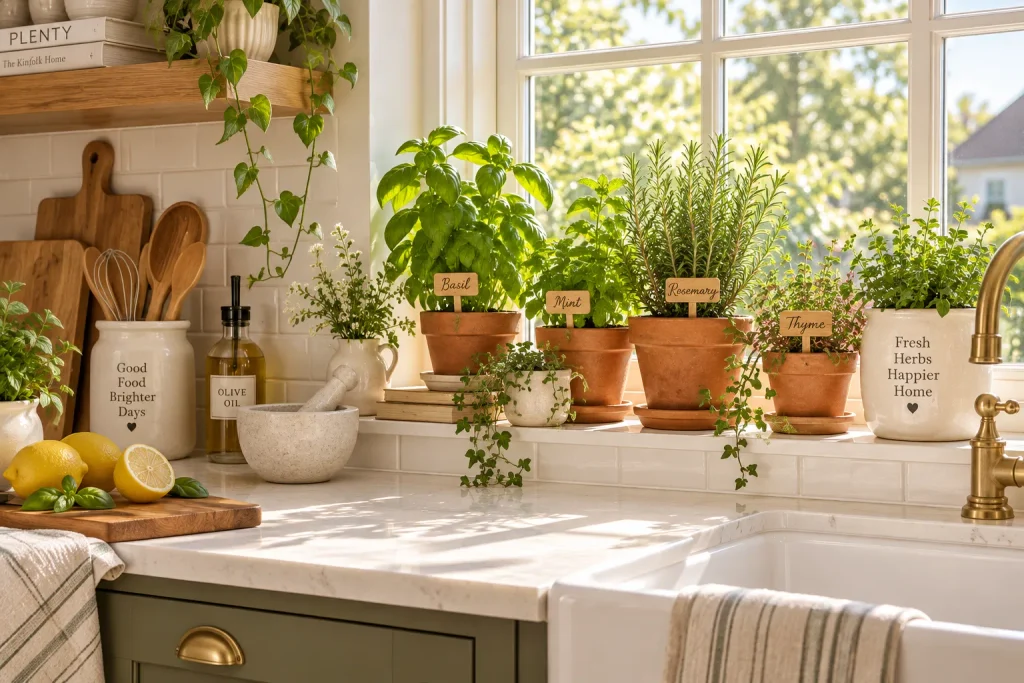
Quick Tip: Place herbs where they receive enough natural light and where watering is easy. Use matching pots or a shared tray to keep the arrangement tidy, and choose varieties you actually cook with so the display stays useful as well as decorative.
A small herb garden brings fresh color and natural texture into an otherwise neutral room. Basil, mint, rosemary, and thyme are practical choices for many home cooks. Use pots with drainage and protect the sill from excess water. The best setup is one you can reach easily while preparing everyday meals.
Two-Tone Cabinetry
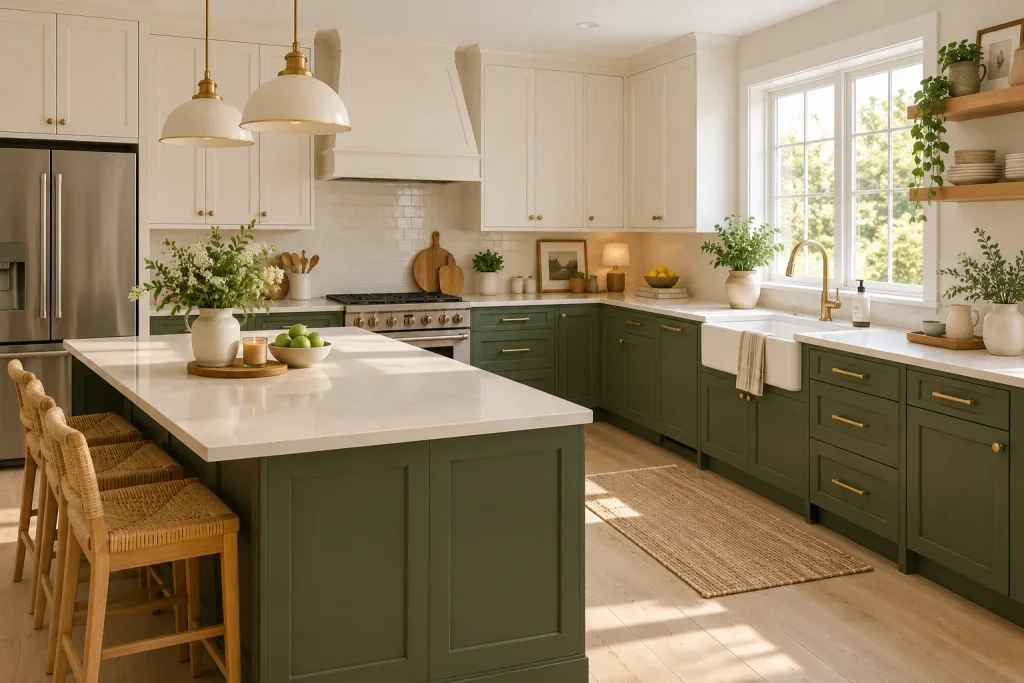
BEFORE: A single cabinet color can sometimes make a kitchen feel visually flat, especially when the room has limited architectural detail. Large uninterrupted blocks of cabinetry may dominate the space.
AFTER: A second complementary color adds structure and creates a clear visual anchor. Keeping the lighter shade above helps maintain an open feeling while the deeper lower tone adds definition.
Two-tone cabinetry gives you a strong color statement without requiring complicated decoration. Pair a darker lower shade with lighter uppers, then connect both colors through small accessories, rugs, or artwork. Warm neutrals such as cream, oak, and brass can soften the contrast and keep the room welcoming.
Decorative Range Hood
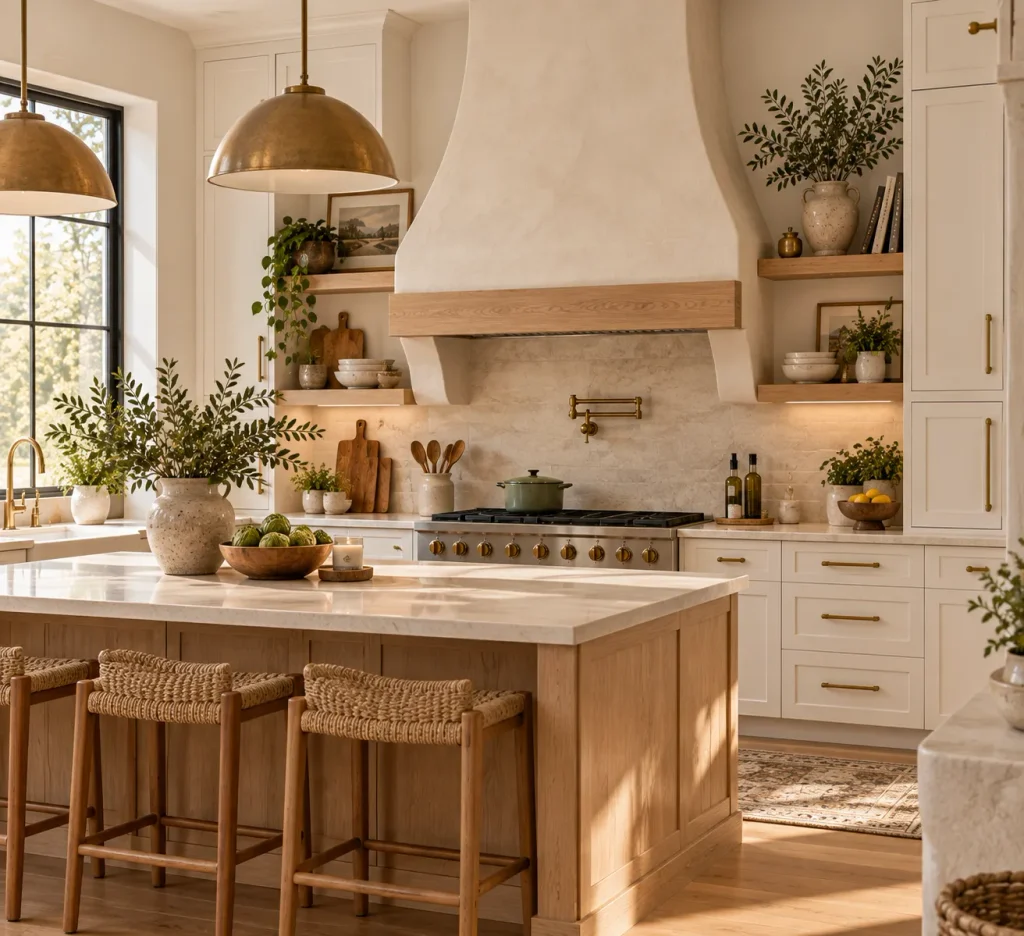
- Choose a hood shape that suits the kitchen’s existing architecture.
- Select a finish that complements the cabinets and backsplash.
- Keep surrounding decor minimal so the hood remains the visual anchor.
- Repeat its main color or material in one or two nearby details.
A decorative range hood can turn a functional appliance area into a strong architectural feature. Smooth plaster, painted wood, or simple tile details can create character without excessive ornament. Keep proportions in mind, because an oversized hood can dominate a compact room. The strongest result usually comes from simple surrounding finishes.
Patterned Backsplash Tiles
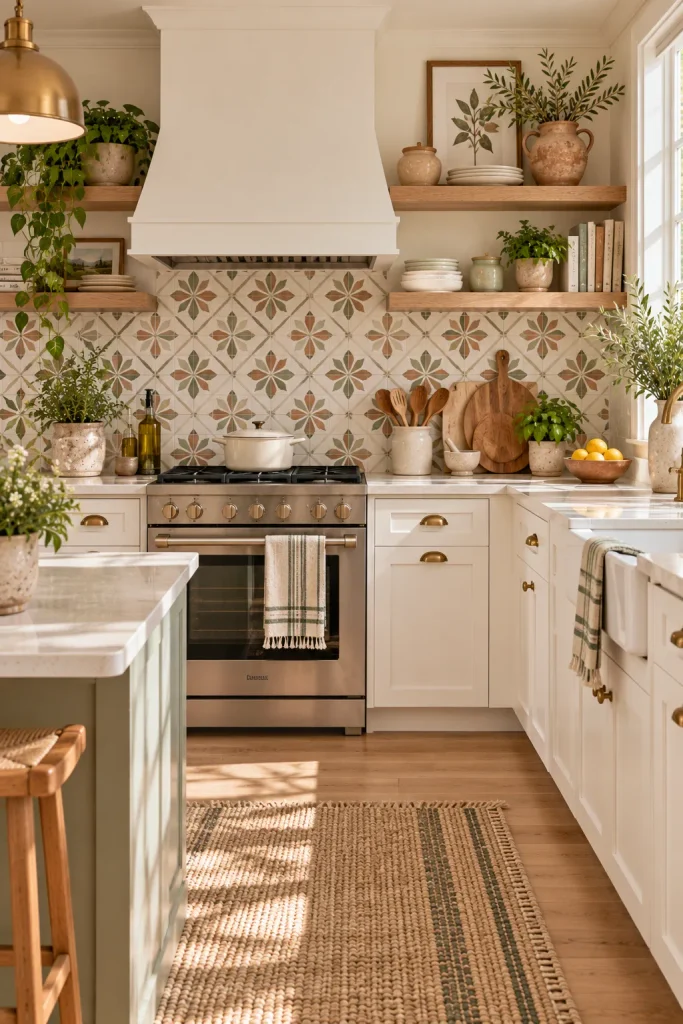
| Feature | Option A | Option B |
| Pattern | Small geometric print | Large simple motif |
| Visual Effect | Detailed and playful | Calm and spacious |
| Best Placement | Compact backsplash | Larger wall area |
| Maintenance | More grout lines | Easier to wipe |
A patterned backsplash can introduce personality while keeping the rest of the room simple. Choose colors already present in your cabinets, flooring, or accessories so the pattern feels connected. For busy designs, use quieter countertops and hardware. For a smaller kitchen, lighter tile backgrounds can help maintain an airy appearance.
Decorative Kitchen Artwork
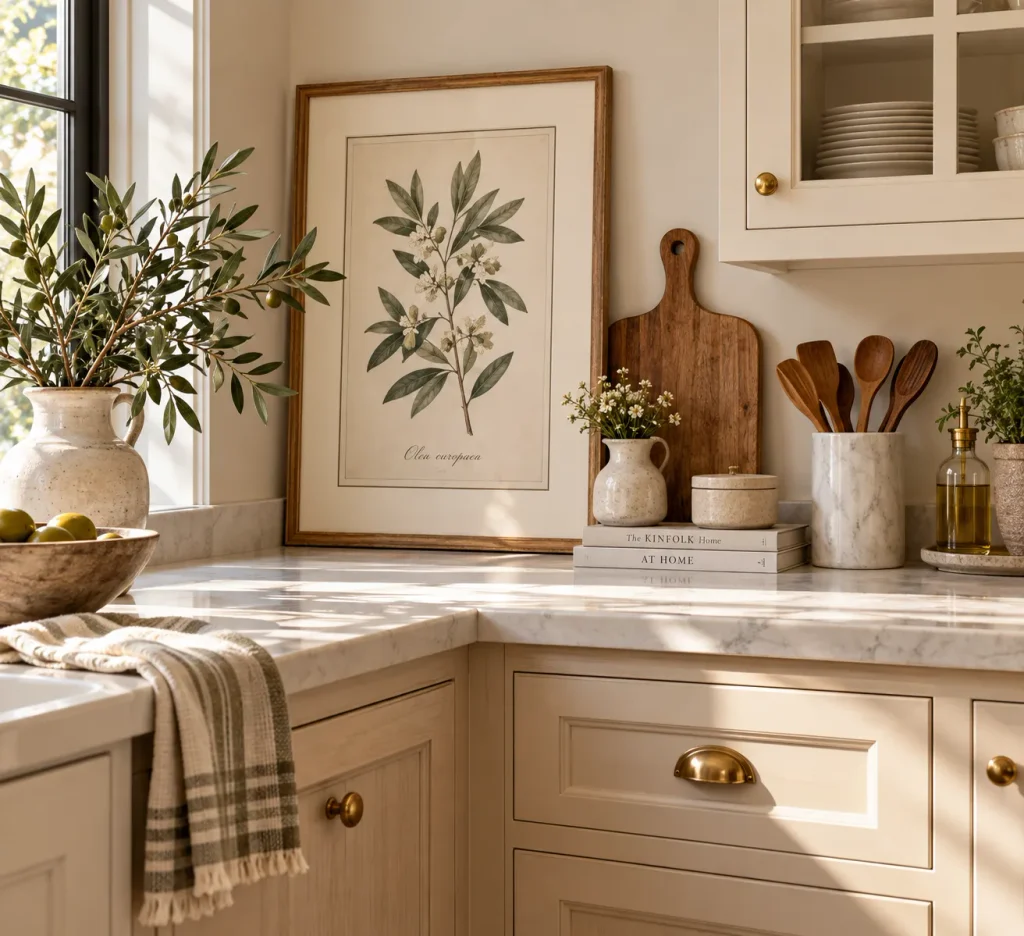
DO:
- Choose artwork that echoes existing kitchen colors.
- Use moisture-resistant frames near sinks and cooking zones.
- Lean small pieces on shelves for easy seasonal changes.
- Hang larger artwork away from areas exposed to heat or splashes.
DON’T:
- Place paper artwork directly above a stove.
- Fill every empty wall with frames.
- Mix too many unrelated color palettes.
- Choose pieces that obstruct cabinet doors or daily work areas.
Artwork adds personality to areas that often get overlooked. Botanical prints, food illustrations, abstract shapes, and simple vintage-style pieces can work well. I’ve noticed that one thoughtfully positioned print often has more impact than a gallery wall packed with small frames. Keep the subject matter connected to the room without making it feel themed.
Vintage Hardware Swap
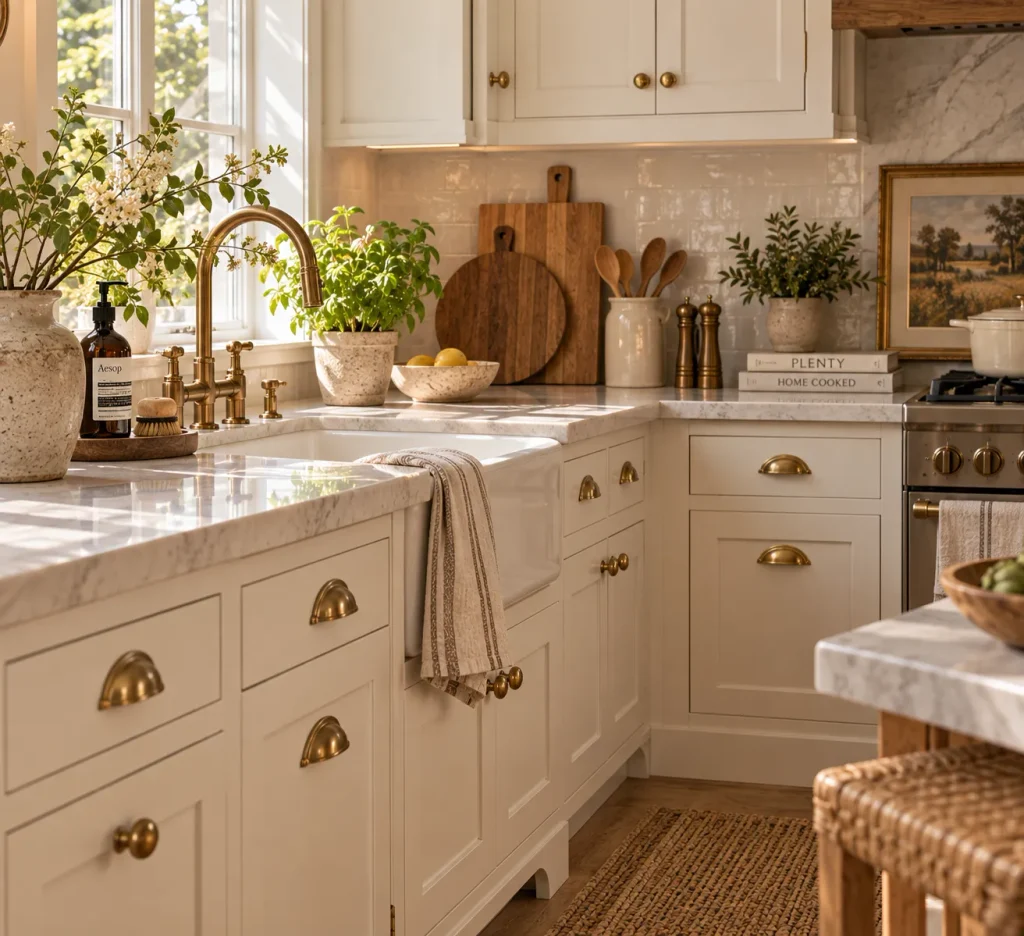
Cost: Low to moderate | Time: 1 to 2 hours | Skill Level: Beginner
Best For: Cabinet refreshes | Works In: Traditional and modern kitchens
Result: Noticeable style update without replacing cabinetry
New hardware can change the character of cabinets surprisingly quickly. Measure existing screw spacing before shopping, especially for handles, because mismatched measurements can turn a simple update into extra work. Warm brass suits creamy tones, while matte black pairs well with crisp white or deeper cabinet colors.
Layered Window Treatments
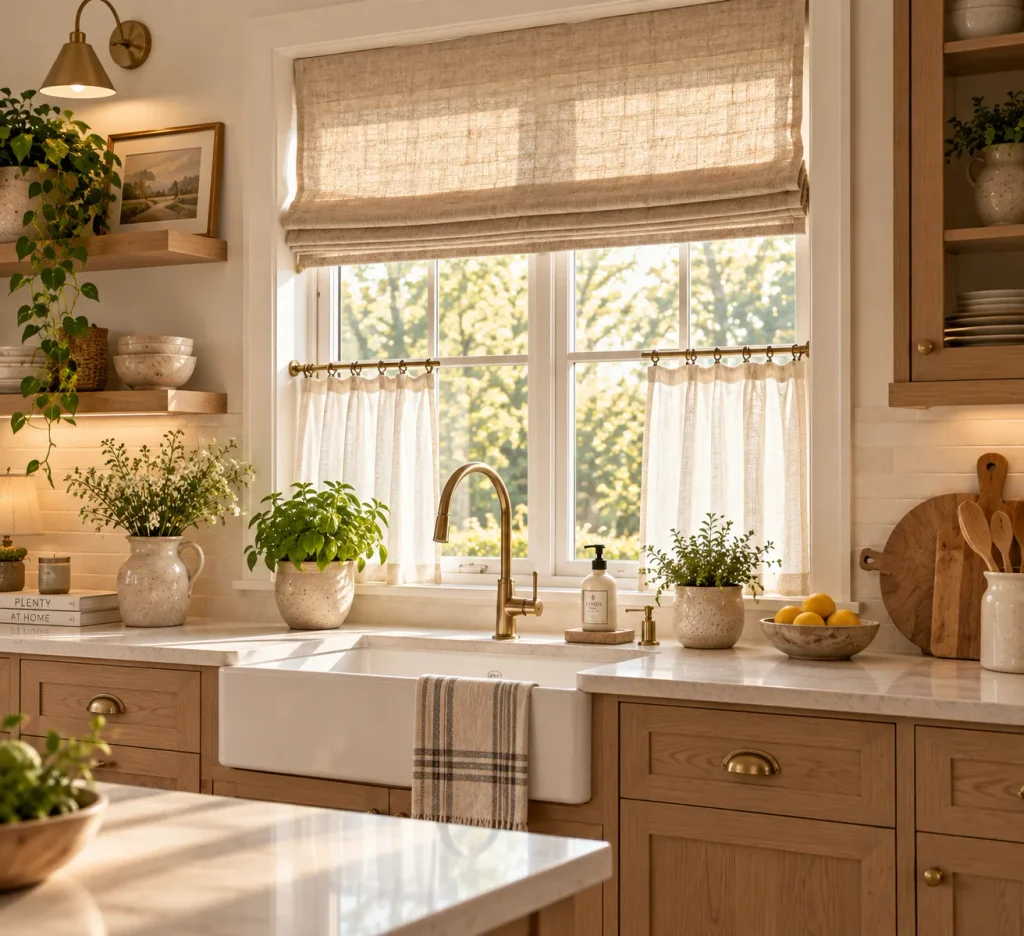
Natural fabrics can soften a kitchen while controlling glare and adding another layer of texture. Start with a simple linen shade or café curtain, then choose a color that relates to nearby cabinetry, rugs, or countertops. Keep fabric away from stovetops and other heat sources for a safer, practical arrangement.
A layered window treatment also gives a plain kitchen a more finished appearance. Choose washable fabrics in busy cooking areas where splashes and cooking residue are common. Light beige, ivory, soft gray, and muted botanical patterns are versatile choices that add visual warmth without making the room feel heavy.
Mixed Metal Details
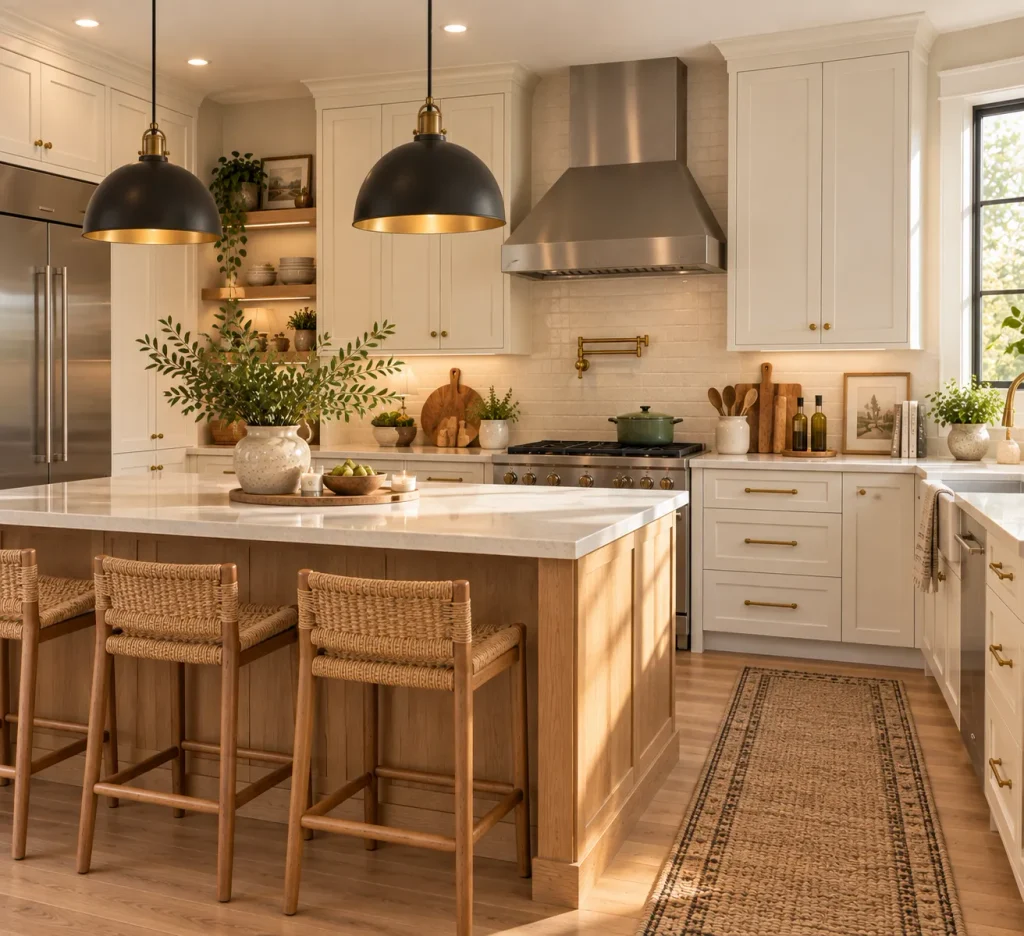
Quick Tip: Limit your room to two or three metal finishes and give each one a clear role. For example, use brass on cabinet hardware, black on lighting, and stainless steel for appliances. Repeating each finish at least twice helps the combination feel deliberate.
Mixed metals can add depth without requiring a dramatic redesign. The key is repetition and balance rather than matching every finish exactly. Keep larger surfaces neutral so the hardware and fixtures remain easy to notice. If you’re unsure, start with two finishes and introduce a third only through small accessories.
Built-In Breakfast Nook
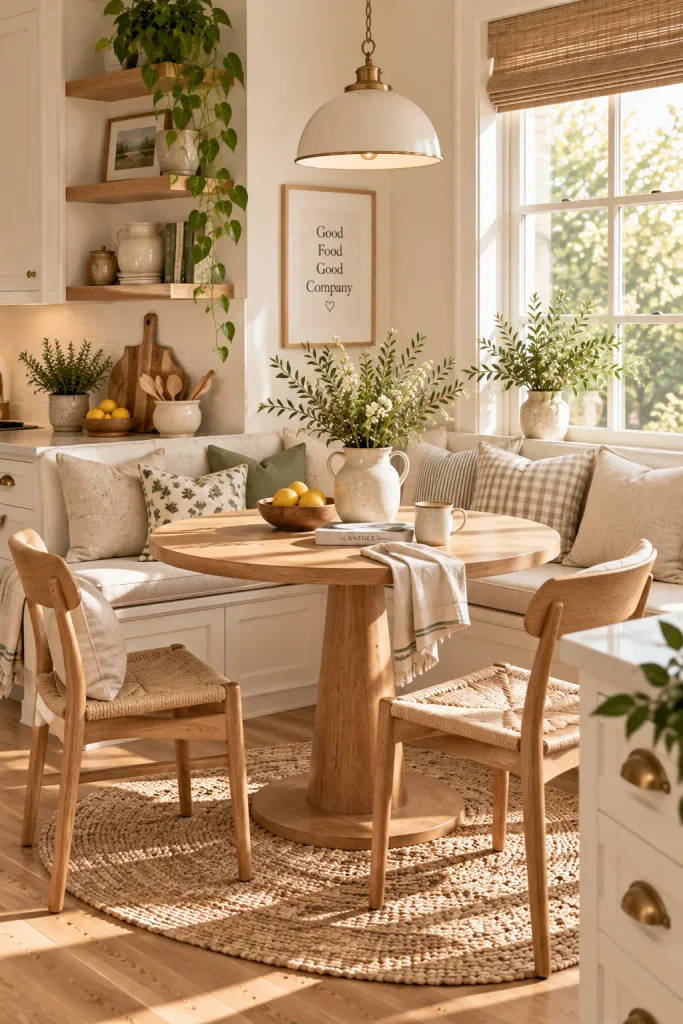
BEFORE: An unused corner can collect random chairs, bags, or household items, making the kitchen feel less organized. The space may have enough room for seating but lack a clear purpose.
AFTER: A compact breakfast nook gives the corner a defined function. A bench with hidden storage can also provide a practical place for cushions, table linens, or rarely used kitchen items.
Measure the available area before choosing furniture, leaving enough room to pull chairs out comfortably. A round table often works well in tighter corners because it creates smoother walking paths. Keep cushions washable and choose durable upholstery if the nook will be used for daily breakfasts or homework.
Open Shelf Styling
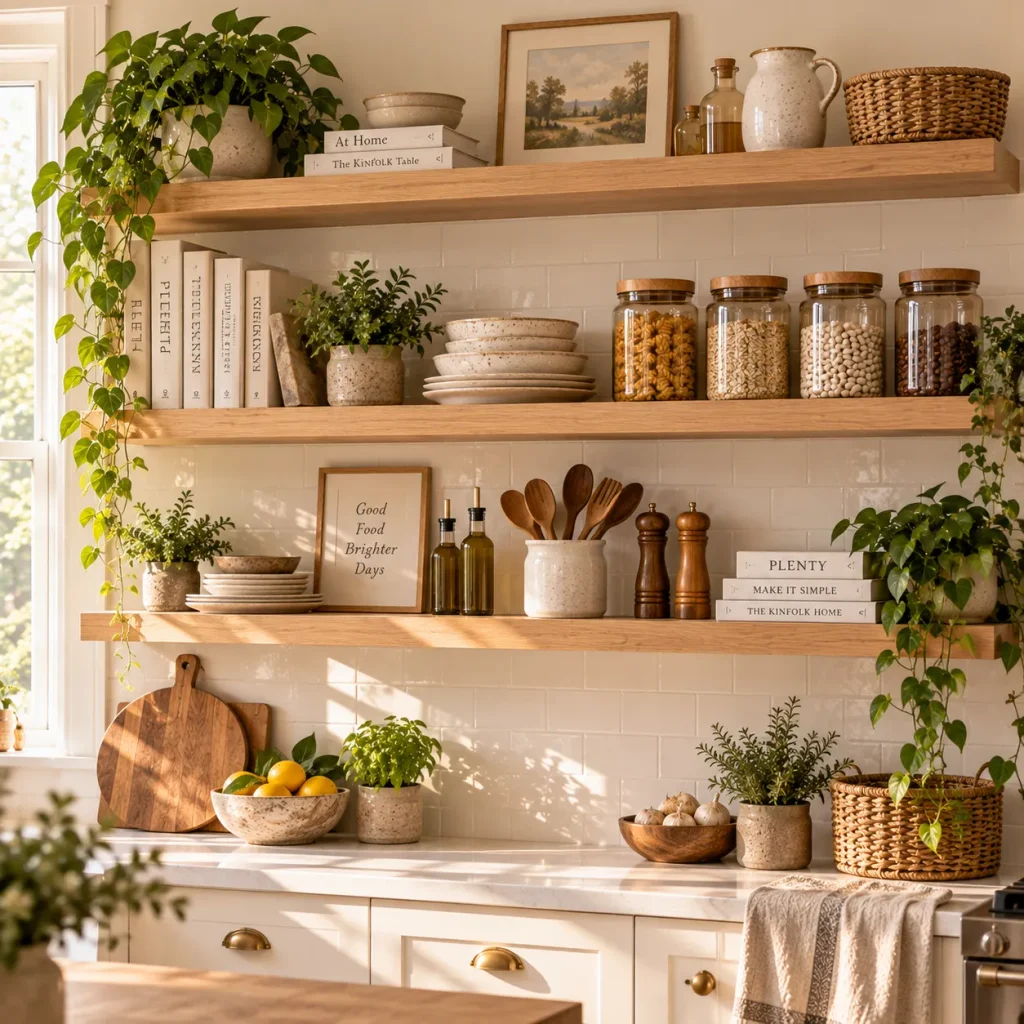
- Start with the largest pieces, such as plates, bowls, or cutting boards.
- Add medium-height objects like jars, mugs, and small baskets.
- Finish with one or two plants or decorative pieces for contrast.
- Leave visible gaps between groups instead of filling every inch.
- Step back and remove anything that makes the shelves look crowded.
Balanced shelf styling depends more on spacing than quantity. Mix vertical and horizontal arrangements to create visual movement, then repeat a few colors throughout the display. I’ve seen simple shelves look far more polished after removing just a handful of unnecessary objects. Empty space is part of the design.
Statement Kitchen Island
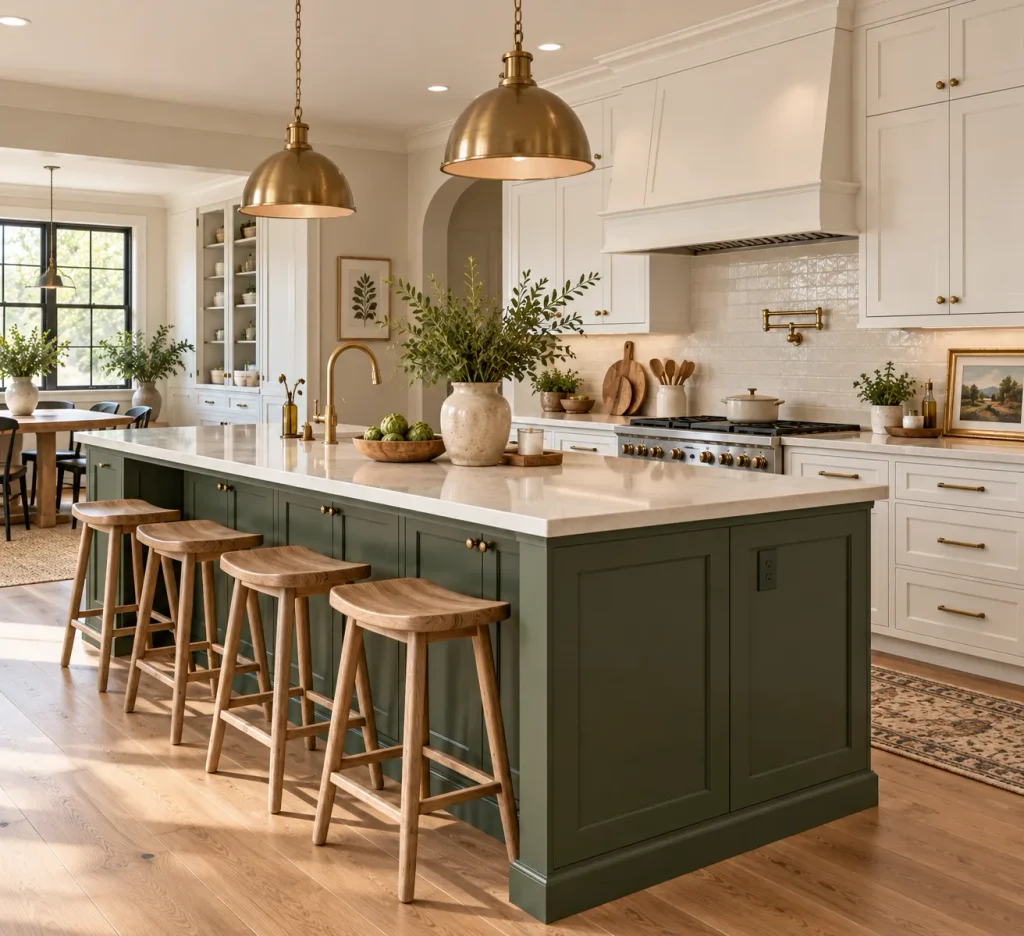
| Feature | Option A | Option B |
| Color | Deep green or navy | Natural wood |
| Countertop | Light quartz | Warm butcher block |
| Seating | Upholstered stools | Simple wood stools |
| Style | Bold focal point | Organic and relaxed |
A statement island works best when the surrounding cabinetry stays relatively calm. Use the island to introduce a stronger color, contrasting material, or distinctive countertop, then repeat one small detail elsewhere. Keep stools comfortable and leave enough clearance around the island for normal cooking, opening doors, and moving through the room.
Conclusion
A fresh kitchen does not require replacing everything you already have. Small, thoughtful updates can add color, texture, warmth, organization, and personality while keeping your everyday routines comfortable.
From painted cabinets and open shelving to layered rugs, statement lighting, and useful storage, these kitchen decor ideas give you plenty of starting points for your next refresh. I’ve seen how small changes can completely shift the way a space feels without requiring a major renovation.
Save this article on Pinterest so you can return to your favorite ideas later. Pick one update that fits your space and budget, then build from there. Share it with someone who is ready for a fresh kitchen look too.
One Comment