23 Gorgeous Coffee Table Decor Ideas for a Stylish Space
A coffee table can make a living room feel polished or leave it looking unfinished. The right details can change the entire mood without requiring a major makeover.
These coffee table decor ideas show simple ways to style books, trays, vases, candles, bowls, natural textures, and meaningful accents. Whether your table is large, small, round, or rectangular, you will find practical setups that are easy to recreate. The goal is not to fill every inch, but to create balance, texture, and personality while keeping the surface useful for everyday life.
In my experience, the most inviting tables usually combine just a few well-chosen pieces with plenty of breathing room. These ideas will help you create that same relaxed, intentional look while giving you plenty of Pinterest-worthy inspiration to save for later.
Glass Vase Centerpiece
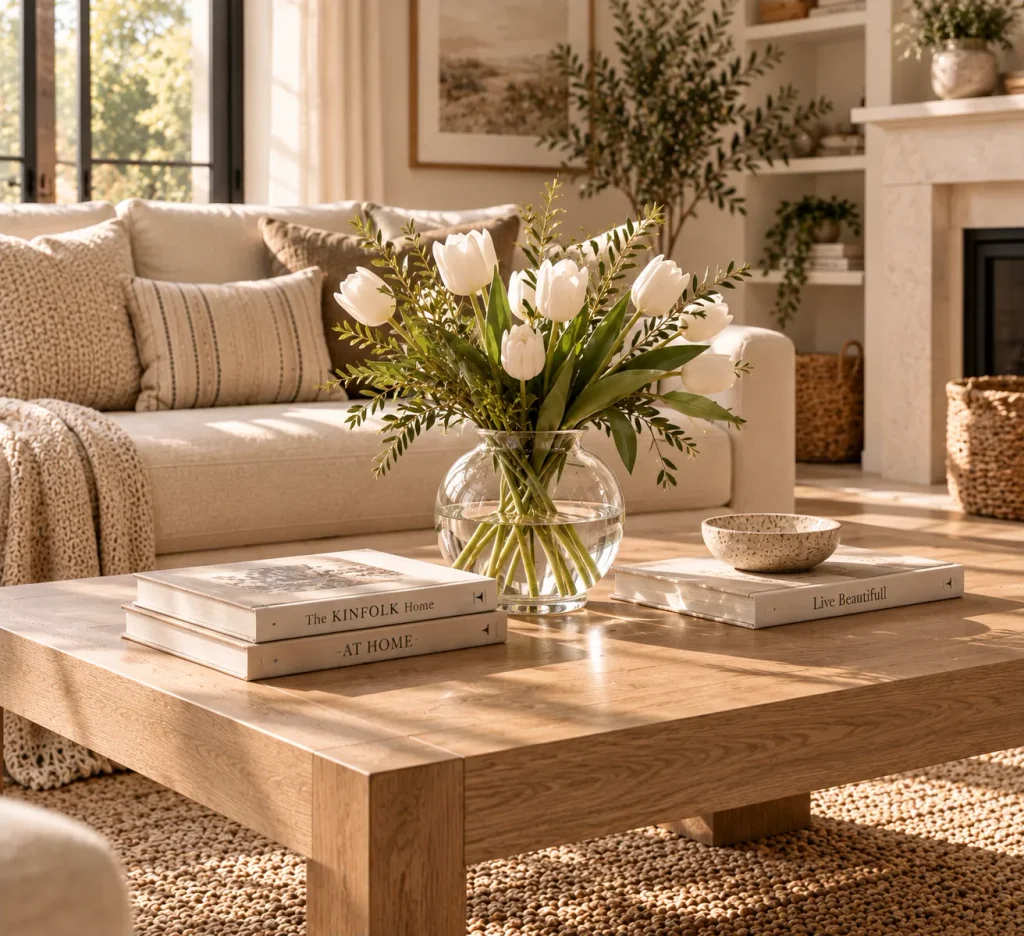
Fresh flowers bring instant life to a coffee table without making the arrangement feel crowded. Choose a low glass vase when you want an open view across the room. White blooms, eucalyptus, or simple seasonal stems work especially well with neutral furniture and natural wood finishes.
Keep the arrangement slightly off-center rather than placing it directly in the middle. I’ve noticed this small adjustment makes the surface feel more relaxed and intentional. Pair the vase with one or two stacked books, leaving enough empty space around each object for the table to remain practical.
Stacked Coffee Books
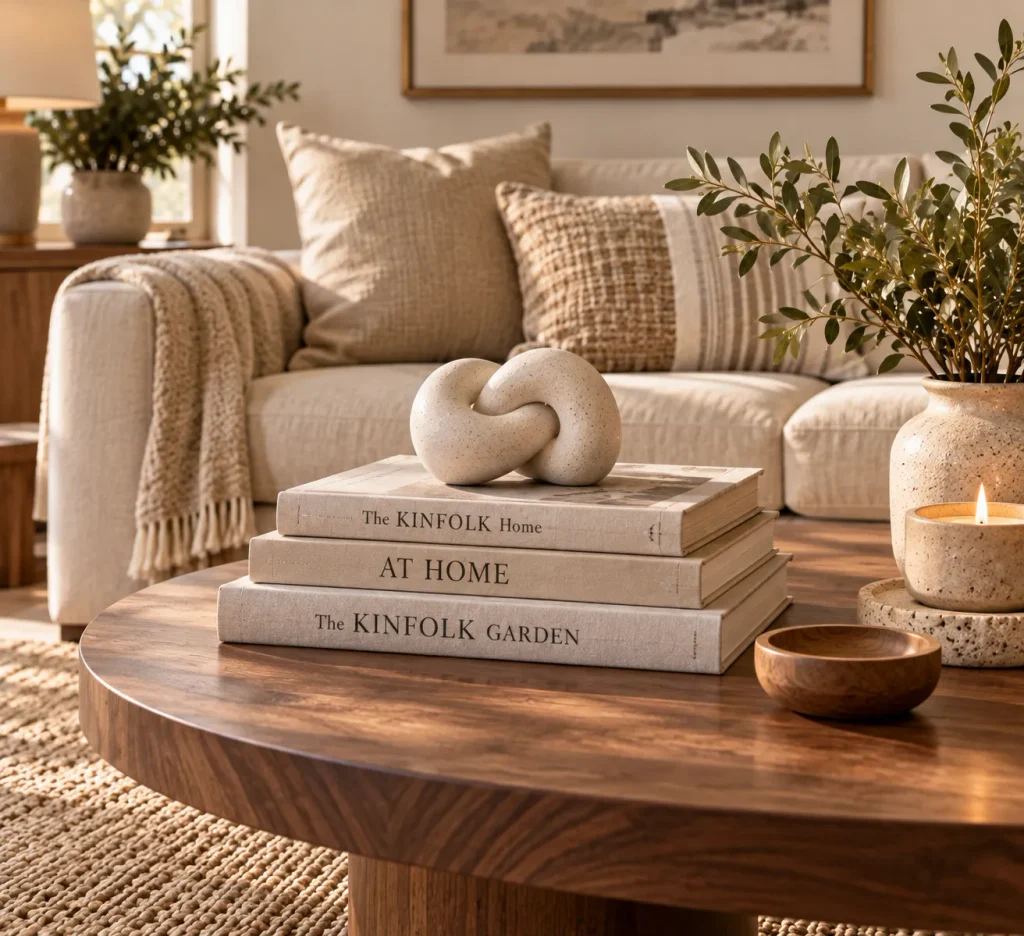
- Choose books with neutral, muted, or softly contrasting covers.
- Stack the largest book on the bottom and the smallest on top.
- Keep the stack between two and four books for a balanced look.
- Place a small vase, candle, or sculptural piece on the upper book.
- Leave part of the tabletop visible so the arrangement does not feel heavy.
Books add height while giving the room a lived-in feel. For a polished arrangement, mix different cover sizes but keep the colors connected to your existing furnishings. A small object on top creates another visual layer without requiring many accessories. This setup also makes it easy to refresh the table seasonally.
More Info : 21 Creative Living Room Gallery Wall Ideas to Inspire
Ceramic Bowl Display

Quick Tip:
Choose a shallow bowl with a wide opening so its contents remain visible from different seating positions. Natural materials such as wooden beads, pinecones, or decorative stones add texture without introducing too many colors.
A ceramic bowl works especially well when your table needs one strong anchor piece. I’ve seen this approach help smaller rooms feel less cluttered because the bowl gathers several small accents into one defined area. Choose a matte finish for a softer look, then leave plenty of empty tabletop around it.
Layered Tray Arrangement
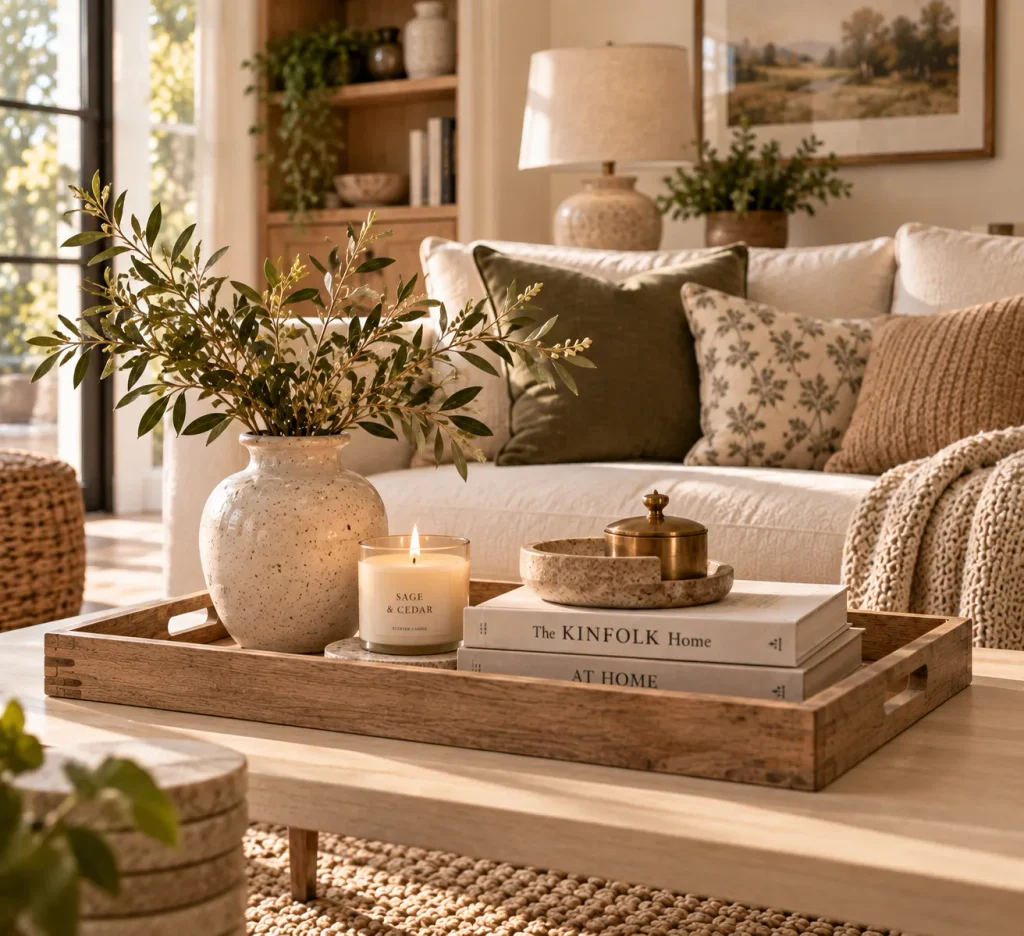
BEFORE: Small accessories sit separately across the tabletop, making the surface feel scattered and difficult to organize. Nothing creates a clear visual center.
AFTER: A shallow wooden tray groups the accessories into one defined arrangement. The remaining tabletop stays open, giving the room a cleaner appearance while keeping everyday pieces easy to move.
A tray is especially useful for busy living rooms where the table needs to serve several purposes. Choose one slightly smaller than half the tabletop width, then arrange objects at different heights. In my experience, mixing wood, ceramic, and glass creates enough texture without requiring a large collection of accessories.
Sculptural Accent Piece
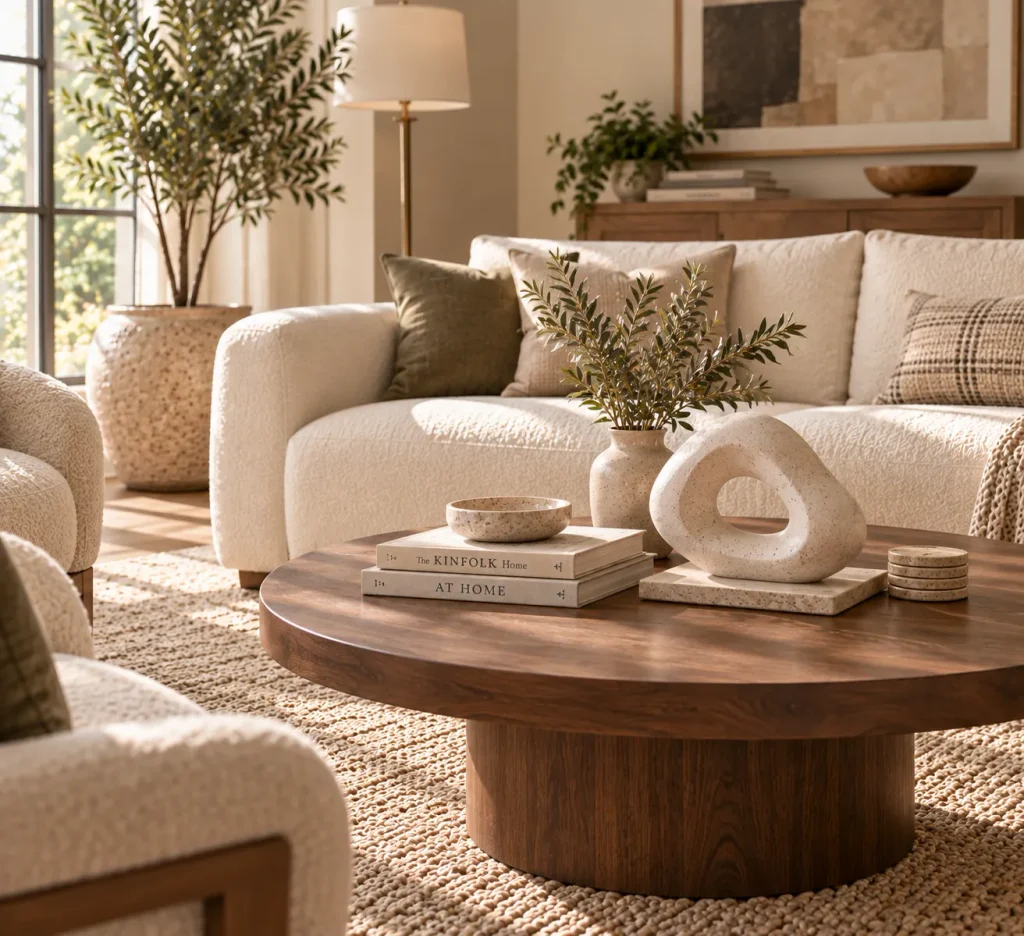
- Choose the shape: Look for a curved, geometric, or abstract object with a noticeable silhouette.
- Keep the color quiet: Cream, stone, beige, charcoal, or muted brown works well with layered interiors.
- Create breathing room: Place the sculpture beside one supporting item rather than surrounding it with many accessories.
- Balance the height: Pair a taller sculpture with a low book or tray to create visual contrast.
A sculptural piece gives the tabletop a strong focal point without adding visual clutter. Stone, ceramic, plaster, and wood finishes all bring different textures into the room. For a small table, choose one substantial object instead of several tiny decorations. The result feels intentional while remaining simple enough for everyday living.
Wood and Glass Mix
| Comparison Point | Option A: Single Material | Option B: Mixed Materials |
| Texture | Repetitive | More layered |
| Visual Interest | Subtle | More noticeable |
| Styling | Very simple | Balanced and dimensional |
| Best Pairing | Minimal rooms | Warm contemporary spaces |
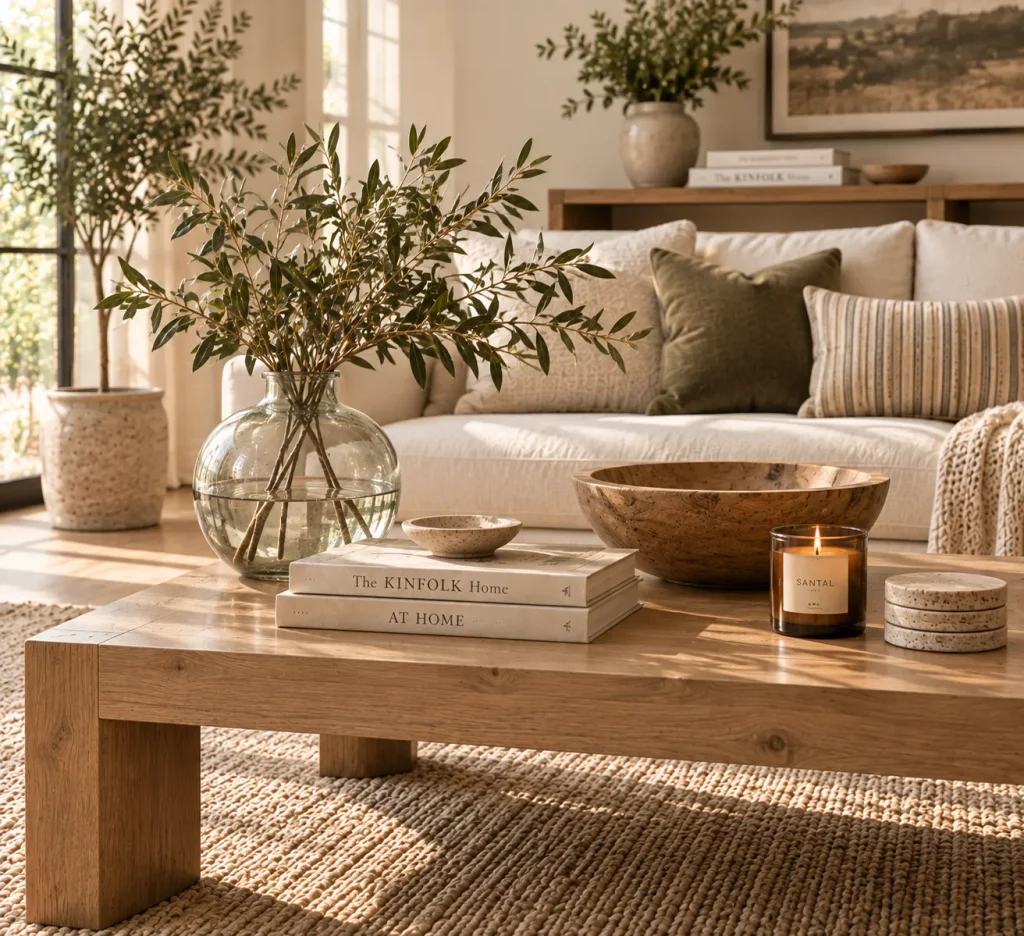
Combining wood and glass keeps a tabletop arrangement from feeling flat. Wood introduces warmth and natural texture, while glass adds lightness and reflection. I’ve noticed that pairing one solid material with one transparent piece works particularly well on darker tables because the glass prevents the arrangement from looking visually heavy.
Candle and Greenery Pair
DO:
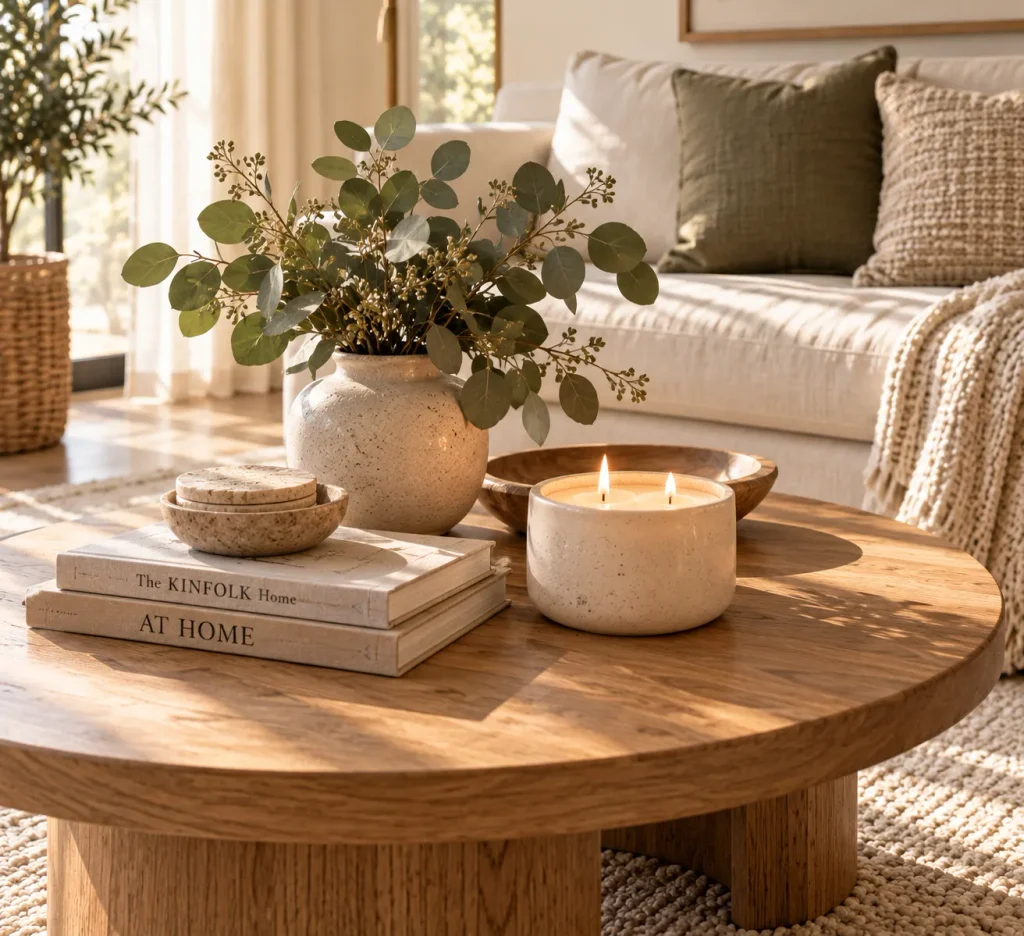
- Pair one candle with a small leafy arrangement.
- Use a low candle holder for an unobstructed view.
- Repeat one color from the surrounding room.
- Leave open space around both pieces.
DON’T:
- Crowd the table with several candle holders.
- Mix too many greenery varieties.
- Choose oversized foliage for a small table.
- Place delicate leaves where they interfere with daily use.
A simple candle and greenery pairing adds warmth without demanding much space. Eucalyptus, olive branches, or compact leafy stems provide gentle color against neutral furniture. Keep both pieces within a small visual zone rather than spreading them across the surface. This arrangement suits relaxed rooms where texture matters more than decoration quantity.
More Articles Like This one : 24 Stunning Living Room Decor Ideas That Wow Guests
Round Tray Styling
Cost: Low to moderate, depending on tray material
Time: 10 to 15 minutes
Skill Level: Beginner
Best For: Small and medium coffee tables
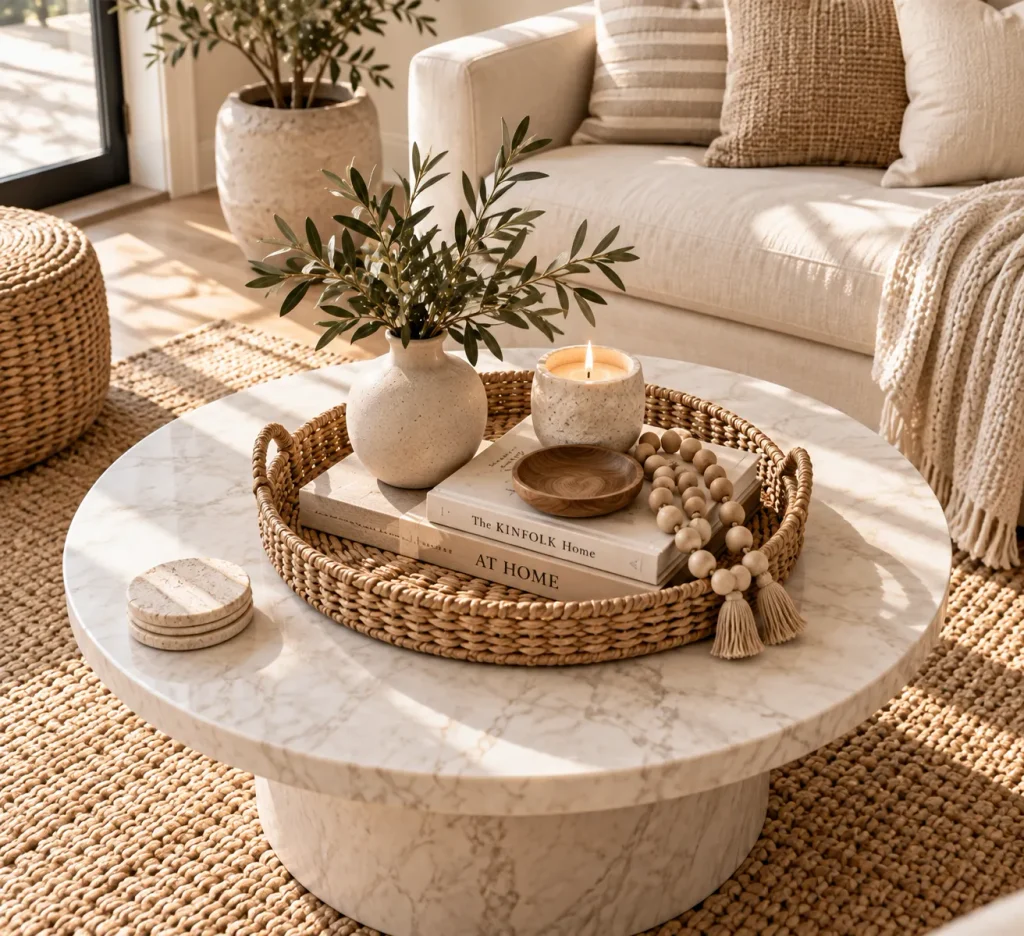
A round tray creates an easy boundary for several decorative pieces while keeping the arrangement visually connected. Woven, wood, metal, and ceramic trays each create a different mood. For a softer room, choose natural fibers or light wood. Keep the tray proportionate to the table so the surrounding surface remains usable.
Neutral Texture Stack
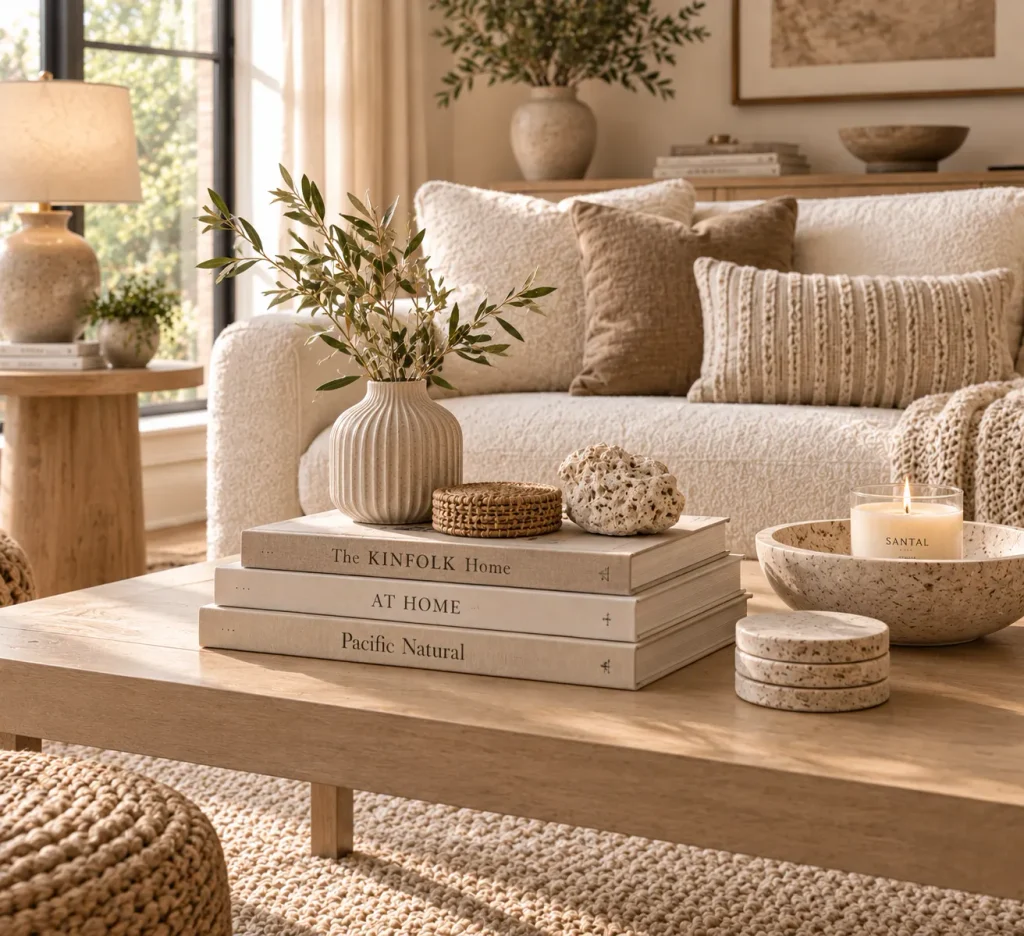
Texture becomes the main decoration when the color palette stays intentionally quiet. Layer linen, ceramic, woven fibers, and natural stone instead of relying on bright accessories. This approach adds depth while keeping the room visually calm, especially when the surrounding furniture already features neutral upholstery and natural finishes.
A useful starting point is three textures with different surfaces and shapes. For example, place two linen books beneath a ribbed vase and add one small stone object nearby. I’ve noticed that rough and smooth finishes create more interest than simply adding more decorative pieces. The table feels layered without becoming busy.
Woven Basket Accent
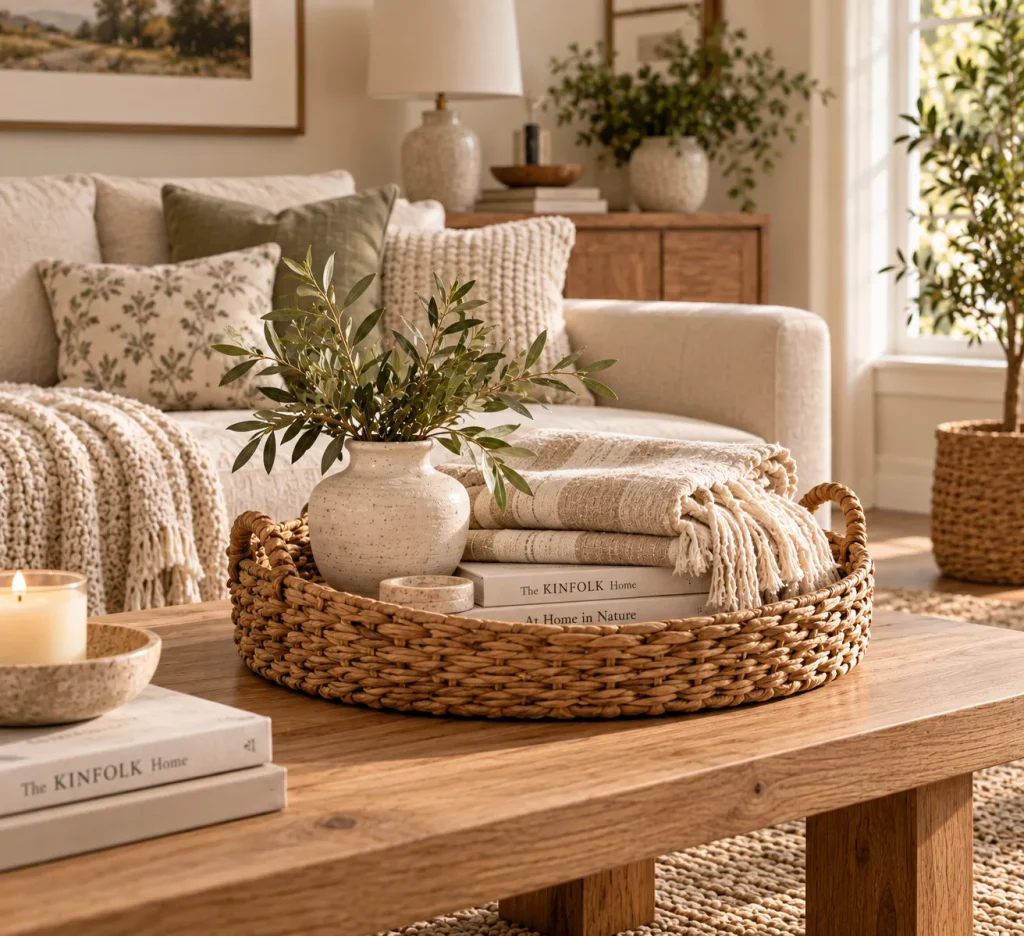
- Choose a shallow basket that does not block the seating view.
- Use natural materials such as rattan, seagrass, or woven cotton.
- Fill it with one practical textile instead of many loose items.
- Add a tiny ceramic accent nearby for contrast.
A woven basket brings useful storage into the styling without making the table look purely decorative. It works especially well for small blankets, magazines, or remote controls that normally create clutter. Select a basket with a soft, natural finish and keep the contents neatly contained for an organized appearance.
Asymmetrical Book Stack
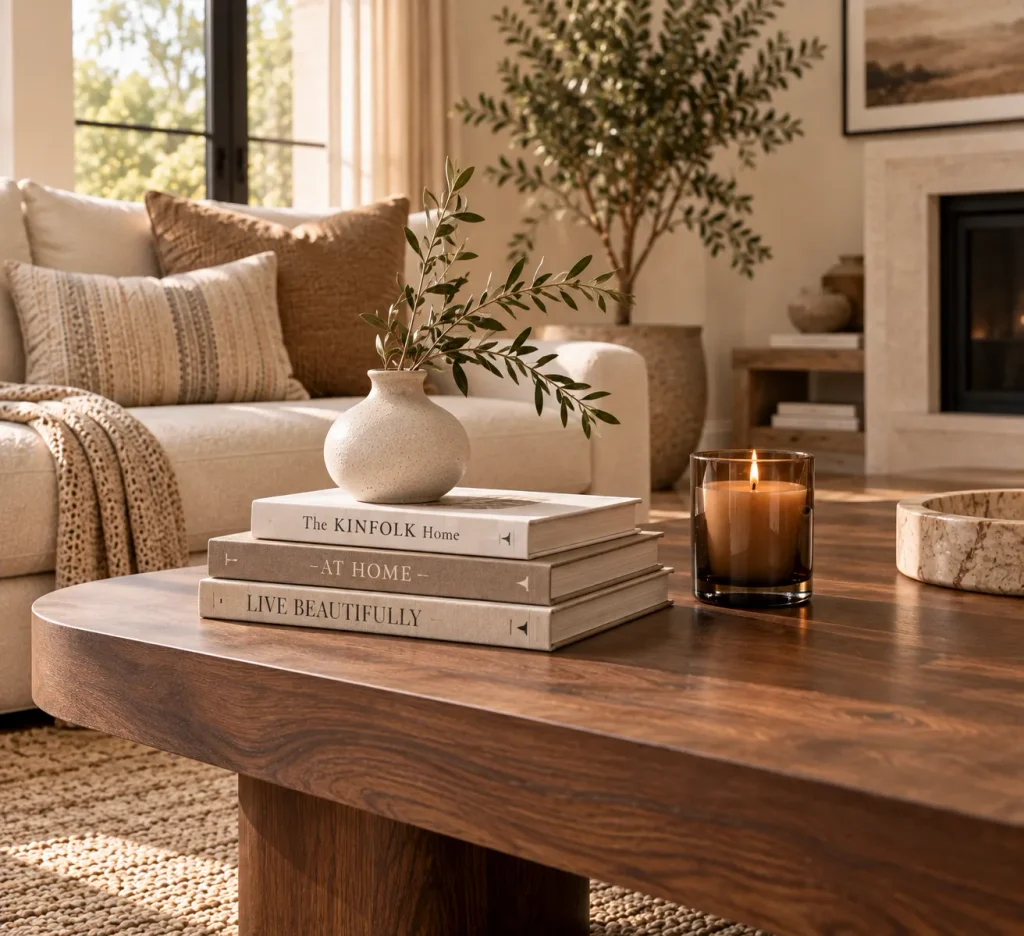
Quick Tip:
Avoid centering every object along the same line. Place the book stack slightly to one side, then balance it with a smaller object on the opposite side. Different heights create movement while keeping the arrangement visually stable.
An uneven arrangement often feels more natural than a perfectly centered display. Start with two or three books, then add one compact accent beside them. Keep the tallest piece toward the back and lower objects toward the front. This creates visible layers without filling the entire tabletop.
Fresh Branches in Glass

BEFORE: A large tabletop feels flat because every accessory sits at nearly the same height. The arrangement has little vertical interest and can disappear against a spacious room.
AFTER: Slender branches introduce height while their open structure keeps the view through the room clear. A simple glass vase adds transparency, allowing the tabletop and surrounding colors to remain visible.
Choose branches with thin stems and a loose silhouette rather than dense foliage. Willow, olive, eucalyptus, or seasonal flowering branches can work beautifully. For a balanced display, keep the vase visually simple and pair it with only one or two low accessories. This approach adds height without making the table feel overloaded.
Decorative Bead Garland
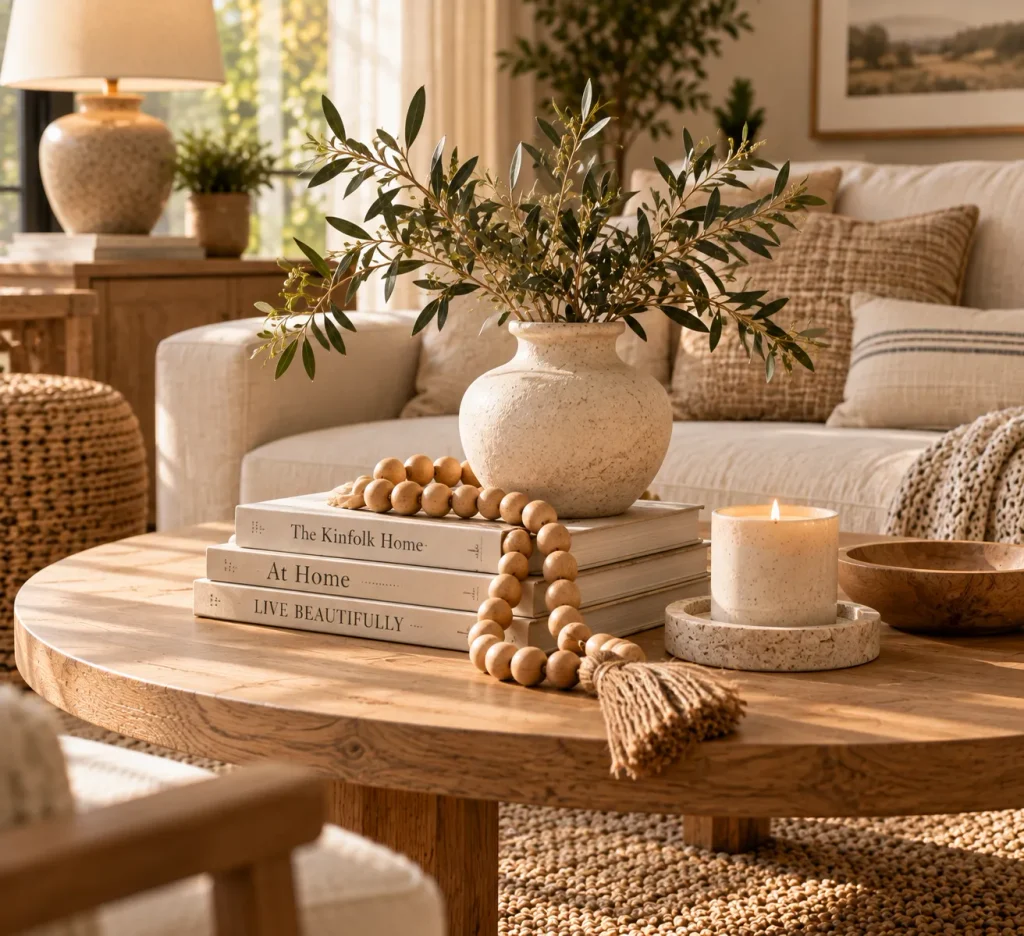
- Drape the garland loosely rather than forming a tight circle.
- Choose beads in natural wood, cream, or muted earthy tones.
- Pair it with one taller object to create height variation.
- Keep the strand short enough to avoid hanging over the table edge.
- Let part of the tabletop remain visible around the arrangement.
Wooden beads add a soft decorative layer without introducing strong color or visual weight. They work particularly well with oak, walnut, rattan, and linen textures. Place the strand beside a vase or across a shallow tray, then remove any extra accessories that compete with its shape. The goal is texture, not clutter.
Low Candle Cluster
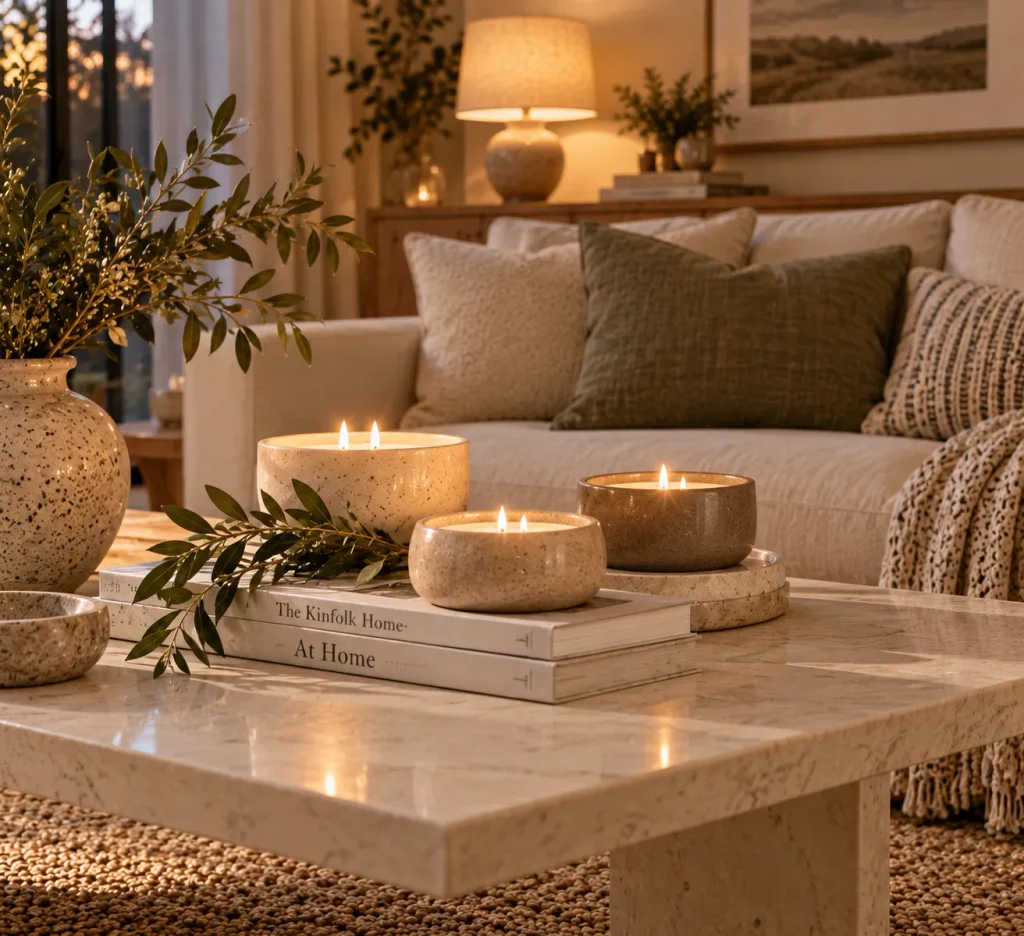
Quick Tip:
Use candles with different widths but similar heights to keep the cluster cohesive. Place them close enough to read as one arrangement while leaving a little space between each vessel.
A low candle grouping creates warmth while keeping sightlines open across the room. Choose matte ceramic or textured stone vessels for added depth, especially in neutral interiors. I’ve noticed that three pieces often provide enough visual variety without making a coffee table feel crowded. Keep the cluster toward one side and balance it with a single low object.
Tray With Seasonal Accents
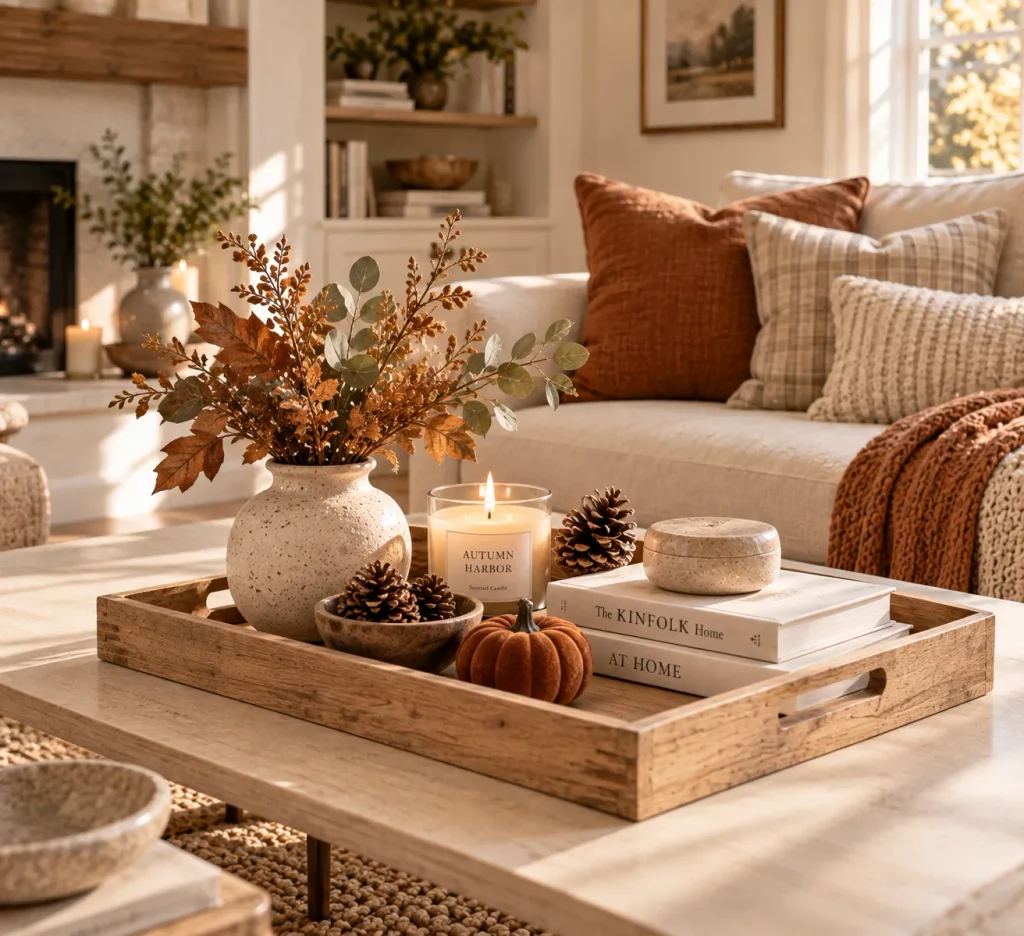
BEFORE: Seasonal decorations are scattered across the tabletop, creating several small focal points and making everyday use inconvenient. The colors may also feel disconnected from the rest of the room.
AFTER: A single tray gathers the seasonal pieces into one organized zone. The arrangement feels intentional, while the rest of the surface remains open for drinks, books, or daily activities.
Seasonal accents do not need to dominate the room. Choose two or three small pieces that echo colors already present in your furnishings. In autumn, try pinecones and muted foliage; in winter, use greenery and warm candles. A contained tray makes seasonal updates simple without requiring a complete restyle.
Layered Mirror Accent
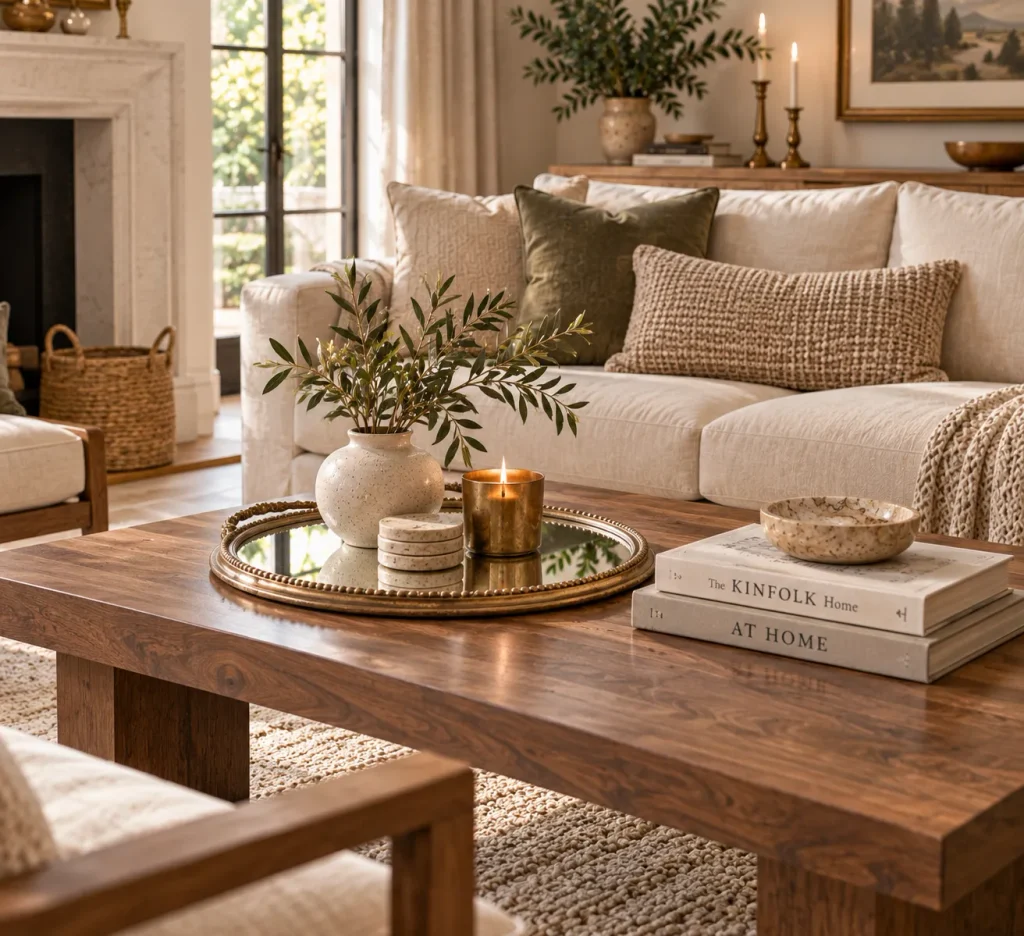
- Choose a shallow mirror: Select a small round or softly rectangular mirror that sits securely on the tabletop.
- Add a base: Place one or two neutral books beneath a nearby vase to create height variation.
- Introduce warmth: Add a small brass, bronze, or ceramic accent beside the mirror.
- Check reflections: Position the mirror so it reflects a pleasing light source or decorative feature.
- Keep the center open: Avoid covering too much of the reflective surface with accessories.
A tabletop mirror can add light and dimension while creating another reflective layer in the room. Place it slightly off-center rather than directly beneath every accessory. For safety and practicality, use a stable decorative mirror designed for tabletop placement and keep heavy objects away from its edge.
Natural Stone Bowl
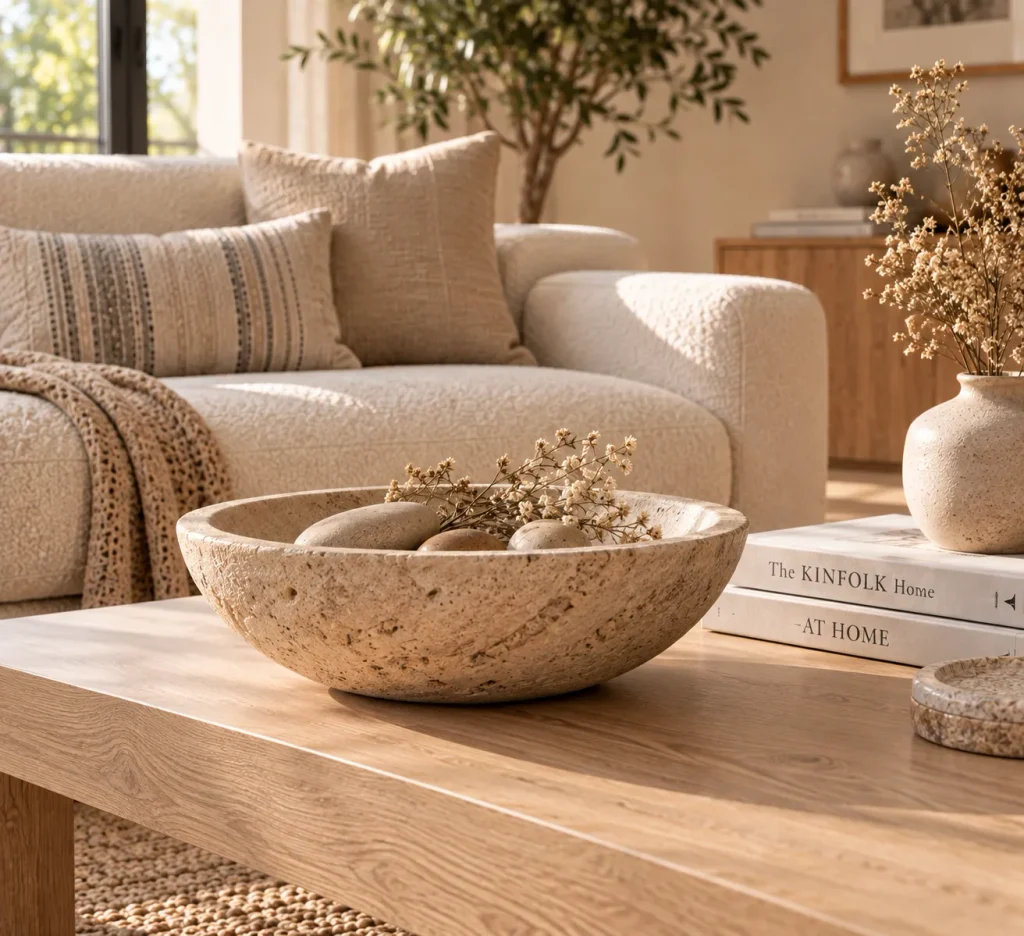
| Comparison Point | Option A: Empty Bowl | Option B: Filled Bowl |
| Visual Weight | Light and minimal | Slightly richer |
| Texture | Focuses on the vessel | Adds layered texture |
| Maintenance | Very low | Requires occasional tidying |
| Best For | Minimal interiors | Organic and rustic rooms |
A natural stone bowl becomes a strong tabletop anchor because its irregular texture contrasts with smoother furniture. Leave it empty for a minimalist appearance or add a few carefully chosen natural pieces. In my experience, uneven materials such as stone and wood create more character than matching every accessory to the same finish.
Sculptural Bowl Display
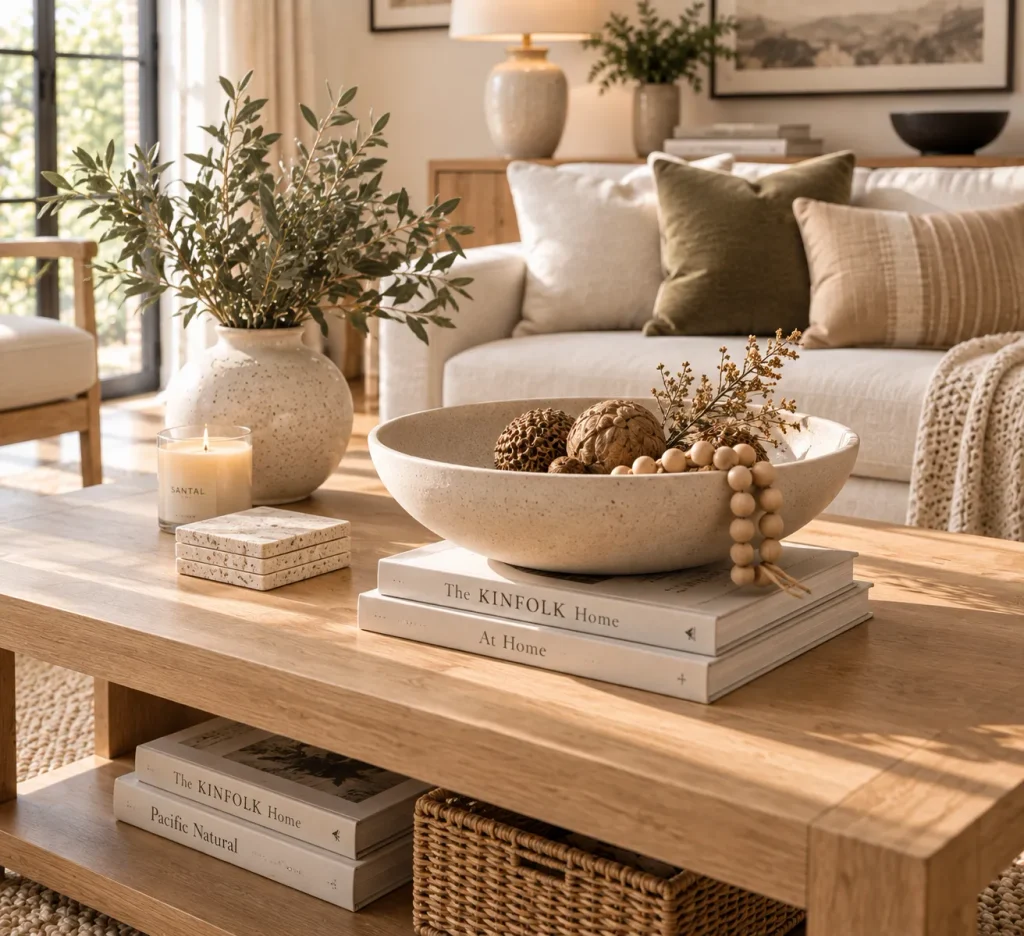
- Pick the bowl: Choose a wide, shallow bowl with a matte ceramic or stone finish.
- Add texture: Fill it with a small number of wooden beads, dried pods, or decorative stones.
- Create variation: Keep the filler lower on one side so the arrangement has natural height differences.
- Balance the table: Add one slim book or small candle beside the bowl.
- Edit carefully: Remove any piece that makes the display feel crowded.
A sculptural bowl can serve as both decoration and a practical container. Its broad shape gives the tabletop a grounded appearance, while natural fillers introduce texture. Keep the contents restrained rather than filling the bowl to the rim. This approach works particularly well for large rectangular tables that need a substantial center element.
Black and Cream Contrast
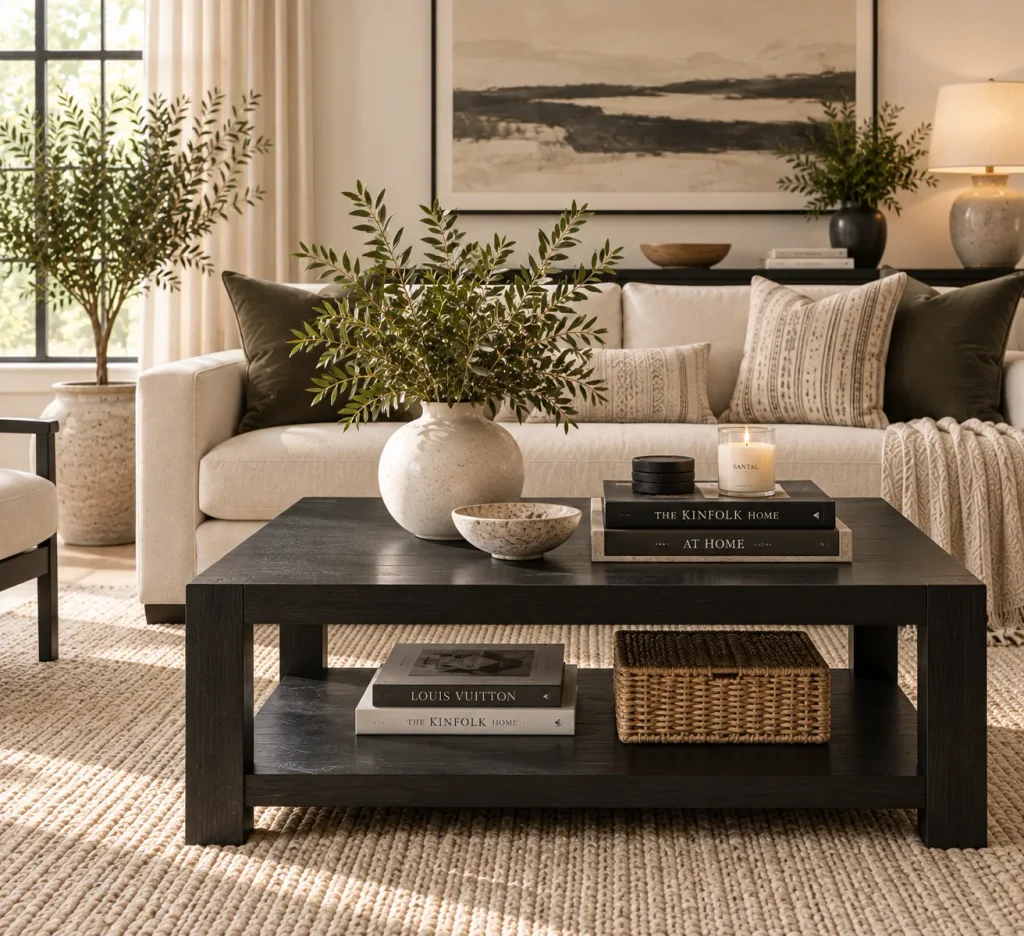
| Comparison Point | Option A: All Neutral | Option B: Black and Cream |
| Contrast | Soft | Stronger |
| Mood | Calm and subtle | Crisp and defined |
| Accent Pieces | Similar tones | Light and dark mix |
| Best For | Relaxed interiors | Modern spaces |
Black and cream accessories create definition without relying on bright colors. Use black for one or two smaller elements, then soften the arrangement with ivory ceramics, pale books, or natural greenery. I’ve noticed that repeating the darker shade elsewhere in the room helps the tabletop feel connected rather than visually isolated.
Minimal Three Piece Setup

A three-piece arrangement keeps styling simple while still creating visual variety. Choose one tall item, one flat item, and one rounded piece so the shapes do not compete. Leave generous empty space around them. This setup is especially useful for smaller rooms where excessive accessories can make the entire living area feel cramped.
Start with the tallest piece, then position the book nearby and finish with the smallest object. Step back and check the arrangement from the sofa, not just from directly above the table. The best placement should look balanced from the angle you actually use every day.
Decorative Box Storage
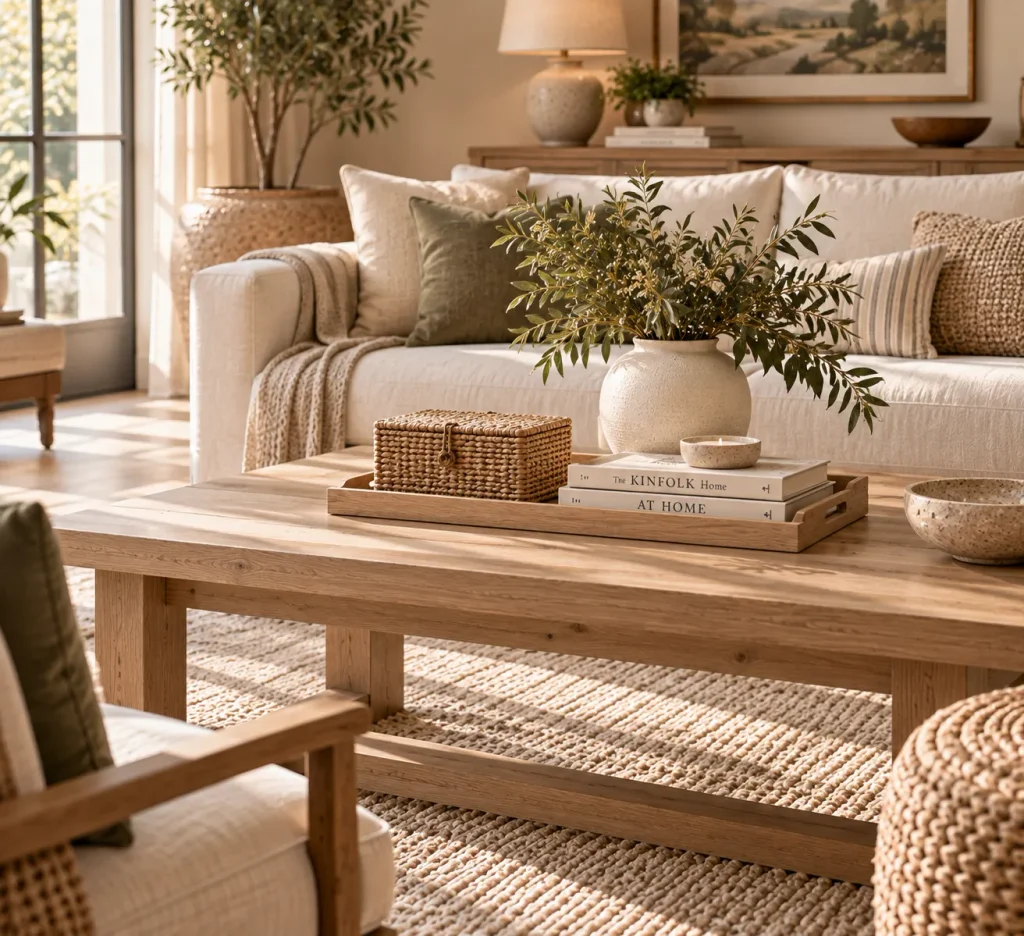
DO:
- Choose a lidded box that complements the table finish.
- Use it to hide remotes, matches, or small everyday items.
- Keep the box near the edge for easy access.
- Pair it with one taller decorative piece.
DON’T:
- Use an oversized box that dominates the tabletop.
- Mix several competing patterns.
- Fill the surface with unrelated storage containers.
- Hide frequently used items under difficult-to-open lids.
A decorative box solves a practical problem while keeping everyday clutter out of sight. Woven, wooden, lacquered, or fabric-covered styles can suit different interiors. Place one beside a vase or book stack rather than treating it as the centerpiece. The result is a tidier surface that still feels useful and personal.
Soft Ceramic Collection
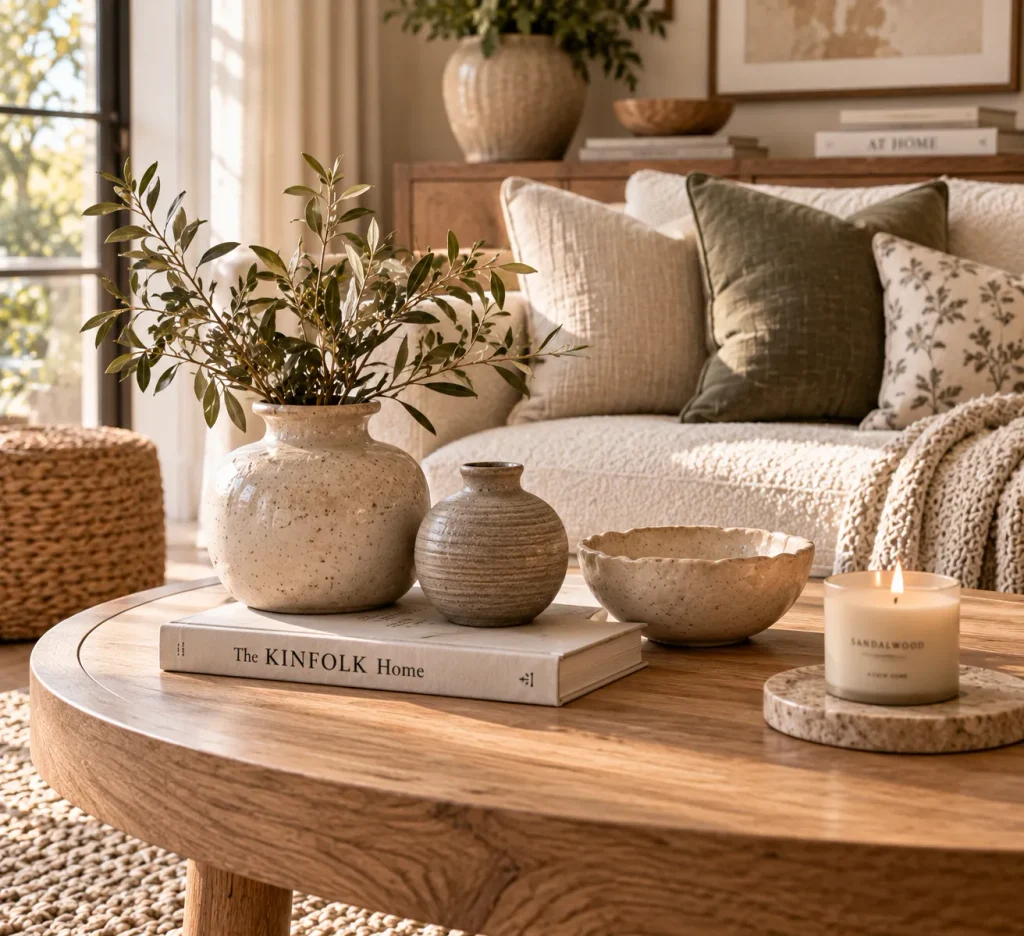
Cost: Low to moderate
Time: 10 minutes
Skill Level: Beginner
Best For: Neutral and organic interiors
Small ceramic pieces create a collected appearance without introducing loud colors. Choose vessels with different shapes but related finishes, such as matte ivory, warm beige, and soft gray. Keep the collection limited to three pieces and vary their heights. This makes the arrangement feel intentional while preserving the calm quality of a neutral living room.
Layered Tray and Vase
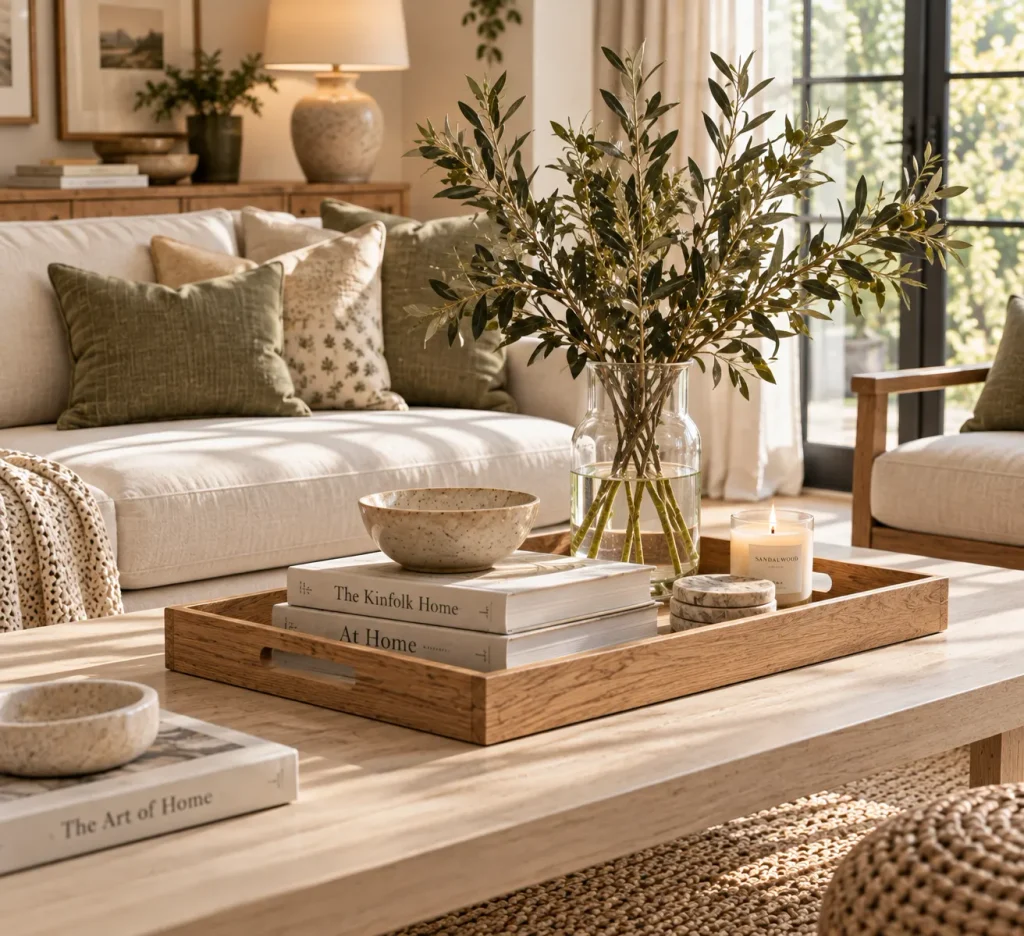
A layered tray and vase combination gives the tabletop a clear focal point while keeping smaller pieces organized. Place the books toward one side of the tray, then position the vase behind them for height. A small bowl can fill the lower space without competing with the branches.
Keep the tallest element toward the back and avoid covering the entire tray. I’ve noticed that leaving a visible strip of wood around the objects makes the arrangement feel more spacious. This setup works especially well on larger rectangular tables where a single small accessory can otherwise look lost.
Conclusion
A beautifully styled coffee table does not need a large collection of accessories. A thoughtful mix of height, texture, shape, and open space can make the room feel more welcoming and complete.
From simple book stacks and ceramic bowls to natural branches and layered trays, these ideas give you plenty of ways to refresh your space using pieces you may already have. I’ve seen how small styling changes can completely shift the way a room feels.
Choose one idea that fits your style and try it today. Save this post on Pinterest so you can revisit your favorite setups, and share it with someone looking for fresh home decor inspiration.



One Comment