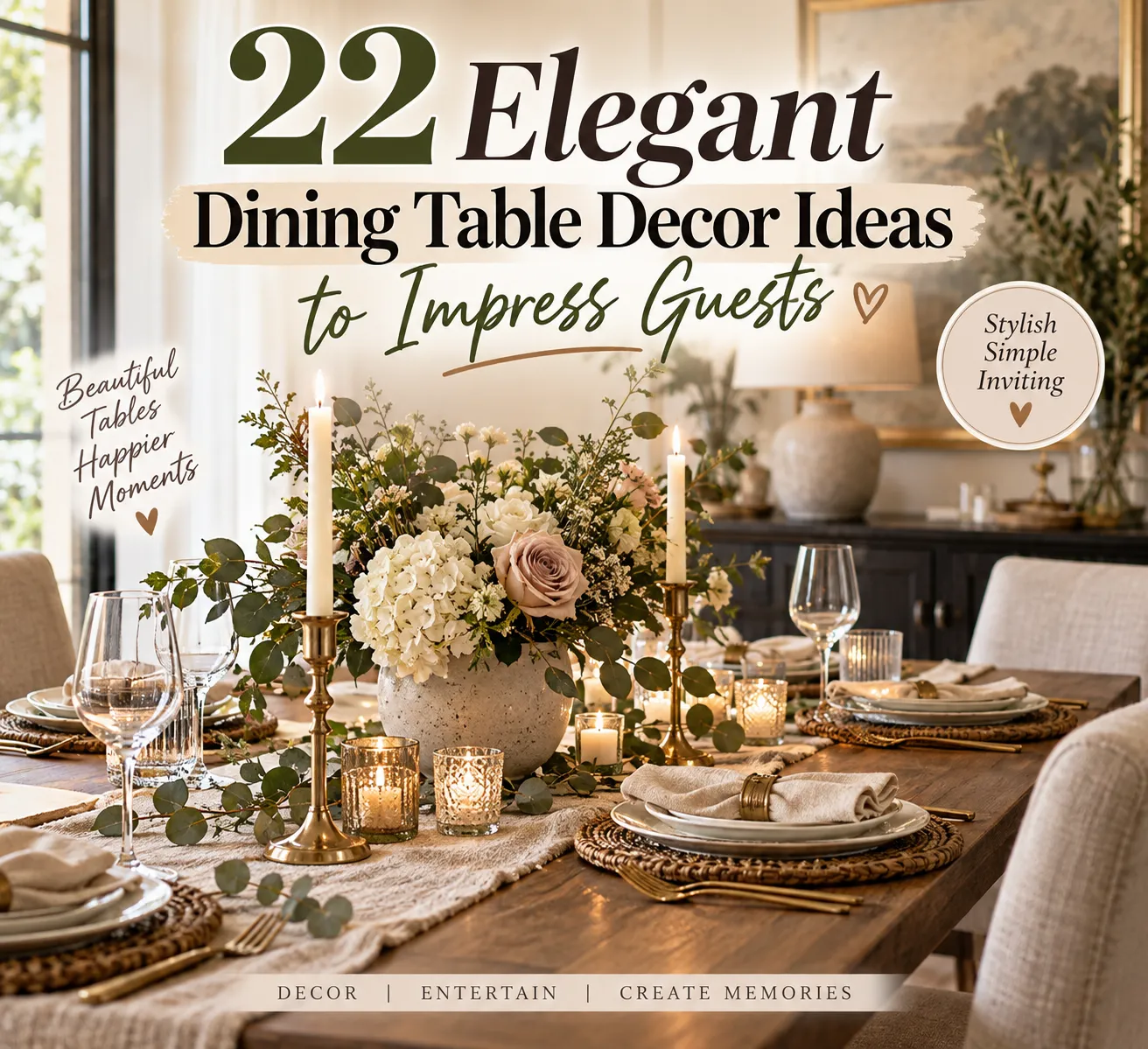
22 Elegant Dining Table Decor Ideas to Impress Guests
A beautiful dining table can make an ordinary meal feel more welcoming. The right details create a space where guests feel comfortable, conversations flow, and every setting feels thoughtfully prepared.
This collection of dining table decor ideas is designed to help you style your table without making it crowded or difficult to use. You’ll find practical inspiration for centerpieces, runners, candles, dinnerware, greenery, napkins, trays, and seasonal accents that work for everyday meals and special gatherings.
Whether your table is small, long, round, or made from natural wood, these ideas can help you create a balanced look that suits your home. In my experience, the most inviting tables are not always the most elaborate. A few well-chosen textures, coordinated colors, and useful pieces can often create a stronger impression than a table covered with accessories. Use these ideas as a starting point, then adapt the details to your own style and routine.
Layered Table Runner
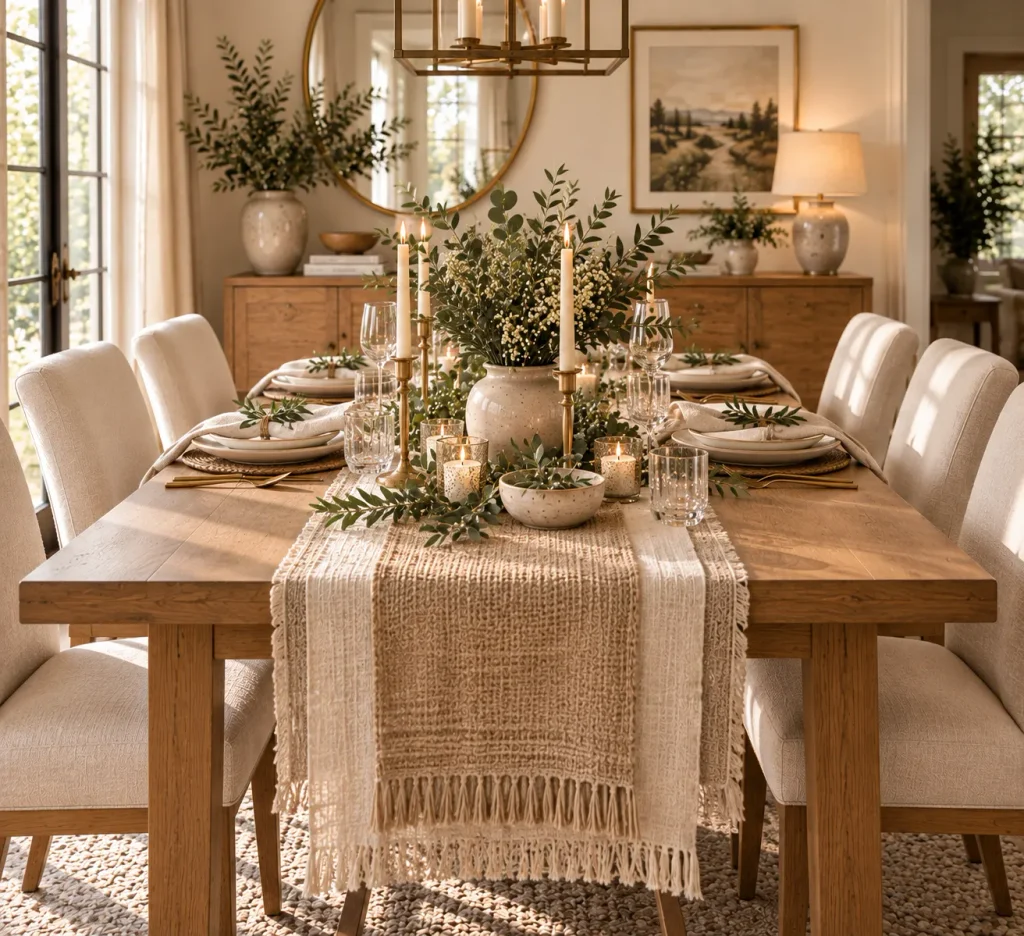
A linen runner creates an instant foundation for a welcoming table without covering the entire surface. Choose a neutral shade such as oatmeal, ivory, or soft beige, then layer a few carefully selected pieces along its center. This approach keeps the arrangement organized while leaving plenty of room for plates and serving dishes.
For everyday meals, let the runner extend naturally along the table rather than hanging too far over the ends. Add low greenery, two candleholders, and one decorative bowl for balance. In my experience, natural fabrics work especially well because their subtle texture adds warmth without competing with dinnerware or centerpiece details.
Natural Greenery Centerpiece
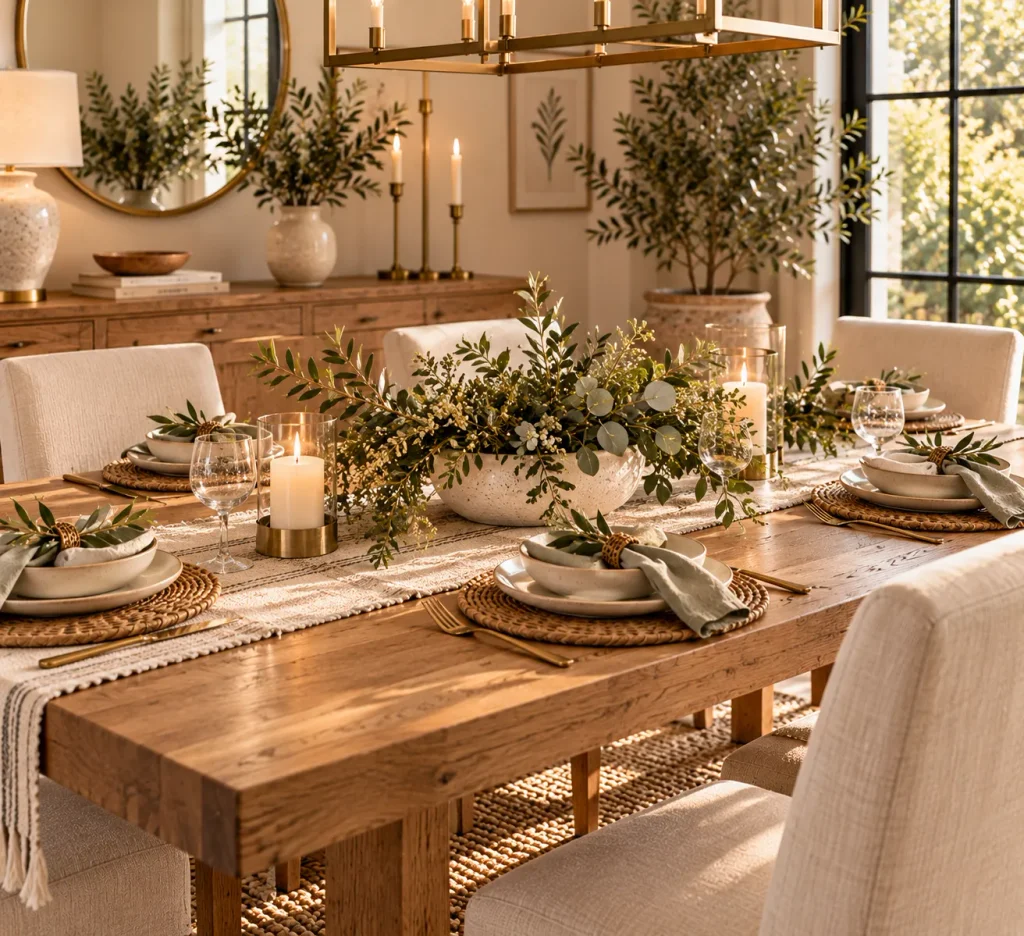
- Choose low branches or leafy stems that keep sightlines open across the table.
- Use one long vessel for rectangular tables or several small pots for a round table.
- Repeat green tones through nearby plants, artwork, or textiles.
- Trim uneven stems so the arrangement looks intentional without becoming overly formal.
- Refresh fresh greenery regularly and remove wilted leaves promptly.
Natural foliage brings softness and movement to a dining setting while keeping the color palette calm. Olive branches, eucalyptus, ferns, and simple leafy stems can all work with different decorating styles. Keep the centerpiece low enough for conversation, especially when guests are seated opposite one another during longer dinners.
Candlelit Place Settings

Quick Tip:
Place small candles between, rather than directly beside, individual plates so the glow feels connected across the table. Choose unscented candles for meals because strong fragrances can interfere with food aromas. Keep flames away from loose napkins, greenery, and other flammable materials.
Candlelight adds warmth and makes an ordinary dinner feel more considered. Small holders in brass, glass, or ceramic can coordinate with existing tableware without demanding attention. I’ve noticed that repeating the same candle style at several points along a long table creates rhythm, while varied heights add gentle visual interest without clutter.
Statement Floral Arrangement
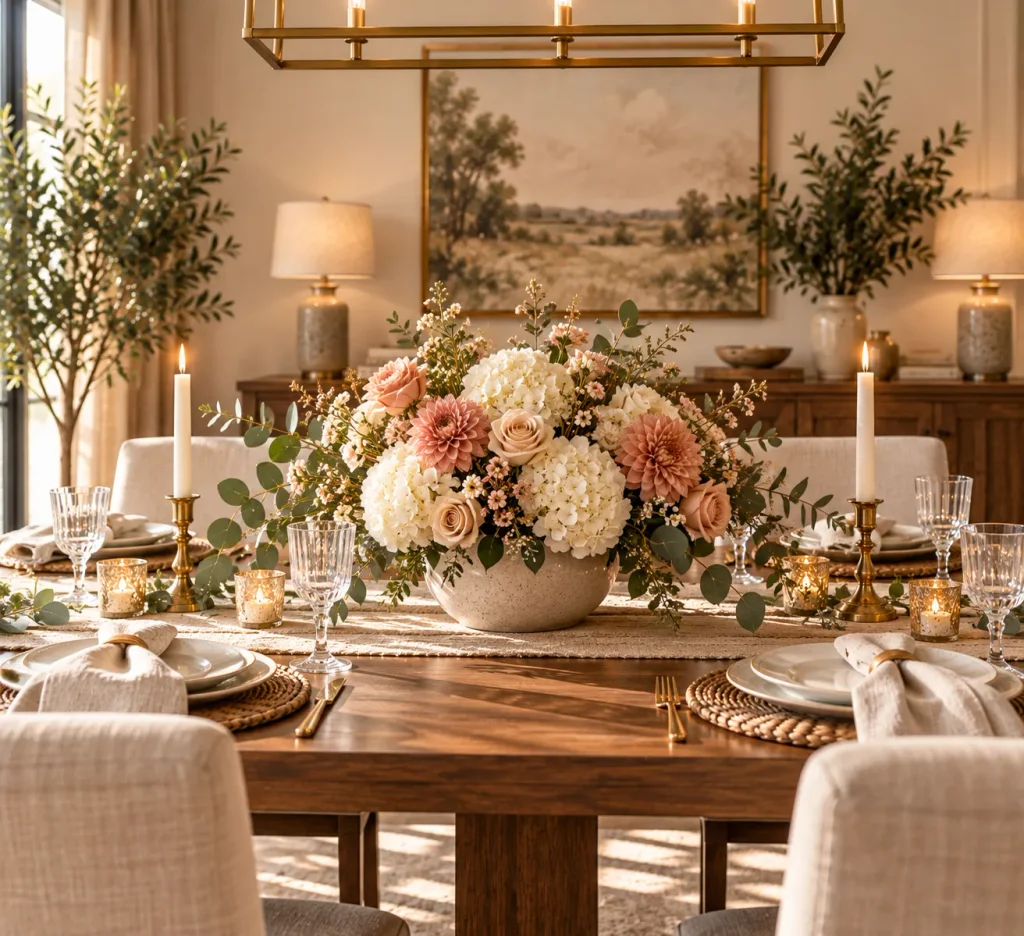
BEFORE: A large dining table can feel unfinished when its center is completely empty. Smaller decorative pieces may also disappear visually across a long surface, leaving the room without a clear focal point.
AFTER: A fuller floral arrangement gives the table a defined center and introduces color, height, and natural texture. A low, wide shape keeps the display noticeable without blocking conversation between guests.
Choose flowers that repeat one or two colors already found in the room. For a relaxed look, combine blooms with varied textures and greenery instead of arranging every stem at identical heights. If the table is used daily, keep the arrangement compact enough to move quickly before meals. A sturdy ceramic vase also adds useful visual weight.
More Content : 23 Dreamy Bedroom Ideas to Create Your Perfect Retreat
Mixed Dinnerware Layers
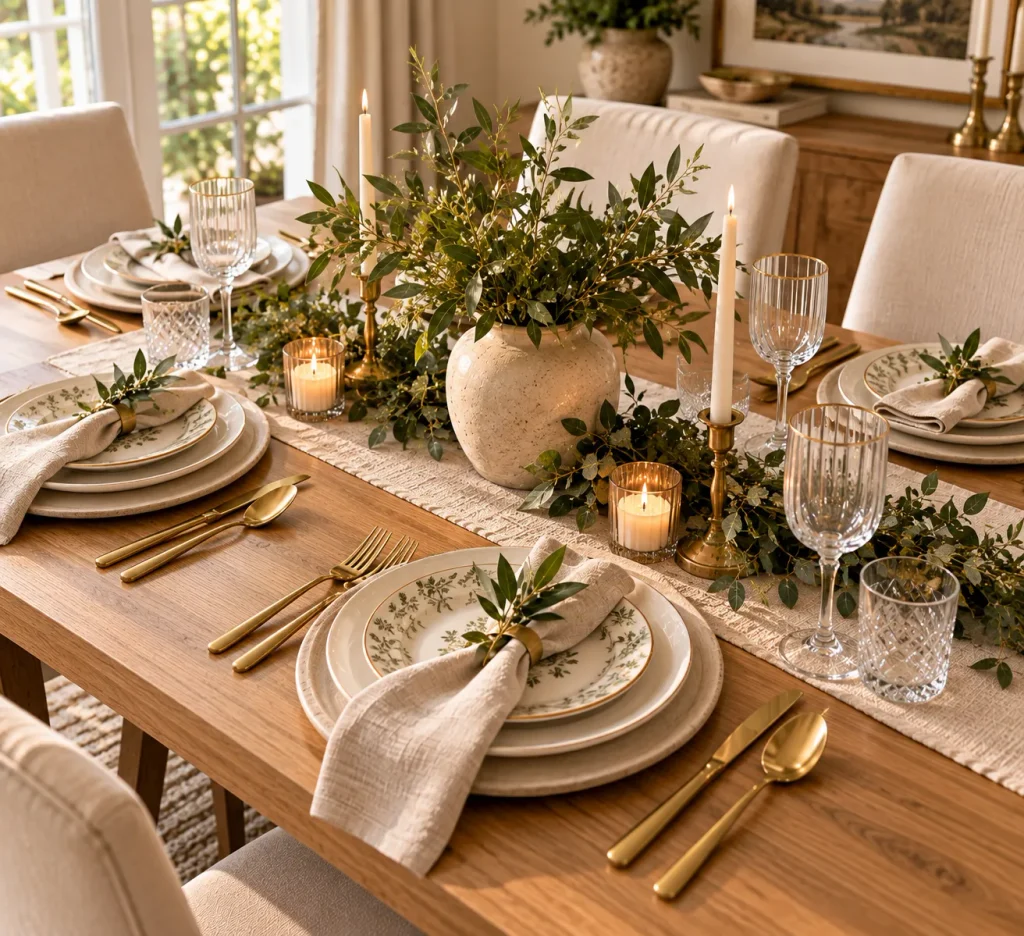
- Start with the largest plate: Place the dinner plate directly at each seating position to create a consistent foundation.
- Add a smaller plate: Layer a salad or appetizer plate with a subtle pattern or contrasting edge.
- Fold the napkin: Position it on top or beside the plates using a simple fold that does not crowd the setting.
- Add essential cutlery: Arrange forks, knives, and spoons according to the meal being served.
- Finish with glassware: Keep glasses above the knife area so the setting remains practical and balanced.
Layered dinnerware makes each seat feel intentional while giving guests everything they need within easy reach. Mixing patterns works best when the pieces share a color or finish. I’ve seen simple white plates become much more interesting when paired with one patterned layer, especially in rooms that already have neutral furniture and walls.
Classic White And Brass
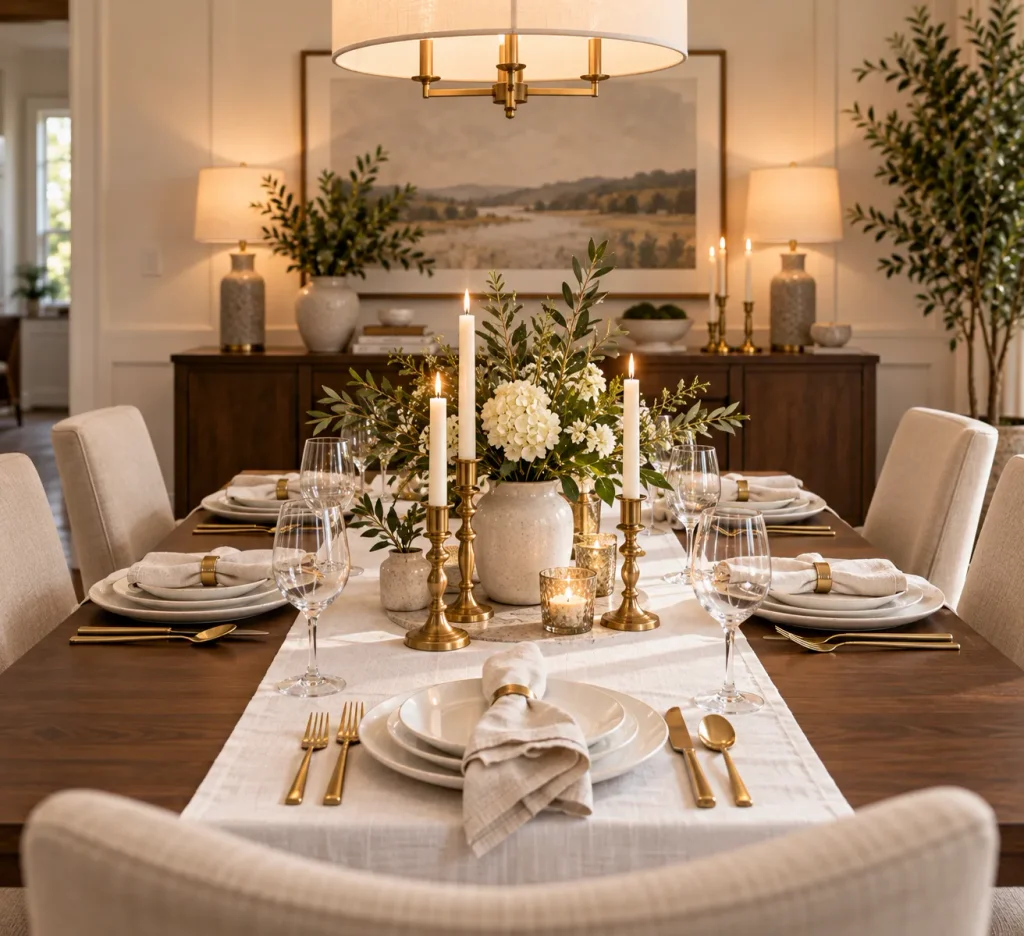
| Feature | Option A: White Dominant | Option B: Brass Accent |
| Main look | Bright and airy | Warm and sophisticated |
| Metal use | Minimal | Candlesticks and flatware |
| Best with | Light wood | Walnut or dark wood |
| Overall feel | Fresh and simple | Rich and refined |
White dinnerware provides a clean foundation, while small brass details introduce warmth without overwhelming the setting. Use brass through candleholders, cutlery, napkin rings, or a small centerpiece vessel. Keep the metal repeated in only a few places so the table feels coordinated rather than overly decorative. This pairing works especially well for formal dinners and celebrations.
Seasonal Fruit Bowl
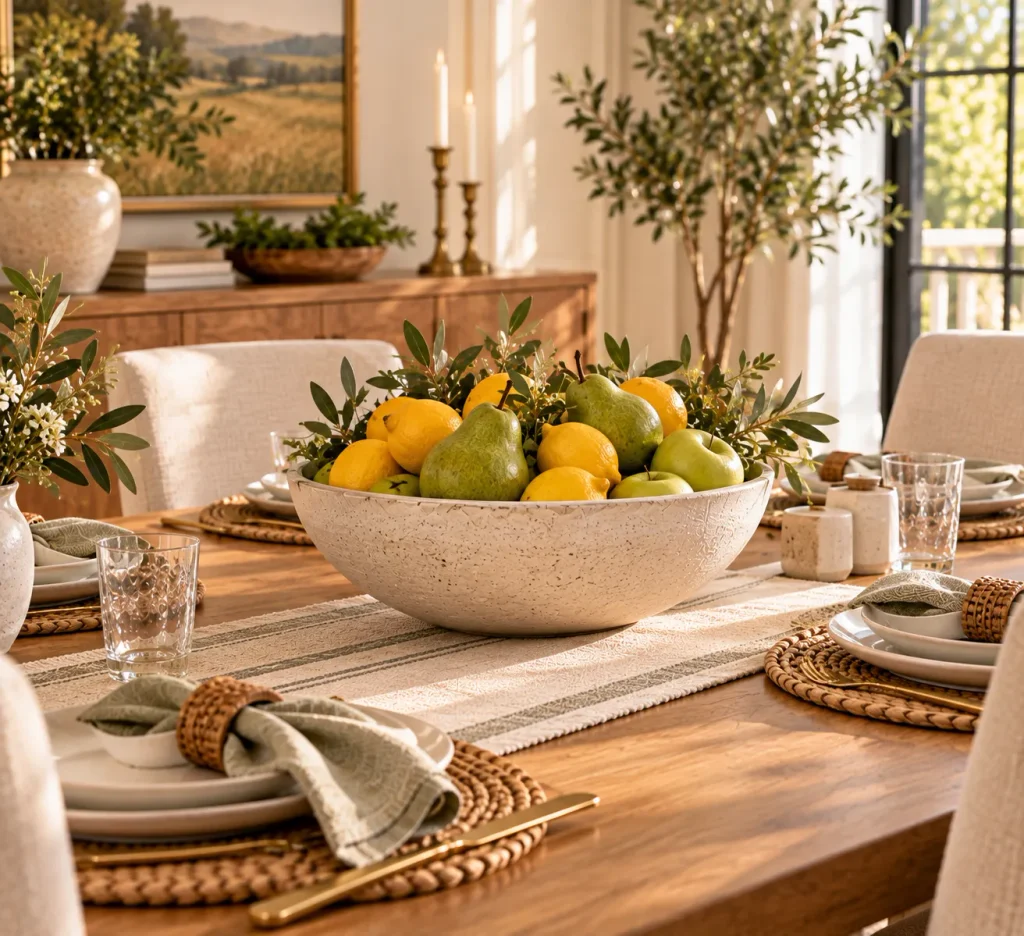
DO
- Choose fruits with colors that complement the room.
- Use a wide, shallow bowl so individual pieces remain visible.
- Mix two or three fruit varieties for natural color variation.
- Replace bruised fruit regularly to keep the display fresh.
DON’T
- Overfill the bowl until fruit spills onto the table.
- Use too many competing colors.
- Place ripe fruit directly beside candles or heat sources.
- Choose a container that blocks guests’ views.
Fresh fruit adds color and a useful everyday element to the table without feeling overly decorative. Lemons create a bright accent, while pears and apples offer softer seasonal tones. I’ve noticed that a simple ceramic bowl often looks more inviting than an elaborate centerpiece because the natural shapes provide enough visual interest on their own.
Textured Linen Napkins

Cost: Low to Moderate | Time: 10 minutes | Skill Level: Beginner
Best For: Everyday meals and dinner parties
Works In: Wood, glass, marble, and painted tables
Result: Added softness, texture, and visual polish
Linen napkins bring a tactile layer that makes even simple place settings feel more intentional. Choose neutral shades for flexibility or introduce a muted color that connects with nearby artwork and upholstery. A loose fold often feels more relaxed than a complicated shape, especially for casual gatherings. Keep napkin rings simple so the fabric remains the focus.
Long Table Runner
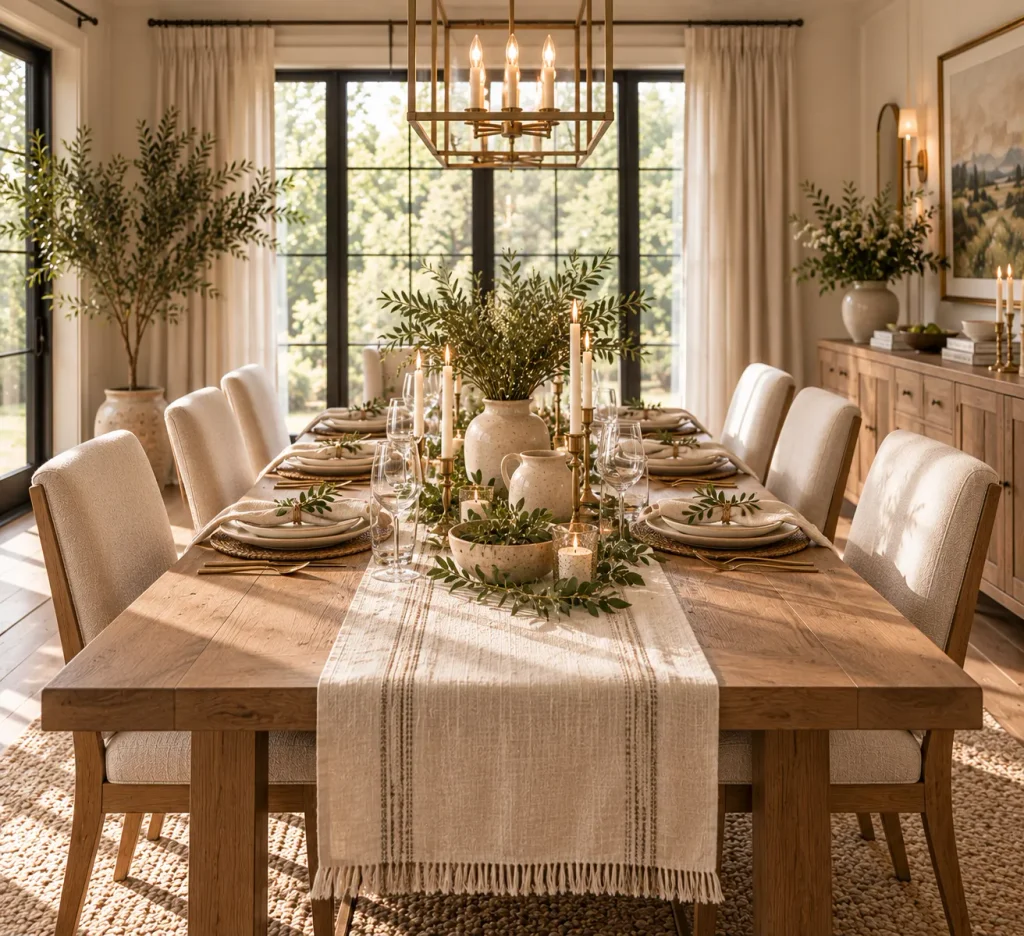
A long runner creates a visual path across a rectangular table and helps connect several decorative elements into one arrangement. Choose a fabric with visible texture, then place low vessels, candles, or greenery along its length. Leave enough uncovered tabletop around each place setting so guests can eat comfortably.
For a polished result, allow the runner to hang modestly over each end or stop it several inches before the edges. In my experience, the best arrangements use the runner as a foundation rather than filling every inch of it. A little open space makes the centerpiece feel lighter and keeps the table ready for serving dishes.
Layered Place Cards

- Choose cardstock in a color already used in the table setting.
- Write each guest’s name clearly with a simple pen or calligraphy style.
- Place cards above the napkin or beside the plate where guests can easily see them.
- Add a tiny botanical sprig or ribbon for subtle texture.
- Keep the design simple so the names remain the main detail.
Personalized place cards make guests feel considered while also helping organize seating. They work especially well for dinner parties, holiday meals, and family celebrations. For a relaxed setting, handwritten cards feel warm and personal. For a formal table, crisp cardstock with restrained lettering creates a more polished appearance without adding unnecessary decoration.
Glass Vase Cluster
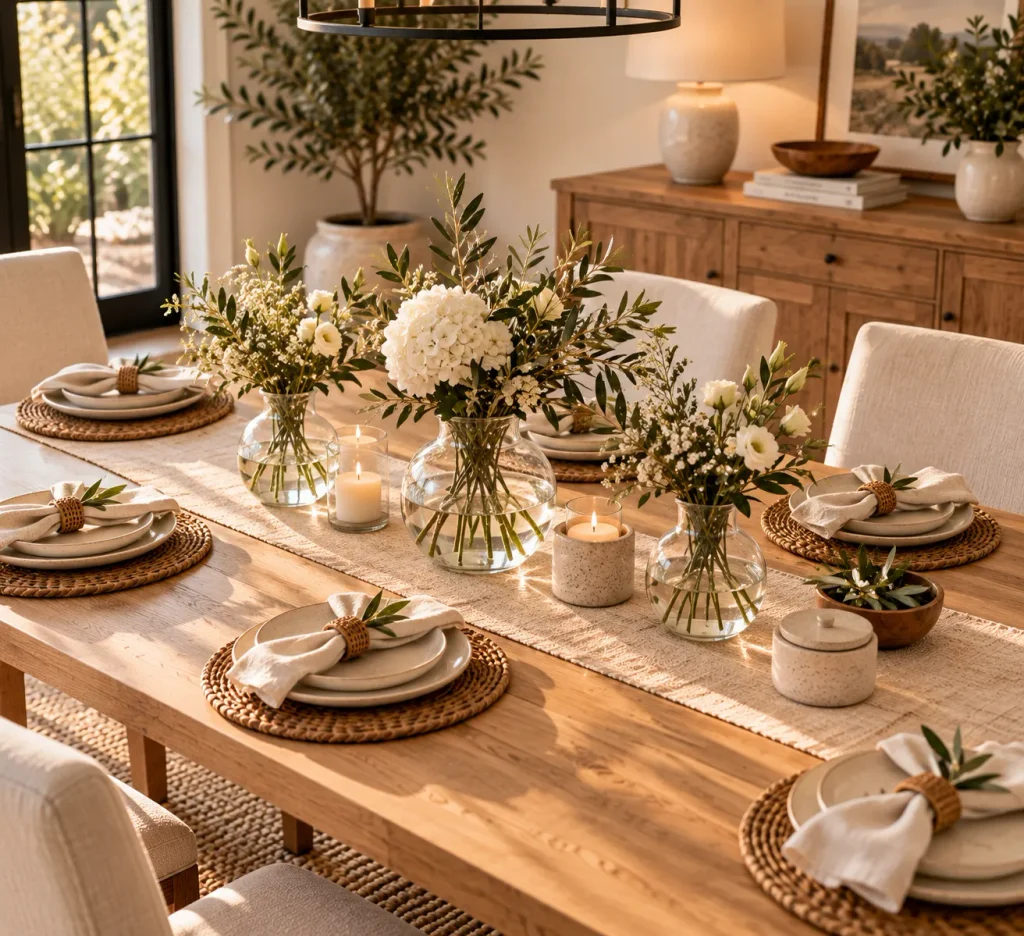
Quick Tip:
Use three or five small vases instead of filling the table with one large arrangement. Vary their heights slightly while keeping their shapes or colors related. Leave generous gaps between the vessels so the centerpiece feels airy and guests can still see across the table.
A cluster of glass vases adds transparency, which helps a dining table feel decorated without looking heavy. Fill each vessel with just a few stems for a relaxed effect. Clear glass pairs easily with wood, marble, ceramic, and metal, making this setup adaptable for everyday meals or special gatherings.
More Info Read : 25 Welcoming Front Porch Decor Ideas That Wow Guests
Warm Wood Accents

BEFORE: A dining table can feel cold when most accessories have glossy glass, polished metal, or smooth ceramic surfaces. The arrangement may look neat but lack the warmth that makes guests want to linger.
AFTER: Introducing natural wood creates visual softness and connects the table with other warm materials in the room. A serving board, carved bowl, or wooden candlestick can add texture while remaining useful.
Choose two or three wood accents rather than covering the table with matching pieces. Different grain patterns can make the setting feel collected and natural. I’ve noticed that warm wood works particularly well beside white dinnerware because the contrast keeps the table visually interesting without requiring bold colors. Keep food-safe boards reserved for serving.
Monochrome Table Setting
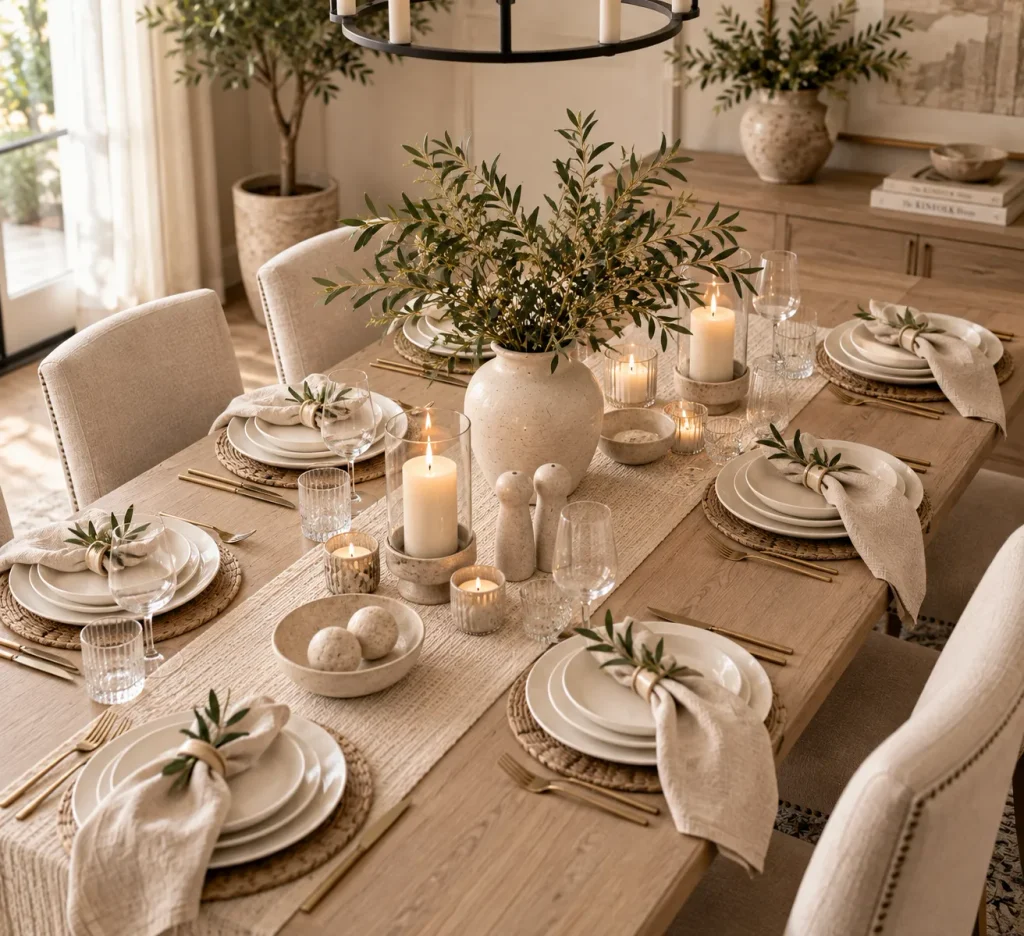
- Choose one color family: Build the setting around ivory, cream, beige, or another soft shade.
- Vary the textures: Combine linen, ceramic, glass, and wood so the single-color palette does not feel flat.
- Layer the plates: Use slightly different tones or finishes to create subtle contrast.
- Add one natural element: Include greenery, dried stems, or a small wooden accent for warmth.
A monochrome table feels sophisticated because the eye notices texture, shape, and layering instead of competing colors. Keep the main pieces within one tonal family, then introduce tiny variations through fabrics and ceramics. This approach is especially useful for neutral dining rooms where you want a refined setting without adding another strong accent color.
Black And Cream Contrast
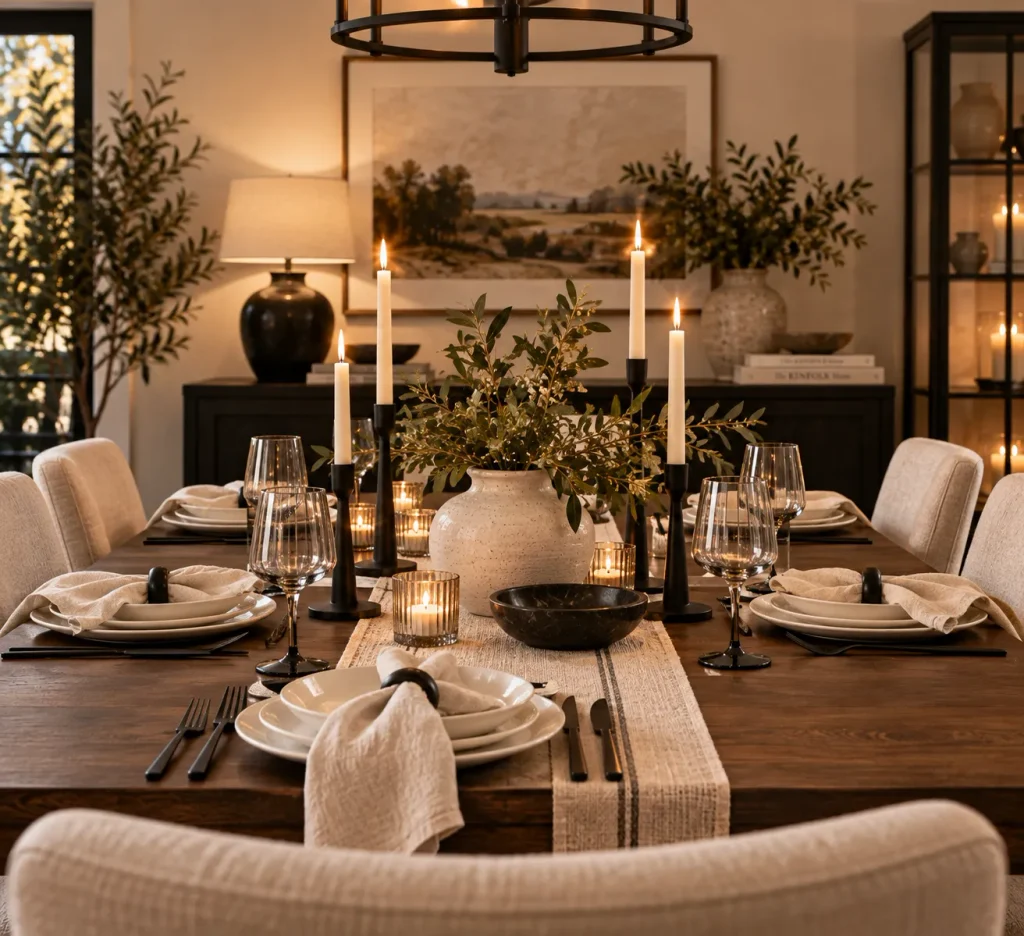
| Feature | Option A: Soft Contrast | Option B: Bold Contrast |
| Main colors | Cream and warm beige | Cream and matte black |
| Metal finish | Brushed brass | Minimal or none |
| Best accents | Wood and linen | Glass and ceramic |
| Overall effect | Relaxed and subtle | Crisp and dramatic |
Black and cream create a strong visual relationship without requiring many decorative pieces. Use black in small repeated details such as candleholders, flatware, or napkin rings, while keeping larger surfaces light. In my experience, repeating the darker accent three times helps the setting feel connected rather than visually scattered.
Dried Floral Display
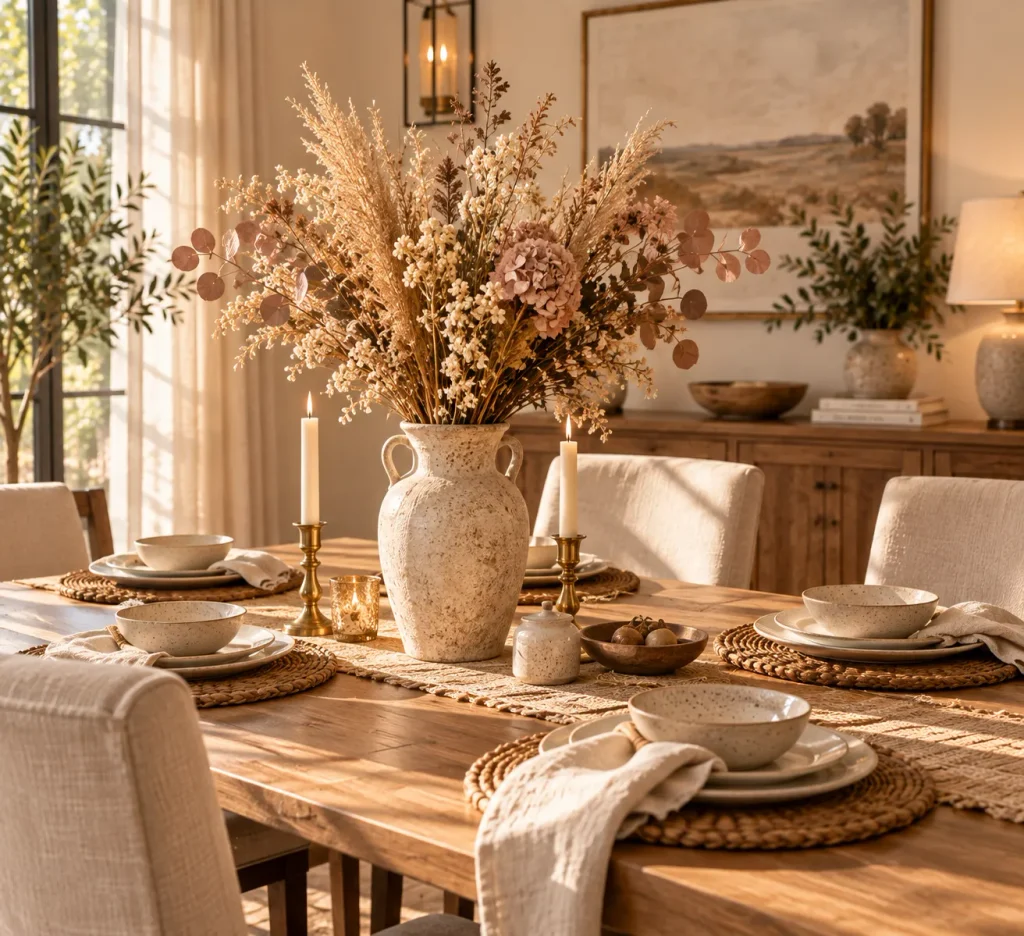
DO
- Select dried stems with different heights and textures.
- Keep the arrangement slightly loose rather than tightly packed.
- Choose muted tones that complement the dining room.
- Trim the stems so the arrangement suits the table’s proportions.
DON’T
- Use an arrangement so tall that guests cannot see across the table.
- Mix too many unrelated flower colors.
- Place fragile stems where sleeves or serving dishes will catch them.
- Overfill a narrow vase.
Dried flowers offer long-lasting texture with little maintenance, making them practical for busy households. Pampas grass, preserved eucalyptus, bunny tails, and wheat stems can create different moods while keeping the table visually soft. Store the arrangement away from moisture and direct heat so the stems retain their shape and color longer.
Seasonal Candle Arrangement

Cost: Low to Moderate | Time: 15 minutes | Skill Level: Beginner
Best For: Dinner parties and seasonal gatherings
Works In: Rectangular and oval tables
Result: Warmth, height, and visual rhythm
A few candles can completely change the atmosphere of a dining setting as evening arrives. Varying the holder heights creates movement while keeping the arrangement simple. For everyday use, choose sturdy holders with wide bases. For special meals, introduce seasonal colors through candles while keeping the surrounding tableware neutral.
Layered Charger Plates
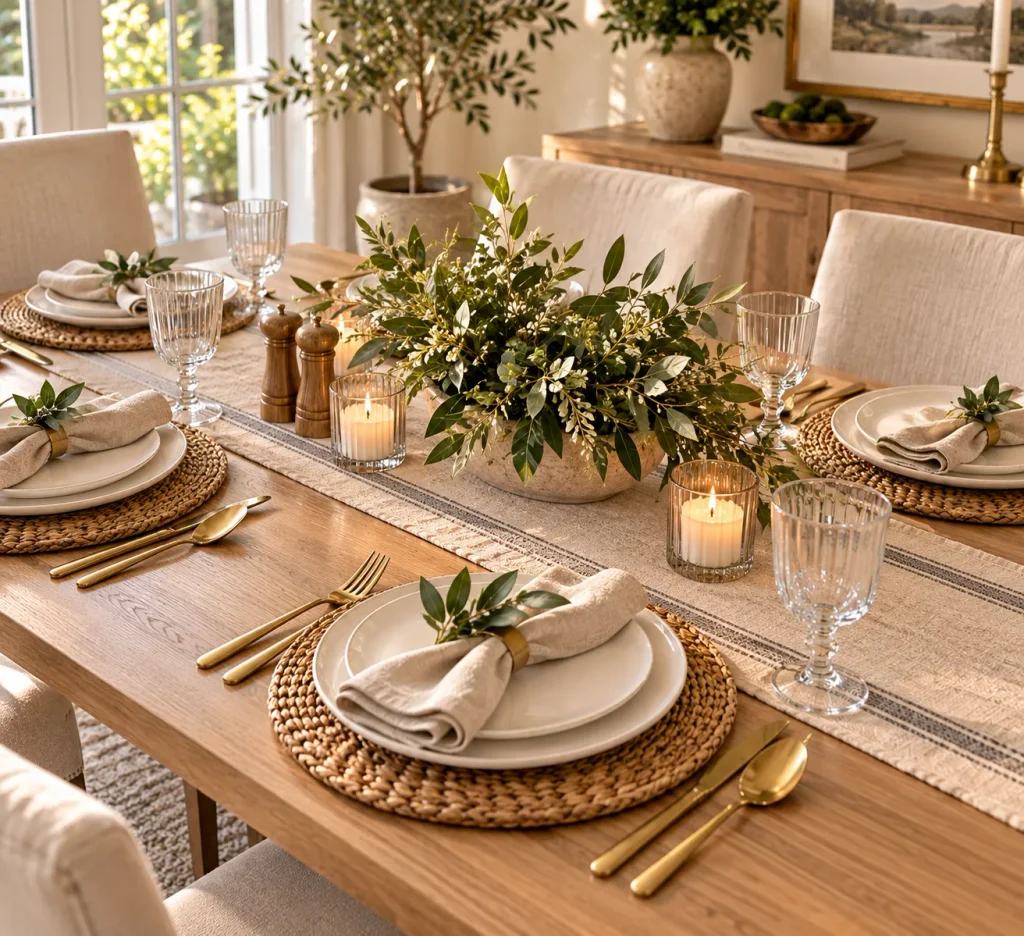
A charger plate gives each place setting a stronger foundation and adds texture beneath simple dinnerware. Woven, wood, rattan, ceramic, and metallic finishes can all work, depending on the room’s style. Keep the charger slightly larger than the dinner plate so a visible border frames each setting without crowding the table.
Pair textured chargers with smooth plates for an appealing contrast. I’ve noticed that woven chargers are particularly useful in neutral rooms because they introduce pattern without adding a busy print. They can also help define each guest’s space, making a long table feel more organized while leaving enough room for serving dishes.
Elegant Serving Tray
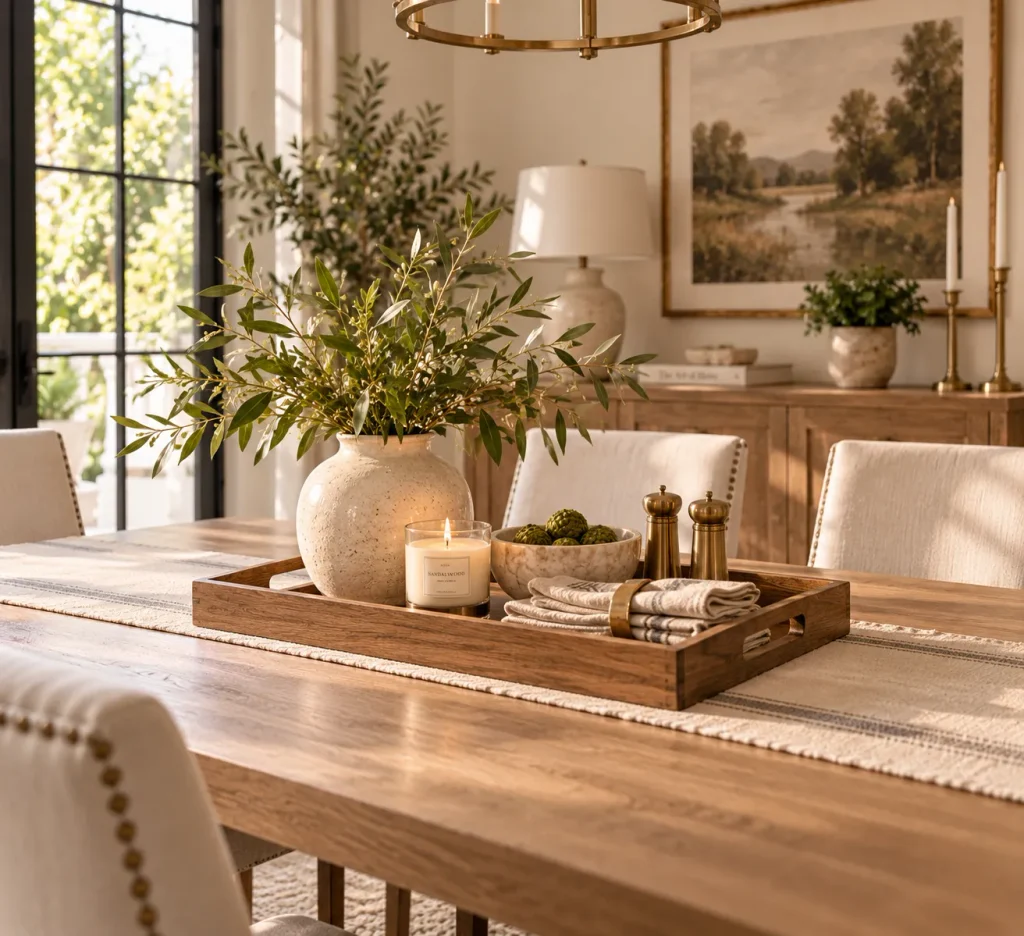
- Choose a tray with handles if you frequently move the centerpiece before meals.
- Keep decorative items grouped within the tray instead of spreading them across the table.
- Combine one tall piece with two lower objects for balanced height.
- Match the tray material with another finish already present in the dining room.
- Leave open tabletop space around the tray for serving dishes and glasses.
A serving tray makes a decorative arrangement easier to manage, especially in dining rooms that switch between everyday meals and entertaining. Place the tallest object toward the center or back, then add smaller pieces around it. This keeps the composition attractive while allowing the entire display to be moved in seconds.
Ceramic Fruit Display
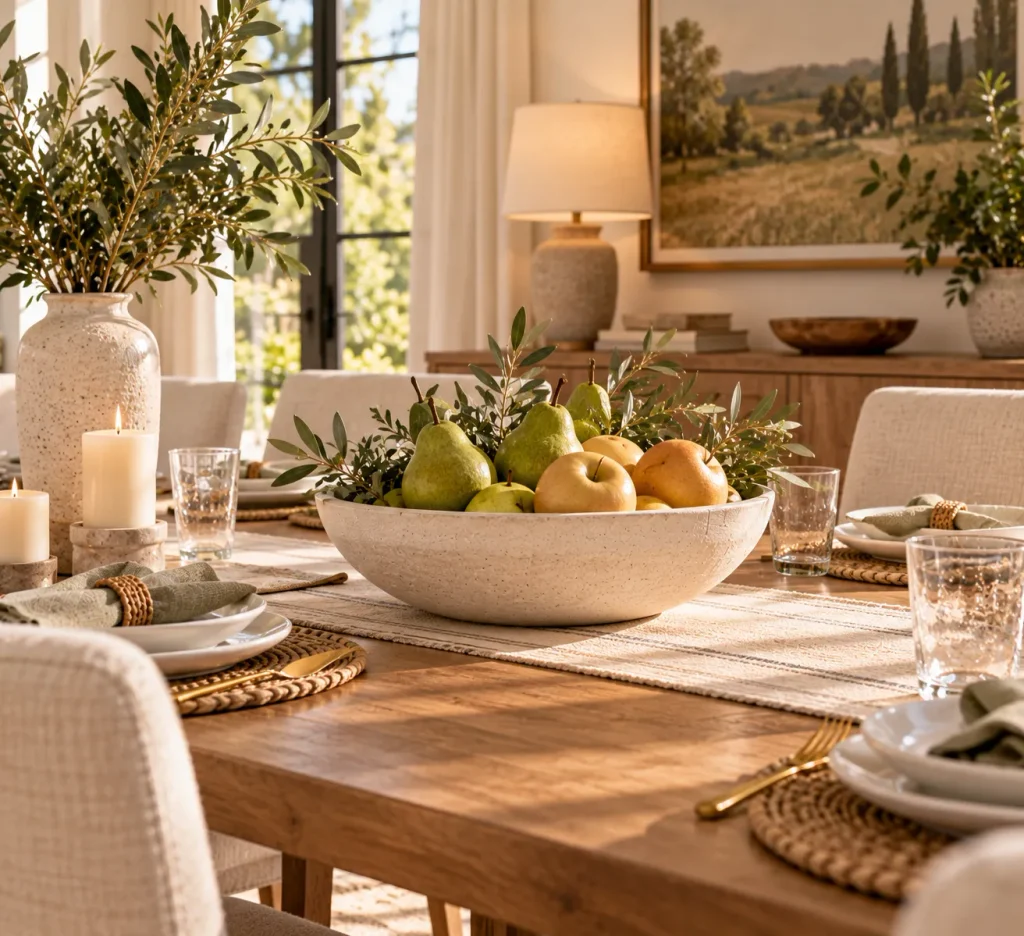
Cost: Low to Moderate | Time: 10 minutes | Skill Level: Beginner
Best For: Everyday dining and casual entertaining
Works In: Wood, marble, and glass tables
Result: Fresh color with practical function
A bowl of seasonal fruit adds color while keeping the centerpiece useful. Choose fruit with related tones, such as green pears and apples, or use citrus for a brighter accent. A wide ceramic bowl gives the arrangement enough visual weight without creating a tall obstacle between guests.
Natural Linen Layers
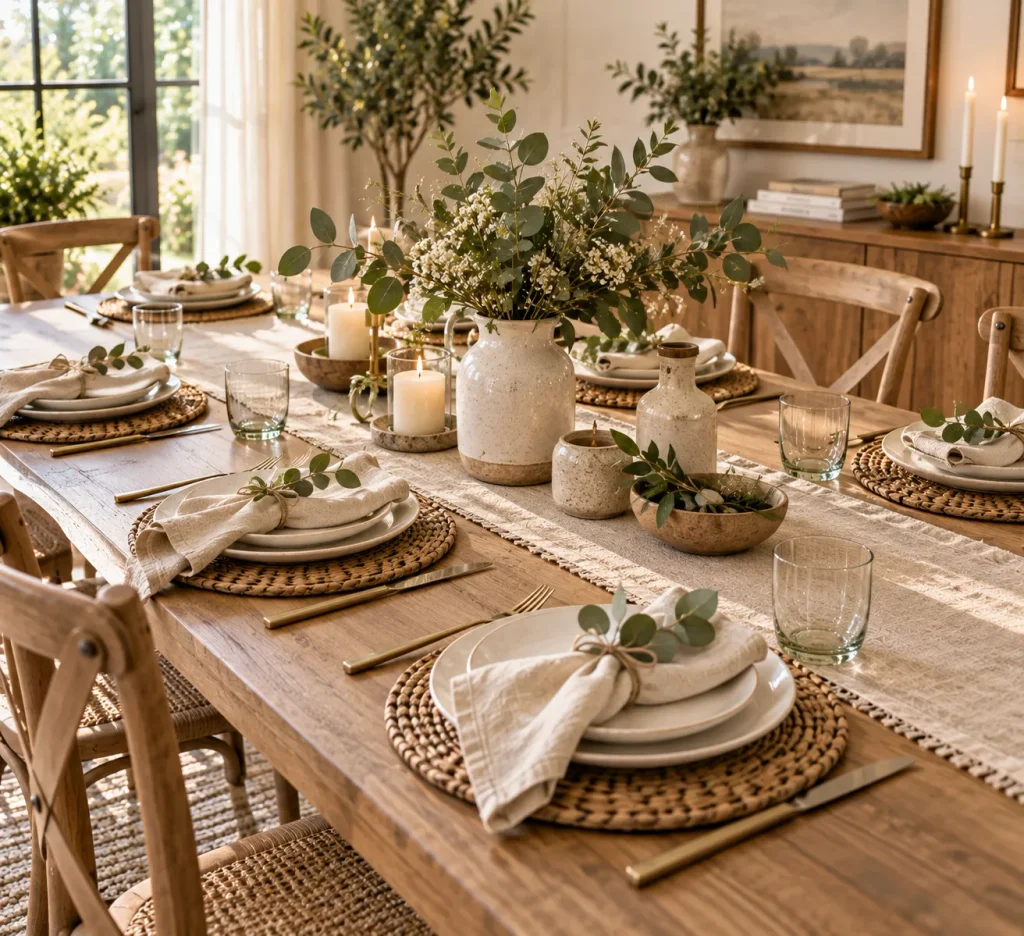
Soft linen layers bring warmth and texture without making the table feel overly formal. Start with a neutral runner, then repeat the fabric through napkins or placemats. Keep the colors close in tone but vary the textures slightly so the setting has depth without becoming visually busy.
For gatherings, natural linen also hides small creases and everyday marks better than very smooth fabrics. I’ve noticed that leaving some wood visible around the edges makes layered textiles feel lighter. Fold napkins simply, keep the centerpiece low, and let the natural texture become part of the overall design.
Coordinated Tableware
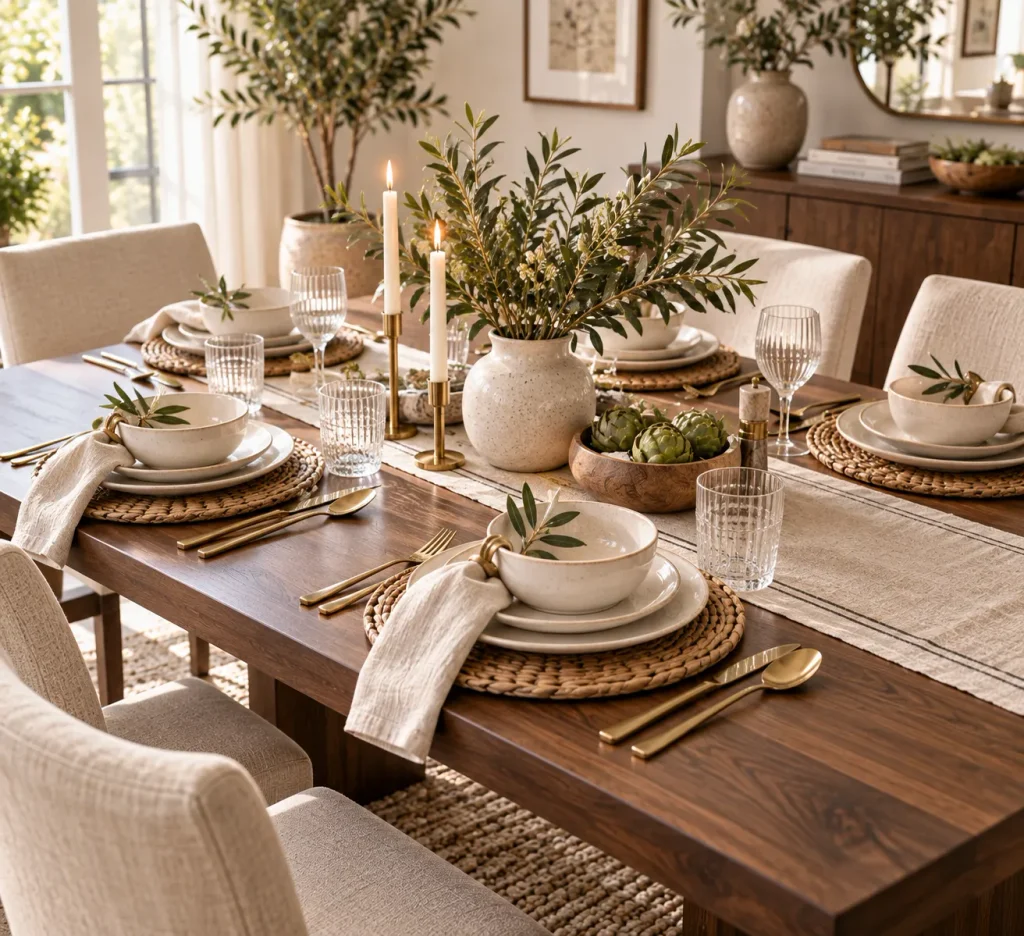
- Match your dinnerware to the room’s existing color palette.
- Repeat one finish, such as matte ceramic or subtle glazed edges.
- Keep glassware simple when plates have decorative details.
- Coordinate napkins with one tone from the tableware.
- Store special pieces separately if they are reserved for entertaining.
Cohesive tableware makes a dining setting feel intentional before any centerpiece is added. Matching does not mean every piece must be identical. A shared color, finish, or shape is often enough to connect different items. This approach also makes future additions easier because new pieces can follow the same visual direction.
Low Centerpiece Bowl
Quick Tip:
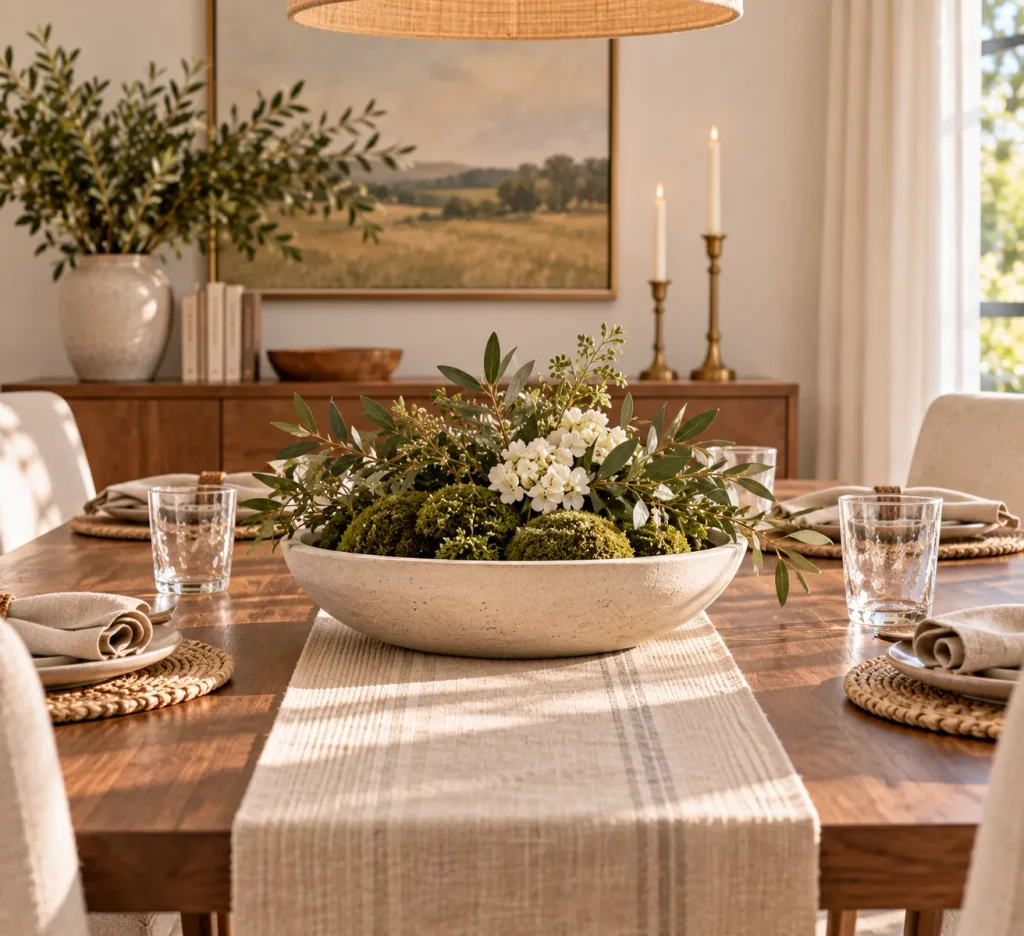
Choose a bowl that stays below eye level when guests are seated. Fill it lightly with greenery, seasonal stems, decorative stones, or fruit, depending on the occasion. Keep the surrounding tabletop mostly clear so the centerpiece remains noticeable without interfering with conversation or serving dishes.
A low bowl is one of the easiest ways to create a defined centerpiece while keeping the table functional. Its broad shape provides visual weight without adding excessive height. I’ve noticed that shallow vessels work especially well for everyday meals because they can remain in place while plates, glasses, and serving dishes are arranged around them.
CONCLUSION
A welcoming table does not need to be complicated. The ideas in this guide show how simple layers, natural textures, thoughtful centerpieces, and coordinated tableware can create a setting that feels polished while remaining practical.
The best dining table decor reflects the way you actually live and entertain. Choose details that make serving easier, leave enough room for guests, and add personality through colors and materials you genuinely enjoy. I’ve seen how small changes, such as fresh greenery or textured napkins, can completely change the atmosphere of a meal.
Save this article to Pinterest for your next decorating project, try one or two ideas this week, and share it with someone who loves hosting. A beautiful table starts with a simple idea and a little creativity.