
25 Smart Kitchen Organization Ideas That Save Space
Small kitchens fill up fast. One busy morning, mugs crowd the counter, lids hide in a deep cabinet, and cooking feels harder than it should. Good kitchen organization changes that daily rush into a calm routine where every pan, jar and utensil has a clear home. These 25 ideas focus on space you already own, from the inside of a cabinet door to the quiet strip of wall above the sink. Most need no tools, cost very little, and suit renters as well as homeowners. Pick two ideas this week, finish them fully, and notice how much lighter the room feels when dinner prep stops feeling like a hunt.
Clear Countertop Zones

Counters shrink when every appliance claims a daily place there. Keep only the items used every day near the stove and sink, then move the rest into cabinets or drawers nearby. A narrow tray holds soap, oil and salt in one tidy group.
Clear zones give chopping, kneading and serving a proper stage. Leave one stretch empty beside the stove for hot pans, and one near the sink for draining dishes. In my experience, that one empty stretch changes cooking more than any new gadget could. Simple wins like this invite calmer cooking.
Vertical Shelf Risers
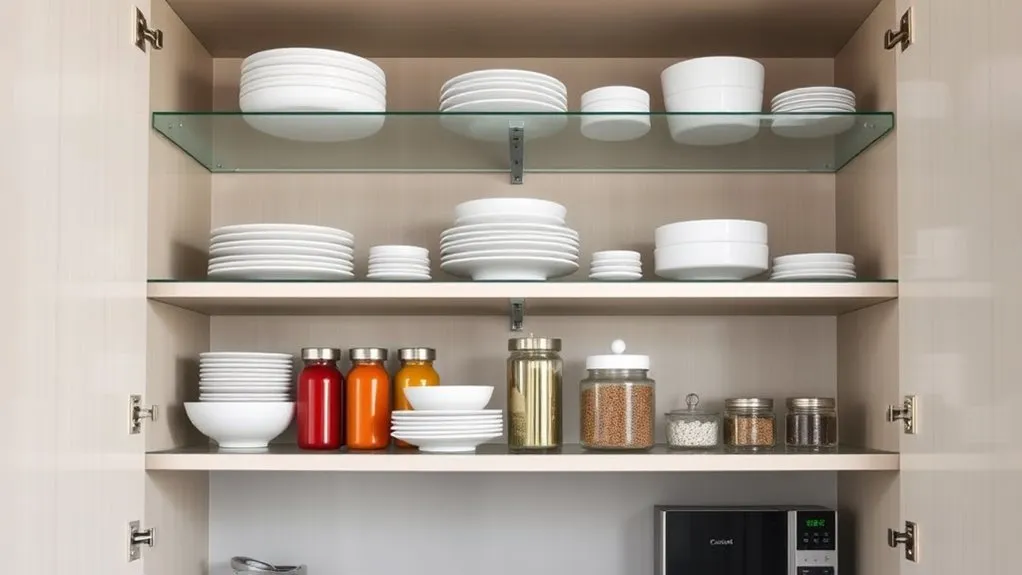
- Place a riser inside a tall cabinet to split one high shelf into two useful levels.
- Store daily bowls on the lower level and spare glasses on the upper level.
- Choose a steel riser that carries weight without bowing in the middle.
- Measure the cabinet height first, leaving room for tall mugs above.
- Keep the front edge clear so each item slides out without lifting others.
Risers turn wasted air above plates into real storage without a single screw. Short stacks stay stable, labels stay visible, and reaching the back row stops being a balancing act. Kitchens with one tall cabinet gain the most, because everyday dishes sit closer to hand and the whole shelf reads clearly at a glance.
Cabinet Door Racks

Quick Tip:
Fit a slim rack inside the cabinet door under the sink and load it with spray bottles and spare sponges. Small hooks on the frame hold it firm, so nothing rattles when the door closes during daily use at home.
Door racks rescue the flat space most households ignore for years. Cleaning cloths, bin bags and measuring cups fit there in neat rows, close to where hands need them. Renters like this fix because it lifts off in seconds, leaves no marks, and moves house with them without any lasting fuss at all.
Deep Drawer Dividers

BEFORE: A deep drawer holds pans, boards and boxes in one sliding heap. Lids clang at every search, and the heaviest pan always settles at the bottom.
AFTER: Adjustable dividers split the drawer into three calm lanes. Boards stand upright on one side, pans nest in the middle, and food boxes line up where eyes find them fast.
Dividers work because deep drawers fail at the sides, not the bottom. Vertical lanes stop items drifting into one pile whenever the drawer opens. Bamboo dividers suit heavy pans best, while spring loaded plastic ones fit lighter loads and cost less for a first try in a small rented home today.
Lazy Susan Turntables

- Empty the corner cabinet fully and wipe the base clean.
- Set a wide turntable in the centre, leaving a small gap at the edges.
- Group sauces, oils and jars by type so each spin shows one family.
- Place daily items at the front and spare refills behind them.
A turntable ends the dark corner problem where jars vanish for months. One slow spin brings the back row forward, so nothing expires unseen behind the pasta. I have noticed that a raised edge matters here, because round bottles roll during a fast spin and a lip keeps them safely in place.
Over Sink Drying Rack

DO
- Roll a rack across the sink so washed plates drip straight into the basin.
- Rest hot pans on the steel bars while they cool after cooking.
- Fold or roll the rack away when guests need a clear sink area.
DON’T
- Leave heavy cast iron sitting on it overnight.
- Block the tap swing with tall bottles at the back.
- Skip drying the bars, or water spots build up fast.
Sink racks earn their keep in kitchens with almost no counter beside the basin. Dishes dry in air that was doing nothing, and the counter stays free for food prep. Homes without a dishwasher feel the gain most, especially after family dinners when every plate seems to arrive at once together.
Stackable Pan Organizers
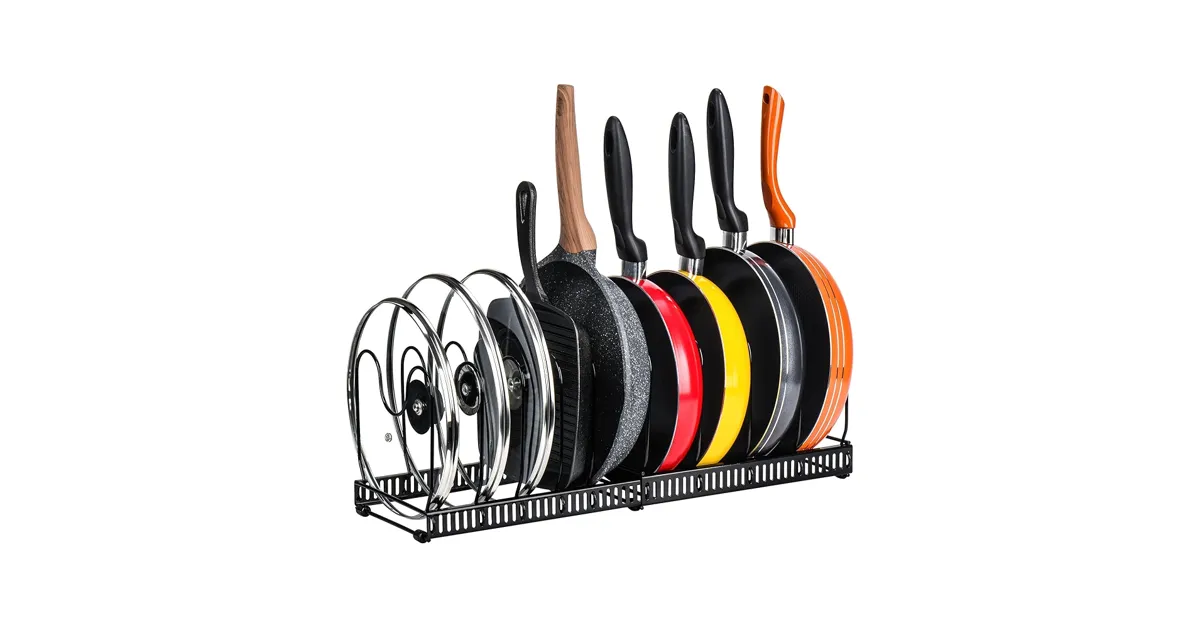
Cost: Low | Time: 20 minutes | Skill Level: Beginner
Best For: Heavy pans stored inside deep base cabinets
Works In: Small kitchens with one main cooking cabinet
Result: Pans lift out one by one, with no scraping
Stacked pans damage each other and test your patience at the same time. A rack that holds each pan on its own tier ends both problems in one move. Nonstick coatings last longer, lids stay paired with their pans, and a weekday omelette no longer starts with a loud rescue job from the cabinet.
Under Shelf Baskets
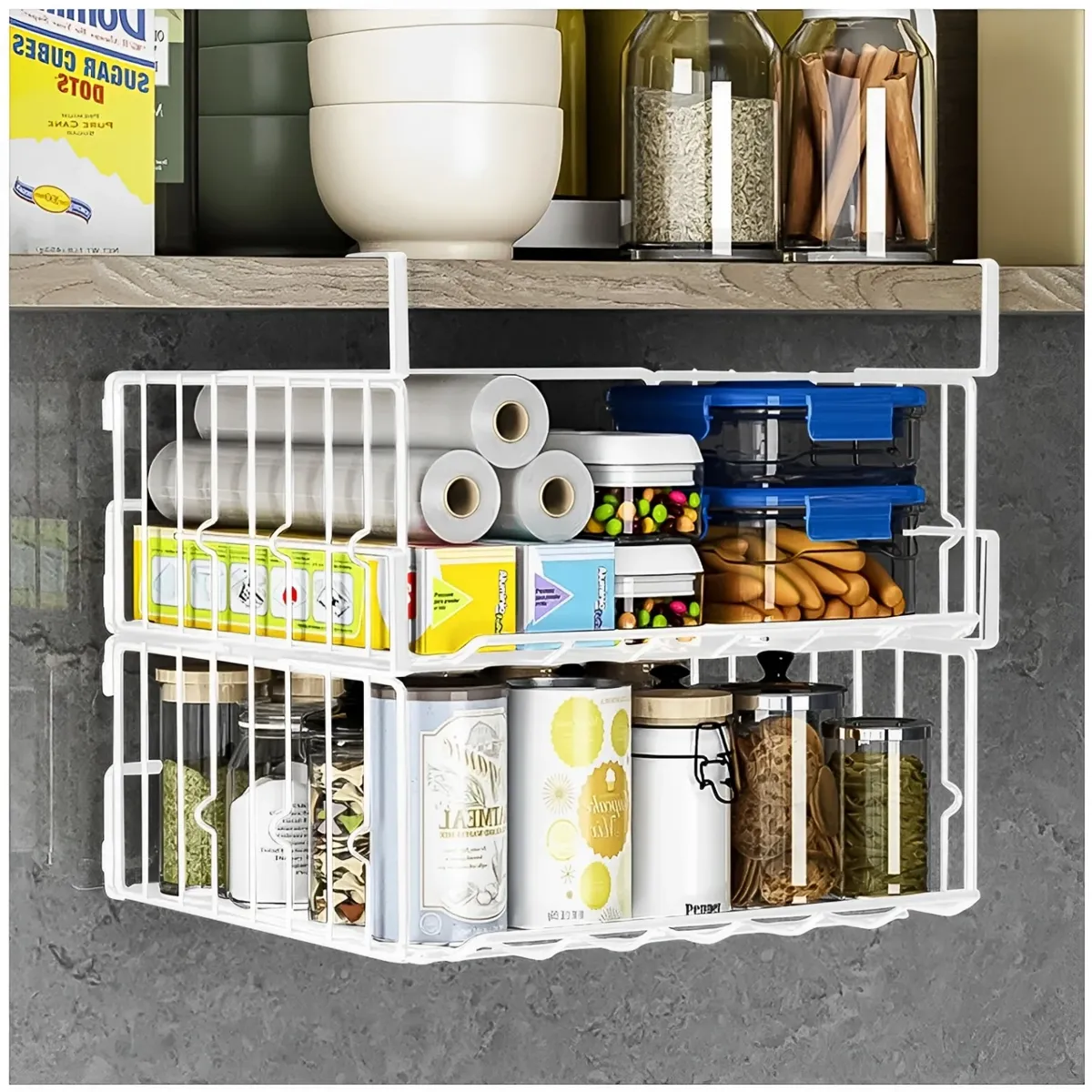
Baskets that clip under a shelf claim the gap between stored items and the shelf above. Slide one under a pantry shelf for wraps and foils. The frame grips the shelf edge, so the basket hangs level and pulls forward like a drawer when needed.
Light goods suit these baskets best. Tea, snacks, napkins and spice refill packs sit neatly without toppling, and the shelf below stays clear for taller jars. Measure the drop before buying, because a basket that hangs too low will crowd the items underneath and cancel the space it was meant to create for you.
Pull Out Cabinet Bins
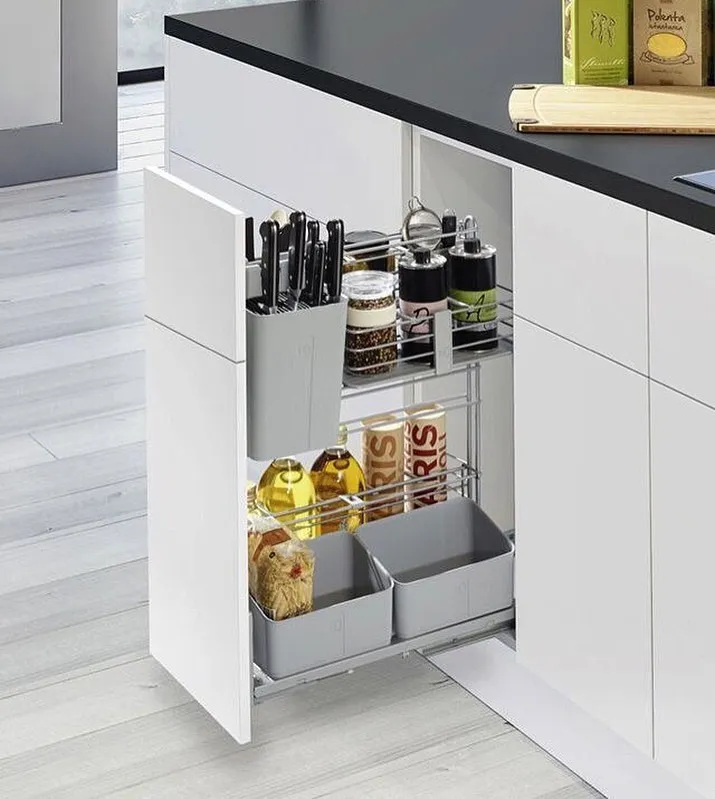
- Choose a frame that fixes to the cabinet floor with four screws.
- Load cleaning bottles into the bin below the sink for fast access.
- Keep bin bags and recycling in a second bin beside it.
- Slide the bin fully out before lifting anything heavy from it.
- Wipe the runners monthly so grit does not slow the glide.
Deep base cabinets swallow supplies at the back and return them months later. A pull out bin brings the whole load into daylight on smooth runners, so knees and backs stop paying for a spray bottle. Under sink storage improves most, since leaks show early and every bottle stands where eyes can check it.
Spice Drawer Inserts

Quick Tip:
Lay spice jars in a shallow drawer near the stove, labels facing up, in rows by cooking style. One glance shows the full set, and an empty slot shows exactly which jar needs a refill this week soon.
Flat storage beats a crowded spice cupboard every single time. Jars stop hiding behind each other, blends stay dry away from steam, and measuring spoons rest in the same drawer. Smaller households gain plenty here, because a single shallow drawer near the hob often holds the whole collection with room left over.
Wall Mounted Spice Racks

BEFORE: Spice jars crowd a worktop corner and fall whenever a bottle moves. Cooking slows while hands hunt for cumin among near matching labels.
AFTER: A slim rack on the wall holds every jar at eye level in one row. Labels face out, sunlight stays off the spices, and the worktop below returns to food prep.
Wall racks suit narrow kitchens where drawer space belongs to cutlery and tools. Spices stay close to the stove but off the counter, which suits daily cooks well. Fit the rack on a cool wall away from direct hob heat, because warmth fades flavour over time and dulls colours in ground spices noticeably.
Clear Pantry Jars
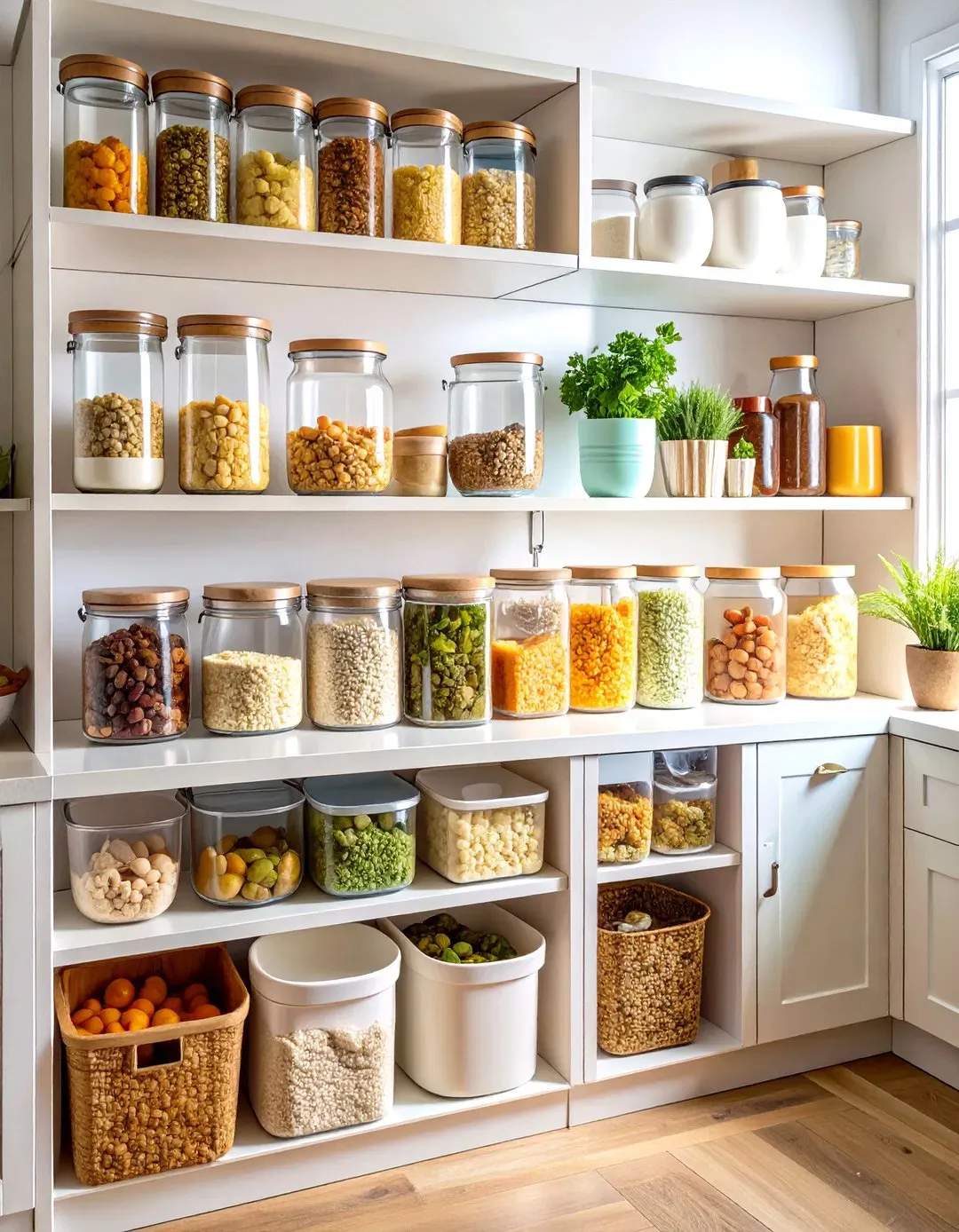
- Wash and fully dry each jar before filling it with dry goods.
- Decant flour, rice and pasta, then note the cooking time on a small label.
- Group jars by meal type, breakfast goods together and baking goods together.
- Keep one spare jar empty for bulk buys that arrive midweek.
Glass jars end the mystery bag problem in a pantry within one afternoon. Contents show at a glance, scoops move faster, and shopping lists write themselves when levels run low. I have seen this work well in family homes, where clear jars also stop double buying of rice, lentils and breakfast oats.
Tiered Can Storage

DO
- Stack cans on stepped shelves so back rows stay visible.
- Put the oldest cans at the front for first use.
- Group soups, beans and vegetables on separate steps.
DON’T
- Mix pet food cans in with family food storage.
- Build stacks higher than three cans on a flat shelf.
- Hide new cans behind older ones during a big shop.
Stepped shelves fix the pantry blind spot where cans hide and expire quietly. Each row sits higher than the one in front, so a weekly shop slots in without a full reshuffle. Budget focused homes waste less food this way, and meal planning gets easier when the full can stock shows in one look.
Hanging Fruit Baskets

Cost: Low | Time: 15 minutes | Skill Level: Beginner
Best For: Fruit that usually fills a whole counter bowl
Works In: Kitchens with a spare wall hook or rail
Result: Counters clear and fruit stays in plain sight
Fruit bowls look sweet, yet they eat a large patch of precious counter. A hanging basket lifts apples and oranges into the air, where they ripen in view and get eaten sooner. Children reach the lowest tier easily, and the freed counter space goes back to chopping boards, mixing bowls and morning coffee making.
Magnetic Knife Strip

A knife block swallows counter space and hides dirty slots inside. A magnetic strip on the wall holds blades in air instead, visible and dry. Mount it away from the sink splash zone and high enough that small hands cannot reach the lowest handle during family cooking hours.
Blades stay sharper when they never knock against other tools in a drawer. The strip also frees a whole drawer for utensils that need one. Fit it into studs or solid brick where possible, because a loaded strip carries weight and a firm fixing keeps every knife steady for years.
Under Cabinet Hooks

- Screw a short hook rail under a wall cabinet near the sink.
- Hang mugs by their handles in one even, spaced row.
- Keep a small towel on one end hook for quick hand drying.
- Leave a gap behind the row so cabinet doors open fully.
- Check the rail fixings each season and tighten any loose screws.
Hooks claim the hollow space under cabinets that most kitchens waste daily. Mugs dry faster in open air, cabinet shelves gain room for plates, and morning coffee feels calmer with every cup in view. Short rails suit renters with permission to screw, while strong adhesive rails give a no drill route in many homes.
Corner Cabinet Solutions
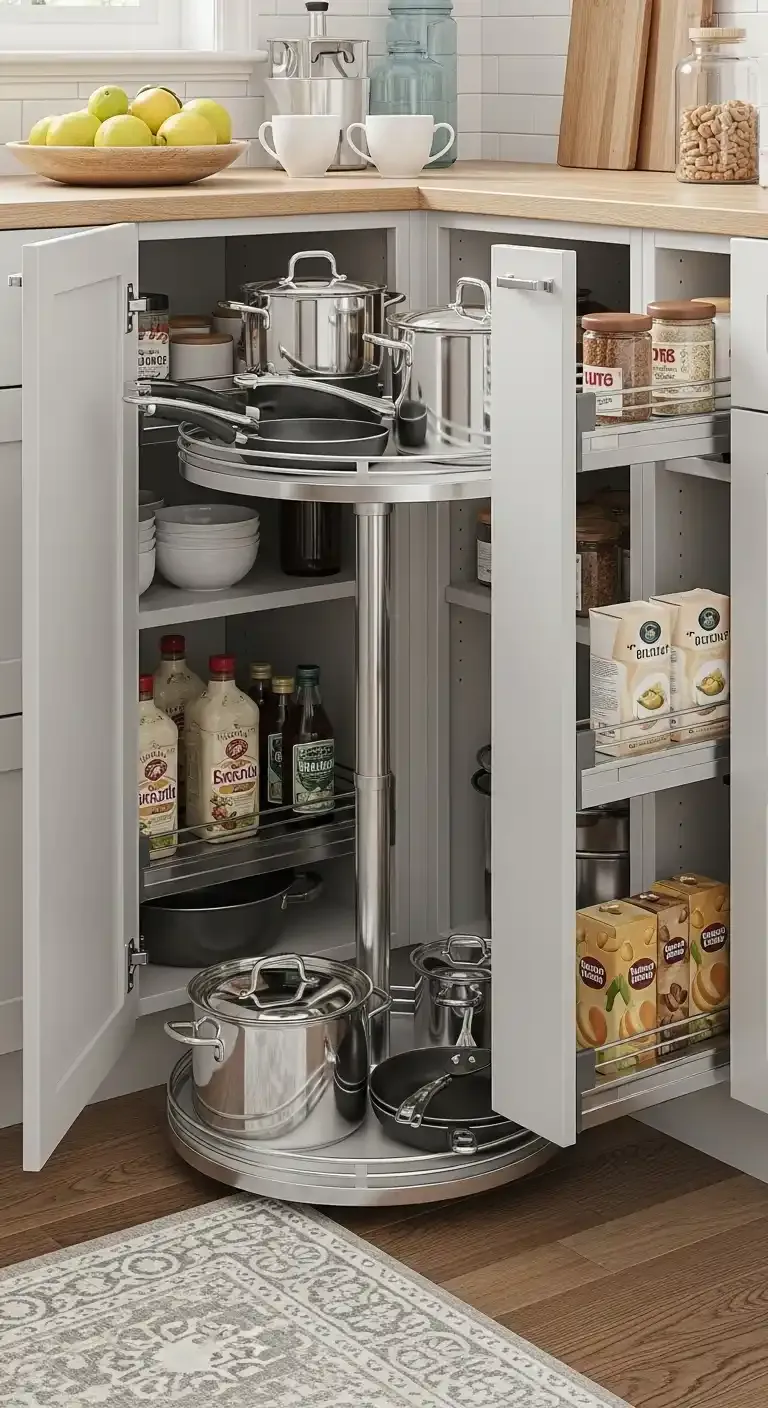
Quick Tip:
Store the least used baking trays and seasonal dishes in the deepest corner, then keep weekly items at the front edge. A low basket acts as a drawer, sliding the whole group out in one pull every time.
Corner cabinets punish anyone who stores daily goods at the back. A basket, a half moon shelf or a simple tray gives that depth a handle, so contents move as one unit. Seasonal and party pieces belong there, while daily pans deserve a spot where knees never touch the floor during cooking.
Appliance Garage Corner

BEFORE: A toaster, blender and kettle spread across the main counter in a loose row. Cords tangle, crumbs gather, and prep space shrinks to a narrow strip.
AFTER: One corner holds all three appliances behind a simple screen or under a cover. Cords coil in a small box, and the counter in front stays clear for cooking.
A grouped corner keeps daily machines plugged in but out of sight. Breakfast stays fast, cleaning gets easier, and the eye reads one calm corner instead of three clashing shapes. Kitchens open to the living room gain the most, since the tidy corner keeps the whole shared space feeling settled during the day.
Rolling Kitchen Cart

- Load heavy jars and tins on the lowest shelf for balance.
- Keep oils, sauces and daily spices on the middle shelf.
- Reserve the top for prep, with a board that fits the surface.
- Lock the wheels before chopping or pouring anything hot.
- Park the cart in the widest gap, never against the oven door.
A cart adds storage that moves where the work happens each day. Parked beside the counter, it works as extra prep space, then rolls aside for cleaning. Renters gain a full pantry shelf with no building work, and small homes gain a flexible station that adapts when guests arrive for dinner at home.
Over Door Pantry Rack

DO
- Hang a rack on the pantry door for packets, wraps and light jars.
- Put daily snacks at eye level for fast packing.
- Add a felt pad where the frame meets the door.
DON’T
- Load glass jars on the top tier above head height.
- Slam the door, or items will shift and rattle.
- Fit a rack on a door that cannot carry extra weight.
Door racks double a pantry without touching a single wall or shelf. Light goods spread across six or seven tiers, so shelves below can hold heavy jars and appliances. Families packing lunches daily feel the benefit first, because wraps, bars and packets line up in one place near the kitchen door each morning.
Sink Caddy Station

Cost: Low | Time: 10 minutes | Skill Level: Beginner
Best For: Soap, brushes and sponges beside a busy sink
Works In: Any kitchen with a small ledge by the tap
Result: A dry, tidy sink edge with no puddles
Wet sponges left on the counter stain surfaces and smell stale fast. A raised caddy with drainage keeps soap, brush and sponge in one washable home above the sink. The counter wipes clean in seconds, and guests never face a soggy sponge when they offer to help with dishes after dinner together.
Lid Storage Rack

Pot lids steal more room than the pans they belong with. A rack files each lid upright in its slot, like books on a shelf. Set the rack inside a deep drawer or on a cabinet floor, sorted by size, so the right lid shows at once during cooking.
One sort ends the lid rattle that fills small kitchens at dinner time. Lids stop chipping pan edges, and the saved floor space fits a roasting tray as well. Keep the rack near the hob, because a lid hunt wastes the minutes when timing matters most for dinner.
Labeled Storage Baskets

- Sort pantry goods into baskets by meal, baking, breakfast and snacks.
- Clip a clear label on the front edge of each basket.
- Size baskets to the shelf depth so no gap hides behind them.
- Keep one basket free for new shopping that needs sorting later.
- Review labels each season and rename baskets as habits change.
Labels end the family question of where anything lives in the pantry. Baskets pull out like drawers, so the back of a deep shelf stays in reach, and children can pack snacks without emptying a whole shelf. Plain baskets in one colour keep the view calm, even when the contents vary week by week.
Toe Kick Drawer

Quick Tip:
Fit a shallow drawer in the plinth below the base cabinets and store flat trays, baking sheets and the good table linen there. That hidden strip under the cabinets is deep enough for flat items in most fitted kitchens today.
Flat goods are the hardest items to store well in a small room. A toe kick drawer gives them a home that uses space no other storage claims, and it opens with a gentle push. Baking days feel easier when every tray rests in one flat layer, not wedged behind heavy pans elsewhere.
Ceiling Pot Rack
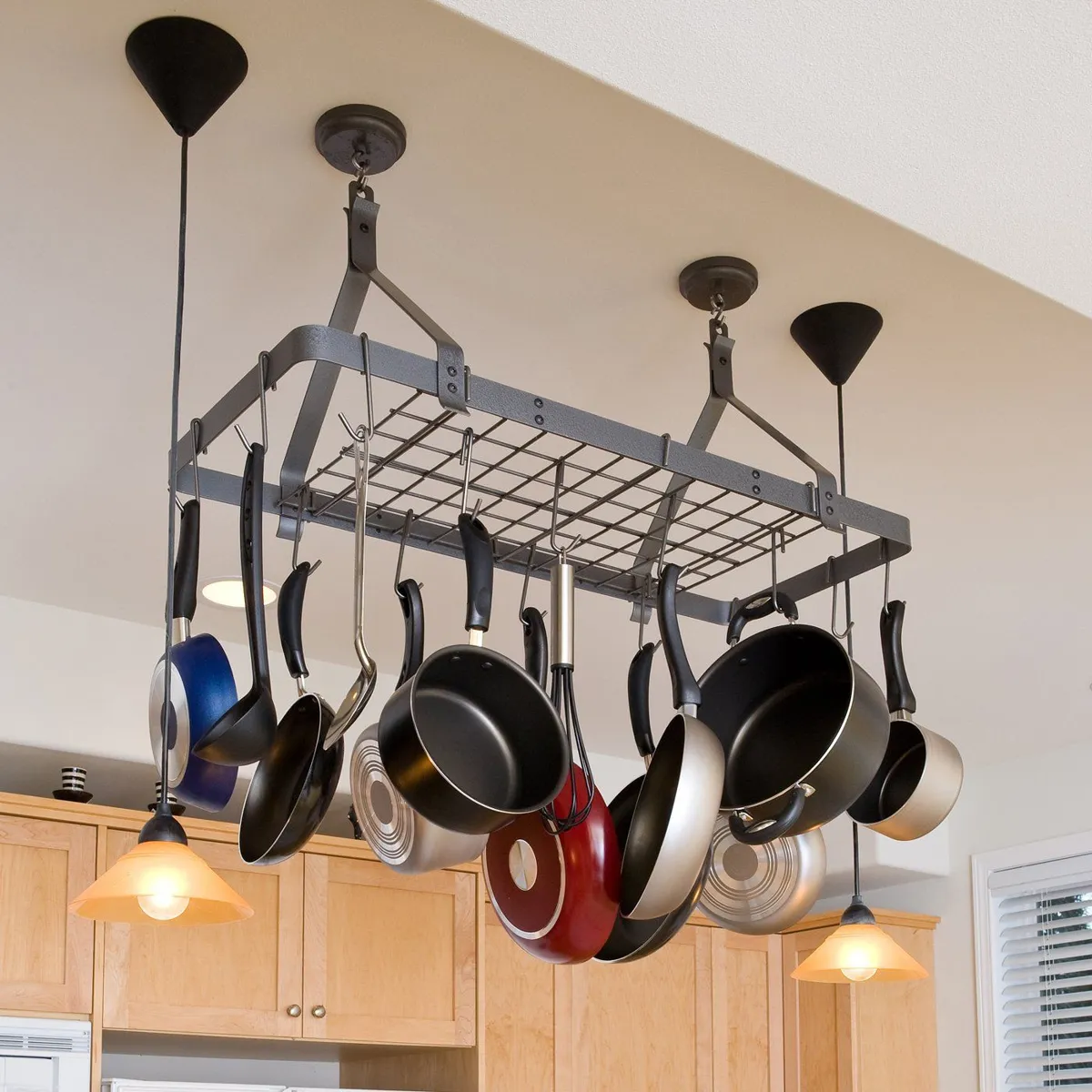
BEFORE: Pots and pans fill two cabinets and still spill onto the stove. Cooking starts with lifting, stacking and loud shifting of heavy metal.
AFTER: A ceiling rack holds the full set overhead in open view. Hooks space each pan apart, cabinets below free up, and the daily pan hangs within easy reach.
Overhead storage suits kitchens with high ceilings and strong joists for fixing. Pots dry in the air after washing, and their shapes add character above the cooking zone. Keep the heaviest cast iron at the sides of the rack, where the frame carries weight best and hands can lift it down safely.
Conclusion
Small wins stack up fast in a hard working room. One clear counter, one sorted drawer and one honest pantry shelf already change how cooking feels each day. Sound kitchen organization is not about buying a full matching set, it is about giving daily items a home that fits real life. Save this post on Pinterest for your next free hour, pick one idea from the list, and finish it fully before moving on. Share it with a friend whose cabinets need the same care. I have seen how small changes like these can shift a whole morning for the better.
4 Comments