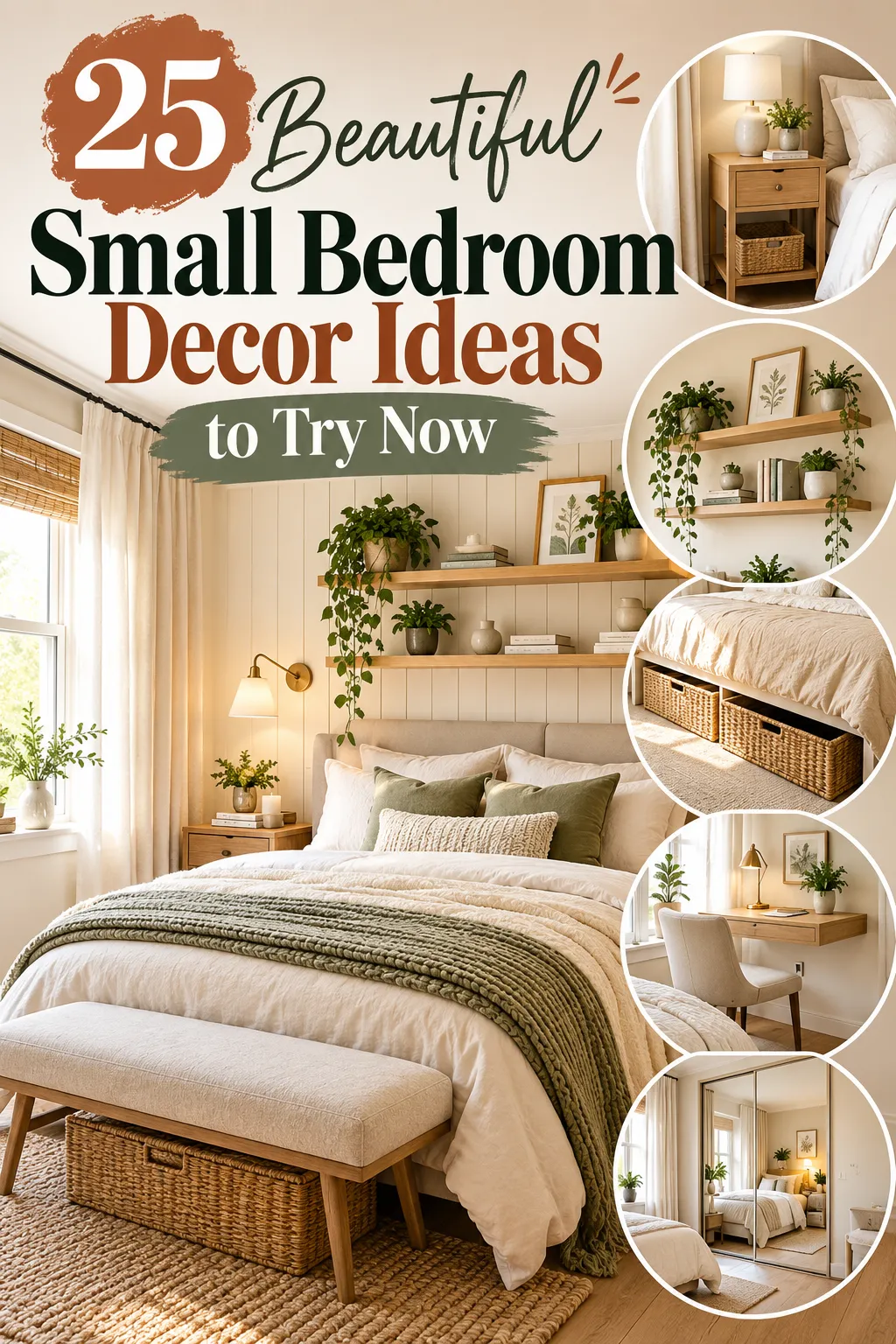
25 Beautiful Small Bedroom Decor Ideas to Try Now
Small bedrooms can feel challenging, but the right details can make every corner work harder. Small bedroom decor is all about creating comfort, function, and style without making the room feel crowded.
Whether you’re working with a tiny rental, a compact guest room, or a bedroom that simply lacks storage, thoughtful choices can make a noticeable difference. From slim furniture and clever storage to soft bedding, useful wall space, and light colors, these ideas focus on practical changes that still feel beautiful.
In my experience, small rooms often benefit most from simple solutions rather than adding more furniture. A floating surface can replace a bulky table, while vertical storage can free valuable floor space. I’ve noticed that when every piece has a purpose, the whole room feels calmer and easier to enjoy.
Keep reading for 25 practical ideas that can help you create a bedroom that feels organized, comfortable, and personal.
Slim Bedside Table
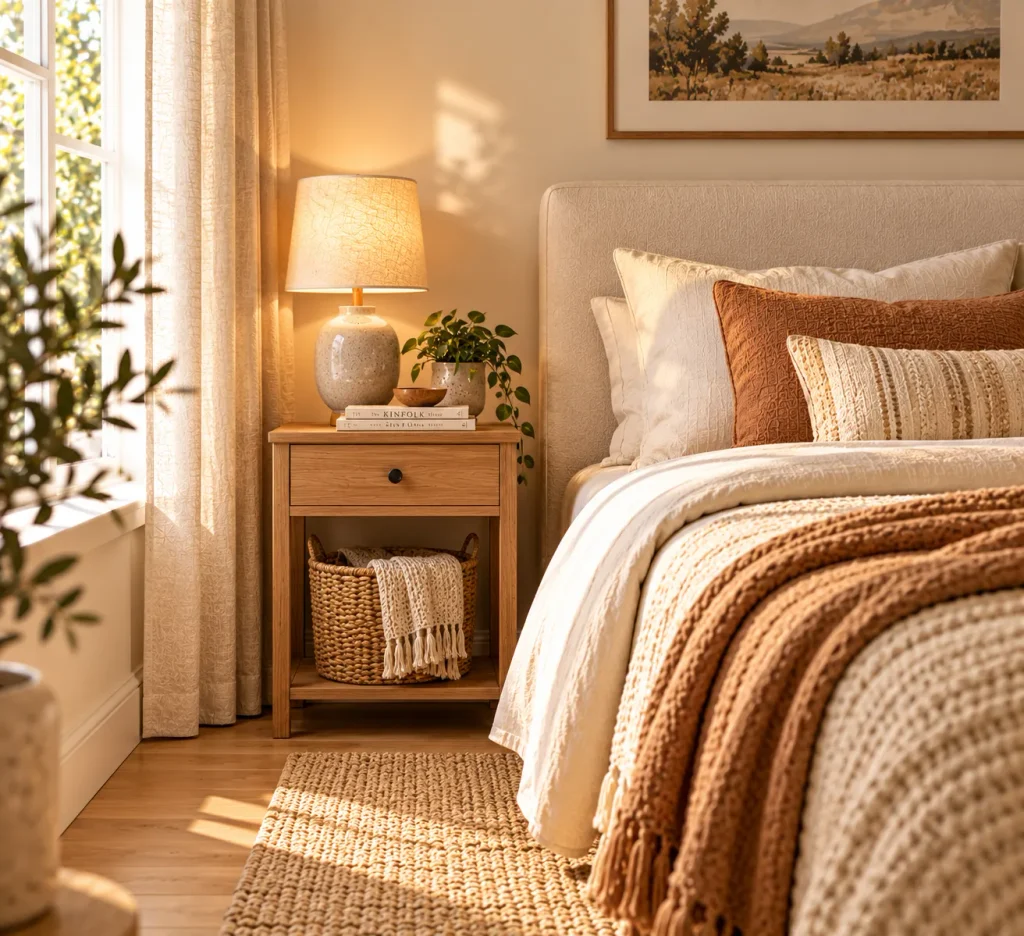
A narrow bedside table can give you the surface you need without crowding the space beside the bed. Look for a design with slim legs, a compact drawer, or a shelf underneath. Keep only useful items nearby, such as a lamp, book, water glass, and small decorative piece.
Measure the gap beside your bed before shopping so drawers and doors can open comfortably. In my experience, a table around 16 to 20 inches wide can provide enough surface for essentials while preserving circulation. Choose a finish that repeats another wood or neutral tone in the room for a connected look.
Wall Mounted Shelves
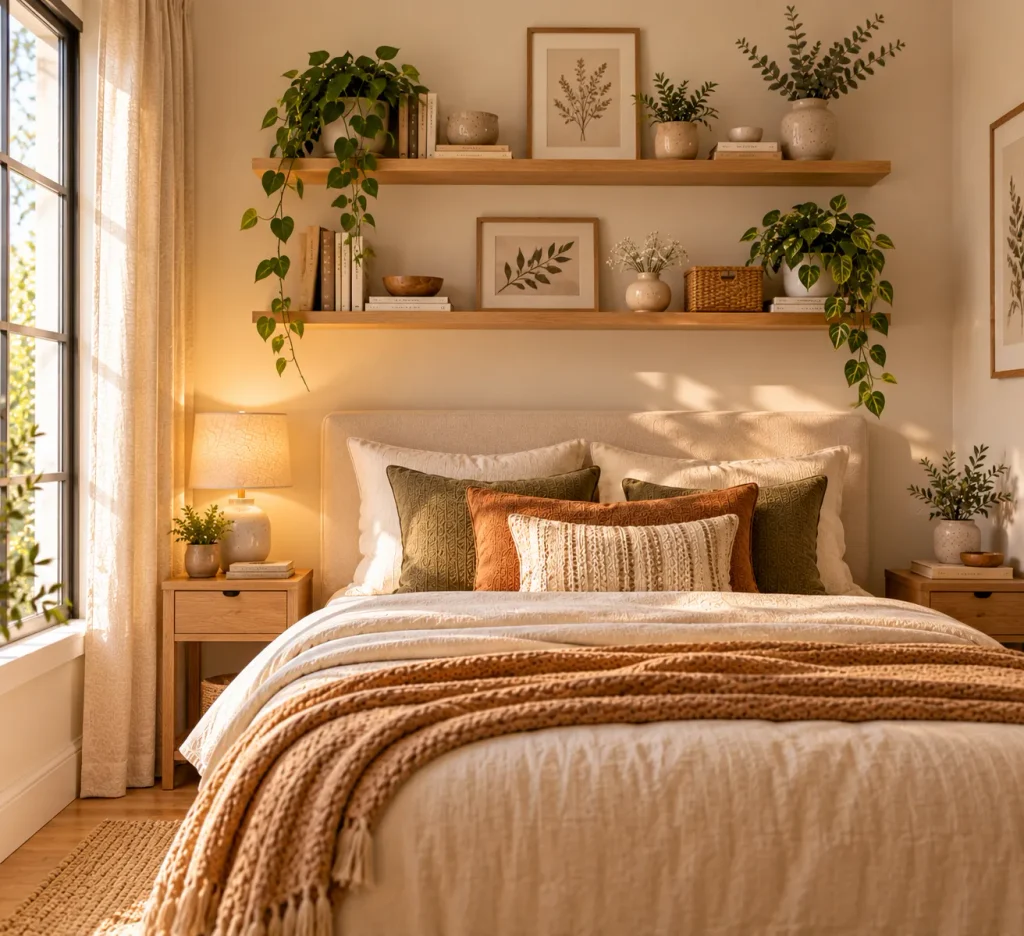
- Install shelves vertically to use wall height rather than valuable floor space.
- Keep shelf depth modest so the room retains comfortable circulation.
- Mix books, small plants, framed prints, and ceramics for visual variety.
- Leave open gaps between groups instead of filling every inch.
- Match the shelf finish with existing furniture for a cohesive look.
Floating shelves provide useful display space while keeping the floor clear. They work particularly well above a desk, dresser, or bedside area where a traditional cabinet might feel bulky. Keep heavier objects on lower shelves and lighter decorative pieces higher up. A few intentional groupings will look more polished than a crowded display.
More Content Read Now : 21 Creative Living Room Gallery Wall Ideas to Inspire
Soft Layered Bedding

Quick Tip:
Build bedding with two or three textures rather than adding many layers. Start with breathable sheets, add a lightweight duvet or quilt, then finish with one or two textured cushions or a folded throw. Keep the colors within a related neutral family so the bed feels calm rather than visually crowded.
Soft bedding can become the main comfort feature without taking additional floor space. Linen, cotton, quilted fabrics, and lightweight knits create subtle texture that makes the room feel more inviting. I’ve noticed that a restrained palette works especially well in compact rooms because the bed remains visually cohesive instead of becoming another busy focal point.
Under Bed Storage
BEFORE
A small bedroom can quickly feel crowded when blankets, shoes, or seasonal items have no dedicated storage. Floor-standing cabinets may solve the problem but consume valuable walking space.
AFTER
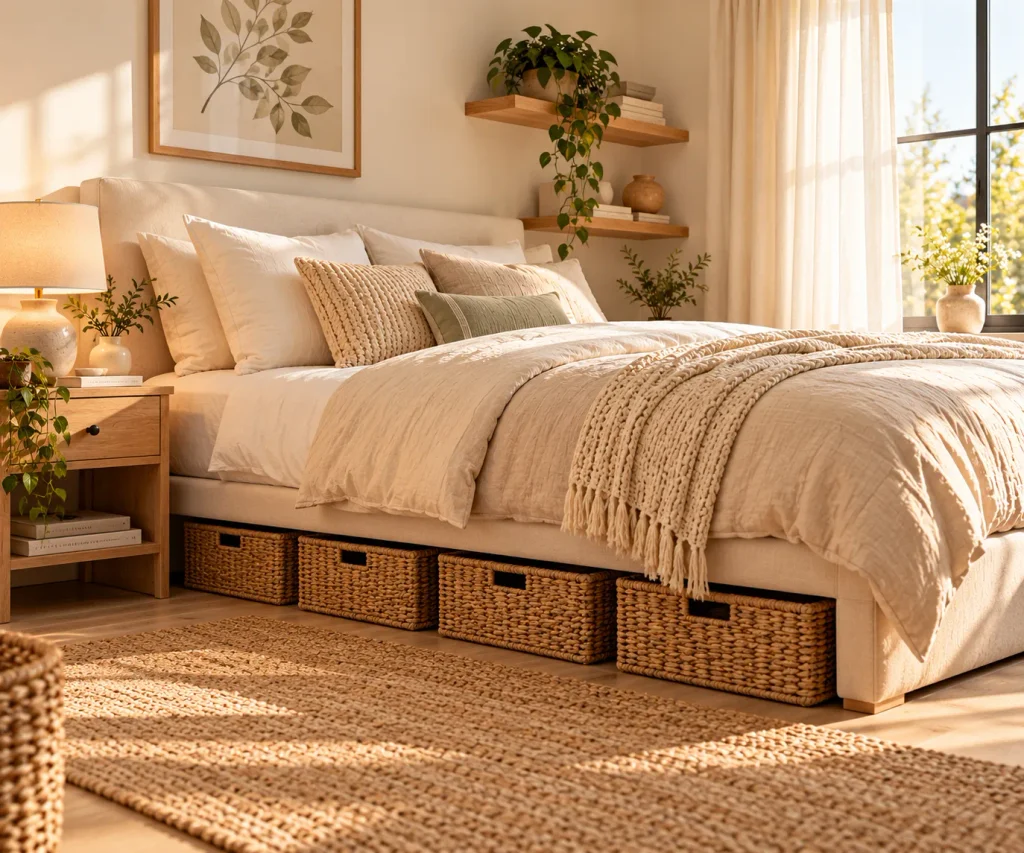
Using the area beneath the bed creates hidden storage without adding another bulky piece of furniture. Flat baskets, lidded boxes, or built-in drawers can keep belongings organized and visually out of sight.
Measure the clearance beneath the frame before buying containers. Choose baskets with handles for items you access regularly and lidded boxes for seasonal belongings. Keep categories separated so finding something does not require pulling everything out. A low-profile bed with built-in drawers can be especially useful when storage needs are significant.
Floating Nightstand
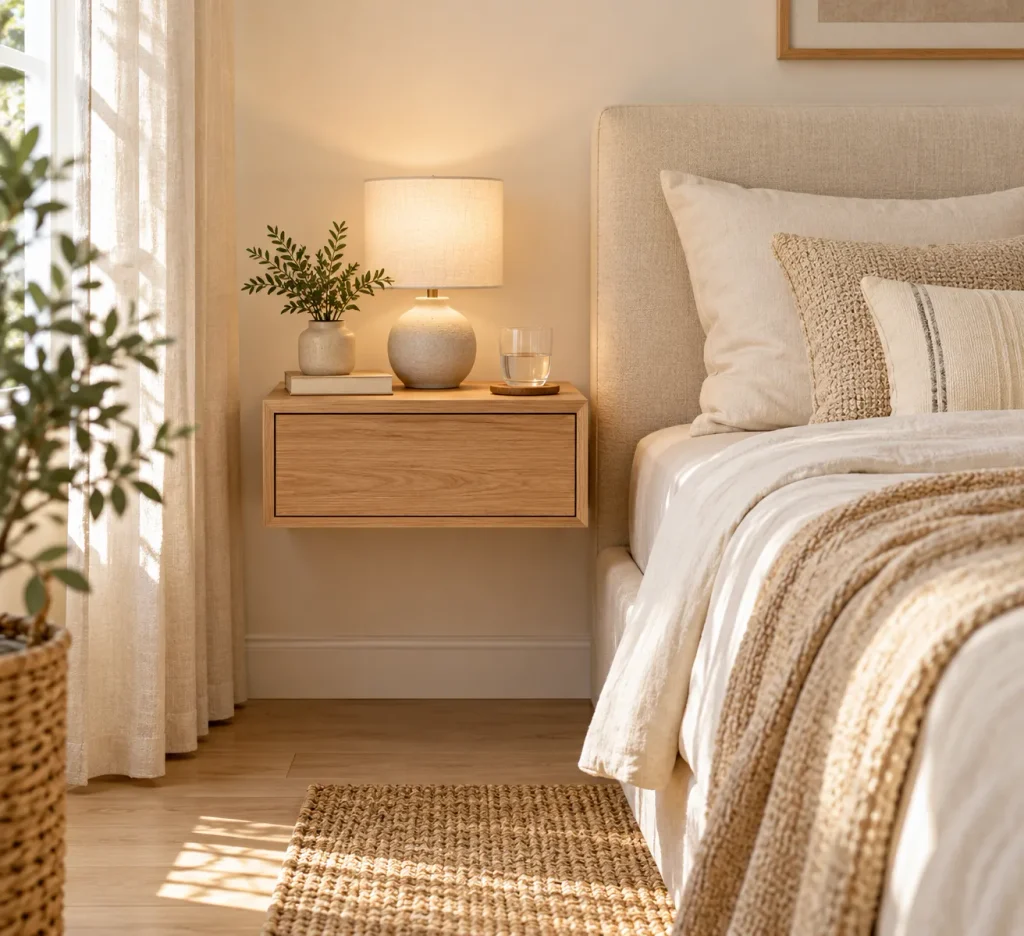
- Measure the wall space: Check the height and width available beside the bed before selecting the shelf.
- Choose a sturdy design: Select a floating nightstand with enough support for your lamp and everyday essentials.
- Keep the surface simple: Limit visible items to two or three useful pieces.
- Hide small items: Choose a model with a drawer or lower compartment if possible.
- Check clearance: Make sure the nightstand does not interfere with bedding or walking space.
A floating bedside surface keeps the floor visible, which can make a compact bedroom feel less crowded. Choose warm wood, white, or another finish that complements the bed. I’ve noticed that keeping the wall-mounted table visually light works best because the goal is to gain function without creating another heavy furniture block.
Lightweight Curtains
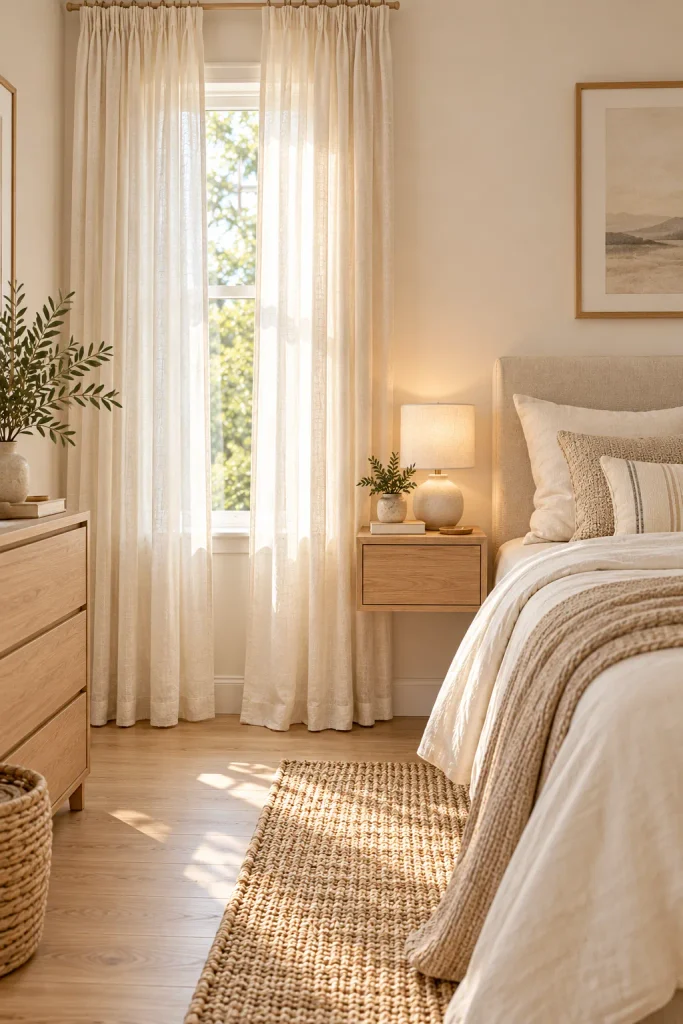
| Feature | Option A: Heavy Drapes | Option B: Lightweight Curtains |
| Light | Blocks more daylight | Allows gentle daylight through |
| Visual weight | Heavier | Lighter and airier |
| Best fabric | Thick cotton or velvet | Linen or cotton blend |
| Small room effect | Can feel enclosed | Helps maintain openness |
Lightweight curtains allow natural light to travel through the room while adding softness around the window. Linen and cotton blends are useful choices because they provide texture without looking bulky. Mount the rod slightly above the window frame and let the panels reach close to the floor for a longer, cleaner visual line.
More Info Read : 24 Stunning Living Room Decor Ideas That Wow Guests
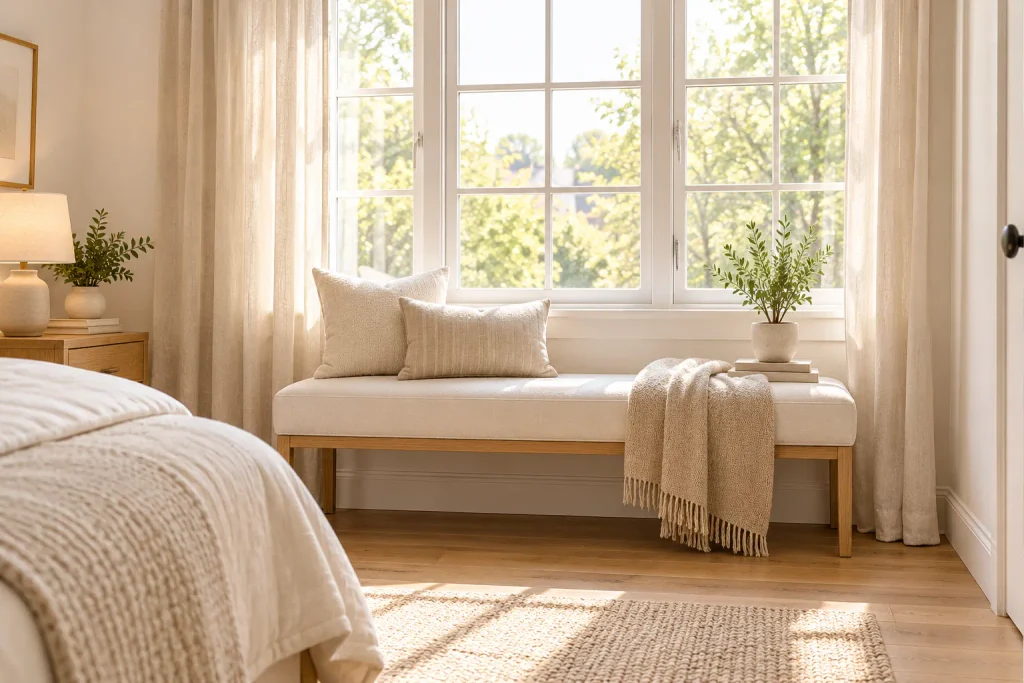
Under Window Bench
BEFORE
The area beneath a bedroom window can become wasted space when furniture cannot fit comfortably around the opening. Leaving it completely empty may also make the room feel unfinished.
AFTER
A narrow bench turns that unused section into a practical sitting or storage zone. Choose a low profile design that stays beneath the window and leaves the surrounding walkway open.
Look for a bench with a lift-up seat, drawers, or an open shelf if extra storage is useful. Keep the cushion simple and add one or two pillows for comfort. I’ve noticed that a bench works best when its width follows the window rather than extending far beyond it, keeping the arrangement visually contained.
Vertical Dresser
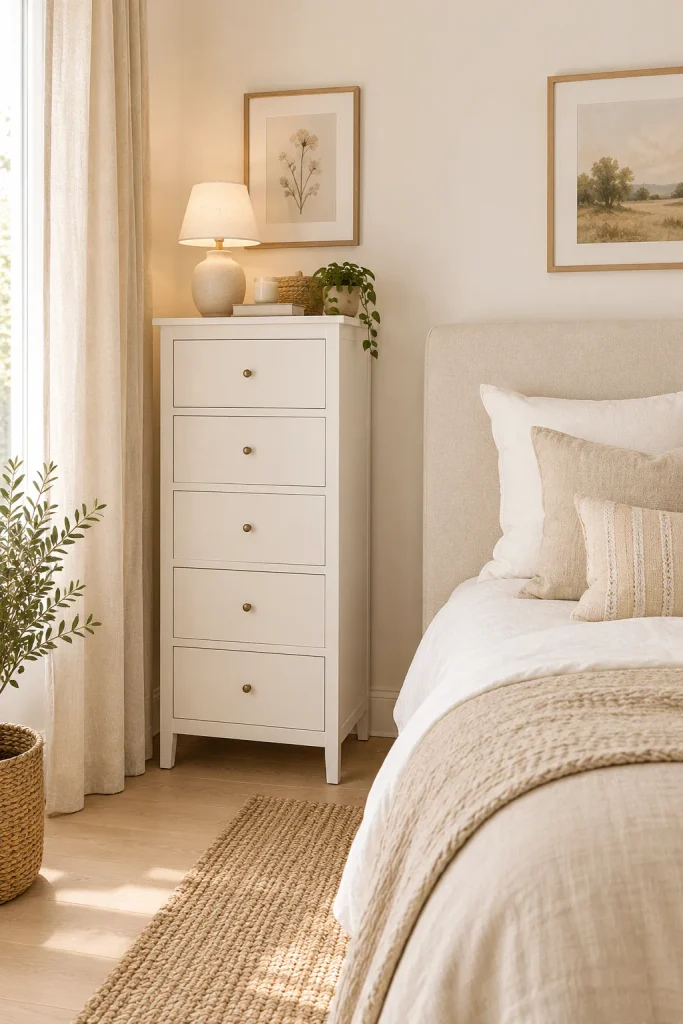
- Measure the footprint: Choose the narrowest dresser that provides enough drawer space for your belongings.
- Use vertical height: Look for a taller design instead of a wide, low dresser.
- Keep the top light: Add only a lamp, small tray, or decorative object.
- Secure tall furniture: Anchor the dresser appropriately to the wall according to the manufacturer’s instructions.
- Maintain circulation: Leave enough space for drawers to open fully without blocking the walkway.
A tall dresser uses vertical space while preserving more floor area than a wide storage unit. Choose drawers that match your actual storage needs rather than simply selecting the largest piece available. In my experience, keeping the top mostly clear also makes a narrow bedroom feel calmer and gives the furniture a lighter visual presence.
Mirror Closet Doors
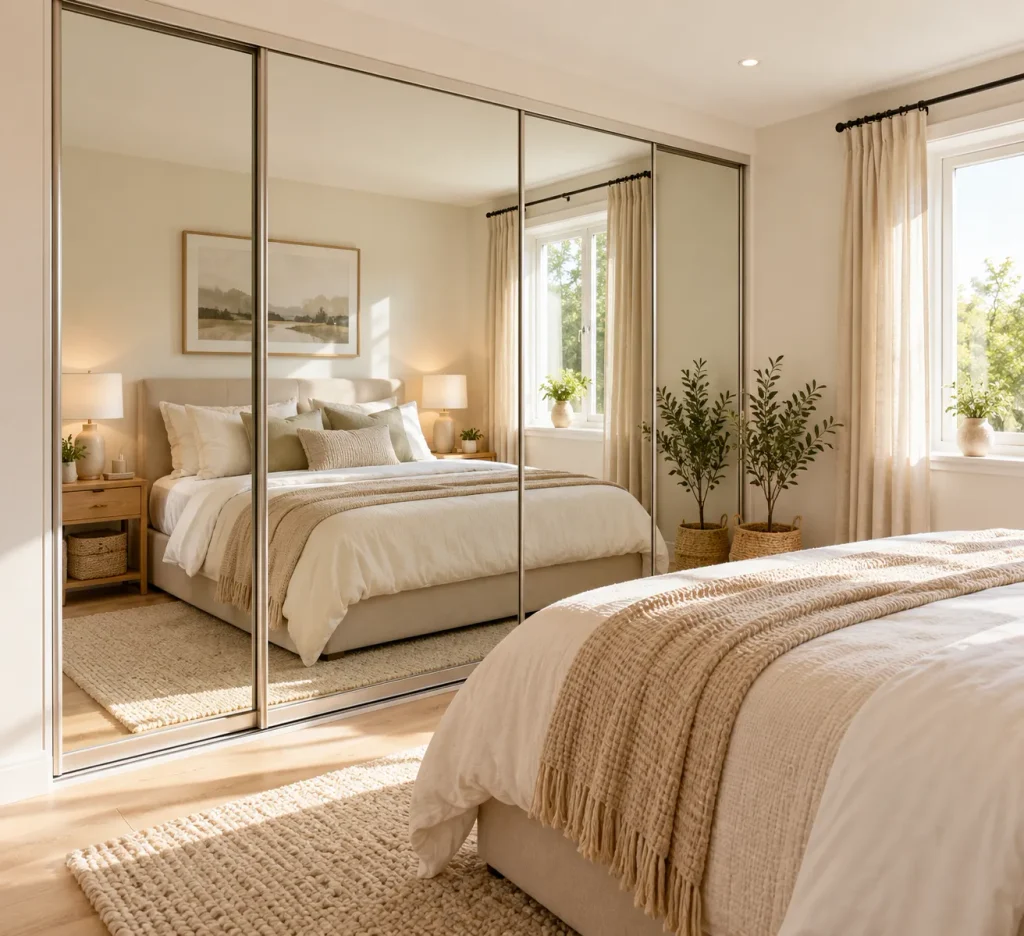
| Feature | Option A: Solid Doors | Option B: Mirrored Doors |
| Visual effect | More enclosed | More reflective |
| Light | Absorbs or blocks reflection | Bounces available light |
| Room feel | Traditional | More open |
| Best for | Rooms with ample visual space | Compact bedrooms |
Mirrored wardrobe doors can combine storage with a reflective surface without requiring a separate full-length mirror. Position the wardrobe where the reflection shows a tidy part of the room or a window rather than clutter. Keep nearby furniture simple so the reflected image does not make the bedroom feel visually busier.
Wall Mounted Lighting
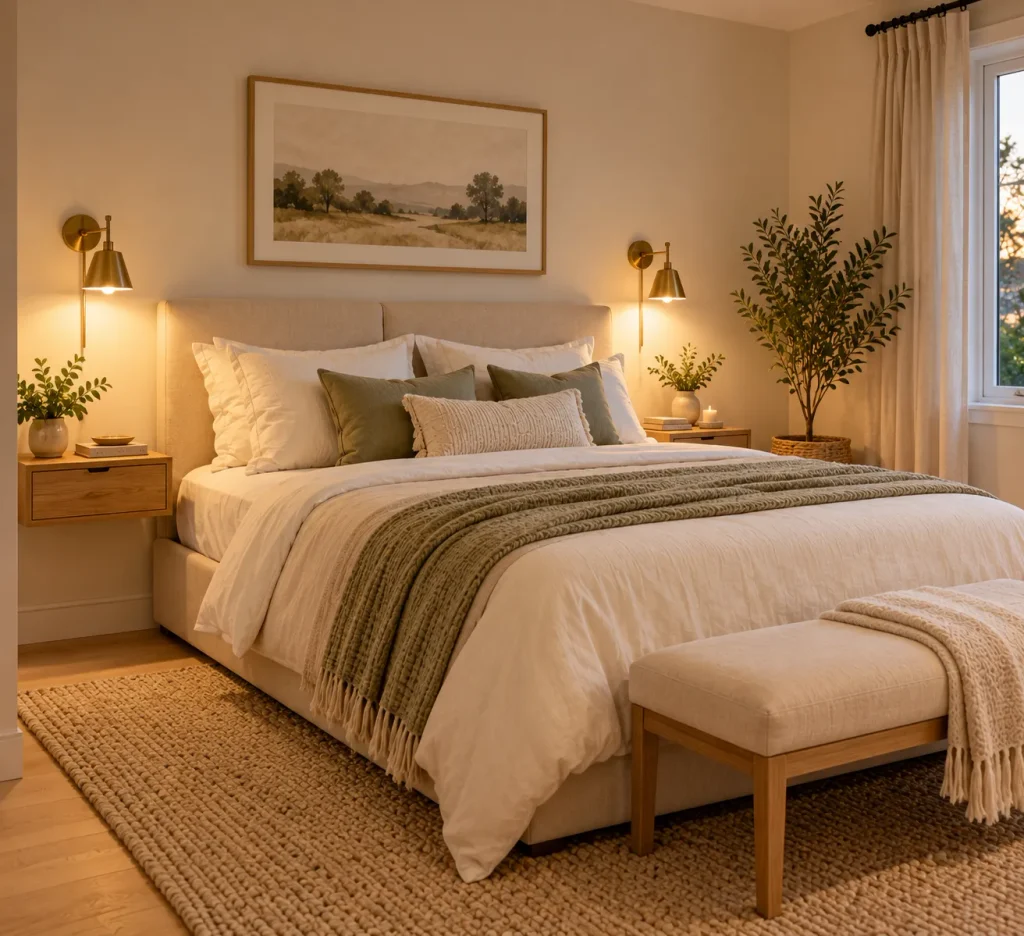
DO
- Mount sconces high enough to provide comfortable reading light.
- Choose adjustable arms if you need flexible lighting.
- Match the metal finish with nearby hardware or furniture.
- Use warm white bulbs for a softer evening atmosphere.
DON’T
- Install fixtures where they interfere with pillows or bedding.
- Choose oversized shades that dominate the wall.
- Leave visible cords loosely hanging.
- Use harsh cool lighting in a relaxing bedroom.
Wall-mounted lighting frees the bedside surface for essentials while adding a useful layer of illumination. Plug-in sconces can be especially practical for renters because they avoid permanent electrical changes. I’ve noticed that slim fixtures with simple shades work best in compact rooms because they provide light without adding another bulky object beside the bed.
Light Neutral Palette
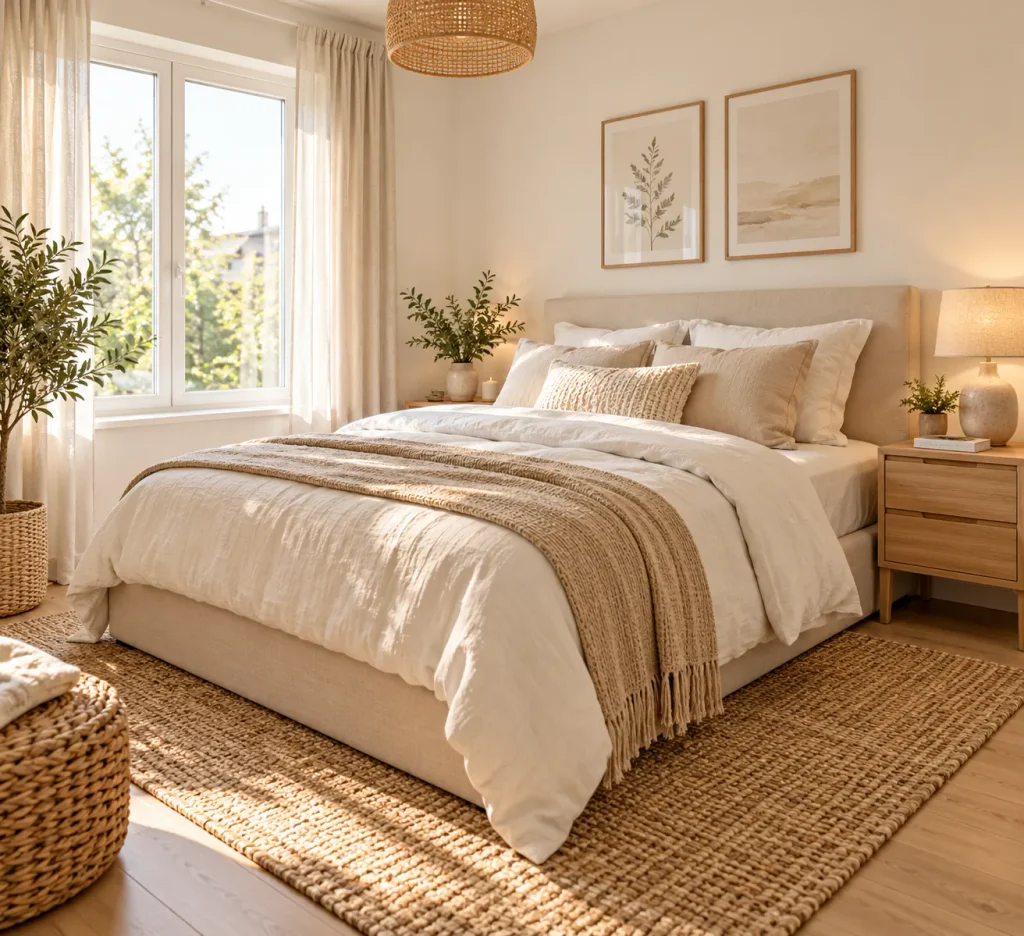
Color: Warm white, ivory, beige, pale oak
Lighting: Natural daylight with soft window glow
Best For: Dark or visually crowded bedrooms
Difficulty: Easy
Result: Brighter and more spacious appearance
A restrained palette helps visual boundaries blend together, making a compact room feel less fragmented. You do not need every item to match exactly. Combine two or three light neutrals, then introduce subtle wood, greenery, or muted accents for warmth. This creates a calm foundation while allowing texture to provide visual interest.
Slim Floating Desk
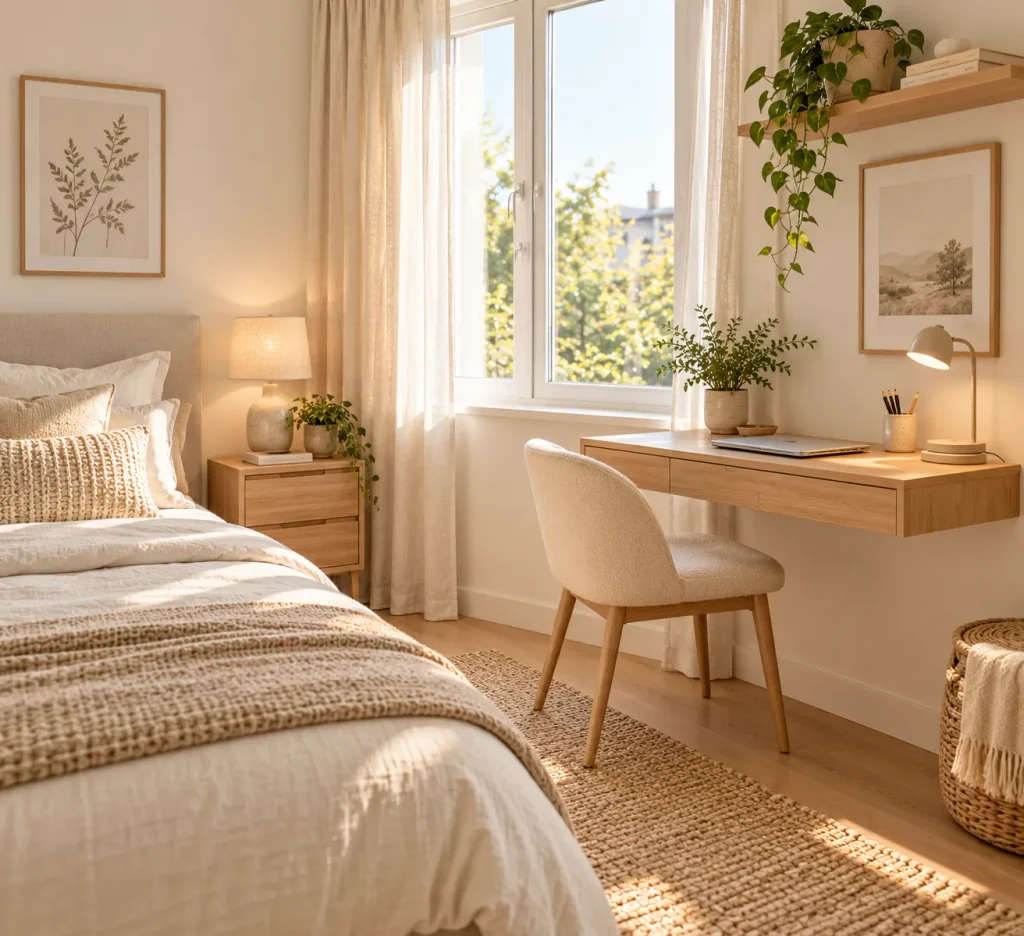
A floating desk turns a small wall section into a useful work area without taking up the floor space of a traditional desk. Choose a shallow surface that accommodates only your essential items, then add a compact chair that can slide underneath when the desk is not in use.
Keep cables routed neatly and use wall-mounted storage above the surface if additional organization is needed. I’ve noticed that a simple desk looks much less intrusive when the chair and accessories share the same neutral palette. Let natural light reach the workspace whenever possible for a brighter, more comfortable setup.
Storage Headboard
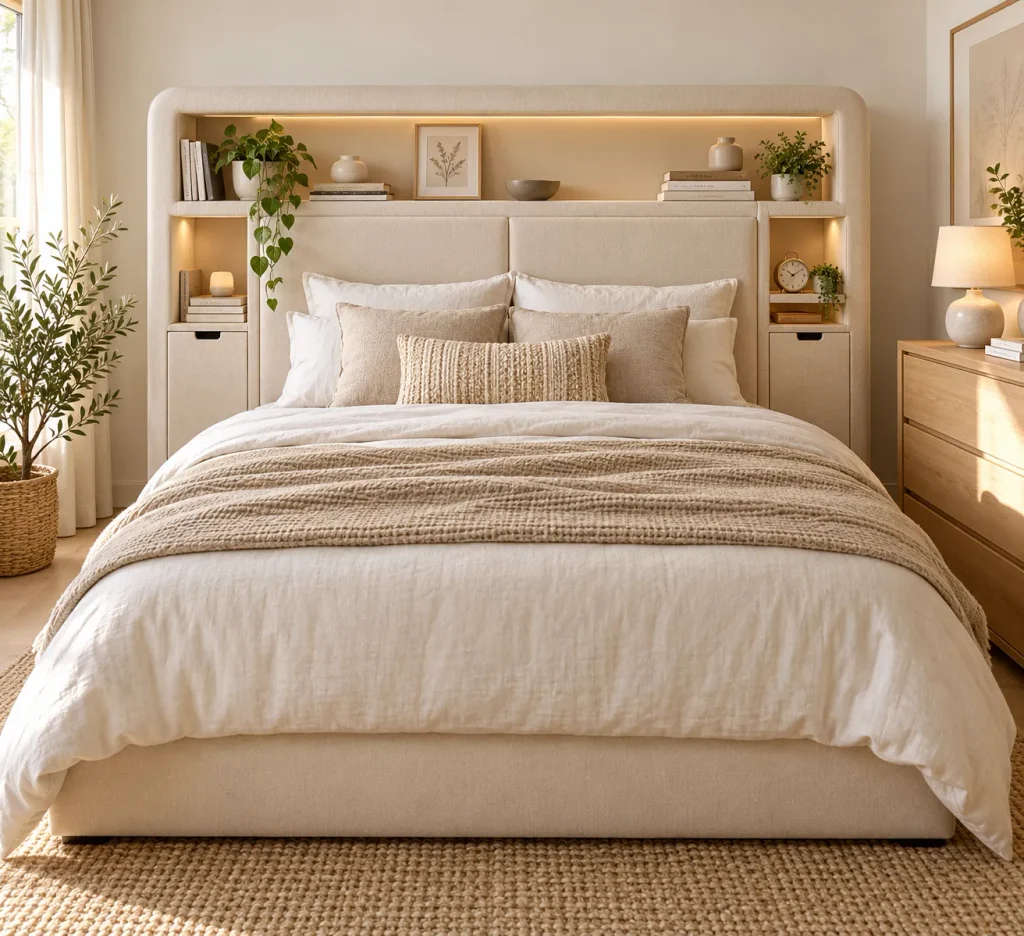
A storage headboard can combine two useful bedroom features in one compact footprint. Look for designs with open cubbies, slim shelves, or concealed compartments where you can keep books, glasses, chargers, or other bedtime essentials.
Keep frequently used items within easy reach and reserve hidden compartments for less attractive necessities. Avoid filling every shelf because open storage becomes visually heavy when overcrowded. A simple headboard in cream, warm white, or natural wood can blend with the bedding while providing practical storage without adding another standalone cabinet.
Corner Reading Nook
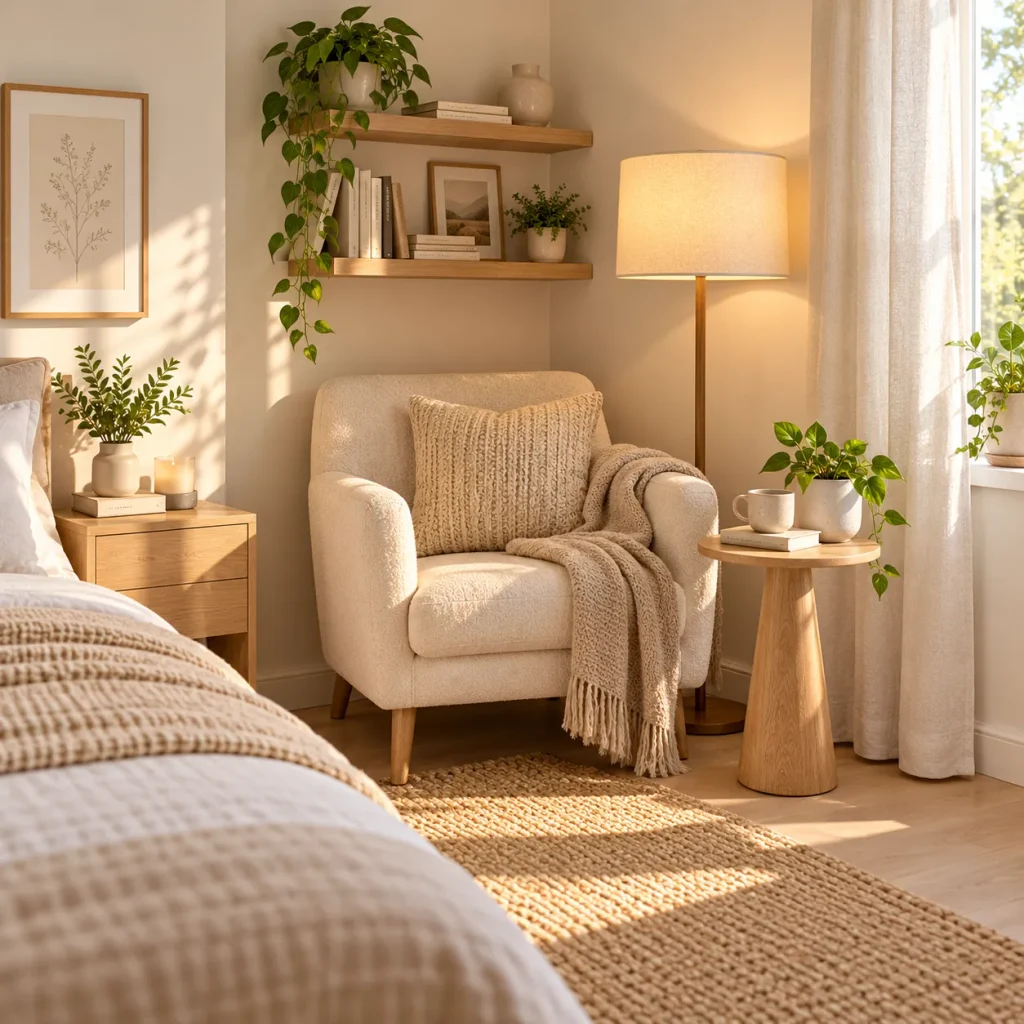
- Choose the smallest comfortable chair: Look for a compact armchair or cushioned slipper chair.
- Use a narrow table: Keep a book, drink, or small lamp within reach without filling the corner.
- Add focused lighting: A slim floor or wall lamp makes the nook practical after sunset.
- Keep textiles simple: One soft throw adds comfort without creating clutter.
An unused corner can become a relaxing retreat without requiring a large furniture arrangement. Keep the chair close to the wall and select pieces with exposed legs to preserve a sense of openness. A small rug can visually define the area while connecting its colors to the rest of the bedroom.
Open Clothing Rack
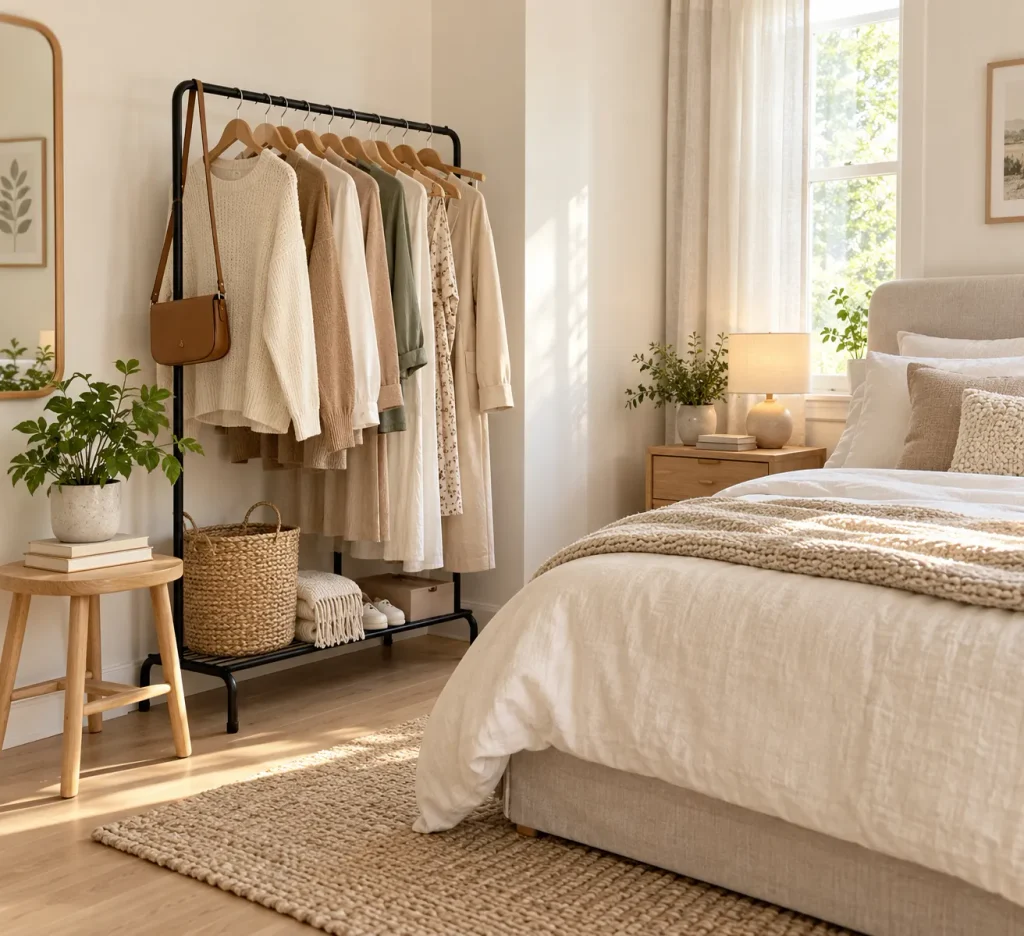
An open clothing rack can replace a bulky wardrobe when you need flexible hanging space. Choose a narrow vertical design and keep only frequently worn pieces visible. Grouping clothes by color can make the rack look more organized while making it easier to choose outfits.
Place the rack against a wall or in an unused corner where it does not interrupt the main walkway. Use matching hangers and one basket underneath for shoes or accessories. I’ve found that keeping the visible collection intentionally small makes open storage feel like part of the room rather than an overflow area.
Foldable Furniture

Furniture that can fold away gives a small bedroom more flexibility throughout the day. A wall-mounted folding desk, collapsible chair, or compact folding table can provide useful function when needed and disappear when the floor needs to stay clear.
Choose sturdy pieces that are easy to open and close, then keep the surrounding area free from obstacles. In my experience, foldable furniture works best when it serves a specific purpose rather than becoming a collection of occasional-use items. Neutral finishes also help these functional pieces blend naturally with the bedroom.
Tall Floor Lamp
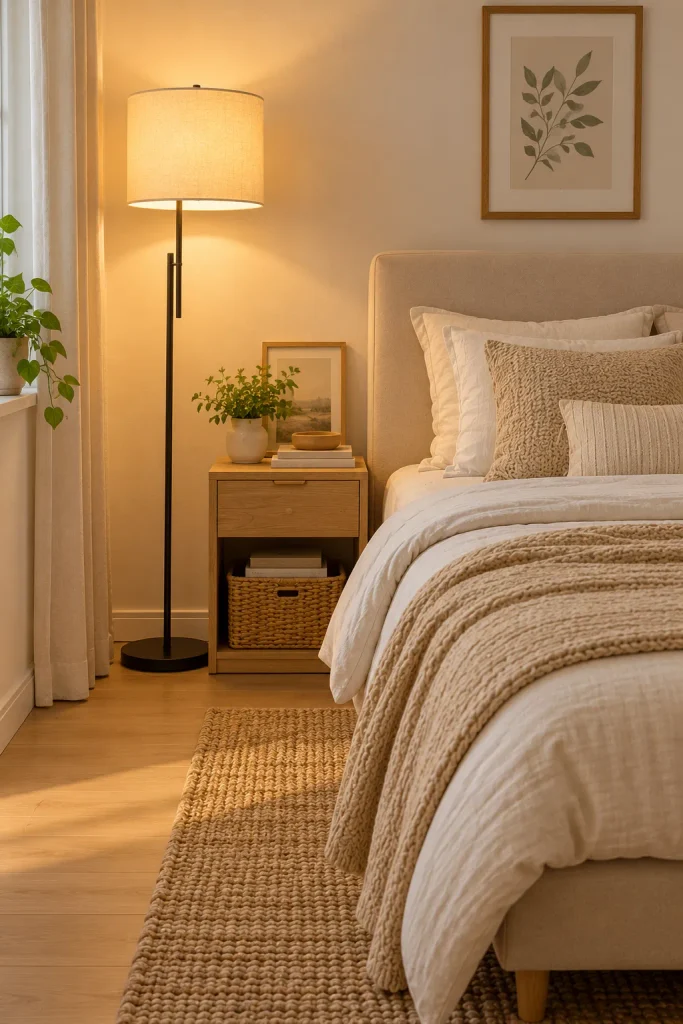
Placement: Beside the bed or in an unused corner
Best Feature: Uses vertical space with a small footprint
Light Type: Warm ambient illumination
Pair With: Compact bedside storage and soft textiles
A slim floor lamp can add height and warm illumination without taking up much surface space. Choose a narrow base and position it where the lamp will not interfere with walking paths. A simple shade can soften the light while adding another layer of texture to the room.
Door Back Organizer

DO
- Use the door surface for lightweight everyday items.
- Choose an organizer with clear pockets when visibility matters.
- Group accessories by type for easier access.
- Keep heavier items in reinforced sections.
DON’T
- Overload the door with bulky belongings.
- Let the organizer interfere with the door handle.
- Store items that make the door difficult to close.
- Fill every pocket simply because space is available.
The back of a bedroom door can provide valuable organization without consuming floor area. Pocket organizers are useful for accessories, scarves, small bags, or lightweight personal items. Keep the contents limited to things you use regularly so the organizer stays practical and does not become another hidden clutter zone.
Hidden Laundry Hamper

Location: Inside a wardrobe, beside a dresser, or in a narrow corner
Best Material: Woven fabric, canvas, or lightweight rattan
Useful Feature: Removable washable liner
Space Benefit: Keeps laundry contained without adding visual clutter
A concealed hamper keeps clothing off the floor while making better use of narrow storage areas. Choose a slim design that fits beneath hanging clothes or inside a wardrobe compartment. A washable liner makes maintenance easier, while a neutral exterior helps the hamper blend with surrounding furniture and textiles.
Peg Rail Storage
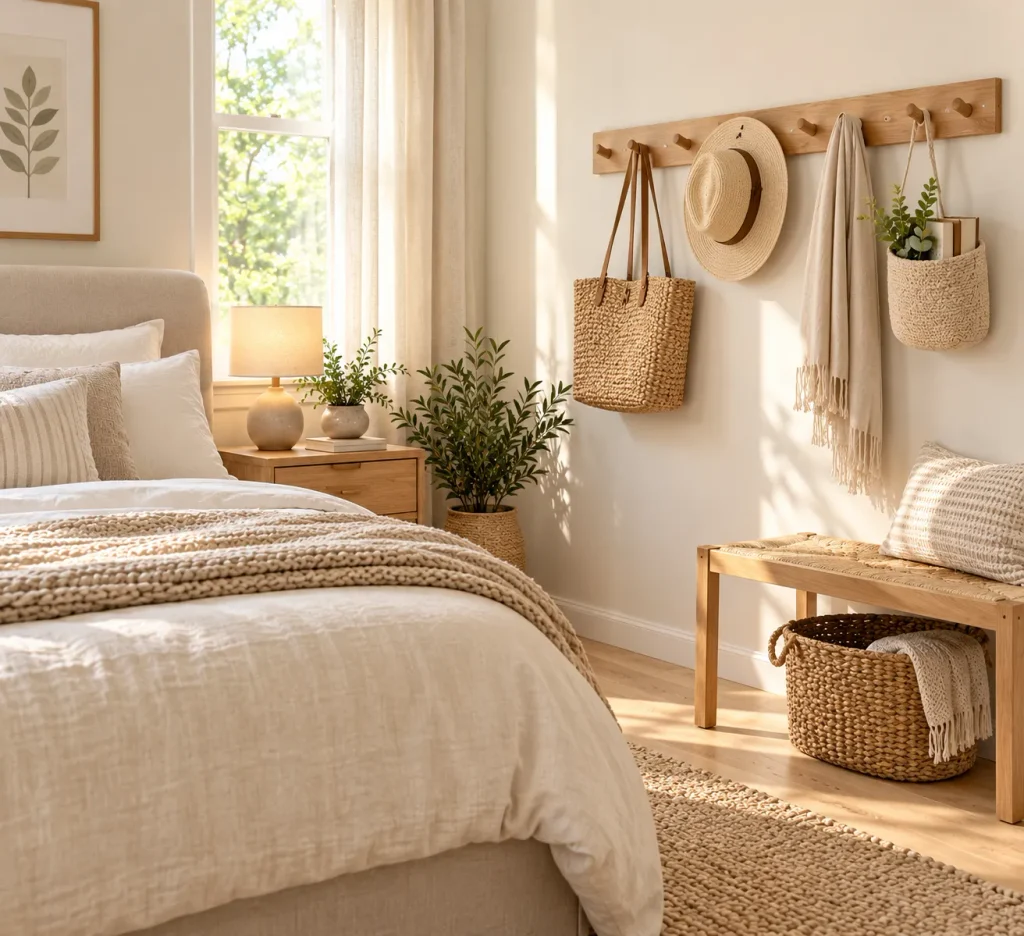
- Mount the rail at a comfortable height for everyday access.
- Use sturdy pegs for bags, hats, scarves, and lightweight clothing.
- Leave space between items so the wall does not look crowded.
- Add a small basket for loose accessories.
- Match the wood finish with another natural element in the room.
A peg rail offers flexible wall storage while taking almost no floor space. It works especially well for belongings that need to stay accessible but do not deserve an entire drawer or cabinet. Keep the display limited to useful items and a few attractive accessories for an organized, intentional appearance.
Bedside Wall Hooks
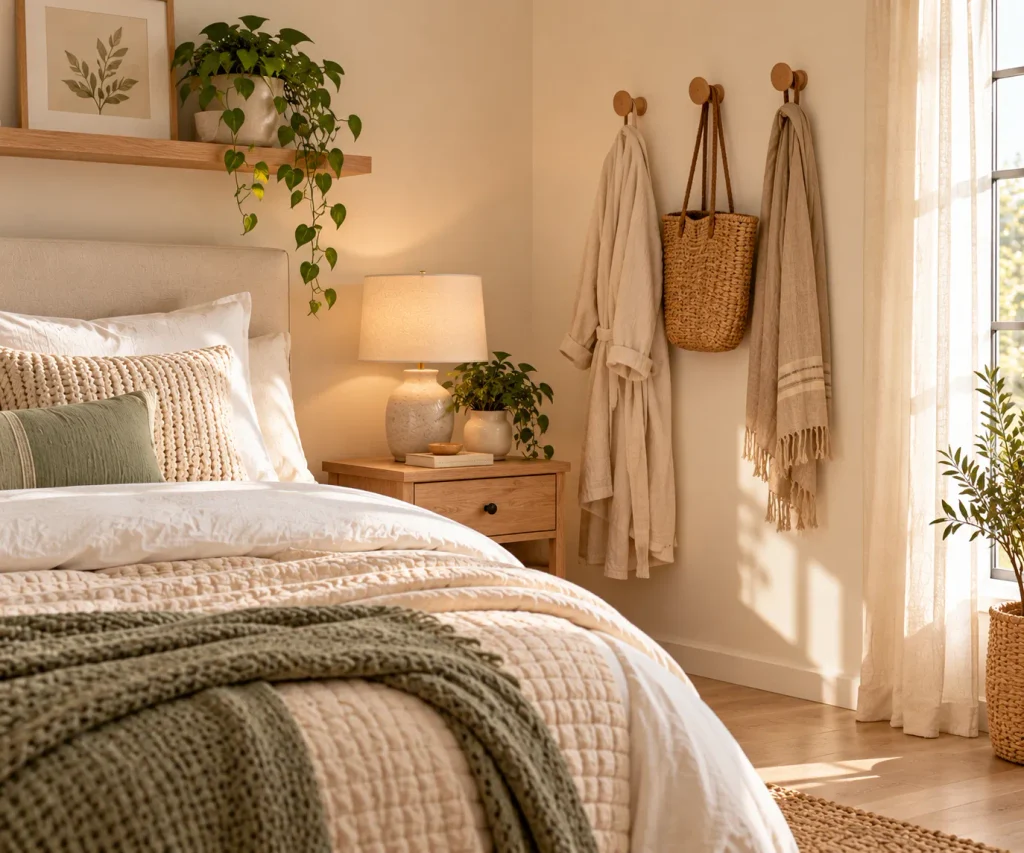
Bedside wall hooks can keep frequently used belongings accessible without taking up the surface of a nightstand. Mount a small row near the bed for a robe, headphones, lightweight bag, or other everyday items that tend to collect on chairs and floors.
Keep the arrangement simple by limiting the number of visible items. Choose wood, brushed metal, or another finish that repeats elsewhere in the bedroom. Place hooks where they are easy to reach but do not interfere with pillows, bedding, or nearby furniture. A tidy wall can make the entire sleeping area feel more organized.
Layered Floor Rug
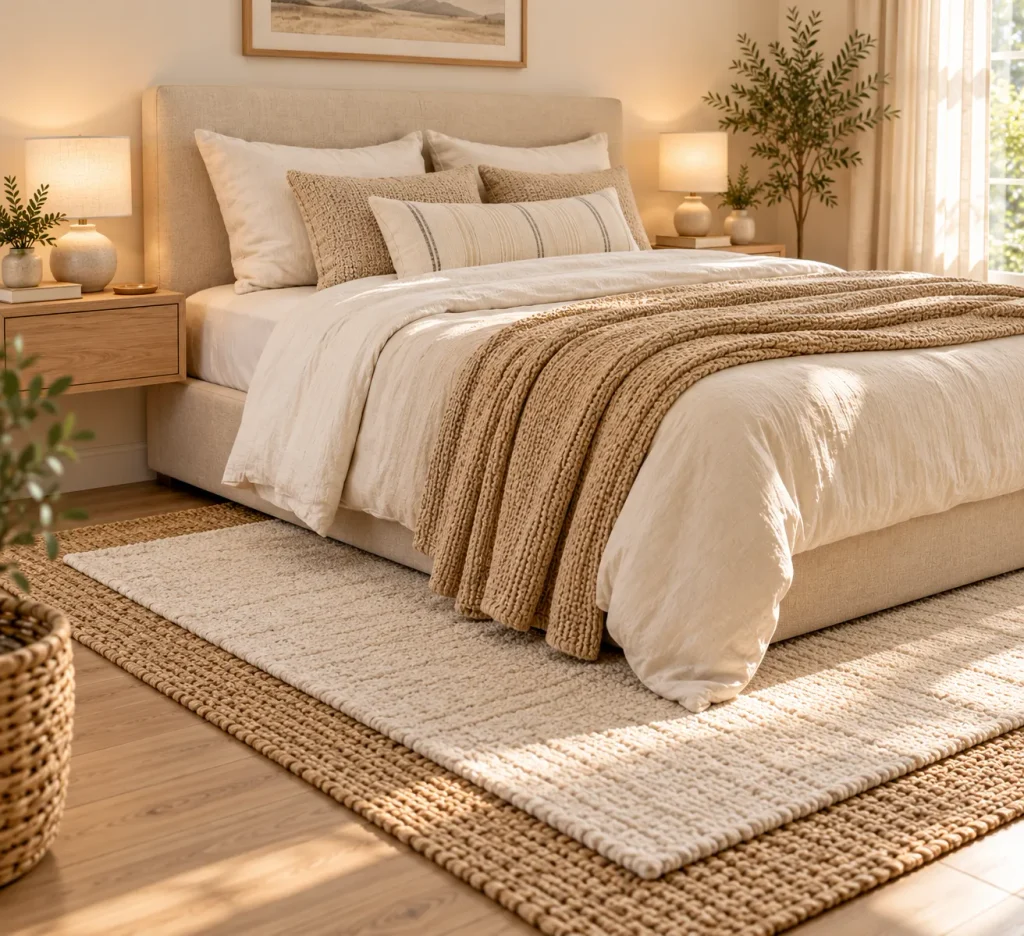
- Start with a thin base: Choose a low-profile natural fiber rug that fits comfortably beneath the bed.
- Add a softer layer: Place a smaller plush or woven rug where your feet land.
- Keep colors related: Use ivory, beige, oatmeal, or muted earthy tones.
- Check door clearance: Make sure the rug does not prevent the bedroom door from opening fully.
Layering rugs can add warmth and texture without introducing another large furniture piece. Keep the base rug relatively simple and let the smaller top layer provide softness. I’ve noticed that related neutral shades create a more connected appearance, especially when the bedding, curtains, and flooring already have several different textures.
Narrow Bed Frame
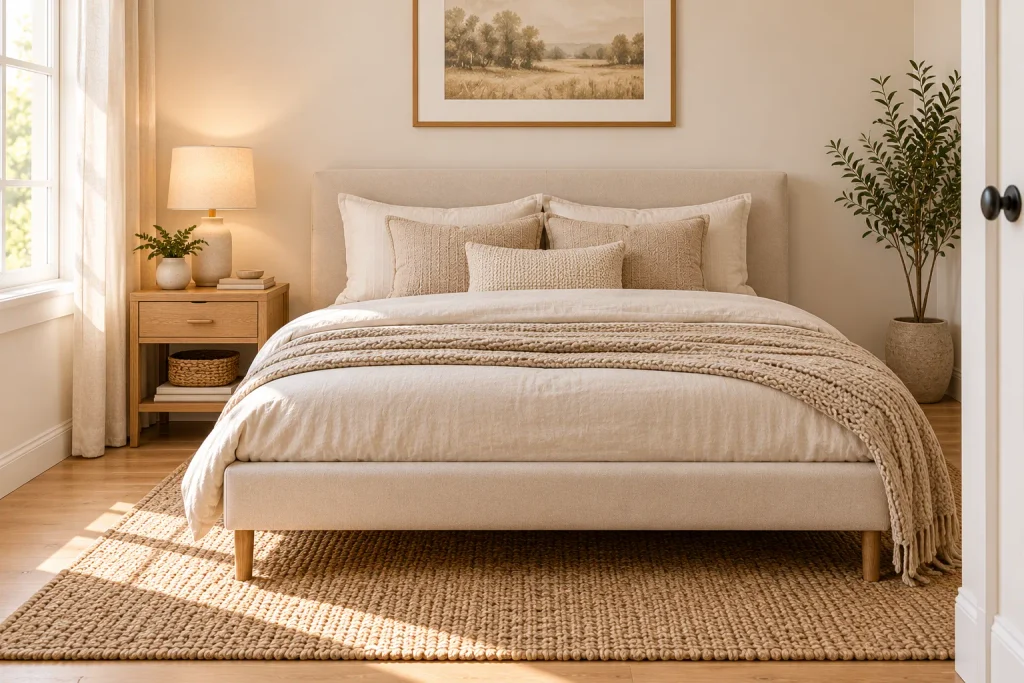
A low-profile bed with a streamlined frame can make more of the floor visible around the sleeping area. Look for slim legs, a simple silhouette, and dimensions that fit the mattress without unnecessary bulk. The extra visual breathing room can help the bedroom feel more open.
Measure the room carefully before replacing a bed frame, including door swings and walking paths. Choose a style that provides the support you need while avoiding oversized headboards or wide side panels. Keeping the surrounding furniture compact will reinforce the sense of openness created by the streamlined frame.
Tall Storage Cabinet
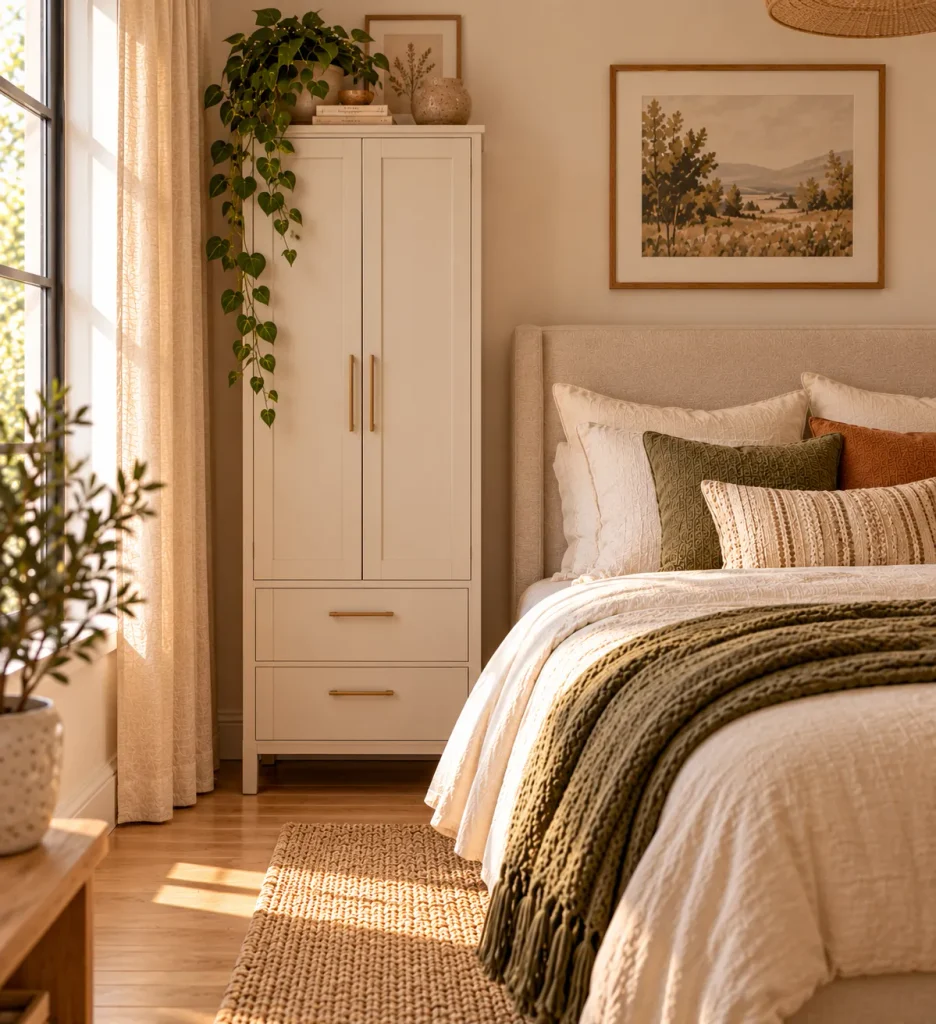
A tall storage cabinet can provide generous organization while using a relatively small amount of floor space. Choose a narrow design with multiple shelves or adjustable compartments for clothing, linens, accessories, or other bedroom essentials.
Keep the cabinet close to a wall and avoid placing several tall pieces together, which can make the room feel enclosed. Use closed doors to keep visual clutter hidden, then reserve nearby open surfaces for a few decorative details. In my experience, combining vertical storage with lighter furniture around it creates a practical balance between capacity and openness.
CONCLUSION
A small bedroom does not need to feel limited. With smart storage, streamlined furniture, thoughtful lighting, and soft layers, you can create a space that feels comfortable and welcoming while making every inch useful.
These small bedroom decor ideas are meant to inspire practical changes that fit your space, budget, and personal style. Start with one idea that solves a real problem, then build from there. I’ve seen how small changes like better storage or lighter visual details can completely shift the way a room feels.
Save this post on Pinterest for your next bedroom refresh, try your favorite ideas, and share it with someone who could use a little more space and inspiration.