
23 Dreamy Bedroom Ideas to Create Your Perfect Retreat
Your bedroom should feel like the easiest place in your home to slow down and recharge. Small changes can make it feel warmer, calmer, and much more personal.
These 23 bedroom ideas bring together practical styling solutions for anyone who wants a more inviting retreat without completely redesigning the room. You’ll find inspiration for layered bedding, warm lighting, natural wood, soft curtains, storage, accent walls, reading corners, and thoughtful bedside details. Each idea is designed to help you create a space that looks beautiful while still working for everyday life.
In my experience, the most comfortable bedrooms are rarely the ones filled with the most decorations. They usually have a balanced mix of soft textures, useful furniture, calming colors, and personal touches. I’ve noticed that even a new lamp, better rug, or carefully styled nightstand can change how a room feels. Use these ideas as a starting point and choose the details that genuinely suit your routine and style.
Layered Linen Bedding
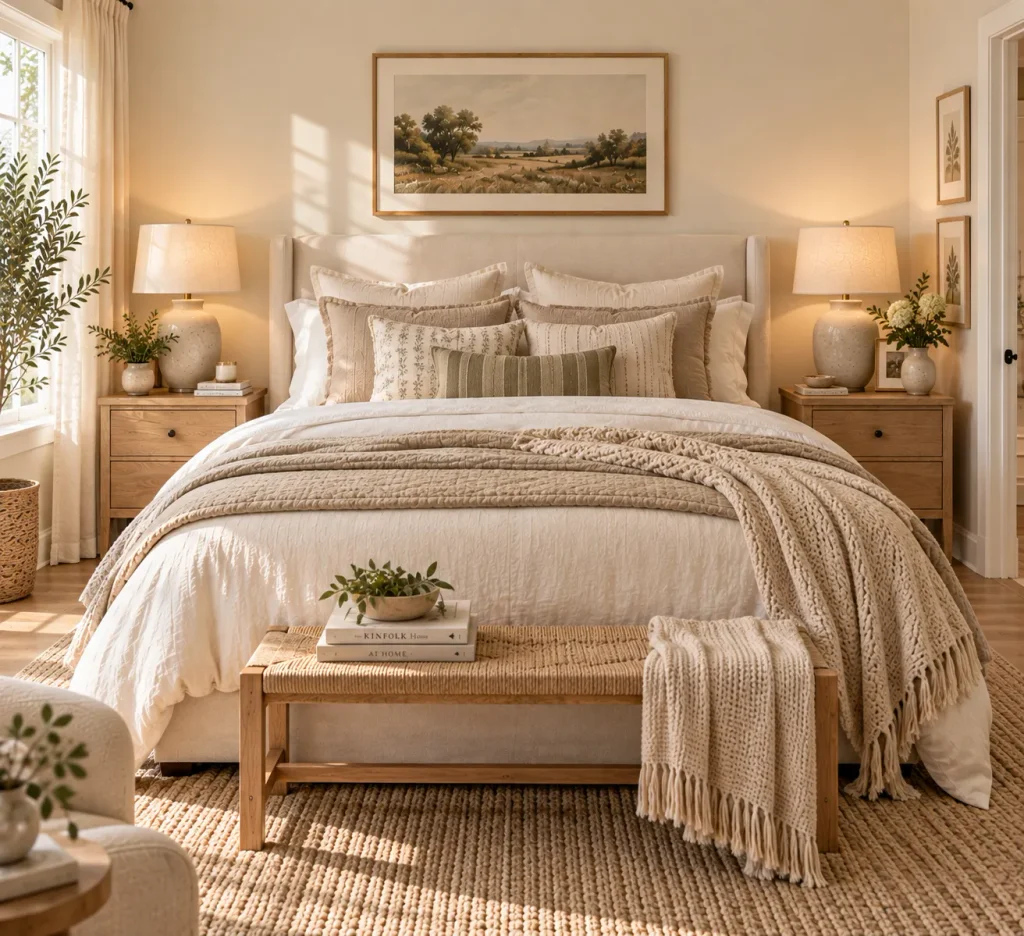
A beautifully layered bed can make the entire room feel more inviting without adding much furniture. Combine linen sheets, a lightweight quilt, textured cushions, and a knitted throw in closely related shades. Mixing fabrics creates depth while keeping the overall palette calm and restful.
For a polished finish, vary pillow sizes and place the thickest layer toward the headboard. Keep one or two surfaces smooth so the bed does not become visually heavy. I’ve noticed that natural fabrics and muted colors also make seasonal changes easier because heavier throws can be swapped for lighter layers.
Warm Bedside Lighting
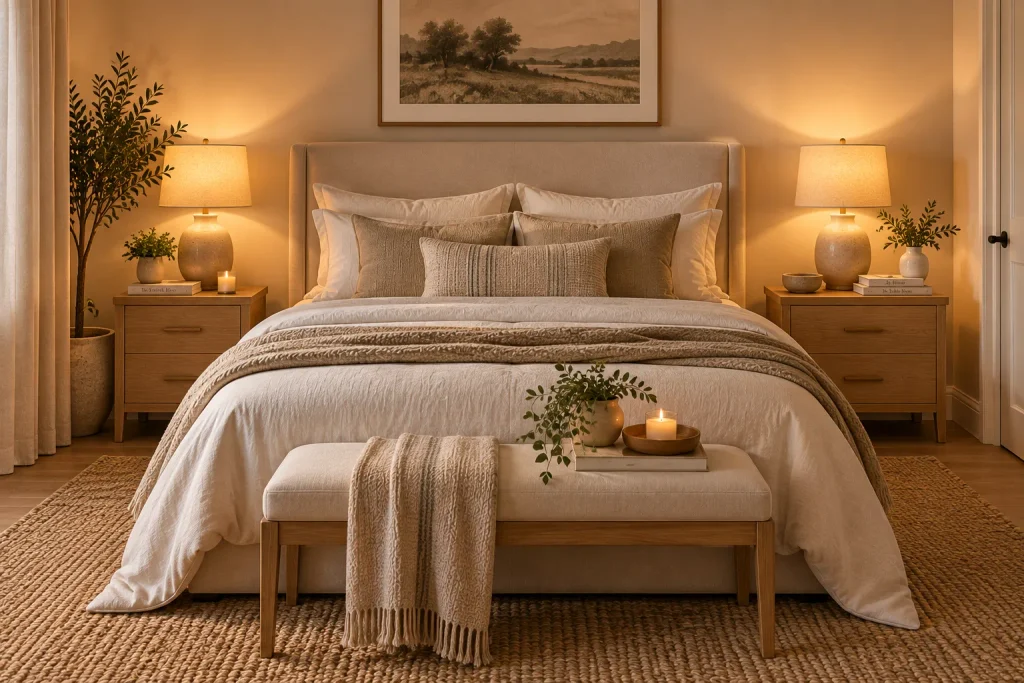
- Choose lamps with warm-toned bulbs for a softer evening atmosphere.
- Keep the lamp height comfortable for reading while sitting in bed.
- Use matching lamps for symmetry or complementary shapes for a relaxed look.
- Leave enough nightstand space for practical items such as books or a water glass.
- Hide visible cords where possible for a cleaner finish.
Good bedside lighting serves both function and atmosphere. A lamp with a warm bulb can create a softer setting at night, while a focused reading light helps prevent the entire room from needing bright overhead illumination. Keep switches easy to reach so the setup remains convenient every evening.
You Can Also Read : 21 Brilliant Kitchen Decor Ideas for a Fresh New Look
Soft Neutral Accent Wall

Quick Tip: Choose an accent shade that is only a few tones deeper than the surrounding walls for a subtle result. Test a sample near the bed and observe it in morning, afternoon, and evening light before painting the full wall.
A softly colored feature wall gives the bed a natural focal point without overwhelming the room. Warm beige, muted sage, dusty blue, or gentle clay can work beautifully with neutral furniture. In my experience, low-contrast colors are easier to live with because they add character while keeping the bedroom restful.
Arched Headboard
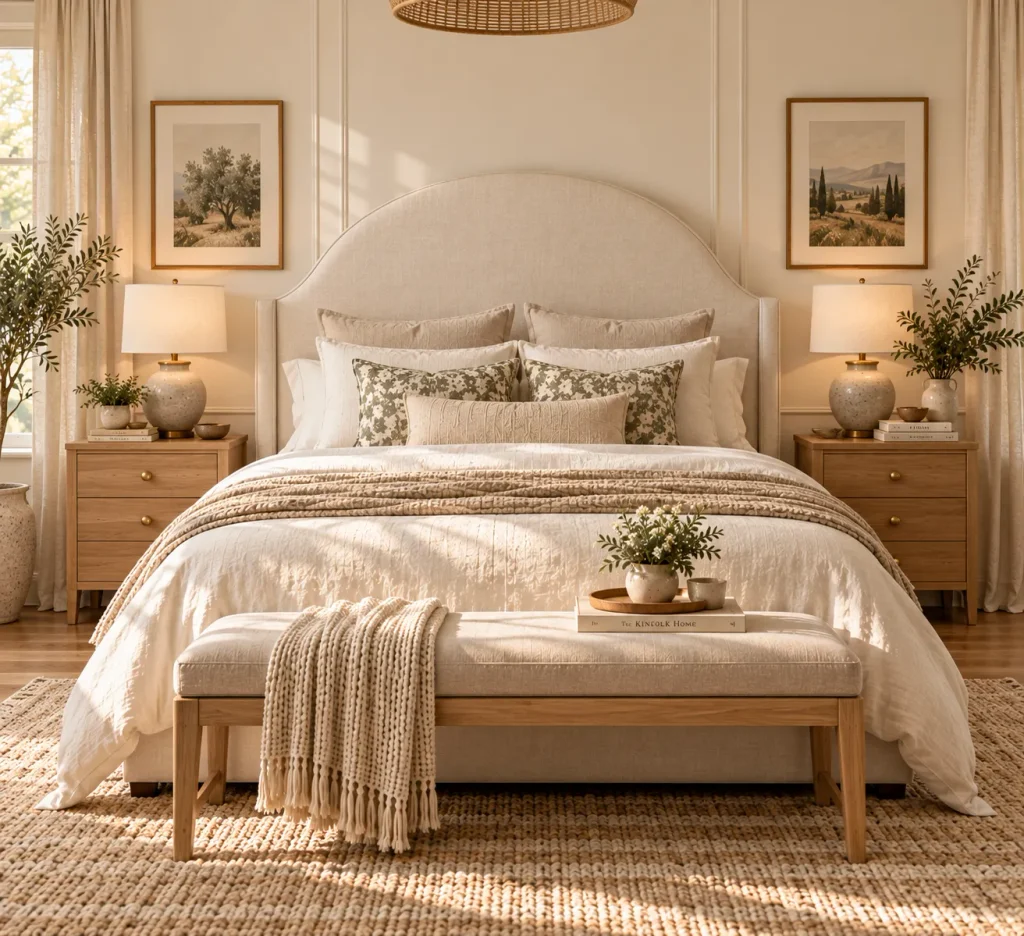
BEFORE: A basic bed frame leaves the wall looking flat and the sleeping area without a clear focal point. Small artwork above the bed may not provide enough visual weight for the room.
AFTER: A tall arched headboard creates a strong vertical feature behind the bed. Its curved silhouette softens the room while upholstery adds another layer of warmth and comfort.
Choose a headboard that extends high enough to relate to the ceiling height without overwhelming the bed. Cream, oatmeal, or muted taupe upholstery works well with natural wood and neutral bedding. Keep surrounding decor simple so the curved shape remains visible and gives the sleeping area a finished appearance.
Window Seat Nook

- Measure the window: Check the width, depth, and available space around the opening before planning the seat.
- Build the base: Choose a sturdy bench structure with drawers, cabinets, or open storage underneath.
- Add cushioning: Use a fitted seat cushion with durable fabric that suits daily use.
- Layer comfort: Add two or three pillows and a lightweight throw for reading or relaxing.
- Add practical lighting: Place a small lamp nearby if the nook will be used after sunset.
An unused window area can become a peaceful retreat with surprisingly little floor space. Keep the cushion close to the room’s existing color palette, then introduce personality through pillows or artwork. I’ve seen small window seats work especially well in bedrooms because they provide a separate spot for reading without adding another large piece of furniture.
Natural Wood Nightstands

| Feature | Option A: Matching Nightstands | Option B: Mismatched Nightstands |
| Overall feel | Symmetrical and calm | Relaxed and collected |
| Styling | Easier to coordinate | More individual |
| Storage | Usually balanced | Can vary by piece |
| Best use | Centered beds | Casual or eclectic rooms |
Natural wood adds warmth beside soft bedding and painted walls, especially when the room uses mostly pale colors. Matching nightstands create a calm symmetrical look, while different pieces can add personality when their height and visual weight remain similar.
Keep the tabletop practical rather than filling it with accessories. A lamp, small dish, book, and one decorative object are usually enough. If the nightstands differ, repeat their wood tone or hardware elsewhere in the room so the two sides still feel connected.
Textured Accent Pillows
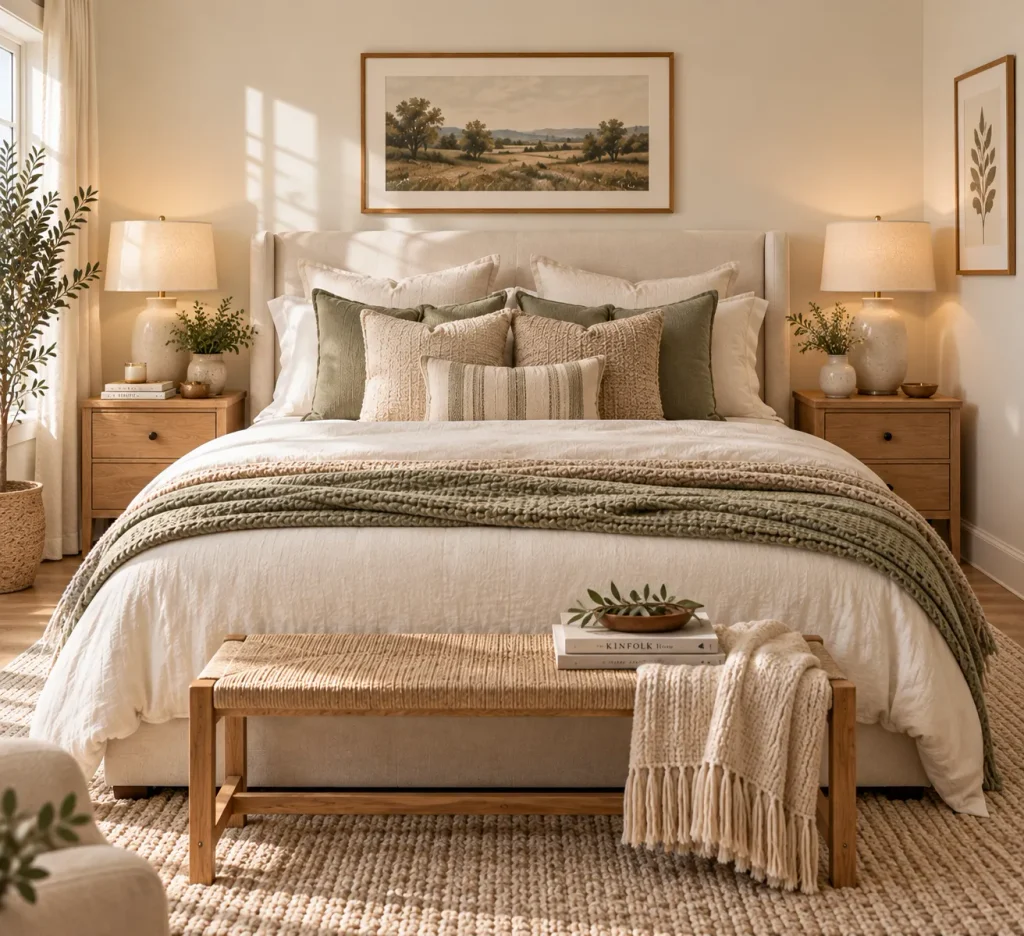
DO:
- Combine two or three related colors across the pillow arrangement.
- Mix linen, cotton, boucle, or woven fabrics for visible texture.
- Place larger pillows behind smaller lumbar cushions.
- Repeat one accent color in artwork or nearby accessories.
DON’T:
- Use every pillow in the same size and shape.
- Introduce too many unrelated patterns.
- Cover the entire headboard with decorative cushions.
- Choose delicate fabrics that are difficult to maintain.
The right pillow combination can make a bed feel finished without changing the larger furniture. Start with a neutral base, then add one muted accent shade and vary the fabric textures. In my experience, three or four thoughtfully chosen layers often look more sophisticated than a bed crowded with decorative cushions.
Soft Layered Curtains
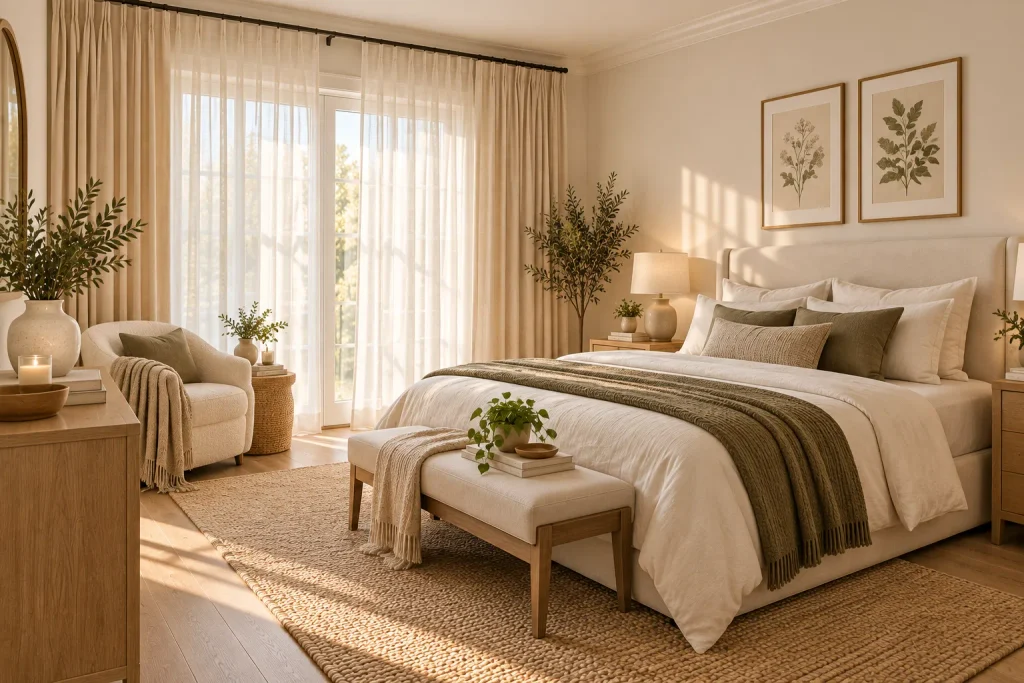
Cost: Moderate | Time: 1 to 2 hours | Skill Level: Beginner
Best For: Bedrooms needing softer light and privacy | Works In: Modern, cottage, Scandinavian, and transitional interiors
Result: A softer window with flexible daylight control
Soft curtains can make a bedroom feel calmer while giving you more control over natural light. Pair sheer panels with heavier linen-look curtains when you want privacy without making the room feel dark. Mount the curtain rod high and allow the fabric to reach close to the floor for a longer visual line.
Choose warm white, ivory, oatmeal, or another shade that relates to the bedding and walls. Before buying, measure the full window width and account for enough fabric to create natural folds. Washable materials are especially practical in bedrooms where dust and sunlight can affect textiles over time.
Reading Corner Chair
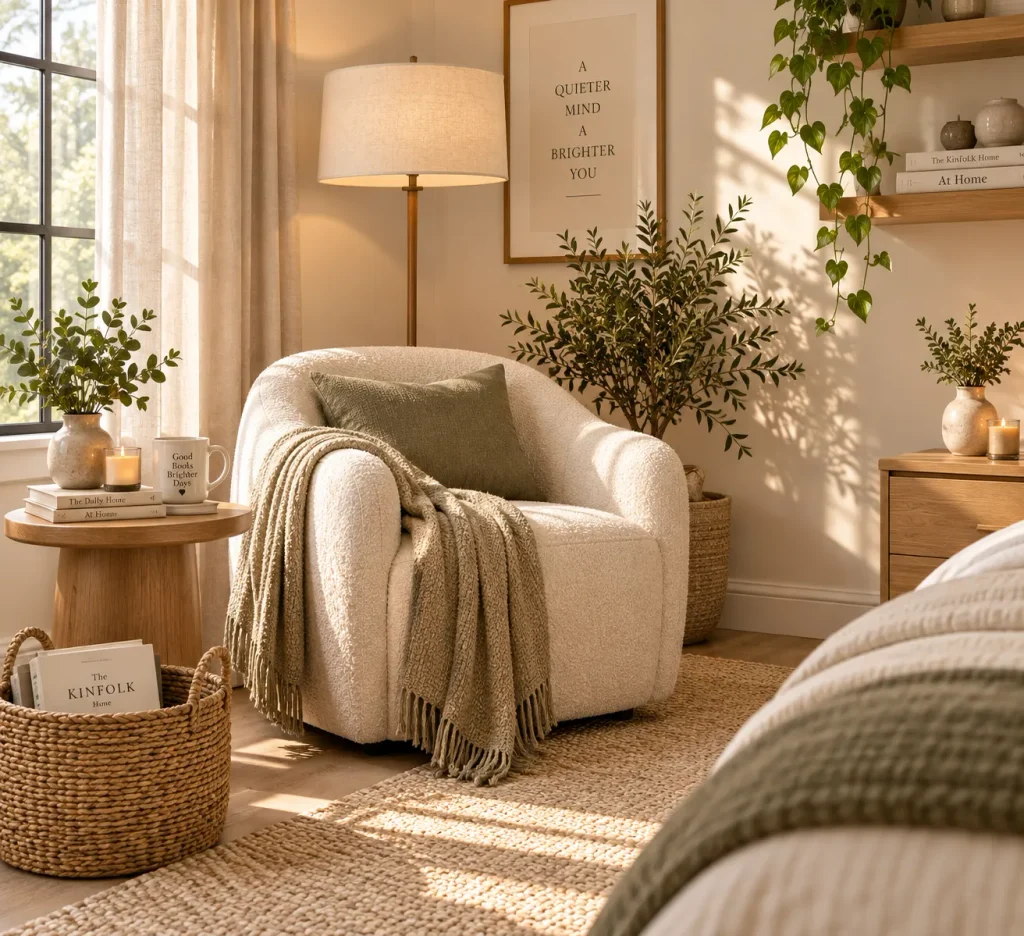
A quiet corner becomes far more useful with a comfortable chair and dedicated light. Choose a seat that supports your posture, then place a small table nearby for a book, drink, or reading glasses. A soft throw can add texture while making the corner feel ready for everyday use.
Keep the chair far enough from the bed and dresser to maintain a clear walking route. For smaller rooms, look for a compact accent chair with narrow arms or a rounded profile. A floor lamp with an adjustable shade can provide focused light without requiring a permanent wall fixture.
Built-In Wardrobe Storage
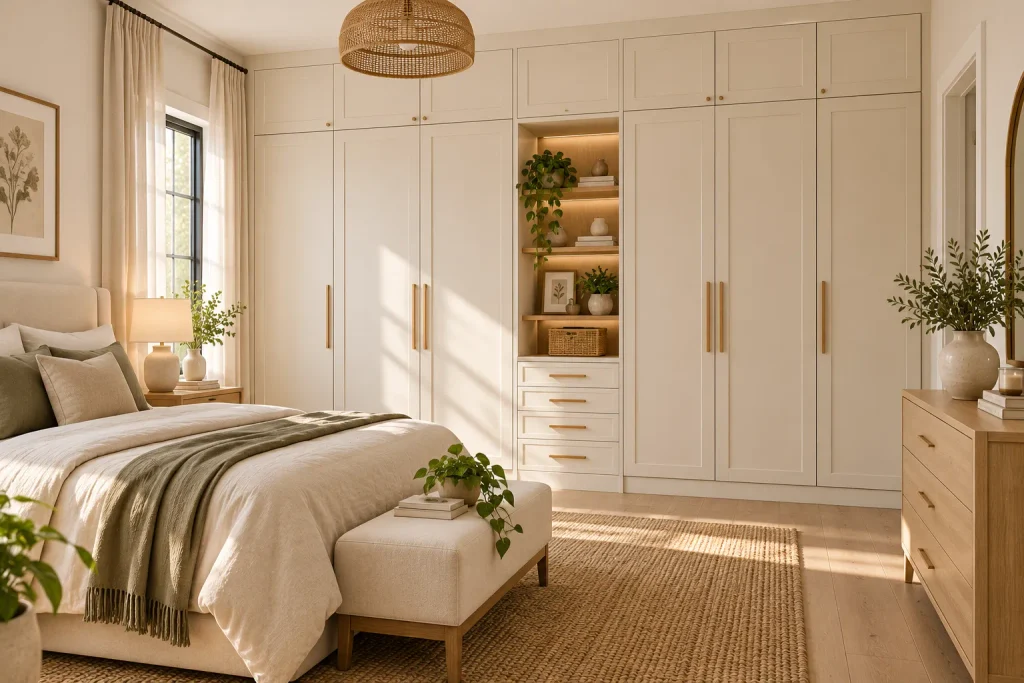
BEFORE: Freestanding storage takes up valuable floor space and leaves awkward gaps around the ceiling or walls. Clothes, bags, and everyday items can also make the room feel visually crowded.
AFTER: Floor-to-ceiling cabinetry uses vertical space efficiently while keeping belongings behind closed doors. A consistent finish creates a calmer backdrop and makes the bedroom feel more organized.
Plan storage around what you actually own rather than choosing shelves and drawers based only on appearance. Include hanging space, adjustable shelves, and a few deeper sections for larger items. Leave enough clearance for doors and drawers to open fully, then use matching handles to give the cabinetry a unified finish.
More Content Read : 22 Inspiring Home Decor Ideas You’ll Love for Years
Layered Bedside Decor
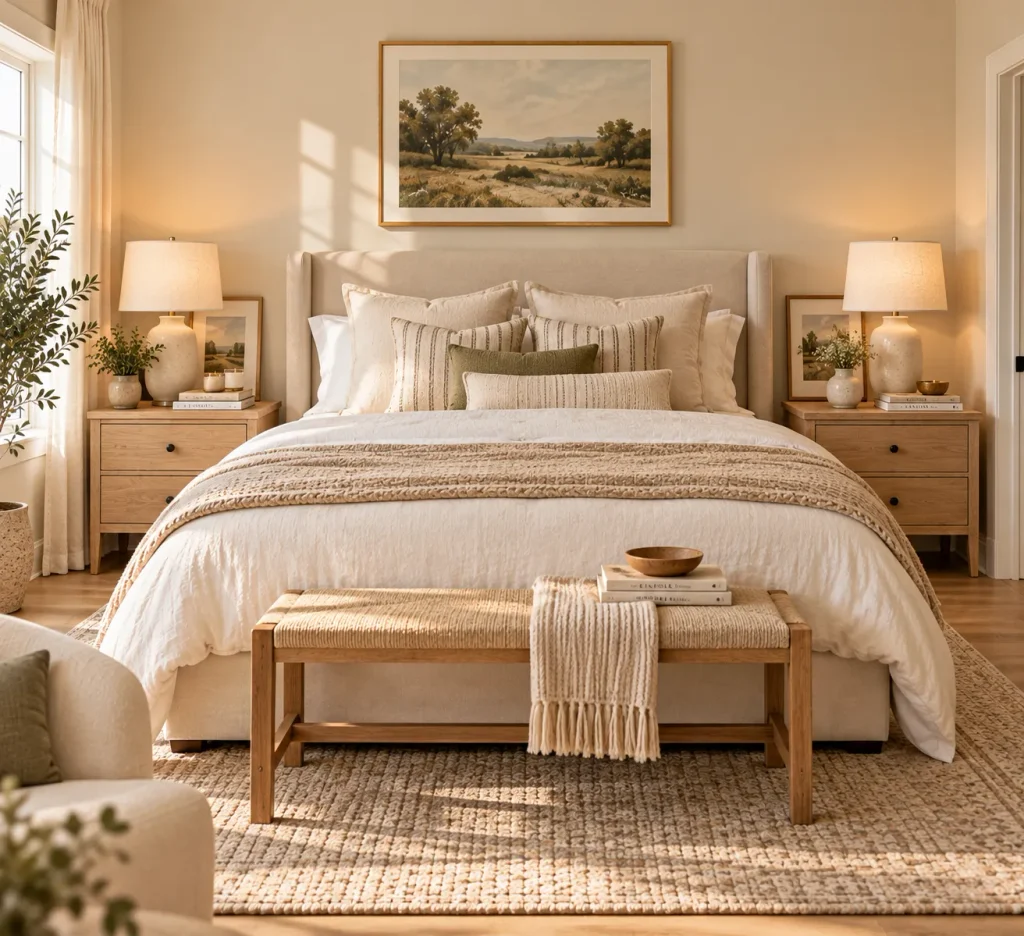
- Start with lighting: Place a lamp that provides enough illumination for reading or evening routines.
- Add one useful item: Keep a small tray, dish, or coaster for everyday essentials.
- Create height: Add a narrow vase, framed print, or small decorative object.
- Introduce texture: Use ceramic, wood, linen, or woven materials to soften the arrangement.
- Leave open space: Keep part of the nightstand available for items you use daily.
A bedside surface should look attractive without becoming difficult to use. Keep decorative pieces limited and prioritize objects that support your routine. I’ve noticed that a small lamp, one book, and a simple ceramic piece often create enough visual interest while leaving plenty of room for practical nighttime essentials.
Statement Pendant Lights
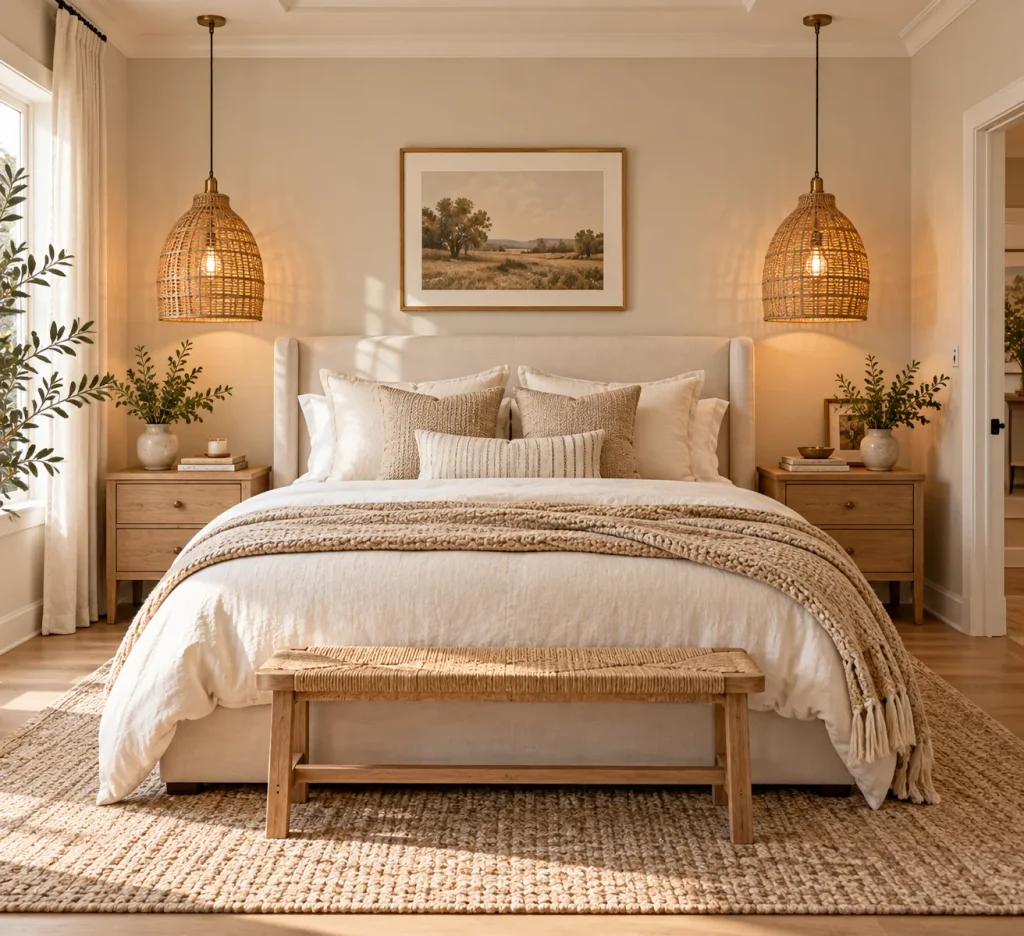
| Feature | Option A: Table Lamps | Option B: Pendant Lights |
| Nightstand space | Uses tabletop area | Keeps surface open |
| Visual effect | Traditional and grounded | Airy and decorative |
| Installation | Usually simple | Requires suitable electrical setup |
| Best use | Flexible layouts | Symmetrical beds or planned lighting |
Pendant lights can free up nightstand space while adding a stronger vertical feature beside the bed. Woven shades bring texture, while glass or fabric options can create a softer appearance. Choose fixtures that are appropriately scaled to the bed and room, then follow installation requirements carefully.
Keep the hanging height practical so the fixtures do not interfere with sitting up or moving around the bed. If electrical work is required, use a qualified professional where appropriate. Repeating the pendant material elsewhere, such as through baskets or wood accents, can make the lighting feel integrated.
Calm Botanical Artwork
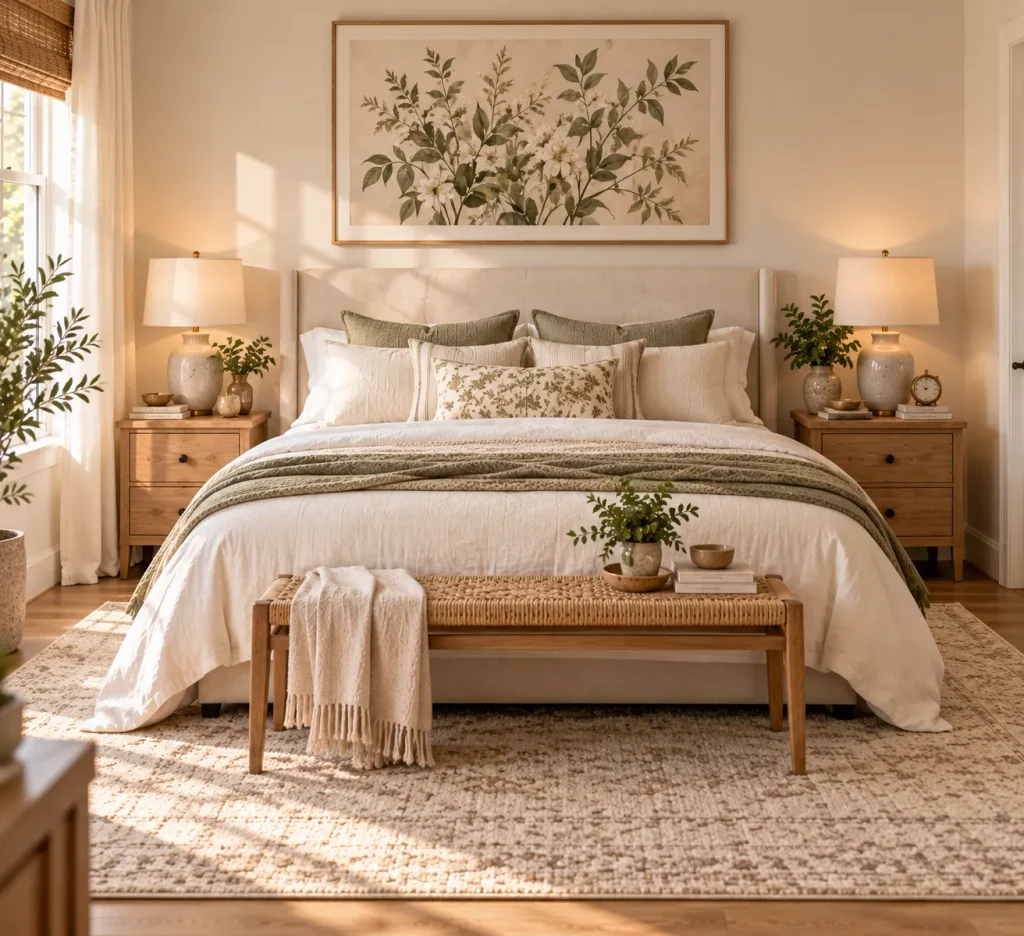
DO:
- Choose botanical artwork with colors already present in the room.
- Use one large print for a clean focal point.
- Select a frame that complements nearby wood or metal finishes.
- Leave enough space around the artwork so it remains easy to see.
DON’T:
- Mix too many unrelated botanical styles.
- Hang artwork so high that it feels disconnected from the bed.
- Cover the print with oversized decorative objects.
- Introduce several competing accent colors.
Botanical artwork brings a quiet connection to nature without requiring extra furniture or strong patterns. Ferns, branches, grasses, and simple leaf studies work especially well with neutral bedding. I’ve noticed that muted green artwork can also introduce color gently, making it easier to coordinate with plants, cushions, and small accessories.
Soft Area Rug
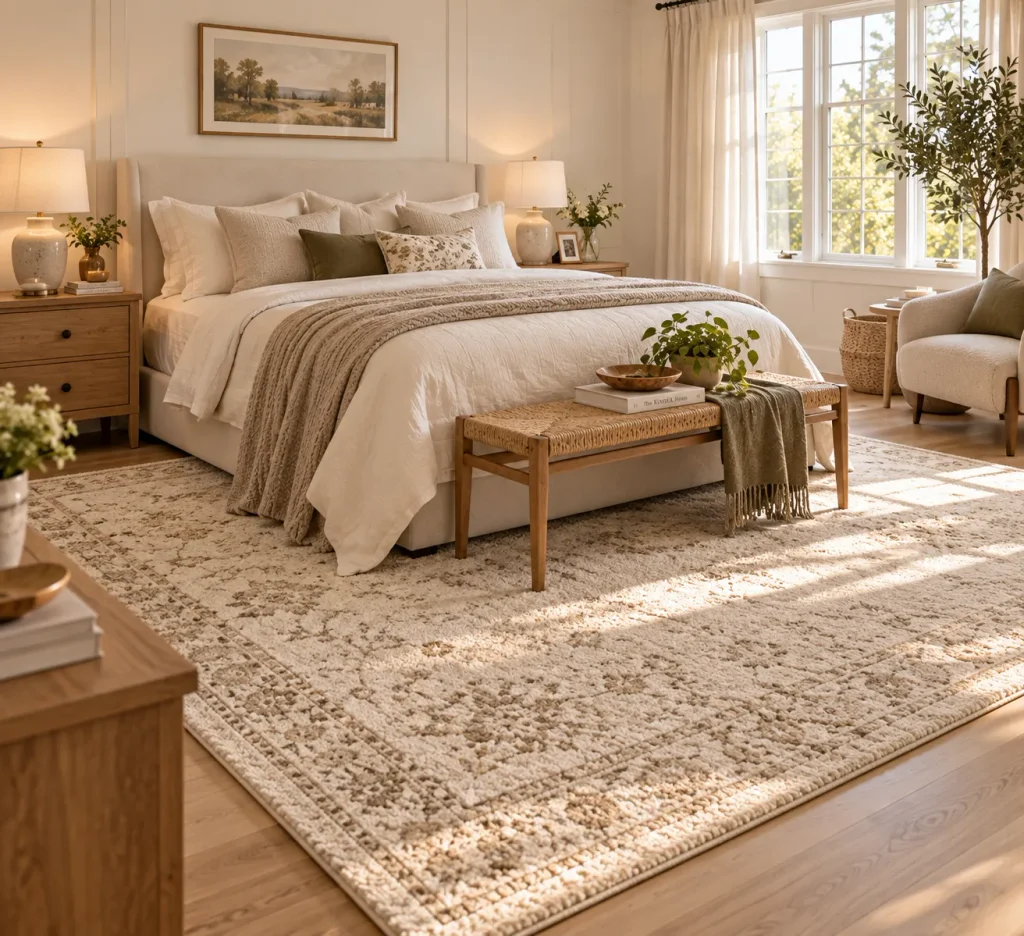
Cost: Moderate | Time: 1 hour | Skill Level: Beginner
Best For: Hard flooring and bedrooms needing extra softness | Works In: Modern, Scandinavian, organic, and traditional spaces
Result: A warmer floor with visual definition around the bed
A soft rug can make getting out of bed more comfortable while visually anchoring the sleeping area. Choose a size large enough to extend beyond the sides and foot of the bed where possible. Wool, cotton, and washable synthetic options each offer different combinations of comfort, durability, and maintenance.
For a small bedroom, a runner on each side of the bed can provide warmth without overwhelming the floor. Keep the rug color close to the bedding or walls if you want a calm appearance. A subtle pattern can help disguise everyday marks while adding just enough visual interest.
Arched Wall Mirror
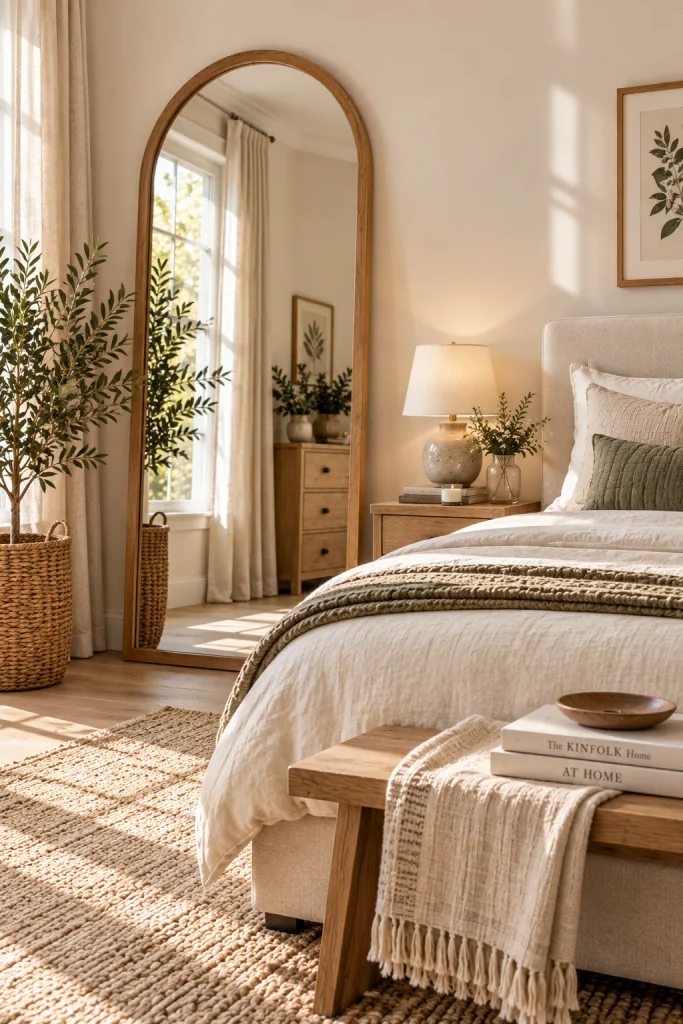
A tall mirror can make a bedroom feel brighter while adding useful function near a wardrobe or dressing area. Position it where it can reflect a window or another attractive part of the room rather than facing clutter.
Choose an arched frame for softer lines or a simple rectangular frame for a cleaner look. Check the mirror’s size against nearby furniture so it does not appear too small or oversized. Secure a leaning mirror appropriately according to its weight and placement, especially in homes with children or pets.
Hidden Underbed Storage
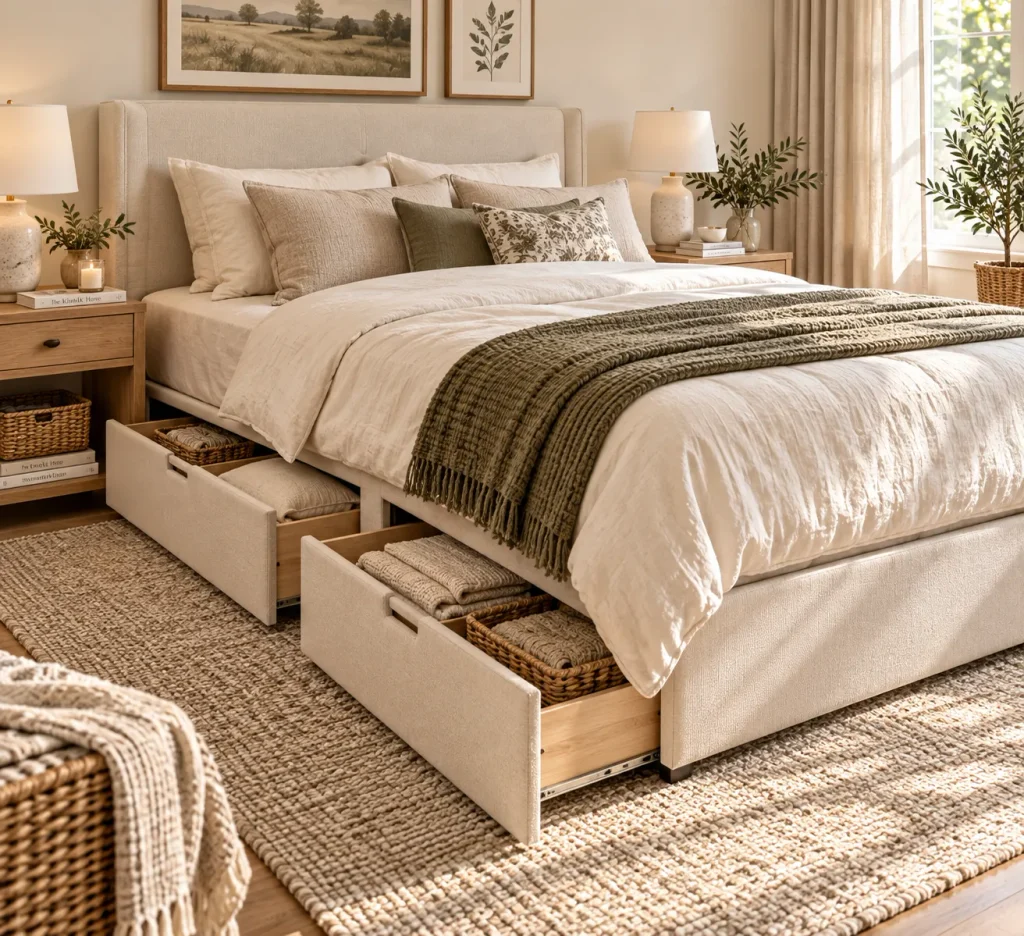
Quick Tip:
Use underbed storage for items you need occasionally, such as spare bedding, seasonal clothing, or extra pillows. Choose enclosed drawers or zippered fabric containers to reduce dust and keep the room visually tidy.
Hidden storage works especially well in bedrooms where wardrobes and closets are limited. Label containers by category so you can find things without opening every box. Keep frequently used items closer to the edge and seasonal belongings farther underneath. A clear storage plan makes this space useful instead of becoming a forgotten pile.
Textured Bedroom Wall

BEFORE: A large plain wall behind the bed can leave the sleeping area feeling flat, especially when the furniture and bedding use similar neutral shades.
AFTER: A subtle textured finish adds depth through natural variations in tone and light. The wall becomes a quiet focal point without requiring bright paint or busy patterns.
Choose a finish that suits the wall condition and the amount of natural light entering the room. Limewash-inspired paint, textured wallpaper, or other suitable finishes can create visual depth. Keep the bedding and accessories relatively simple so the surface remains noticeable without making the room feel visually heavy.
Cozy Bed Bench

Cost: Moderate | Time: 30 minutes | Skill Level: Beginner
Best For: Larger bedrooms and beds with open space at the foot | Works In: Modern, traditional, Scandinavian, and organic interiors
Result: Extra seating and a polished finishing layer
A bench at the foot of the bed gives the room a practical landing spot for clothing, shoes, or morning routines. Choose a piece that is slightly narrower than the mattress so the proportions feel balanced and walking space remains comfortable.
Upholstered benches add softness, while wood or rattan designs introduce natural texture. Keep the top mostly clear, perhaps with one folded throw, so the bench remains useful. Before buying, measure the distance between the bed and opposite furniture to ensure there is enough room to move comfortably.
Warm Wood Accents
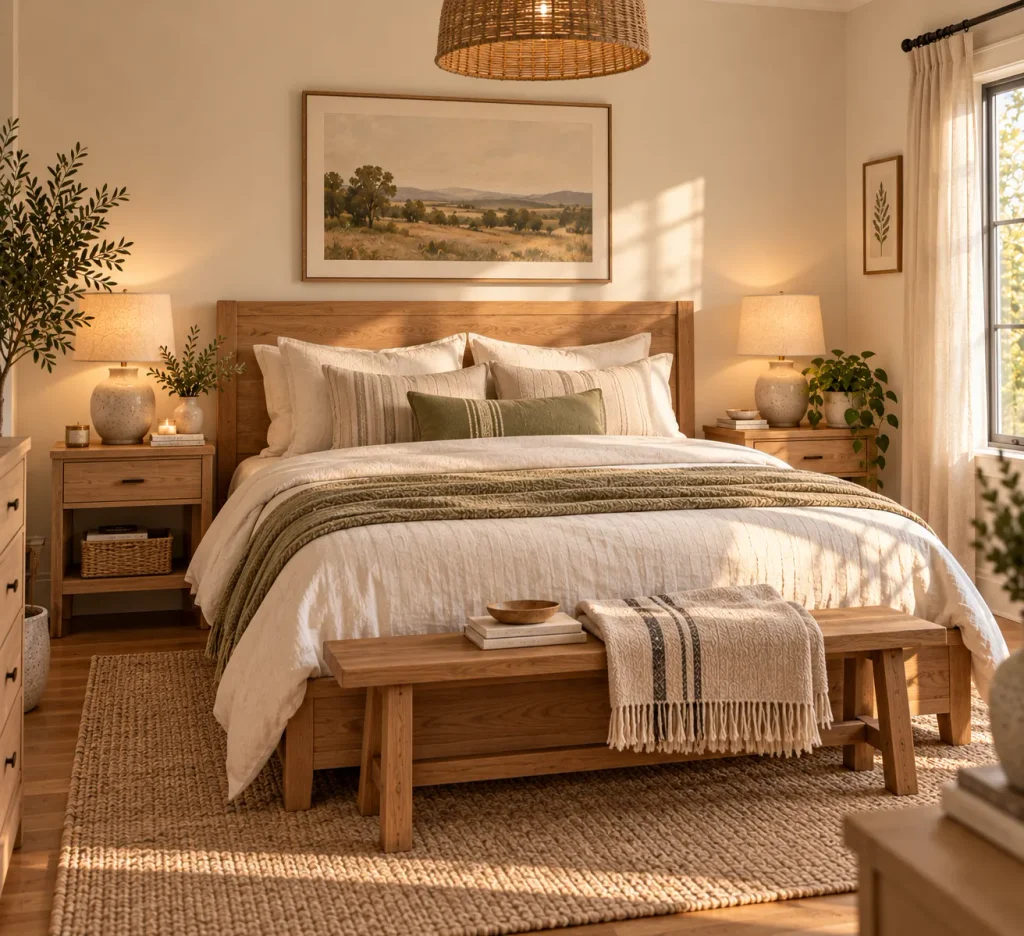
Cost: Low to moderate | Time: One afternoon | Skill Level: Beginner
Best For: Neutral bedrooms needing warmth | Works In: Scandinavian, modern, farmhouse, and organic interiors
Difficulty: Easy | Result: A warmer, more grounded atmosphere
Wood accents can make a neutral bedroom feel less flat without introducing strong colors. Add warmth through a wooden stool, picture frame, bedside table, bench, or decorative tray. Choose similar undertones across the pieces so the room feels connected rather than filled with unrelated wood shades.
For a cohesive result, pair warm wood with cream fabrics, woven textures, and muted greenery. You do not need to replace major furniture to get the effect. A few carefully chosen wooden details can soften cooler finishes and give the bedroom a more natural, comfortable character.
Minimal Bedside Styling
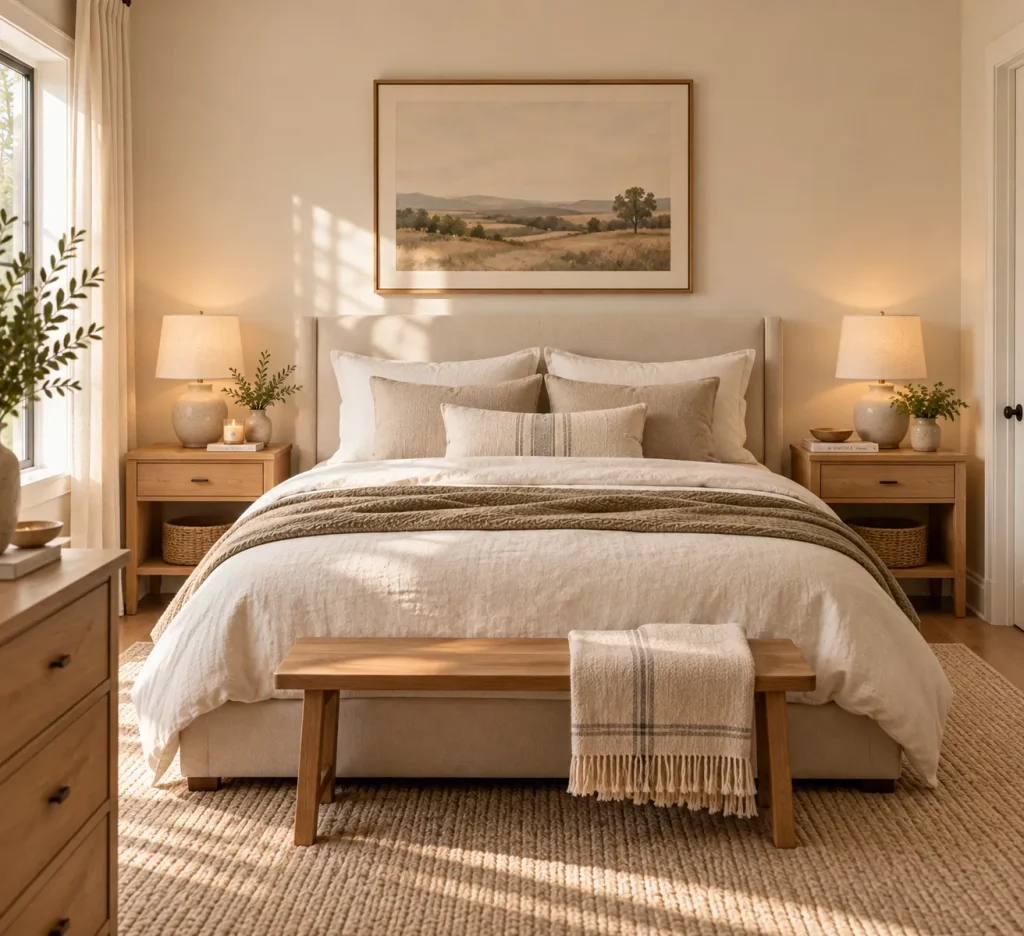
A quiet bedside arrangement can make the entire bedroom feel more restful. Keep only the objects you actually use, such as a reading lamp, book, small tray, or water glass, then add one decorative piece for personality.
Leave some of the nightstand visible instead of covering the entire surface. I’ve noticed that reducing visual clutter beside the bed makes the room feel calmer, especially when the rest of the space already contains layered bedding, artwork, or textured furniture. Simple styling also makes daily cleaning much easier.
CONCLUSION
A relaxing bedroom does not require a complete makeover or an unlimited budget. Thoughtful layers of texture, natural materials, comfortable lighting, useful storage, and personal details can create a room that feels welcoming and restful.
These bedroom ideas give you plenty of practical inspiration, whether you’re refreshing a small rental or planning a larger bedroom update. I’ve seen how small changes can completely shift the way a space feels, especially when they improve both comfort and function.
Save this article on Pinterest so you can return to your favorite ideas later. Pick one or two ideas to try this week, then share the article with someone who needs fresh bedroom inspiration. A more comfortable retreat can start with one simple change.

3 Comments